
CIAL and SpiceJet Clash Over Kochi Bad Weather Flight Disruptions as Passengers Face 20-Hour Waits
Cochin International Airport Limited publicly rejected SpiceJet's claim that bad weather caused widespread Kochi flight disruptions on August 22, 2026, calling the advisory misinformation as stranded passengers reported waits of 15 to 20 hours on Gulf-bound routes while rival carriers operated normally.

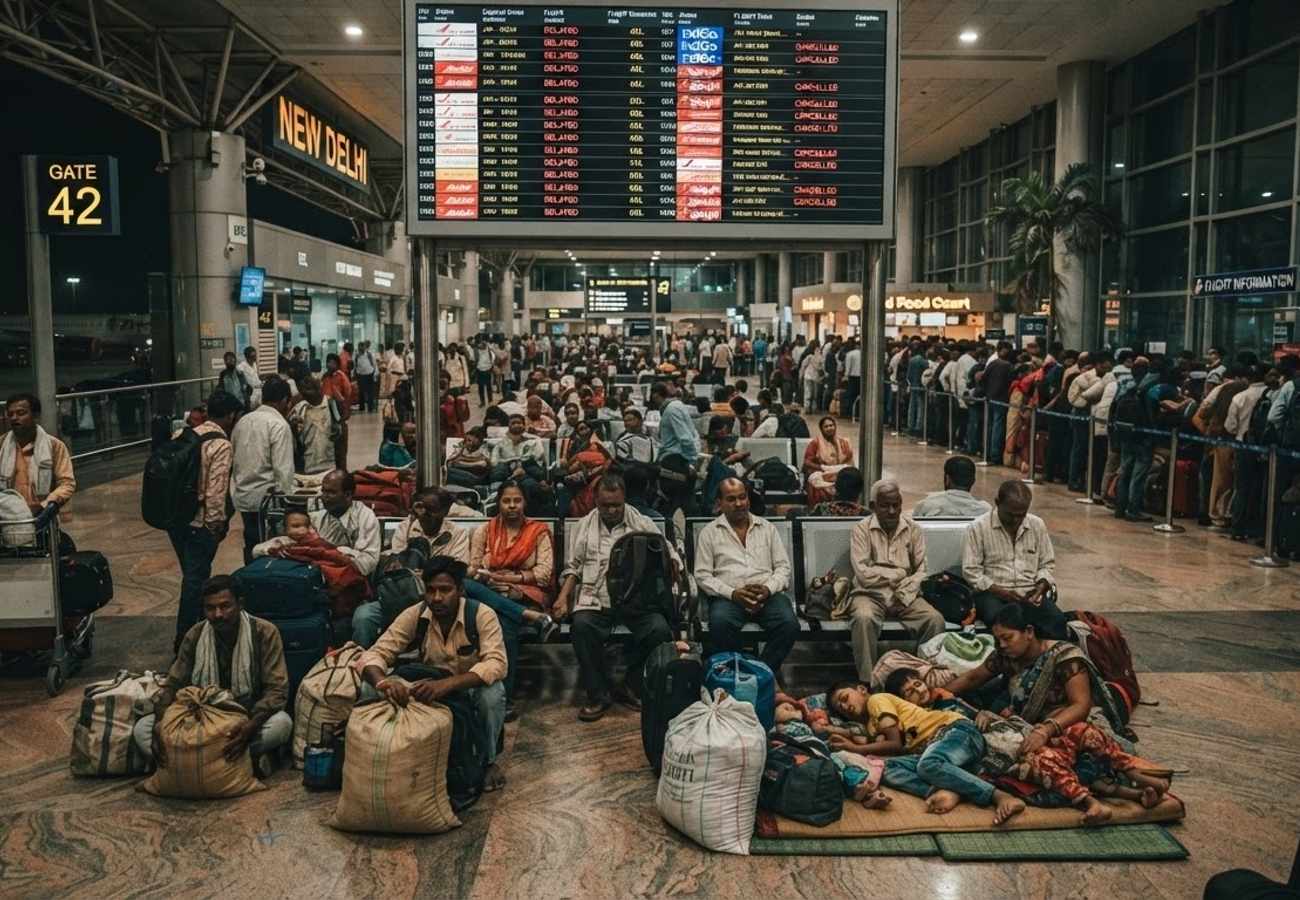
Image generated by AI
Cochin International Airport Limited (CIAL) has publicly rejected SpiceJet's claim that bad weather caused a wave of Kochi flight disruptions, branding the airline's August 22 advisory misinformation. The rare public clash leaves stranded passengers, many of them Gulf-bound migrant workers, caught between two conflicting explanations.
A Weather Advisory That Triggered an Airport Rebuttal
The dispute erupted on August 22, 2026. SpiceJet issued a social media advisory stating that "bad weather" in Kochi could affect all departures, arrivals and their consequential flights. Passengers were urged to check their flight status.
The framing pointed squarely at conditions at Cochin International Airport. CIAL's response was unusually blunt.
The airport operator stated there were no adverse weather conditions at Kochi that warranted widespread cancellations or delays. It described the airline's messaging as misinformation. It stressed that no other carrier had reported weather-related cancellations during the same period.
Local media coverage indicates CIAL went a step further. It advised passengers booked on SpiceJet services to reconfirm flight status before heading to the airport. The cited reason: continuing operational issues at the airline, not airport or weather constraints.
Key Facts at a Glance
- Advisory date: SpiceJet issued its "bad weather" advisory for Kochi on August 22, 2026.
- Airport position: CIAL says no flights were canceled at Kochi for weather reasons on the day referenced.
- Other carriers: No other airline reported weather-related cancellations during the same period.
- Reported waits: Some passengers allege waits of 15 to 20 hours as schedules slipped.
- Routes hit hardest: Gulf-bound services, with knock-on disruption across SpiceJet's network.
- Who is affected: Many stranded travelers are migrant workers worried about expiring visas and missed connections.
- Pattern: Regional coverage points to repeated disruptions on SpiceJet's Kochi services in recent weeks, including international flights.
What the Departures Board Actually Showed
Flight information displays cited in local coverage told a one-sided story. While SpiceJet services were cancelled or heavily delayed, rival carriers kept flying to major Indian metros and key Gulf destinations.
| Carrier | Operational status at Kochi (per local coverage) |
|---|---|
| IndiGo | Operating as normal |
| Air India | Operating as normal |
| Air India Express | Operating as normal |
| SpiceJet | Cancelled or heavily delayed |
The contrast matters. Weather at a shared airport does not discriminate by airline. Our analysis of the reported operating pattern suggests a carrier-specific problem rather than an airport-wide weather event.
Operational Strains Behind the Dispute
Reports from Kochi describe extended knock-on disruption across SpiceJet's network. Gulf-bound routes took the heaviest hit.
Kerala-based outlets note that many affected travelers were migrant workers. Their concerns go beyond inconvenience. Expiring visas and missed onward connections carry real financial and legal stakes for this passenger group.
Media summaries of internal accounts from the airport environment suggest the airline has been working through a combination of operational and financial constraints. Commentaries refer to repeated disruptions in recent weeks on SpiceJet's Kochi services, including international flights. The weight of reporting points to airline-specific issues, not an airport-wide event.
Why This Matters
The weather label is not semantics. It determines what passengers can claim.
SpiceJet's published passenger rights policy draws a hard line between disruption types, with obligations that differ sharply depending on the stated cause.
| Disruption cause | SpiceJet obligation under published policy |
|---|---|
| Operational reasons (within airline control) | Options including alternate flights or full refunds, subject to norms laid down by India's aviation regulator |
| Weather or circumstances beyond control | Reasonable efforts to assist travelers in reaching their destination; no liability for consequential losses |
For travelers on the Kochi–Gulf corridor, the real impact is immediate. If the disruption is classified as weather-related, the airline's liability shrinks to reasonable assistance. If it is operational, alternate flights or full refunds come into play under norms from India's aviation regulator, the Directorate General of Civil Aviation (DGCA). Passengers weighing a claim should review our guide to SpiceJet passenger rights and disruption policy and the broader India flight delay and cancellation compensation rules.
From a logistical perspective, CIAL's intervention changes the evidentiary record. Passengers now hold a public statement from the airport operator confirming no weather-related cancellations occurred on August 22. That document could prove valuable in refund claims or complaints to the regulator.
Industry observers note the clash is a rare instance of a major Indian airport publicly contesting an airline's explanation in real time. Market trends suggest the episode will deepen scrutiny of how Indian carriers communicate disruption causes, particularly after several high-profile disruption incidents across the country.
For CIAL, the stakes are reputational. Kochi is a key gateway for traffic between Kerala and the Gulf. By challenging the weather narrative directly, the operator moved to separate wider airport operations from one carrier's specific problems, protecting confidence in the hub. Travelers planning future trips through the region can consult our Kochi airport guide for Kerala-Gulf routes.
Industry Outlook
Expect three developments in the days ahead.
First, regulatory attention. India's aviation regulator has shown increasing willingness to examine disruption handling after repeated high-profile incidents. A public airport-airline dispute over the cause of cancellations is exactly the kind of event that invites formal questions.
Second, a claims test. SpiceJet has previously highlighted options such as full refunds, date changes or rerouting to a nearby airport without additional charges after disruption episodes elsewhere in its network. How those commitments apply in the Kochi context will be closely scrutinized by affected travelers.
Third, continued schedule fragility. With reports of repeated disruptions on Kochi services in recent weeks, travelers booked on SpiceJet's Gulf-bound flights should reconfirm status before leaving for the airport and keep alternative carriers in mind. IndiGo, Air India and Air India Express all maintained normal operations during this episode.
The broader takeaway from our analysis is simple. During any disruption event, check multiple sources — airline advisories, airport status updates and independent coverage — before accepting a single explanation for a cancelled flight. As India's air travel market expands, the Kochi standoff will likely intensify debate over minimum communication standards when plans go off schedule.
When an airport publicly calls an airline's weather claim misinformation, the smartest move for passengers is to keep every screenshot, receipt and advisory — the paper trail decides the payout.
Related Travel Guides
Disclaimer
This article is for informational and educational purposes only. It does not constitute legal, financial, or professional advice. While we strive to provide accurate and up-to-date information, travel policies, regulations, and conditions change rapidly. Always verify information with official sources before making travel decisions. Nomad Lawyer makes no representations about the accuracy, reliability, completeness, or suitability of the information provided. Readers should consult qualified professionals for advice specific to their circumstances. The views expressed in this article are those of the author and do not necessarily reflect the views of Nomad Lawyer.
Kunal K Choudhary
Co-Founder & Contributor
A passionate traveller and tech enthusiast. Kunal contributes to the vision and growth of Nomad Lawyer, bringing fresh perspectives and driving the community forward.
Learn more about our team →