
United States Issues Urgent Travel Disruption Warning as Massive American Airlines Flight Cancellations Hit Gerald R. Ford International Airport and Major Hubs: What Every Traveller Must Know
A massive wave of American Airlines flight cancellations and delays has struck Gerald R. Ford International Airport, cascading across critical U.S. routes including Dallas, Atlanta, and Denver. Travelers are urged to immediately verify their flight status.

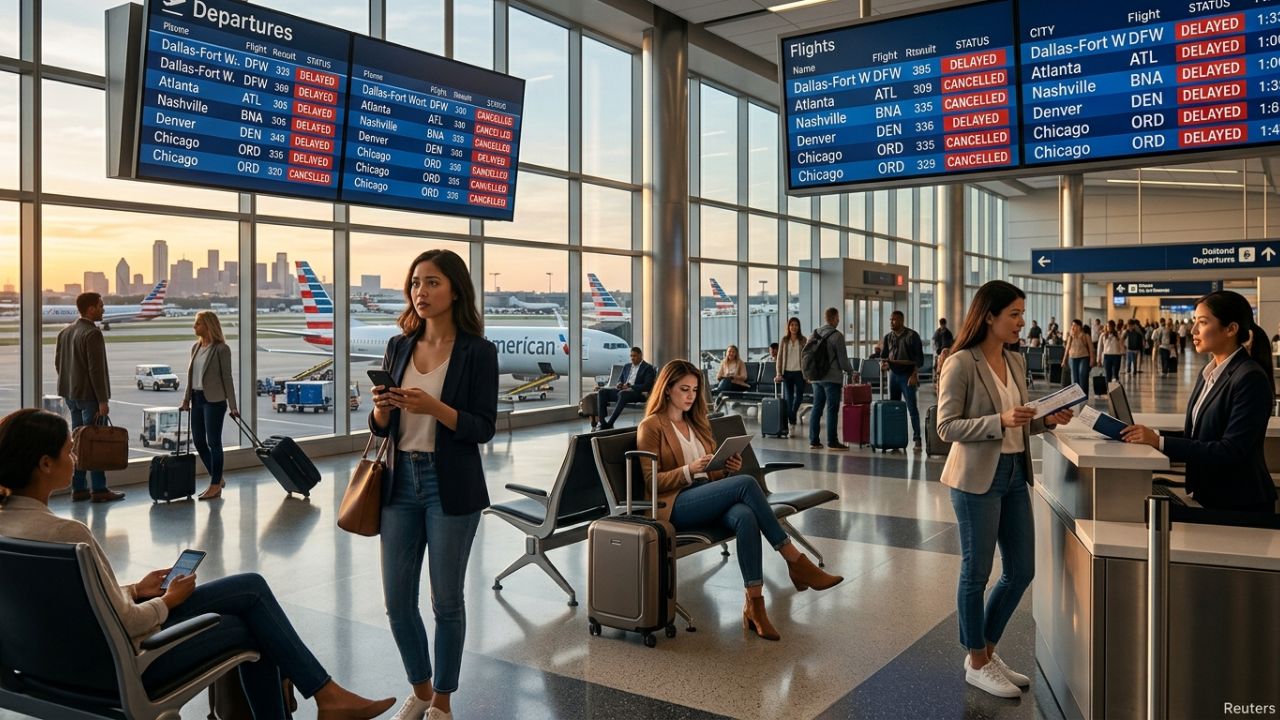
Severe flight cancellations and delays at Gerald R. Ford International Airport are causing cascading travel disruptions across major U.S. airline routes.
United States Issues Urgent Travel Disruption Warning as Massive American Airlines Flight Cancellations Hit Gerald R. Ford International Airport and Major Hubs: What Every Traveller Must Know
A massive wave of American Airlines flight cancellations and severe delays has suddenly crippled operations at Gerald R. Ford International Airport, triggering nationwide travel disruptions across the United States. Thousands of passengers are currently stranded as operational bottlenecks cascade through critical airline routes connecting major hubs like Dallas-Fort Worth, Atlanta, Nashville, Denver, and Detroit. Travelers navigating these congested transit corridors are urgently advised to immediately verify their flight statuses and prepare for extended delays as aviation authorities work to manage the surging seasonal demand.
Quick Summary
- Epicenter of Disruption: Gerald R. Ford International Airport (GRR) in Michigan is experiencing significant operational strain due to American Airlines flight cancellations.
- Major Hubs Affected: The travel chaos is cascading across critical U.S. transit points including Dallas-Fort Worth, Atlanta, Nashville, Denver, and Detroit.
- Staggering Delay Rates: Specific regional routes are facing catastrophic interruptions, with airports like Nashville and Austin reporting 100% delay rates for tracked flights.
- Primary Causes: Airlines have officially cited compounding operational challenges intersecting with unusually high seasonal travel demand.
- Immediate Action Required: Passengers must aggressively monitor real-time updates via airline applications and contact customer service desks immediately for rebooking options.
As of June 7, 2026, the United States domestic aviation network is experiencing a severe test of its operational resilience. The sudden spike in flight cancellations originating from regional facilities like Gerald R. Ford International Airport has exposed critical vulnerabilities within the broader hub-and-spoke transit system. Because modern airline networks are heavily interconnected, minor disruptions in regional sectors rapidly escalate into widespread logistical nightmares at major international gateways. This current crisis matters deeply to the traveling public because it highlights how operational challenges and high seasonal demand can instantly dismantle carefully planned itineraries across the central and eastern United States.
Event and Incident Details: Tracking the Operational Collapse
The operational turmoil heavily centers around American Airlines' scheduling grid. At the localized level, Gerald R. Ford International Airport (GRR) suffered a direct hit. Initial disruption tracking specifically highlighted 3 cancelled flights and 3 delayed flights directly attributed to American Airlines.
Flight Cancellations Matrix:
| Airport | Cancelled Flights | Delayed Flights | Airline |
|---|---|---|---|
| Gerald R. Ford Intl (GRR) | 3 | 3 | American Airlines |
However, a deeper analysis of the June 7, 2026 data exposes a far more complex and widespread operational breakdown across multiple datasets. At Gerald R. Ford International Airport, overarching metrics showed 2 total cancellations (representing a 2% failure rate) and 8 delays (a 9% rate). The contagion rapidly spread to massive international gateways. Dallas-Fort Worth experienced highly volatile disruption metrics; one dataset revealed 1 cancellation (33%) and 2 delays (66%), while a conflicting secondary dataset indicated 2 cancellations (66%) and 1 delay (33%).
Other major urban centers endured varying degrees of operational failure. Atlanta faced minimal cancellations but suffered a widespread 25% delay rate. Denver managed to avoid outright cancellations but choked under a severe 50% delay rate. Meanwhile, Detroit Metro Wayne County experienced massive delays ranging aggressively from 42% to 57%.
Assessing the Severe Risks and Passenger Impacts
The immediate risks facing travelers caught in this aviation gridlock are substantial and highly disruptive to both personal and corporate schedules. The ripple effects of these cancellations force passengers into highly vulnerable logistical positions.
- Total Route Paralysis: Specific localized routes have completely collapsed. Both Nashville and Austin-Bergstrom reported a devastating 100% delay rate for their single tracked flights.
- Cascading Missed Connections: With major hubs like Dallas-Fort Worth and Denver operating under severe delay percentages, thousands of passengers are missing their downstream connecting flights, stranding them in unfamiliar cities.
- Extended Terminal Confinement: Travelers are reporting massive confusion at check-in counters and are being forced to endure extended waiting times as flight boards continuously display updated delay notifications.
- Regional Bottlenecks: Moderate to severe delays at central and northern hubs like Detroit highlight critical operational bottlenecks that threaten to stall transcontinental travel.
- Sporadic Urban Disruptions: Cities like Minneapolis/St. Paul recorded minor delays between 16% and 20%, while Chicago O’Hare faced isolated delays of 7–8%, and New York's LaGuardia reported a single delayed flight, proving that no major hub is completely immune.
What Airport Authorities and Airlines Are Saying
In response to the mounting public frustration, airline representatives and airport officials have issued immediate public statements. Airlines are officially citing a volatile combination of "operational challenges and high seasonal demand" as the primary catalysts for the widespread disruptions. Ground staff and airport management teams at Gerald R. Ford International Airport and affected hubs are actively deploying personnel to assist stranded passengers, provide immediate rescheduling options, and attempt to minimize traveler inconvenience. Despite the agonizingly long lines and terminal chaos, officials are publicly urging extreme patience from the flying public. Furthermore, authorities strongly advise all ticketed passengers to avoid relying on printed itineraries and instead continuously check real-time flight updates through official digital channels. All flight data has been manually obtained from FlightAware’s official website, and authorities stress that in order to maintain safety, airlines will continue to actively modify schedules and itineraries.
Practical Traveler Advice: How to Survive the Cancellations
Flight cancellations are incredibly frustrating, but executing the right contingency steps can significantly minimize logistical stress. Travelers navigating this current wave of American Airlines disruptions must take immediate action:
- Stay Calm and Check for Updates: As soon as you learn your flight is canceled, do not panic. Many airlines will automatically notify you via text, email, or their official application. Immediately visit the airline’s website for real-time updates on the ongoing situation.
- Monitor Your Digital Channels: Continuously monitor your email inbox, smartphone texts, and the airline’s mobile app for rebooking confirmations or critical gate announcements.
- Contact the Airline Immediately: Reach out to the airline’s customer service team either in person at the airport or over the phone. If you are already at the airport, head directly to the service desk. If you are not at the terminal, try calling the hotline or using the airline’s online chat system to completely avoid waiting in long physical queues.
- Know Your Passenger Rights: Familiarize yourself intimately with the airline’s policies regarding cancellations. Many major airlines offer direct rebooking options or financial compensation, especially if the cancellation is deemed within their operational control. For international context, remember that in the EU, passengers are entitled to compensation under certain conditions.
- Consider Alternative Flights and Transport: Aggressively ask the airline about securing a seat on the next available flight. If you cannot find a suitable airline option to reach your destination safely, immediately consider booking a new flight through a rival carrier, or check for other forms of ground transport like regional trains or long-distance buses.
Broader Context: The Fragility of the Nationwide Network
The massive travel disruption currently crippling Gerald R. Ford International Airport serves as a stark reminder of the broader systemic issues currently facing American Airlines across its massive domestic network. When a carrier operating at this scale encounters localized operational bottlenecks, the resulting cancellations and delays instantly ripple through key U.S. routes. The disruptions observed today in Grand Rapids, Dallas, Atlanta, and Detroit emphasize the fragile, nationwide reach of commercial travel interruptions. As airlines aggressively attempt to maximize seating capacity during periods of high seasonal demand, the margin for operational error vanishes entirely.
What to Expect Next and Looking Ahead
Looking ahead, travelers should anticipate continued volatility across the central and eastern United States airspace over the next 48 to 72 hours. As aircraft and flight crews fall out of their mandated operational sync, American Airlines will be forced to execute "rolling resets" to stabilize their network routing. This situation heavily underscores the critical importance of proactive airline communication and heightened passenger preparedness. The widespread disruptions currently paralyzing these key U.S. routes emphasize an urgent, industry-wide need for vastly improved contingency planning and superior resource allocation to reduce the severity of future travel interruptions.
Conclusion
The sudden wave of American Airlines flight cancellations at Gerald R. Ford International Airport and surrounding U.S. hubs has plunged thousands of travelers into a highly stressful operational gridlock. To successfully navigate this ongoing travel chaos, passengers must remain extremely vigilant, heavily rely on real-time digital updates, thoroughly review airline rebooking restrictions, and maintain absolute flexibility with their travel plans.
Frequently Asked Questions (FAQ)
Why are flights being cancelled at Gerald R. Ford International Airport? Airlines, specifically American Airlines, are currently citing a combination of severe operational challenges and unusually high seasonal passenger demand as the primary reasons for the ongoing flight cancellations and delays.
Which major U.S. cities are most affected by these travel disruptions? The operational disruptions are cascading across several massive domestic hubs, heavily impacting flights connecting through Dallas-Fort Worth, Atlanta, Nashville, Denver, Detroit, Minneapolis, Chicago, New York, and Austin.
What should I do if American Airlines cancels my flight today? Do not panic. Immediately check the American Airlines app or website for real-time updates and rebooking options. If necessary, contact their customer service desk via phone or online chat to secure an alternative flight.
Am I entitled to compensation for these specific flight delays? Familiarize yourself with American Airlines' specific cancellation policies. Airlines generally provide rebooking options or compensation if the disruption is within their direct operational control, though U.S. regulations differ significantly from EU compensation rules.
How can I avoid getting stranded during this wave of airport congestion? Maintain extreme travel flexibility, rely heavily on real-time flight tracking platforms like FlightAware, ensure your airline app notifications are active, and have alternative transportation plans (like rival airlines or regional trains) ready just in case.
Disclaimer
This article is for informational and educational purposes only. It does not constitute legal, financial, or professional advice. While we strive to provide accurate and up-to-date information, travel policies, regulations, and conditions change rapidly. Always verify information with official sources before making travel decisions. Nomad Lawyer makes no representations about the accuracy, reliability, completeness, or suitability of the information provided. Readers should consult qualified professionals for advice specific to their circumstances. The views expressed in this article are those of the author and do not necessarily reflect the views of Nomad Lawyer.
Kunal K Choudhary
Co-Founder & Contributor
A passionate traveller and tech enthusiast. Kunal contributes to the vision and growth of Nomad Lawyer, bringing fresh perspectives and driving the community forward.
Learn more about our team →