
Texas Expands Dark Sky Tourism Across Big Bend, Hill Country, and State Parks with Amber LED Mandates: What Every Traveller Must Know

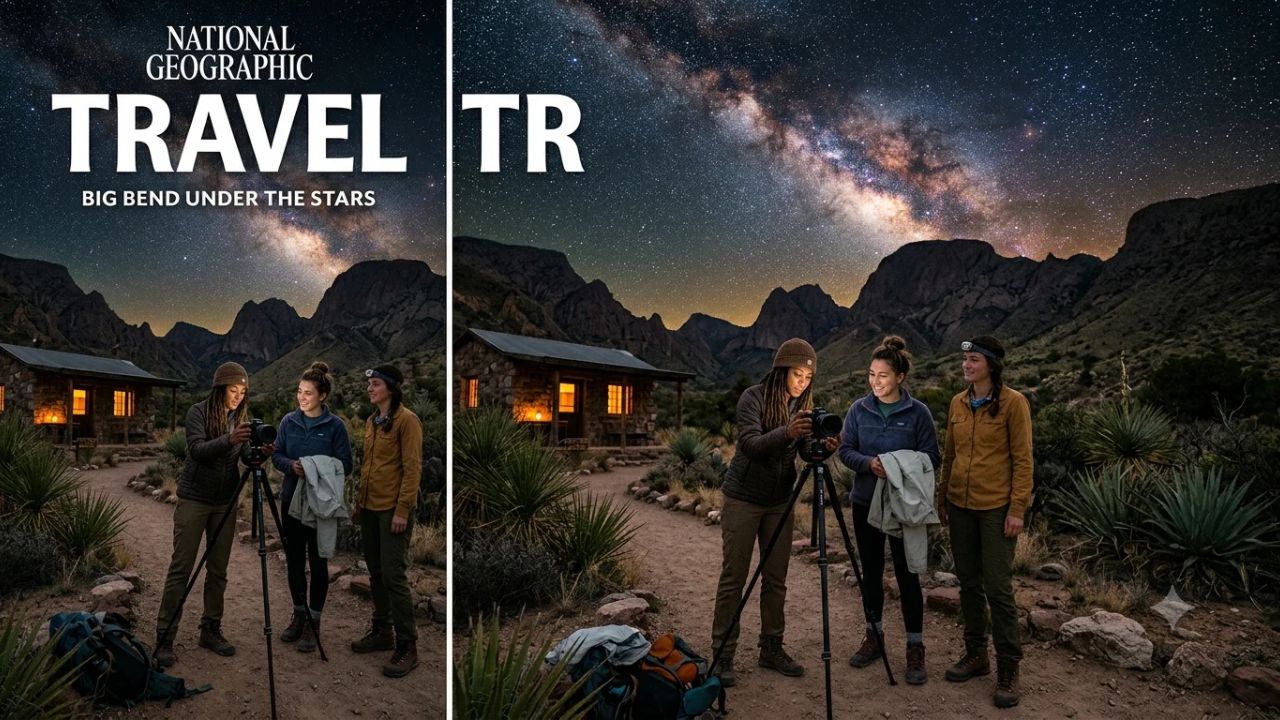
Texas has accelerated a statewide dark-sky tourism expansion, linking the 15,000-square-mile Greater Big Bend International Dark Sky Reserve with protected state parks and Hill Country communities to combat urban light pollution. Spearheaded by the Texas Parks and Wildlife Department, the McDonald Observatory, and municipal conservation alliances, the initiative safeguards world-class Bortle Class 1 nightscapes while establishing a high-yield nocturnal tourism economy spanning luxury stargazing domes, bat-watching expeditions, and astrophotography workshops.
To shield astronomical research and sensitive wildlife habitats against expanding metropolitan glare, state authorities and local jurisdictions enforce strict outdoor lighting ordinances under the Texas Health and Safety Code. By retrofitting more than 3,000 active oil and gas sites across the Permian Basin with full-cutoff fixtures and mandating warm amber LEDs in designated International Dark Sky Communities like Dripping Springs and Wimberley, Texas has transformed natural darkness into a major economic and ecological asset.
Quick Summary: Key Facts and Travel Impact
- World's Largest Dark-Sky Reserve: The Greater Big Bend International Dark Sky Reserve covers over 15,000 square miles across West Texas and Northern Mexico, anchored by Big Bend National Park and the McDonald Observatory.
- Bortle Class 1 Precision: West Texas reserves maintain pristine night skies measuring 21.7 to 22.0 magnitudes per square arcsecond, contrasting sharply with Bortle Class 8 and 9 metropolitan corridors in Houston and Dallas.
- Permian Basin Industrial Retrofits: Partnerships with the Permian Basin Petroleum Association have retrofitted over 3,000 active drilling sites with zero-uplight, 90-degree cutoff fixtures, cutting unnecessary glare by up to 80%.
- High-Yield Lodging Premiums: Accommodations in certified dark-sky counties command a 25% to 40% Average Daily Rate (ADR) premium, with luxury stargazing yurts and glass domes priced from $180.00 to over $450.00 per night.
- Ecological Protection Corridor: Darkness preservation safeguards the Central Flyway, where over 1.9 billion migratory birds (33% of all U.S. landbird migrations) pass annually through Texas.
Commercial Dark-Sky Infrastructure Across West Texas and the Hill Country
The commercial foundation of Texas noctourism relies on strategic public-private partnerships uniting state environmental departments, research universities, and local municipal councils. Anchoring this network is the Greater Big Bend International Dark Sky Reserve, encompassing more than 15,000 square miles of contiguous protected terrain across West Texas and Northern Mexico. Core entities—including the University of Texas at Austin's McDonald Observatory, Big Bend National Park, Big Bend Ranch State Park, the Black Gap Wildlife Management Area, and historic gateway towns such as Alpine, Marfa, and Terlingua—collaborate continuously to protect the hemisphere's clearest nocturnal corridors.
At the state level, the Texas Parks and Wildlife Department actively manages designated International Dark Sky Parks, including Enchanted Rock State Natural Area, South Llano River State Park, Copper Breaks State Park, Caprock Canyons State Park, and Big Bend Ranch State Park. Rangers deploy handheld and stationary Sky Quality Meters to monitor atmospheric radiance, replace commercial lighting with fully shielded luminaires, and host public constellation interpretation sessions. Concurrently, Hill Country municipalities such as Dripping Springs—the first certified International Dark Sky Community in Texas—enforce strict municipal codes requiring amber outdoor LEDs, creating an appealing evening ambiance that fuels boutique bed-and-breakfasts, outdoor wedding venues, and wellness retreats.
TEXAS DARK-SKY PARKS AND ASTRONOMICAL SANCTUARIES MATRIX
| Entity / Facility | Delays | Cancellations | Details |
|---|---|---|---|
| Protected Area | Night-Sky Certification | Primary Astronomical Asset | Public Visitor Offerings |
| Greater Big Bend | Certified International | Pristine Bortle Class 1 skies, | Public Star Parties, research |
| Reserve | Dark Sky Reserve (15,000 sq | 21.7 - 22.0 mag/arcsec² radiance | telescope viewings, workshops |
| Enchanted Rock | International Dark Sky | High-elevation granite dome | Guided nocturnal rock hikes, |
| State Natural Area | Park (Hill Country) | unobstructed 360° horizon views | constellation storytelling |
| McDonald | Premier Research | Otto Struve and Harlan J. Smith | Deep-sky telescope viewing, |
| Observatory | Observatory Facility | telescopes; dark-sky education | public astronomy masterclasses |
| Dripping Springs | International Dark Sky | Municipal amber LED ordinance; | Nocturnal weddings, boutique |
| & Wimberley | Communities (Hill Country) | strict 2700K lighting threshold | stargazing dome glamping |
| South Llano River | International Dark Sky | Riparian wilderness basin with | Backcountry night photography, |
| State Park | Park (Central Texas) | minimal regional skyglow | nocturnal wildlife tours |
Urban Noctourism: Congress Avenue Bat Flights and Historic Night Walks
Urban centers across Texas have developed complementary nocturnal tourism formats that blend biological wonders with evening pedestrian culture. In downtown Austin, the Ann W. Richards Congress Avenue Bridge hosts the largest urban bat colony in North America, comprising approximately 1.5 million Mexican free-tailed bats (Tadarida brasiliensis). Generating direct visitor spending across downtown hotels, restaurants, and boat tour operators, the nightly emergence draws over 140,000 paid spectators annually, supported by Bat Conservation International, the Texas Parks and Wildlife Department, and the Austin Convention & Visitors Bureau.
Further south, historical night-walking tours along the San Antonio River Walk and through the Galveston Historic District channel cultural travelers into evening heritage exploration. Preservation societies lead lantern-lit historical walks detailing folklore, historic architecture, and local history after sunset. Concurrently, municipal parks departments in San Antonio and Austin coordinate inclusive community astronomy walks in collaboration with DarkSky Texas advocates, demonstrating that night-sky awareness and lighting education thrive inside urban perimeters.
Celestial Economics: Astronomical Surges Across Rural Texas Counties
Major astronomical occurrences—such as total and annular solar eclipses, recurring meteor showers (the Perseids and Geminids), planetary oppositions, and bright cometary apparitions—serve as massive financial windfalls for rural Texas counties. Landmark celestial events have generated unprecedented visitor spending and lodging occupancy across the Texas Hill Country, San Antonio, Austin, and Dallas–Fort Worth. Municipal financial audits across rural Hill Country jurisdictions, including Kerr County, Gillespie County, and Kendall County, recorded sustained 100% hotel occupancy levels and record-breaking Hotel Occupancy Tax (HOT) revenues during peak astronomical windows.
Outside specific event corridors, the McDonald Observatory in Fort Davis operates as a permanent economic pillar for West Texas. Its world-renowned public Star Parties, deep-space telescope sessions, and daytime educational tours draw tens of thousands of paid visitors each year, sustaining regional hospitality, culinary, and passenger transportation networks. Visitors routinely bundle observatory tickets with excursions to nearby state and national parks, ensuring a reliable influx of capital into rural municipalities during off-peak travel months.
ATMOSPHERIC SKY RADIANCE AND BORTLE SCALE COMPARISON IN TEXAS
| Entity / Facility | Delays | Cancellations | Details |
|---|---|---|---|
| Geographic Region | Bortle Scale Rating | Sky Radiance Level | Visual Astronomy Quality |
| West Texas Dark-Sky Reserves | Bortle Class 1 | 21.7 - 22.0 mag/sec² | Pristine; Milky Way casts |
| (Big Bend, Fort Davis) | (Pristine Black Skies) | Zenith darkness | distinct ground shadows |
| Texas Hill Country Parks | Bortle Class 2 to 3 | 21.2 - 21.6 mag/sec² | Superb; detailed galactic |
| (Enchanted Rock, South Llano) | (Truly Dark / Rural Sky) | Clean horizons | structures visible to eye |
| Suburban Edge Communities | Bortle Class 4 to 5 | 19.5 - 20.8 mag/sec² | Moderate; skyglow visible |
| (Dripping Springs, Blanco) | (Rural-Suburban Fringe) | Shielded fixtures | over metropolitan borders |
| Metropolitan Corridors | Bortle Class 8 to 9 | < 18.0 mag/sec² | Severe degradation; only |
| (Houston, Dallas-Fort Worth) | (Inner-City Skyglow) | Artificial glare | Moon and planets visible |
Legislative Frameworks and the Permian Basin Industrial Overhaul
Safeguarding natural darkness against industrial light trespass requires enforceable regulatory standards. To resolve light pollution threatening sensitive astronomical mirrors at the McDonald Observatory, university astronomers initiated direct engineering collaborations with the Permian Basin Petroleum Association and regional energy operators.
This joint technical taskforce overhauled lighting configurations across more than 3,000 active oil and gas extraction sites throughout the Permian Basin:
- 90-Degree Full Cutoff Shielding: Oilfield installations mandate zero-uplight luminaires that direct 100% of light downward, eliminating horizontal scatter and upward atmospheric spill.
- Automated Timers and Proximity Sensors: Motion-activated sensors and automated shutoffs on temporary drilling towers cut unnecessary site illumination by up to 80%.
- Low-Kelvin Spectral Selection: Permian Basin energy facilities transitioned to warm-white and amber LEDs operating between 1800 and 2200 Kelvin, restricting blue light wavelengths below 450 nanometers to minimize atmospheric Rayleigh scattering.
Under the Texas Health and Safety Code, counties bordering major astronomical research facilities—such as Jeff Davis County—possess statutory authority to adopt and enforce binding outdoor lighting regulations. Additionally, forward-thinking Hill Country municipalities including Blanco, Wimberley, Fredericksburg, and Horseshoe Bay have integrated comprehensive DarkSky standards directly into their municipal zoning and construction ordinances.
Ecological Safeguards: Avian Migration and Nocturnal Biodiversity
Preserving natural photoperiods is essential for maintaining Texas's ecological integrity. More than 1.9 billion migratory birds navigate along the Central Flyway through Texas each year, representing nearly 33% of all landbird migrations in the United States. Artificial light pollution disorients migrating flocks, alters seasonal migration timelines, and precipitates fatal collisions with illuminated commercial structures. By deploying fully shielded amber fixtures operating at or below 2700 Kelvin, local authorities and state parks reduce commercial power consumption by 50% to 70% while restoring safe transit skies for migratory species.
The benefits extend directly to terrestrial ecosystems. Approximately 80% of native Texas amphibian and insect species depend upon uninterrupted nighttime darkness to forage, breed, and evade predators. Uncontrolled artificial skyglow disrupts insect pollinator mating patterns, precipitating localized population collapses. Implementing downward-directed, low-lux lighting maintains these vital environmental functions across state parks and river valleys.
ECONOMIC AND NOCTOURISM REVENUE MULTIPLIERS IN RURAL TEXAS
| Sector & Commercial Driver | Economic Metric | Financial Yield | Regional Impact Summary |
|---|---|---|---|
| Stargazing Lodging Premium | Average Daily Rate (ADR) | 25% - 40% Increase | Geodesic domes and yurts |
| (Certified Dark-Sky Counties) | vs. Standard Motels | $180 to $450/night | maintain 65-75% winter occ |
| Dark-Sky Real Estate Value | Residential Appraisal | 10% - 15% Premium | Buyer demand for quiet, |
| (Dripping Springs, Wimberley) | Property Valuation Base | Sustained baseline | unpolluted aesthetics |
| Municipal Sales Tax Share | Local Sales Tax Revenue | 12% - 18% of Total | Critical fiscal cushion |
| (Alpine, Marfa, Fort Davis) | Generated by Noctourism | Annual Receipts | during off-peak periods |
| Sleep & Wellness Tourism | Length of Stay (LOS) | 1.5 nights to 3.5 | $1,200 avg spend per guest |
| (Circadian Health Retreats) | Extended Rural Stays | nights average | on lodging and dining |
Commercial Real Estate, Sleep Tourism, and Astrophotography Economics
Dark-sky designation has evolved into a lucrative marketing asset for rural property developers and hospitality operators across Texas:
Stargazing Lodging and Real Estate Premiums
Accommodations in certified dark-sky counties achieve Average Daily Rates 25% to 40% higher than non-certified lodging. Specialized stargazing accommodations—such as geodesic glass domes, off-grid cabins, and luxury yurt retreats—routinely command prices between $180.00 and $450.00 per night, sustaining 65% to 75% occupancy during off-peak winter months. In communities like Dripping Springs and Wimberley, homes and commercial lots command a 10% to 15% real estate appraisal premium linked to lighting and noise controls.
Circadian Sleep and Wellness Retreats
Exposure to artificial light exceeding 10 lux at night suppresses human melatonin production by up to 50%, disrupting restorative sleep cycles. Health-conscious travelers increasingly book dark-sky wellness retreats to reset circadian rhythms. Guests seeking sleep restoration extend their rural stays from an average of 1.5 nights to 3.5 nights, spending an average of $1,200.00 per retreat on specialized lodging, organic cuisine, and guided night immersion.
Professional Astrophotography Masterclasses
Professional and serious amateur astrophotographers represent one of noctourism's highest-spending cohorts, traveling with camera setups valued between $3,500.00 and $12,000.00 (equatorial trackers, cooled sensors, wide-aperture optics). Commercial astrophotography workshops in Big Bend and Palo Duro Canyon charge tuition fees ranging from $1,500.00 to $3,000.00 per participant, generating substantial revenue for local guides, park concessions, and hospitality businesses while boosting social media reach for regional tourist boards by over 400%.
Cultural Ethno-Astronomy: Ancient Indigenous Star Lore
Heritage noctourism across Texas also integrates rich indigenous star lore and archaeological preservation. Historic locations such as Hueco Tanks State Park & Historic Site and Caddo Mounds preserve Native American rock pictographs and astronomical alignment markers dating back more than 10,000 years.
State park surveys reveal that over 85% of nocturnal tour participants actively request cultural storytelling alongside standard astronomical observation. In response, park rangers and tribal cultural liaisons organize dozens of annual ethno-astronomy night walks, linking physical petroglyphs and indigenous constellation legends with seasonal planetary movements.
Practical Traveler Advice: Planning a Texas Dark-Sky Expedition
Travelers preparing for an astronomy or dark-sky getaway across Texas should integrate these field recommendations:
- Reserve Star Parties Well in Advance: Public Star Parties at the McDonald Observatory in Fort Davis and night passes for Enchanted Rock State Natural Area routinely sell out weeks ahead; secure reservations online prior to arrival.
- Equip Flashlights with True Red Filters: White light instantly destroys human scotopic (night) vision and takes up to 30 minutes to recover. Use flashlights emitting deep red light (above 620 nanometers) to navigate observation decks safely.
- Align Travel with the Lunar Calendar: For deep-space observation and Milky Way astrophotography, schedule trips during the new moon window (spanning three days before to three days after the astronomical new moon).
- Respect Local Lighting Ordinances: When lodging in Dripping Springs, Wimberley, or Fort Davis, ensure exterior vacation rental lights remain extinguished after 10:00 PM to comply with local dark-sky municipal codes.
Looking Ahead: Reinvesting Bed Taxes in Conservation Infrastructure
As dark-sky tourism contributes between 12% and 18% of municipal sales tax revenues in gateway communities like Alpine, Marfa, and Fort Davis, local leaders are reinvesting Hotel Occupancy Tax (HOT) receipts directly back into nocturnal infrastructure. Municipalities allocate up to 15% of these collections to finance public education, community night-sky festivals, and municipal streetlamp retrofits.
By pairing grassroots municipal leadership and industrial energy engineering with academic research, Texas has established a world-class model for darkness conservation. Travelers escaping urban glare can discover pristine celestial expanses while supporting the economic vitality of rural communities and the ecological balance of the Southwest.
Frequently Asked Questions
Where can travelers find the darkest skies in Texas?
The darkest night skies are located within the Greater Big Bend International Dark Sky Reserve in West Texas, which encompasses Big Bend National Park, Big Bend Ranch State Park, and the McDonald Observatory in Fort Davis, offering pristine Bortle Class 1 conditions.
What is the Bortle Dark-Sky Scale, and what do Texas ratings mean?
The Bortle Scale measures night-sky brightness from Class 1 (pristine darkness) to Class 9 (inner-city skyglow). West Texas reserves rate as Bortle Class 1 (21.7 to 22.0 mag/arcsec²), while metropolitan areas like Houston and Dallas rate at Class 8 or 9.
Why do Texas dark-sky communities mandate amber LED lighting?
Amber LEDs operate at low color temperatures (between 1800K and 2200K) and emit minimal blue light, cutting atmospheric Rayleigh scattering, saving 50% to 70% in energy costs, and protecting migrating birds along the Central Flyway.
When is the best time of year for stargazing and Milky Way viewing in Texas?
The galactic core of the Milky Way is best observed from late March through October during the new moon phase, while autumn and winter provide crisp atmospheric clarity for observing meteor showers like the Perseids and Geminids.
Are reservations required to visit the McDonald Observatory Star Parties?
Yes. Due to high demand, public Star Parties and telescope viewing nights at the McDonald Observatory in Fort Davis require advance ticket reservations through their official portal and frequently sell out months ahead.
Related Travel Guides
- Queensland Unveils South East Paddock-to-Plate Food Corridors and Enforces Mandatory Farmgate Biosecurity Around Brisbane: What Every Traveller Must Know
- Hungary Overhauls Multi-Generational Family Travel with Free Senior Fares, Accessible Transit, and Sensory Airport Hubs: What Every Traveller Must Know
- Canada Tightens Visitor Visa Vetting with AI Risk Screening and Stricter Financial Proof Rules: What Every Traveller Must Know
Disclaimer
This article is for informational and educational purposes only. It does not constitute legal, financial, or professional advice. While we strive to provide accurate and up-to-date information, travel policies, regulations, and conditions change rapidly. Always verify information with official sources before making travel decisions. Nomad Lawyer makes no representations about the accuracy, reliability, completeness, or suitability of the information provided. Readers should consult qualified professionals for advice specific to their circumstances. The views expressed in this article are those of the author and do not necessarily reflect the views of Nomad Lawyer.
Raushan Kumar
Founder & Lead Developer
Full-stack developer with 11+ years of experience and a passionate traveller. Raushan built Nomad Lawyer from the ground up with a vision to create the best travel and law experience on the web.
Learn more about our team →