
CDC Investigates Fourth Gastrointestinal Outbreak on National Geographic Sea Bird Cruise Ship in 2026
The CDC is investigating a fourth gastrointestinal illness outbreak on the National Geographic Sea Bird cruise ship within eight weeks, raising concerns for U.S. travelers.

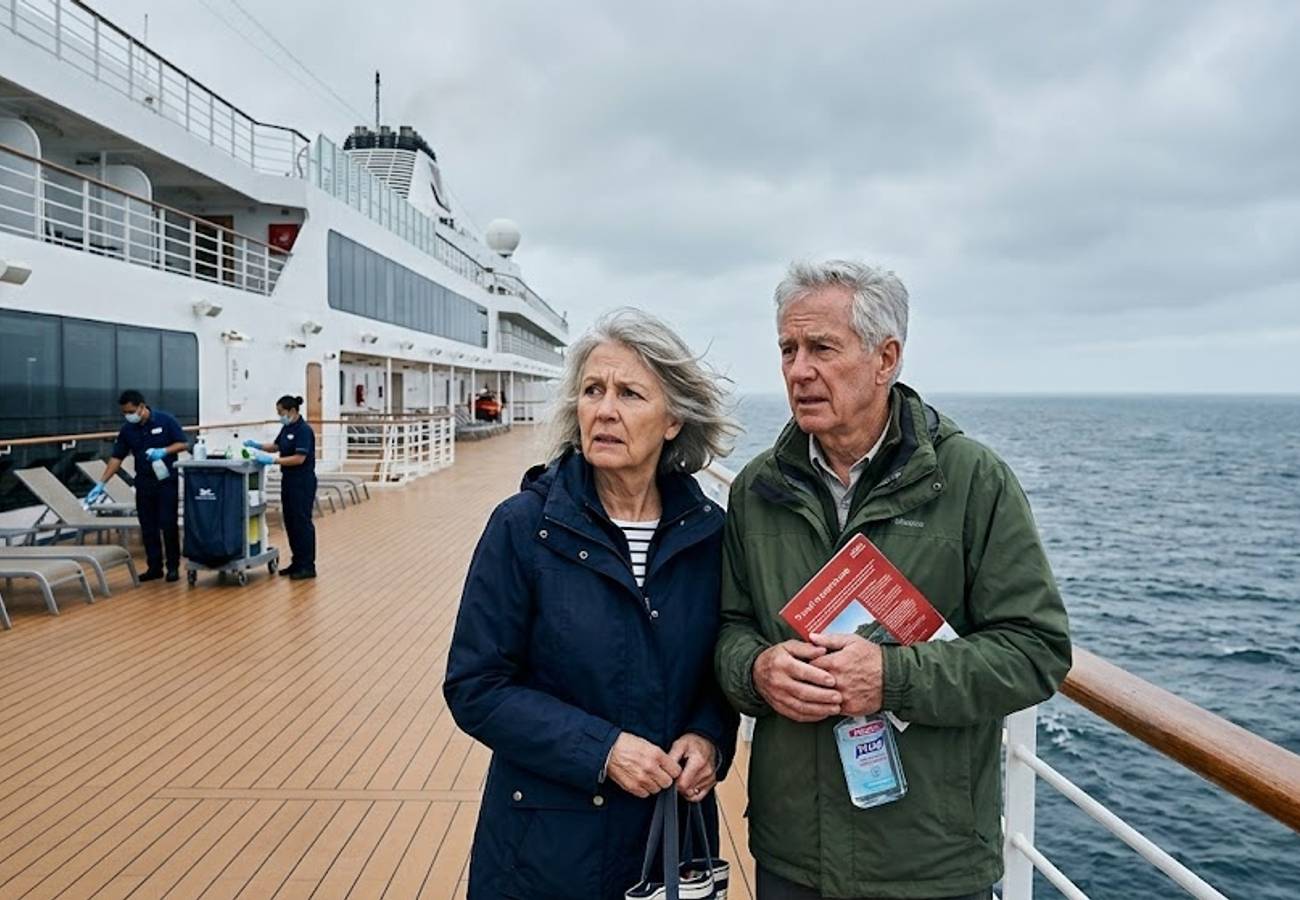
Image generated by AI
U.S. travelers are on high alert as the CDC investigates a fourth gastrointestinal illness outbreak on the National Geographic Sea Bird within a two-month window.
The vessel, operated by Lindblad Expeditions, has seen a recurring pattern of illness that has repeatedly crossed the official reporting threshold for public health outbreaks. The most recent incident occurred between July 15 and July 20, 2026, marking a concerning trend of contagion in a high-density travel environment.
Recurring Gastrointestinal Outbreaks on National Geographic Sea Bird
The Centers for Disease Control and Prevention (CDC) is currently analyzing the cause of the latest outbreak. While the first two incidents in May and June were confirmed as Norovirus, the third and fourth outbreaks are currently listed as "unknown."
Under the Vessel Sanitation Program (VSP), the CDC defines a public gastrointestinal outbreak as any incident where 3% or more of the ship's population is affected. Mandatory reporting for cruise lines begins at a 2% infection rate. The National Geographic Sea Bird has exceeded these thresholds in every instance over the last eight weeks.
Documented Outbreak Data: National Geographic Sea Bird (2026)
| Voyage # | Date | Outbreak Cause | Affected Passengers | Infection Rate |
|---|---|---|---|---|
| SB32621 | May 26–31, 2026 | Norovirus | 9 of 66 | 13.6% |
| SB32627 | June 25–30, 2026 | Norovirus | 19 of 68 | 28% |
| SB32630 | July 10–15, 2026 | Unknown | 18 of 62 | 29.0% |
| SB32631 | July 15–20, 2026 | Unknown | 8 of 57 | 14.0% |
The Challenge of Pathogen Identification
The CDC reported on July 23 that identifying the specific causative agent for these outbreaks takes time. The process requires the collection of stool and vomitus samples from infected passengers. While Norovirus is the most frequent culprit in maritime settings, the "unknown" status of the recent July outbreaks indicates that laboratory confirmation is still pending.
Norovirus is particularly difficult to eradicate because it is resistant to heat, drying, and standard alcohol-based hand sanitizers. It can persist on surfaces for weeks unless treated with bleach-based disinfectants.
Transmission Dynamics in Closed Environments
Cruise ships act as semi-enclosed environments that facilitate the rapid spread of fecal-oral viruses. The combination of high passenger density, shared indoor spaces, and buffet-style dining creates a high-risk scenario for transmission.
Industry data suggests the virus is typically introduced by a passenger or crew member. Because Norovirus has an incubation period of 12 to 48 hours, infected individuals often board the ship without showing symptoms, only to become contagious shortly after departure.
According to Dr. Robyn F. Chatman, a family physician and AMA delegate, the virus is transmitted when contaminated particles are handled and then transferred to the mouth. The virus sheds billions of particles through vomit and stool, creating aerosols that settle on high-touch surfaces.
Risk Mitigation for 2026 Travelers
With a projected 21.7 million Americans planning ocean cruises in 2026, the risk of exposure is at an all-time high. The CDC recommends the following protocols to reduce infection risk:
- Prioritize Soap and Water: Frequent handwashing is significantly more effective than hand sanitizer for Norovirus.
- Critical Timing: Wash hands immediately after using the restroom and before eating or smoking.
- Immediate Reporting: Notify the ship's medical center at the first sign of diarrhea, vomiting, or abdominal cramps to prevent further spread.
- Post-Cruise Caution: Dr. Joanna Turner Bisgrove of the AMA Council on Science and Public Health warns that individuals can shed the virus for up to two weeks after symptoms disappear.
Supportive care, rehydration, and rest are the only recommended treatments; antibiotics and antiemetics are generally not advised by the CDC.
Why This Matters: Industry Implication
From a logistical and legal perspective, the repetition of outbreaks on a single vessel—the National Geographic Sea Bird—suggests a failure in "deep cleaning" or a persistent reservoir of the pathogen on the ship. For travelers, the real impact is the high infection rate; in two of the four outbreaks, nearly 30% of the passengers were incapacitated.
Our analysis indicates that the resilience of Norovirus against standard sanitizers means that cruise lines relying on alcohol-based gels are providing a false sense of security. This trend highlights a critical gap in maritime health protocols: the need for aggressive, bleach-based sanitation cycles between voyages to break the cycle of reinfection.
Forward Outlook
Expect the CDC to increase surveillance on Lindblad Expeditions' fleet if the "unknown" agents in the July outbreaks are confirmed as a resistant strain of Norovirus or a different pathogen. Travelers booking high-density expedition cruises should anticipate stricter health screenings and may see a shift toward "anti-buffet" dining options to curb transmission.
Travelers are advised to monitor VSP reports before boarding any vessel with a history of recurring outbreaks.
Related Travel Guides
Disclaimer
This article is for informational and educational purposes only. It does not constitute legal, financial, or professional advice. While we strive to provide accurate and up-to-date information, travel policies, regulations, and conditions change rapidly. Always verify information with official sources before making travel decisions. Nomad Lawyer makes no representations about the accuracy, reliability, completeness, or suitability of the information provided. Readers should consult qualified professionals for advice specific to their circumstances. The views expressed in this article are those of the author and do not necessarily reflect the views of Nomad Lawyer.
Kunal K Choudhary
Co-Founder & Contributor
A passionate traveller and tech enthusiast. Kunal contributes to the vision and growth of Nomad Lawyer, bringing fresh perspectives and driving the community forward.
Learn more about our team →