
Haiti Mandates iKat Digital Arrival and Departure Form for All Travellers: 2026 Border Rules
Haiti has made the iKat digital arrival and departure declaration mandatory across all international airports, seaports, and land crossings, requiring citizens, tourists, and families to submit electronic filings before crossing borders.

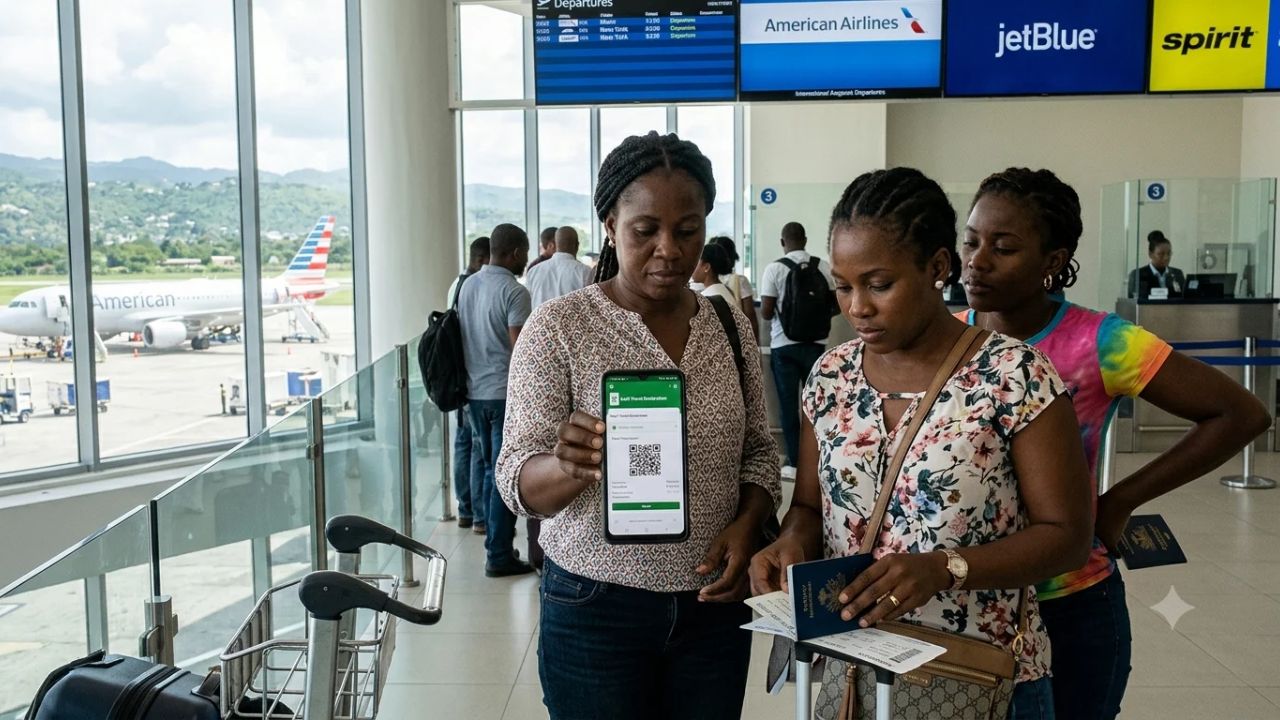
[PORT-AU-PRINCE, Oct 22, 2026] — International travelers, returning diaspora members, and cross-border transport operators face a unified digital border regime across Haiti following the government’s formal enforcement of the mandatory iKat electronic arrival and departure form. Administered by the Directorate of Immigration and Emigration (Direction de l’Immigration et de l’Émigration — DIE) under the Ministry of the Interior and Local Authorities, the digital declaration replaces traditional paper embarkation and disembarkation cards. The statutory mandate applies universally across all commercial airports, maritime harbors, and land border crossings with the Dominican Republic, requiring electronic registration for both entering and exiting the country.
[!NOTE] Executive Summary & Core Mandate Checklist
- Enforcement Effective Date: Mandatory compliance took effect on 1 October 2026, succeeding an initial operational rollout that began in March 2026.
- Bidirectional Obligation: Travelers must file separate digital declarations for both arrival and departure; a single filing does not cover a round trip.
- Universal Coverage: Appointed for all Haitian citizens, returning residents, foreign tourists, commercial delegates, and humanitarian personnel.
- Individual Submissions for Children: No family exemptions exist; infants and children require individual, dedicated iKat submissions prepared by parents or guardians.
- Submission Timeline: Primary government guidance specifies submission within 72 hours before arrival or departure, while official FAQ documentation references a 48-hour window. Travelers should file within this pre-departure timeframe.
- Verification Mechanism: Each approved submission generates a unique QR code that must be presented on a mobile device or as a printed paper copy at border checkpoints.
- Security Status Unaltered: Digital paperwork does not modify diplomatic security ratings. The U.S. Department of State maintains a Level 4: Do Not Travel advisory, and Canada and the UK enforce strict travel warnings.
HAITI iKAT DIGITAL BORDER CLEARANCE ARCHITECTURE
| Column 1 |
|---|
| ONLINE REGISTRATION PORTAL (immigration.mict.gouv.ht) |
| [ 72 to 48 Hours Prior to Departure or Arrival ] |
| +---> 1. Identity & Passport Data (Must match travel document exactly) |
| +---> 2. Journey Specifics (Flight number, vessel name, or land post) |
| +---> 3. Customs Declarations (Baggage disclosures & currency) |
| +---> 4. Public Health Information (Health status screening) |
| v |
| SYSTEM VALIDATION & QR CODE GENERATION |
| (Saved on mobile device or printed on physical paper) |
| +-----------------------+-----------------------+ |
| v v v |
| AIRPORTS SEAPORTS LAND CROSSINGS |
| * Port-au-Prince (PAP) * Labadee Port * Ouanaminthe / Dajabón |
| * Cap-Haïtien (CAP) * Port-au-Prince Bay * Malpasse / Jimaní |
| * Cap-Haïtien Docks * Belladère / Comendador |
| +-----------------------+-----------------------+ |
| v |
| IMMIGRATION CHECKPOINT SCAN & CROSS-AGENCY DATA INTEGRATION |
| (Directorate of Immigration, Customs Administration, Public Health) |
The 2026 iKat Mandate: Modernising Haitian Border Management
The institutional shift toward digital immigration control represents Haiti's effort to replace outdated paper card handling with centralized electronic databases. The transition is managed under the authority of the Ministry of the Interior and Local Authorities (Ministère de l’Intérieur et des Collectivités Territoriales), executed operationally through the Directorate of Immigration and Emigration.
The legal groundwork for the initiative dates back to an executive decree issued in late December 2025, which envisioned a consolidated electronic clearinghouse for passenger movement. The program entered its initial operational phase in March 2026, featuring targeted pilots at Cap-Haïtien International Airport and regional maritime docks. Between February and September 2026, immigration authorities conducted extensive training for border inspectors, customs officials, and public health officers to prepare frontline checkpoints for paperless processing.
Effective 1 October 2026, the iKat platform became strictly mandatory across all border entry and exit points. Under this framework, physical blue-and-white arrival slips and paper departure cards have been phased out. By digitizing passenger data collection, authorities aim to streamline border record-keeping, improve migration tracking, and establish automated data-sharing channels with international law enforcement and statistical bodies.
Importantly, the system is bidirectional. Unlike electronic travel authorizations in other jurisdictions that only inspect incoming travelers, Haiti’s iKat system governs both entry and exit. A passenger flying from Miami to Cap-Haïtien and returning a week later must execute two separate digital filings: one arrival form submitted before departing Florida, and one departure form submitted before clearing airport security in Cap-Haïtien for the homeward leg.
Universal Scope: Individual Mandates for Citizens, Visitors, and Children
The iKat requirement applies across all traveler categories without exception based on nationality or travel intent. The Directorate of Immigration and Emigration codified that every person crossing an international border checkpoint must possess an individual confirmation record.
iKAT APPLICABILITY & DOCUMENTATION REQUIREMENTS
| Column 1 |
|---|
| Traveler Category Legal Requirement Individual Submission Required? |
| ----------------- ----------------- ------------------------------- |
| Haitian Citizens Mandatory Yes (Separate form per citizen) |
| Foreign Tourists Mandatory Yes (Separate form per visitor) |
| Business Delegates Mandatory Yes (Separate form per executive) |
| Returning Residents Mandatory Yes (Separate form per resident) |
| Diplomatic Personnel Mandatory Yes (Official passport data required) |
| Children & Minors Mandatory Yes (Individual form completed by adult |
| Infants & Toddlers Mandatory Yes (Separate declaration required) |
A critical element for group and family travel planning is the strict prohibition against joint or household submissions. Parents and legal guardians cannot list spouses or dependents under a single primary application. Each child, infant, and minor must have a dedicated electronic form completed on their behalf, generating a unique registration code and QR identifier.
For families traveling with minors, this administrative requirement demands careful pre-trip coordination:
- Distinct Information Sets: Guardians must gather each minor’s individual passport number, birth date, and travel ticket details before initiating the submission process.
- Parental Authorization: The iKat declaration is an administrative data-gathering tool; it does not replace statutory legal authorizations. Minors traveling alone or accompanied by only one parent must still present official parental consent affidavits, birth certificates, and custody decrees required under Haitian domestic law.
- Confirmation Management: Parents must save and organize separate QR codes for each family member to ensure smooth presentation during airline check-in and border inspection.
Comprehensive Policy and Operational Comparison
To provide absolute clarity for international passengers, the following matrix contrasts the operational specifications of the iKat system across different transit environments.
| Administrative Dimension | Official Government Specification | Operational Traveler Action Required |
|---|---|---|
| Enforcing Authority | Directorate of Immigration and Emigration (DIE) / Ministry of the Interior | Verify updates exclusively through official government channels. |
| Mandatory Effective Date | 1 October 2026 (Preceded by March 2026 operational pilot) | Electronic declaration required for all current and future travel. |
| Directional Scope | Bidirectional (Both Arrival and Departure) | Submit two independent declarations for round-trip itineraries. |
| Applicable Gateways | International Airports, Maritime Seaports, and Land Borders | Complete registration regardless of transport mode (air, sea, road). |
| Submission Timing | 72 hours prior to journey (FAQ references 48 hours) | Submit data inside the 72-hour window once travel plans are finalized. |
| Data Verification | Biographical, Passport, Health, and Customs Declarations | Ensure submitted details match passport and airline booking precisely. |
| Output Document | Unique Alpha-Numeric Code & Digital QR Code | Download image to smartphone and carry a printed backup. |
| Data Amendment | Online modification via Form Code and Passport Number | Edit incorrect dates, addresses, or flight numbers via the portal. |
| Non-Compliance Impact | Checkpoint delays, manual reporting, potential airline denial | Complete declaration in advance to prevent secondary interrogation. |
iKAT DATA FIELDS & PROCESSING WORKFLOW
| Column 1 |
|---|
| SECTION 1: PERSONAL & PASSPORT IDENTIFICATION |
| - Full Legal Name (as printed on passport) |
| - Date of Birth, Gender, and Country of Citizenship |
| - Passport Number, Issue Date, and Expiration Date |
| SECTION 2: JOURNEY SPECIFICS & CONTACT INFORMATION |
| - Direction of Travel: Inbound (Arrival) or Outbound (Departure) |
| - Port of Entry/Exit (PAP, CAP, Ouanaminthe, Malpasse, Labadee) |
| - Transportation Details: Airline & Flight Number, Ship Name, or Vehicle Details |
| - Physical Address during stay in Haiti (Hotel, private residence, or NGO compound) |
| SECTION 3: CONSOLIDATED CUSTOMS DECLARATIONS |
| - Currency holdings exceeding statutory reporting thresholds ($10,000 USD equiv.) |
| - Commercial merchandise, agricultural goods, firearms, or restricted electronics |
| SECTION 4: PUBLIC HEALTH ASSESSMENT |
| - Communicable disease exposure disclosures and vaccination status verification |
Timing Protocol: Resolving the 72-Hour vs. 48-Hour Government Guidance
One of the most frequent points of confusion for travelers heading to Haiti is the discrepancy in official timing instructions published on government platforms. The primary administrative portal text states that declarations should be completed within the 72-hour window prior to arrival or departure. Conversely, a secondary frequently asked questions section on the same portal mentions submitting 48 hours in advance.
This inconsistency stems from the phased rollout of the IT infrastructure. The underlying database architecture was originally configured around a 48-hour submission lock during early testing at Cap-Haïtien in early 2026. However, to give travelers adequate time to complete documentation across varying time zones and flight schedules, the Directorate of Immigration expanded the operational window to 72 hours before departure.
OPTIMAL SUBMISSION TIMELINE & RISK BUFFER
| 72 HOURS TO DEPARTURE 48 HOURS TO DEPARTURE FLIGHT CHECK-IN |
|---|
| ===================== ===================== =============== |
| Portal Window Opens Target Completion Point Final Verification |
| * Gather passport numbers * Submit completed form * Present QR code |
| * Verify flight/vessel code * Download QR code to device * Carrier checks |
| * Input lodging address * Print physical paper copy * Immigration scan |
| RECOMMENDATION: File between 72 and 48 hours prior to scheduled departure. |
Travelers should adhere to the following best practices:
- Target the 72–48 Hour Window: Complete the online filing as soon as the 72-hour threshold opens, particularly when connecting flights or remote itineraries are involved.
- Avoid Premature Submission: Attempting to file weeks or months in advance will fail, as the system restricts flight and date selections to active travel periods.
- Save Offline Copies: Internet connectivity across regional transport corridors can be unstable. Passengers must capture a high-resolution screenshot of the QR code and retain a printed paper copy in their hand luggage.
- Utilise the Online Amendment Tool: If a flight is delayed, rescheduled, or canceled after filing, passengers do not need to restart the application from scratch. The iKat portal includes an edit function that permits travelers to update their journey details by entering their original form registration code and passport number.
Checkpoint Enforcement: Airports, Seaports, and Dominican Land Borders
The mandatory iKat protocol applies across all points of entry and exit within Haitian sovereign territory. Travelers must adapt their preparation to the specific characteristics of their arrival or departure checkpoint.
MULTI-MODAL BORDER ENFORCEMENT & TRANSIT HUBS
| Column 1 |
|---|
| AIR GATEWAYS |
| * Toussaint Louverture International Airport (PAP) - Port-au-Prince |
| Dedicated electronic verification desks integrated into primary immigration halls. |
| * Cap-Haïtien International Airport (CAP) - Northern Corridor |
| Regional international flights from Florida, Turks and Caicos, and the Bahamas. |
| MARITIME PORTS |
| * Labadee Private Cruise Destination |
| Coordinated passenger manifest integration for private cruise calls. |
| * Commercial Harbours (Port-au-Prince & Cap-Haïtien) |
| Merchant seamen, cargo vessel crew, and private maritime charter clearance. |
| LAND BORDER CHECKPOINTS (Haiti - Dominican Republic) |
| * Ouanaminthe / Dajabón (Northern Corridor) |
| * Malpasse / Jimaní (Central Lake Route near Port-au-Prince) |
| * Belladère / Comendador (Highland Crossing) |
| * Anse-à-Pîtres / Pedernales (Southern Coastal Crossing) |
International Airport Operations
At Toussaint Louverture International Airport in Port-au-Prince and Cap-Haïtien International Airport, commercial airlines—including regional Caribbean operators and carriers connecting to North America—are instructed to verify iKat QR codes before issuing boarding passes. Immigration booths at arrival terminals are equipped with optical barcode scanners to validate traveler declarations instantly against the central DIE database.
Maritime Ports and Coastal Gateways
For commercial shipping crew and international maritime travelers entering via Port-au-Prince or Cap-Haïtien harbors, port immigration inspectors require electronic submission before granting shore clearance. At specialized private destinations such as Labadee, cruise operators coordinate directly with the Ministry of the Interior to streamline digital compliance through pre-cleared electronic manifests.
The Haiti–Dominican Republic Land Border
The terrestrial border between Haiti and the Dominican Republic represents an essential operational environment for the iKat system. Cross-border transit through official checkpoints—such as Ouanaminthe (opposite Dajabón) and Malpasse (opposite Jimaní)—strictly requires completed iKat filings.
Travelers navigating overland routes must recognize critical operational distinctions:
- Distinct Sovereign Systems: Completing Haiti’s iKat declaration does not satisfy Dominican immigration requirements. The Dominican Republic operates its own electronic travel portal (the Dominican E-Ticket). Travelers crossing overland must complete both nations' separate digital forms: an exit declaration for the country being left, and an arrival declaration for the country being entered.
- Border Operating Conditions: Land checkpoints remain subject to volatile diplomatic relations, security closures, and restricted operating hours. Independent overland travel requires real-time verification of checkpoint statuses before arranging ground transit.
Practical Border Realities: Compliance, Penalties, and Passenger Rights
Understanding what the iKat declaration does—and does not—entail is essential for avoiding travel complications.
MYTH VS. FACT: HAITI iKAT IMPLEMENTATION
| Column 1 |
|---|
| Common Misconception Official Regulatory Reality |
| -------------------- --------------------------- |
| "iKat replaces my visa or passport" FALSE. iKat is an administrative declaration; |
| valid passports and required visas remain vital. |
| "One form covers my entire family" FALSE. Every passenger, including infants, must |
| possess a distinct individual submission. |
| "There is a fixed $500 late fine" FALSE. No universal monetary penalty is codified |
| in official rules, though severe delays occur. |
| "Unregistered travelers are refused PARTIAL. Airlines may deny boarding, but border |
| entry immediately" posts maintain manual reporting kiosks. |
| "The digital form proves Haiti is FALSE. Border digitization has zero impact on |
| safe for tourism" active Level 4 security warnings and threats. |
What Happens If You Arrive Without Submitting?
Government instructions confirm that arriving at a border post without an approved iKat submission does not relieve the traveler of the obligation. Immigration checkpoints maintain secondary clearance kiosks and paper-assisted filing counters where non-compliant passengers must submit their declarations before receiving entry stamps.
However, relying on airport or land-border completion carries severe practical disadvantages:
- Prolonged Queue Delays: Immigration infrastructure can experience localized power disruptions or internet slowdowns, turning an on-site filing into an extended wait.
- Secondary Interrogation: Passengers lacking pre-approved QR codes face heightened scrutiny from border inspectors regarding their lodging arrangements, travel purpose, and financial solvency.
- Airline Boarding Denial: While the Haitian government allows secondary completion on the ground, individual commercial airlines reserve the contractual right under international transport conventions to deny boarding at departure gates if a passenger fails to present required destination paperwork.
Financial Clarity on Fines
Online travel forums have generated rumors claiming fixed monetary fines for missing iKat forms. A thorough review of official directives issued by the Ministry of the Interior and Local Authorities confirms that no universal financial penalty has been enacted for late submissions. The consequence of non-compliance is administrative friction, boarding delays, and mandatory checkpoint processing rather than an arbitrary on-the-spot cash fine.
Security Context: Administrative Reform vs. Active Travel Advisories
While the launch of the iKat system modernizes border paperwork, international travelers must not confuse technological efficiency with personal safety. The introduction of an electronic declaration does not diminish the severe security and humanitarian crisis affecting Haiti.
INTERNATIONAL DIPLOMATIC TRAVEL ADVISORIES (2026)
| Column 1 |
|---|
| UNITED STATES DEPARTMENT OF STATE |
| * Rating: Level 4: Do Not Travel (Maintained July 2026) |
| * Advisory Factors: Kidnapping, gang violence, armed conflict, collapsed healthcare |
| * Direct Directive: "Do not travel to Haiti. If in Haiti, depart immediately." |
| GOVERNMENT OF CANADA (GLOBAL AFFAIRS CANADA) |
| * Rating: Avoid All Travel |
| * Advisory Factors: Extreme violent crime, civil unrest, emergency states |
| UNITED KINGDOM (FOREIGN, COMMONWEALTH & DEVELOPMENT OFFICE) |
| * Rating: Advise Against All Travel |
| * Consular Reality: British Embassy consular operations conducted remotely from |
| Santo Domingo; no emergency in-country assistance available |
Major diplomatic bodies maintain their most severe travel warnings for Haiti:
- The U.S. State Department: Reaffirmed its Level 4: Do Not Travel advisory in mid-2026, citing widespread gang violence, violent carjackings, kidnappings for ransom, and an incapacitated public healthcare system. U.S. government personnel face strict curfews and are prohibited from utilizing public transit or walking in Port-au-Prince.
- Consular Limitations: Foreign embassies operate with minimal essential staffing. If a traveler encounters armed violence, medical emergencies, or detention, foreign consular officials cannot dispatch emergency extraction teams or provide on-the-ground legal defense.
- Travel Insurance Invalidations: Most international travel insurance policies carry explicit exclusion clauses regarding regions under Level 4 or "Avoid All Travel" directives. Travelers entering Haiti without specialized high-risk, war-risk, or kidnap-and-ransom insurance riders operate without medical evacuation coverage.
The iKat platform is an administrative border tool designed for migration accounting. It does not provide safe passage, guarantee transit security along national highways, or alter the hazardous operating environment across urban centers.
Strategic Checklist for Travelers Heading to Haiti
For individuals traveling to Haiti for verified humanitarian missions, diplomatic assignments, or essential business, adherence to a structured preparation protocol is essential.
PRE-TRAVEL DIGITAL COMPLIANCE PROTOCOL
| Column 1 |
|---|
| [ 7 DAYS BEFORE TRAVEL ] |
| [ ] Verify passport validity (must have at least 6 months validity remaining). |
| [ ] Secure specialized medical evacuation and high-risk insurance policies. |
| [ ] Coordinate secure transport with vetted private security or humanitarian teams. |
| [ 72 TO 48 HOURS BEFORE TRAVEL ] |
| [ ] Access the official iKat portal at immigration.mict.gouv.ht. |
| [ ] Complete Section 1: Biographical information matching passport exactly. |
| [ ] Complete Section 2: Precise flight, vessel, or overland checkpoint details. |
| [ ] Complete Section 3 & 4: Accurate customs disclosures and health declarations. |
| [ ] Submit separate, individual applications for all accompanying children. |
| [ 24 HOURS BEFORE TRAVEL ] |
| [ ] Download approved QR codes to mobile device photo galleries. |
| [ ] Print two physical hard copies of each QR code confirmation sheet. |
| [ ] Re-check flight status and use portal amendment function if schedules changed. |
| [ UPON ARRIVAL AT CHECKPOINT ] |
| [ ] Present passport alongside digital or printed QR code at airline check-in. |
| [ ] Scan QR code at the Directorate of Immigration electronic inspection desk. |
By completing the iKat electronic declaration within the designated window, securing hard-copy verifications, and maintaining awareness of broader geopolitical conditions, travelers can navigate Haitian border formalities smoothly and maintain compliance with the 2026 travel rules.
Frequently Asked Questions (PAA)
Is the Haiti iKat form mandatory for all travelers in 2026?
Yes. Effective 1 October 2026, the Directorate of Immigration and Emigration made the iKat digital arrival and departure form compulsory for all passengers entering or leaving Haiti by air, sea, or land. The requirement applies equally to Haitian citizens, overseas diaspora, returning residents, and foreign visitors.
Do children and infants need their own separate iKat form?
Yes. Haitian immigration regulations explicitly require individual submissions for every traveler regardless of age. There are no family-wide or group declarations. Parents and guardians must complete an individual electronic form for each child and infant, generating a separate QR confirmation for each minor.
When should I submit the Haiti iKat digital declaration?
Primary government guidance specifies submitting the iKat declaration within 72 hours prior to scheduled arrival or departure, while official FAQ documentation references filing 48 hours in advance. To avoid processing issues, travelers should submit their information inside the 72-to-48-hour window before departure.
Does the iKat form replace a Haitian visa or passport?
No. The iKat form is an electronic embarkation and disembarkation declaration designed for migration tracking, health monitoring, and customs disclosures. It does not replace a valid passport, required entry visas, or airline boarding passes. Travelers must continue to satisfy all standard nationality-based visa requirements.
Does completing the iKat form mean it is safe to travel to Haiti?
No. The iKat form is an administrative border control procedure that has no bearing on national safety conditions. The U.S. Department of State maintains a Level 4: Do Not Travel advisory for Haiti due to armed gang violence, kidnappings, and civil unrest. Travelers must independently evaluate security conditions and maintain appropriate high-risk medical insurance.
Related Travel Guides
Disclaimer
This article is for informational and educational purposes only. It does not constitute legal, financial, or professional advice. While we strive to provide accurate and up-to-date information, travel policies, regulations, and conditions change rapidly. Always verify information with official sources before making travel decisions. Nomad Lawyer makes no representations about the accuracy, reliability, completeness, or suitability of the information provided. Readers should consult qualified professionals for advice specific to their circumstances. The views expressed in this article are those of the author and do not necessarily reflect the views of Nomad Lawyer.
Raushan Kumar
Founder & Lead Developer
Full-stack developer with 11+ years of experience and a passionate traveller. Raushan built Nomad Lawyer from the ground up with a vision to create the best travel and law experience on the web.
Learn more about our team →