
US State Department Issues Renewed Middle East Travel Warning and Flight Cancellation Alerts for 2026
The US State Department has renewed urgent travel warnings for Americans in the Middle East, citing flight cancellations and security risks amid the ongoing US-Israel-Iran conflict.

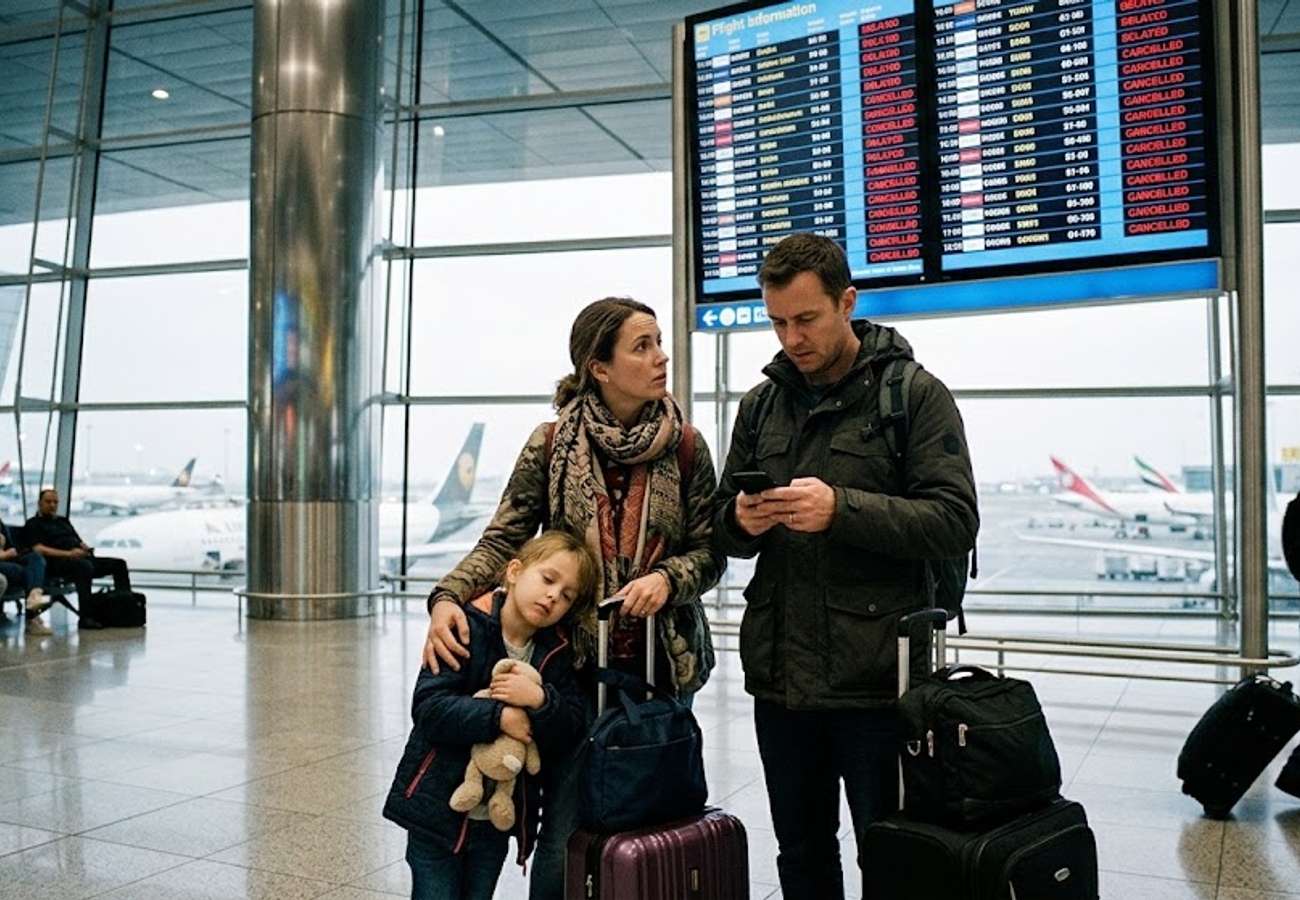
Image generated by AI
The US State Department has issued a rare, renewed worldwide caution urging Americans to reconsider travel to and through the Middle East as the US-Israel-Iran conflict enters its fifth month.
The alert follows a critical security environment where "flight cancellations, periodic airspace closures, and potential travel disruptions" are now expected. This updated guidance is not merely a regional suggestion but a response to a complex security landscape where U.S.-associated entities globally could potentially become targets.
The Shift in Regional Travel Security
The current volatility is driven by the collapse of a signed interim ceasefire agreement and a strategic struggle for control over the Strait of Hormuz. The conflict, which began on February 28, has evolved from localized skirmishes to a broader geopolitical crisis.
A pivotal moment in this escalation occurred last week when an Iranian strike resulted in the deaths of two service members in Jordan and one in northern Iraq during the controlled detonation of unexploded ordnance from a downed Iranian drone. Consequently, the U.S. Embassy in Jerusalem has warned that the threat is not confined to the Middle East; Iran and supportive groups may target U.S. businesses, institutions, and interests overseas.
For the traveler, this means the "standard" risks of international transit have been replaced by a high-probability chance of sudden itinerary changes. Some regional airlines have already postponed the resumption of previous flight schedules, while others have stripped entire routes from their boards.
Environmental and Cultural Impact on Tourism
The instability has created a ripple effect across the Mediterranean and Gulf regions. For instance, the U.S. government advised Americans to reconsider travel to Cyprus shortly after the war began in February due to Iranian tensions.
The real impact for the visitor is a transition from leisure-focused travel to "vigilance-based" movement. The U.S. Virtual Embassy Iran has specifically noted that land border-crossing procedures are subject to rapid change, meaning entry requirements can shift in hours, not days. This volatility disrupts the local tourism economies of the UAE and Jordan, where the Dubai Mall and other hubs remain open but operate under a cloud of systemic uncertainty.
On a diplomatic level, the Foreign Affairs Ministries of Qatar and Egypt are attempting to broker a de-escalation. Their focus remains on the "Memorandum of Understanding between the United States of America and the Islamic Republic of Iran," specifically regarding the freedom of navigation in the Strait of Hormuz.
Visitor Insider Tips: Navigating High-Tension Zones
For those who must travel to the region or are currently stationed there, standard travel apps are insufficient. True operational awareness requires a localized approach:
- The "Shelter First" Rule: If you are in Iran, the U.S. government advises leaving as soon as possible. If delayed, your first priority upon arrival at any lodging should be identifying the nearest reinforced shelter.
- Digital Redundancy: Do not rely on cloud-based documents. Carry physical, waterproof copies of your passport and visa, as network disruptions often accompany airspace closures.
- The STEP Advantage: Enroll in the Smart Traveler Enrollment Program (STEP). This is the primary method the State Department uses to communicate emergency evacuation routes.
- Low-Profile Movement: Avoid "U.S.-associated" hubs. This includes high-profile American hotel chains or known expat gathering spots, as these are specifically highlighted in the Jerusalem embassy's warning.
- Flight Tracking: Monitor "periodic airspace closures" via aviation-specific trackers rather than consumer apps, as the latter often lag behind official NOTAMs (Notices to Air Missions).
Long-Term Tourism Outlook
The long-term trajectory for Middle Eastern tourism depends entirely on the stability of the Strait of Hormuz. Until a permanent ceasefire is established and the "freedom of navigation" is guaranteed, the region will likely see a shift toward "essential-only" travel.
The precedent set by the coordinated attacks on Iran in February—which saw major airlines cancel all regional flights immediately—suggests that the infrastructure for a total regional shutdown is already in place. Travelers should expect a "stop-start" rhythm of availability for the remainder of 2026.
Travelers are urged to prioritize official consular information over social media trends when navigating these volatile corridors.
Related Travel Guides
Disclaimer
This article is for informational and educational purposes only. It does not constitute legal, financial, or professional advice. While we strive to provide accurate and up-to-date information, travel policies, regulations, and conditions change rapidly. Always verify information with official sources before making travel decisions. Nomad Lawyer makes no representations about the accuracy, reliability, completeness, or suitability of the information provided. Readers should consult qualified professionals for advice specific to their circumstances. The views expressed in this article are those of the author and do not necessarily reflect the views of Nomad Lawyer.
Raushan Kumar
Founder & Lead Developer
Full-stack developer with 11+ years of experience and a passionate traveller. Raushan built Nomad Lawyer from the ground up with a vision to create the best travel and law experience on the web.
Learn more about our team →