
US Park Fee Rules Divide Travelers as Zion Regulations Impact Southwest Tours
Nonresident Indian travelers face a pricing divide during the August 25 US National Park fee-free day, with surcharges and new road limits affecting itineraries.

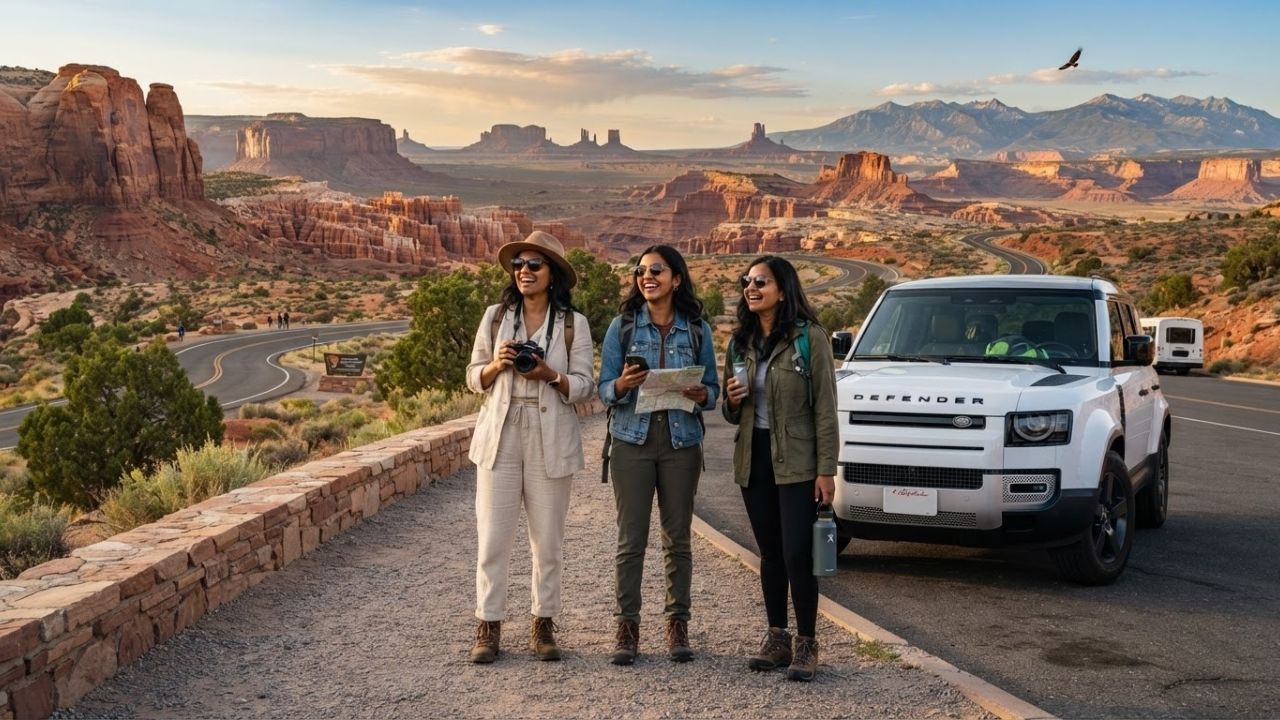
Image generated by AI
The upcoming US National Park Service fee-free entrance day on August 25, 2026, has highlighted a significant pricing divide, as nonresident international travelers remain subject to normal entry fees and hefty park surcharges.
On August 7, 2026, travel planners analyzed the financial impact of the updated US National Park Service (NPS) admission policies on long-haul markets. The upcoming fee-free day, celebrating the agency's 110th anniversary, is restricted exclusively to US citizens and residents. Nonresident visitors, including travelers from India, must still pay standard entrance rates and the $100 nonresident surcharge per person at eleven designated national parks, including Zion and Bryce Canyon, unless covered by a qualifying $250 annual pass.
The Core Transit Update
International tour operators are adjusting their booking systems to accommodate residency-based pricing and new vehicle dimension limits across Utah and Colorado.
Under current guidelines from the National Park Service, nonresident visitors aged 16 or older entering surcharge parks must pay the $100 fee in addition to standard vehicle charges ($35 for Zion, $35 for Bryce Canyon). While Canyonlands National Park charges a $30 vehicle entry fee, it is not on the surcharge list, meaning the $100 per-person fee is not active there. To manage these costs, travelers can purchase a $250 Non-Resident America the Beautiful Annual Pass, a calculation that varies depending on group size.
These adjustments coincide with broader travel bottlenecks in the region, including shuttle capacity issues discussed in Zion National Park Transit and Access Failures: Why Unplanned Visits to Utah's 4.9 Million Visitor Hub Collapse in 2026 and dark sky routing trends detailed in Night Tourism Surge in Utah Arizona and Colorado: US Dark Sky Destinations Grow in 2026.
US Southwest Road Trip Admission & Cost Comparison
The following table compares pay-as-you-go costs with the Non-Resident Annual Pass for a private vehicle visiting Zion, Bryce Canyon, and Canyonlands.
| Group Configuration (Nonresident Adults 16+) | Zion Standard & Surcharge Cost | Bryce Canyon Standard & Surcharge Cost | Canyonlands Vehicle Entrance Fee | Pay-As-You-Go Federal Total | Non-Resident Annual Pass | Estimated Savings |
|---|---|---|---|---|---|---|
| One Nonresident Adult | $135 | $135 | $30 | $300 | $250 | $50 |
| Two Nonresident Adults | $235 | $235 | $30 | $500 | $250 | $250 |
| Four Nonresident Adults | $435 | $435 | $30 | $900 | $250 | $650 |
Assumes one private, non-commercial vehicle and the passholder traveling with the party. Excludes municipal parking, guiding fees, tribal permits, and local taxes.
Route-by-Route Transit & Access Specifications
In addition to admission costs, the Southwest circuit features multiple overlapping jurisdictions and road restrictions.
- Zion Vehicle Dimensions: Since June 7, 2026, vehicles exceeding 35 feet 9 inches in length, 7 feet 10 inches in width, or 11 feet 4 inches in height have been banned from transiting the Zion–Mt Carmel Highway. Oversized recreational vehicles (RVs) and coaches must detour via Highway 20, adding 150 miles and 2.5 hours to the journey.
- Canyonlands Closures: The Grand View Point area is closed from Monday at 6:00 AM to Thursday at 4:00 PM weekly until October 1, 2026. Shafer Trail and Potash Road remain open but require high-clearance all-wheel drive (AWD) or four-wheel drive (4WD).
- US 550 (Million Dollar Highway) Construction: Following severe flooding that closed the route between Silverton and Ouray, the road reopened on July 31. Ongoing repairs south of Ouray cause 24-hour alternating traffic, an 11-foot width limit, and potential overnight closures from 9:00 PM to 5:00 AM.
- Tribal Regulations (Page & Monument Valley): Navajo Nation parks require independent fees. Antelope Canyon trips require a guided tour and carry a separate $15 tribal entrance charge per person, while Monument Valley charges $10 per person plus $15 per vehicle.
These transport limits are monitored by the Colorado Department of Transportation (CDOT) and local land management offices.
Traveler Logistics Guide
From a ground-level perspective, the best way to navigate this is to buy your Non-Resident Annual Pass online before departing and carry physical identification for gate checks.
- Residency Verification: Carry a valid passport or international driver's license. Park rangers verify residency status at entrance booths for any visitor claiming fee waivers or utilizing passes.
- Pre-booked Permits: Kanarra Falls allocates only 200 general tickets and 20 commercial tickets daily at $25 per person. Book these tickets months in advance to avoid being turned away at the trailhead.
- Itinerary Planning: If visiting Canyonlands, schedule your Grand View Point tour between Thursday afternoon and Sunday to bypass the weekly construction closures.
- Width and Weight Audits: Check your vehicle's exact specifications, including external mirrors and bike racks, before attempting to drive through the Zion–Mt Carmel tunnel to avoid fines or forced detours.
Infrastructure Impact Assessment
Enforcing targeted nonresident surcharges helps fund trail restoration, search-and-rescue teams, and shuttle fleet upgrades in high-traffic parks. However, these fees can create friction for valuable long-haul source markets like India, which sent 2.06 million visitors to the US in 2025 according to the National Travel and Tourism Office (NTTO). Reinvesting this revenue into maintaining vital links like US 550 and improving digital permit gates is essential to keep the Southwest's scenic corridors accessible to global travelers.
Related Travel Guides
Night Tourism Surge in Utah Arizona and Colorado: US Dark Sky Destinations Grow in 2026
US National Parks Adventure Travel Guide 2026: Yellowstone, Yosemite, and Denali Top Destinations
Disclaimer
This article is for informational and educational purposes only. It does not constitute legal, financial, or professional advice. While we strive to provide accurate and up-to-date information, travel policies, regulations, and conditions change rapidly. Always verify information with official sources before making travel decisions. Nomad Lawyer makes no representations about the accuracy, reliability, completeness, or suitability of the information provided. Readers should consult qualified professionals for advice specific to their circumstances. The views expressed in this article are those of the author and do not necessarily reflect the views of Nomad Lawyer.
Kunal K Choudhary
Co-Founder & Contributor
A passionate traveller and tech enthusiast. Kunal contributes to the vision and growth of Nomad Lawyer, bringing fresh perspectives and driving the community forward.
Learn more about our team →