
Zion National Park Transit and Access Failures: Why Unplanned Visits to Utah's 4.9 Million Visitor Hub Collapse in 2026
An analysis of transit bottlenecks and access failures during an unplanned visit to Zion National Park, highlighting shuttle capacity limits and permit requirements for 2026.

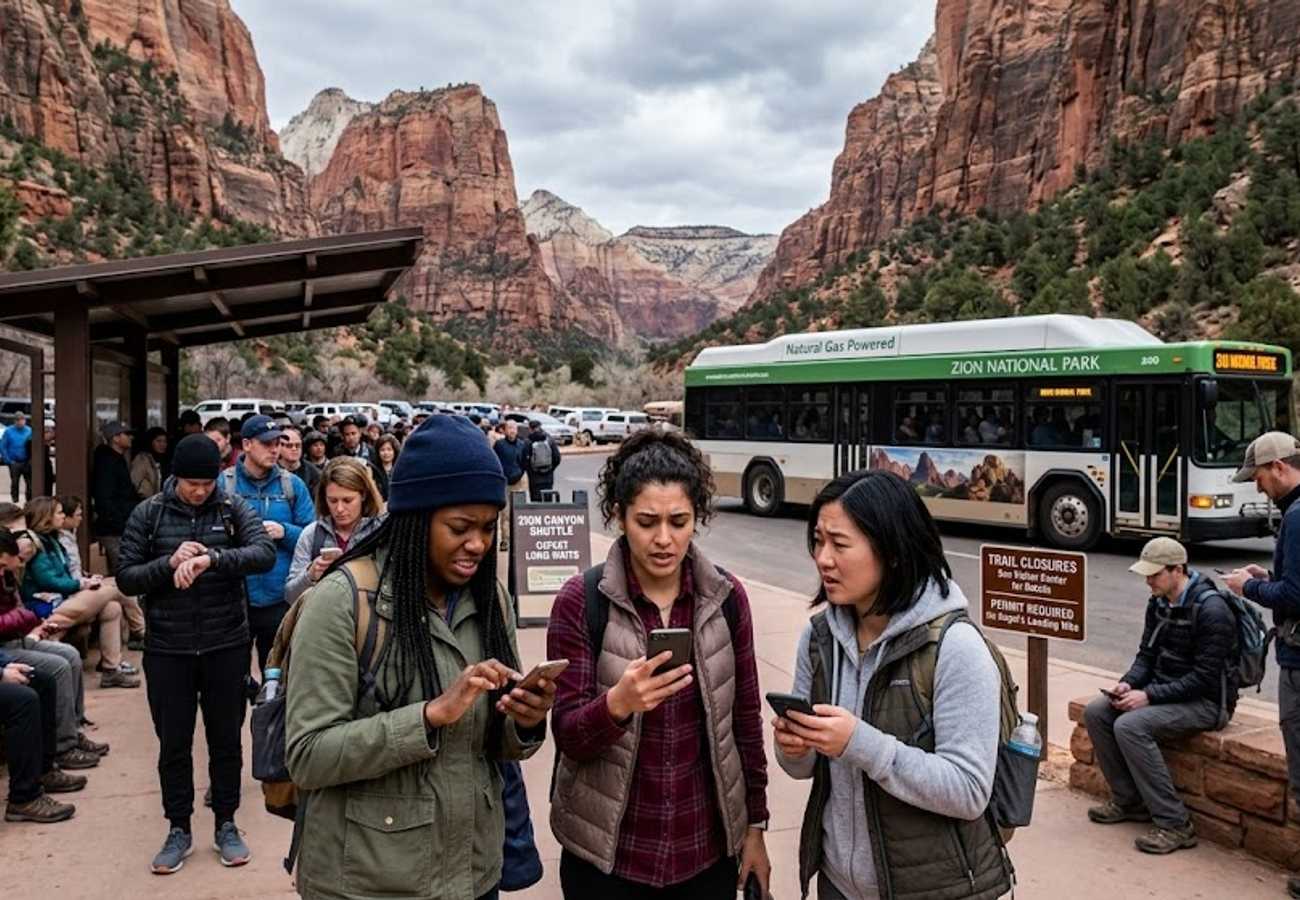
Image generated by AI
A spontaneous two-day trip to Zion National Park reveals severe transit bottlenecks, with shuttle capacity limits and closed trailheads turning a simple weekend getaway into a logistical crisis for unprepared visitors.
The Core Transit Update
The era of arriving at a major United States National Park without a structured transit and access plan is definitively over. A recent 48-hour case study of an unplanned family trip to Zion National Park in southern Utah demonstrates exactly how quickly unmanaged visits deteriorate when faced with modern infrastructure safeguards. Despite being located just four hours from the traveler's home base, the lack of pre-arrival logistics planning resulted in immediate transit failures, financial penalties, and locked-out trail access.
Zion National Park accommodated 4,946,592 visitors in 2024. To manage this volume, the park relies heavily on a mandatory shuttle system and strict permit requirements. When visitors attempt to access the park spontaneously—arriving at noon on a weekend or at 9 am on a weekday—they immediately collide with the park's transit ceiling. The primary failures observed during this unplanned visit included total parking saturation at the South Entrance, a rigid shuttle schedule that left hikers stranded, and a complete lack of awareness regarding trail closures and permit-only access systems.
Transit Schedule & Route Specifications
| Parameter | Specification |
|---|---|
| Park | Zion National Park, Southern Utah |
| 2024 Visitation | 4,946,592 |
| Entrance Fee | $35/vehicle |
| Park Entrances | South Entrance (Springdale); East Entrance (Zion Scenic Drive); Kolob Canyons Entrance |
| Nearest Cities | Springdale; St. George |
| Primary Canyon Transit | Zion Shuttle System (Does not run 24/7) |
| Springdale Parking Fee | $20 per reservation |
| Traffic Control | One-way traffic control through the Zion Tunnel |
| Restricted Access Trails | Angels Landing (Permit required), The Narrows (Top-Down permit required) |
Traveler Logistics Guide (Information Gain & Experience)
From a ground-level perspective, the best way to navigate Zion National Park is to treat it as a highly regulated transit network rather than an open-access wilderness.
Parking and Shuttle Connections Arriving at Zion without a parking strategy guarantees delays. The town of Springdale operates the primary overflow parking for the South Entrance. During this unplanned trip, securing a spot cost $20. However, due to a lack of familiarity with the digital reservation system, the travelers accidentally paid $40 by purchasing a spot for someone else's vehicle. Visitors must book Springdale parking in advance via the town's official portal and double-check license plate entries. Once parked, the shuttle is the only way to access the main canyon.
Shuttle Timing and Capacity Management The Zion Shuttle does not operate 24 hours a day. A major logistical failure on day one occurred when hikers completed the Sand Bench Trail in the Three Kings section and returned to the shuttle stop during the final hour of operations. For 45 minutes, full shuttles arrived every five minutes, bypassed the stop because no passengers were disembarking, and departed. The family was only able to board when a driver manually allowed them to squeeze onto a packed bus. Travelers must map their hike durations against the published shuttle schedule and aim to be at the stop at least two hours before the final departure.
Permit Systems and Trail Closures Day two highlighted the necessity of checking the official National Park Service (NPS) website before arrival. By arriving at 9 am, the travelers had already missed the optimal window for trailhead access. More importantly, they discovered that the Narrows was blocked off due to high waters, and the Emerald Pools stop was closed for repairs. Additionally, Angels Landing requires a specific permit to limit traffic on its narrow stretches. Because no permits were secured in advance, the most famous trails in the park were entirely inaccessible. Visitors must secure Angels Landing permits through the Recreation.gov lottery system months in advance and monitor NPS daily reports for water levels and maintenance closures.
Infrastructure Impact Assessment
The transit and access failures at Zion National Park reflect a broader shift in how United States public lands manage hyper-visitation. With 4,946,592 visitors recorded in 2024, the physical infrastructure of the canyon simply cannot support individual vehicle traffic. The implementation of the mandatory shuttle system and one-way traffic control through the Zion Tunnel are necessary engineering solutions to prevent total gridlock.
However, these safeguards have fundamentally altered the tourism landscape. Spontaneity is no longer a viable strategy. The infrastructure now demands that visitors function within a highly scheduled, permit-heavy environment. When travelers fail to adapt to these digital transit policies and timed entry systems, they experience immediate consequences: wasted financial resources, exhausted physical labor from navigating full transit lines, and the inability to access the primary attractions they traveled to see. Regional connectivity to Springdale and St. George remains strong, but the bottleneck has simply moved from the highway to the transit staging areas within the park boundaries.
[Punchy italic closing line]
Related Travel Guides
Disclaimer
This article is for informational and educational purposes only. It does not constitute legal, financial, or professional advice. While we strive to provide accurate and up-to-date information, travel policies, regulations, and conditions change rapidly. Always verify information with official sources before making travel decisions. Nomad Lawyer makes no representations about the accuracy, reliability, completeness, or suitability of the information provided. Readers should consult qualified professionals for advice specific to their circumstances. The views expressed in this article are those of the author and do not necessarily reflect the views of Nomad Lawyer.
Raushan Kumar
Founder & Lead Developer
Full-stack developer with 11+ years of experience and a passionate traveller. Raushan built Nomad Lawyer from the ground up with a vision to create the best travel and law experience on the web.
Learn more about our team →