
United States Prepares for Monumental July Fourth 2026 Travel Spike as America250 Programs Align National Celebrations with City Cultural Events: Latest Update
A massive July Fourth 2026 travel spike is anticipated as America250 programming coordinates national events with localized heritage celebrations across the country.

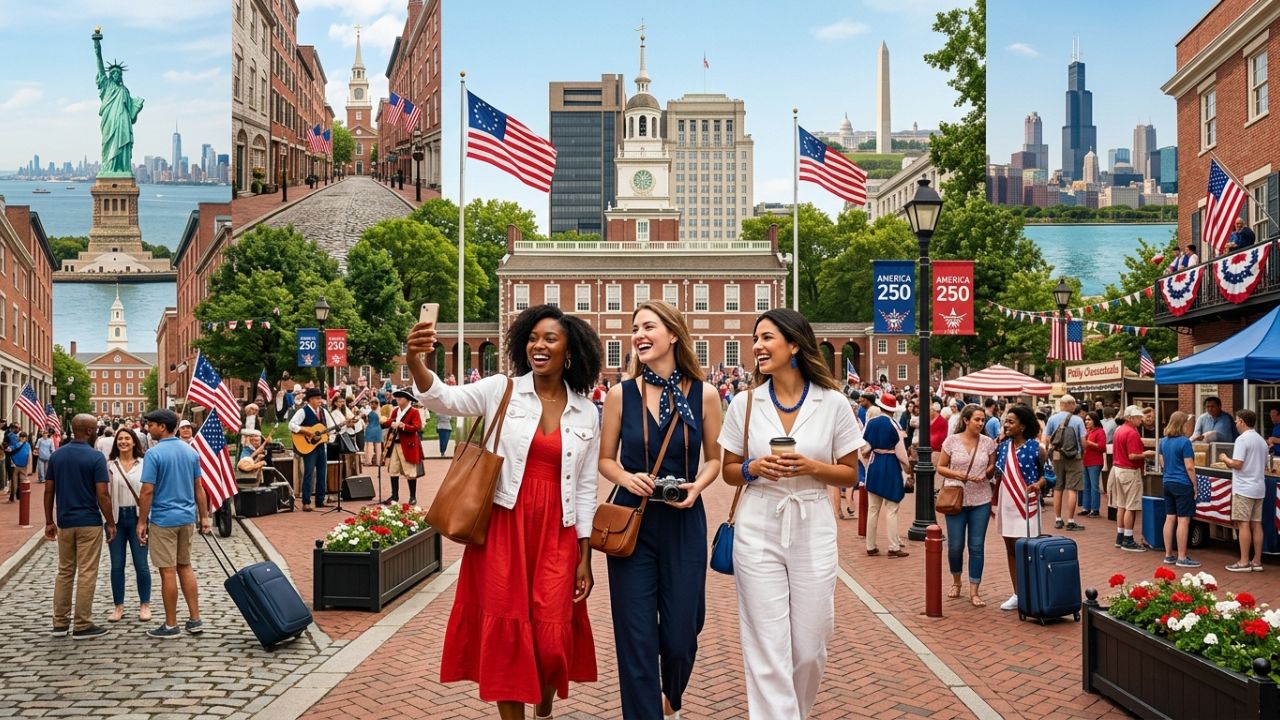
Image generated by AI
Published on June 22, 2026
The United States is bracing for an unprecedented July Fourth 2026 travel spike as the nationwide America250 initiative coordinates national semiquincentennial celebrations with city-level cultural programs. Driven by a joint effort to align historic commemorations with local festivals, exhibitions, and live performances, this milestone is set to draw millions of domestic and international visitors. To make the most of this peak travel window, travelers must navigate complex logistics and prepare for highly elevated crowd levels in major heritage destinations.
Quick Summary
- National Semiquincentennial Milestones: The nationwide celebration marks the 250th anniversary of the Declaration of Independence on July 4, 2026, boosting travel demand.
- Decentralized Celebration Framework: The America250 commission is distributing events broadly across cities and towns rather than concentrating them in a single regional hub.
- Designated Anchor Cities: Key historical destinations including Philadelphia, Boston, New York City, and Charleston are serving as primary anchors for heritage tourism.
- Chicago’s Cultural Integration: Major hubs like Chicago are integrating musical genres like blues, jazz, gospel, and house music into anniversary-themed park and museum events.
- Economic Tourism Surge: Hospitality and transportation sectors are preparing for event-driven occupancy peaks and severe traffic congestion during the summer window.
The official U.S. Semiquincentennial Commission, operating through the America250 initiative, has established a coordinated framework to support states and municipalities. By organizing a decentralized series of programs, the initiative ensures that celebrations are accessible and broadly distributed across the nation. For travelers, this means that the upcoming holiday period will offer a multi-layered tourism environment, highlighting both famous historical hubs and localized community stories.
Event and Incident Details: Core Programs of the July Fourth 2026 Travel Spike
The preparations for the 250th anniversary of the Declaration of Independence are transforming cities across the country into major heritage tourism hubs. The national commission has designated an elite group of historically significant cities for enhanced planning roles due to their foundational relevance in the country’s independence history. These include Philadelphia, Boston, New York City, and Charleston, all of which are preparing public exhibitions and commemorative events to manage the high traffic volumes.
At the same time, cultural programs in major metropolitan centers are utilizing arts and performance to engage visitors. In Chicago, extensive events are being organized through public park networks and cultural institutions. Collaborative planning between Choose Chicago and local cultural organizations began well in advance to structure music-based initiatives around themes of freedom, protest, and identity. Large-scale orchestral presentations are scheduled to pay tribute to influential figures in American film and music composition.
| Designated City / Region | Historical Significance & Planning Role | Programmed Cultural Events & Attractions | Visitor Engagement Strategy |
|---|---|---|---|
| Philadelphia, Pennsylvania | Birthplace of Independence | Commemorative exhibitions and walking tours at National Park Service (NPS) sites | Primary heritage anchor; massive occupancy and visitor demand |
| Boston, Massachusetts | Foundational Revolutionary Hub | Immersive historical storytelling, walking tours, and reenactments | Coordinated routes connecting regional heritage sites |
| New York City, New York | Early Capitol and Strategic Center | Public performances, neighborhood storytelling, and museum exhibits | Large-scale civic events distributed across boroughs |
| Charleston, South Carolina | Major Southern Revolutionary Gateway | Community heritage events and localized storytelling projects | Promoting Southern revolutionary history and regional identity |
| Chicago, Illinois | Center of Musical and Arts Innovation | Large-scale orchestral presentations and tributes in public parks | Leveraging blues, jazz, gospel, and house music exports |
To ensure visitor traffic is distributed more evenly, city governments and cultural agencies are integrating historical walking tours, live reenactments, and immersive installations into regional travel itineraries. Museums and public institutions are developing special exhibitions that connect independence-era history with contemporary civic narratives.
Risk and Impact: Transport Congestion and Hospitality Constraints
The physical scale of the national celebrations introduces specific transit and accommodation challenges during the holiday week. The expected rise in visitor volume will test the capacity of local transit systems and public resources.
The key risks and potential travel disruptions facing holidaymakers include:
- Severe Highway Congestion: The concentration of events in major urban hubs will trigger significant traffic bottlenecks on key interstate corridors during the holiday week.
- Hospitality Occupancy Surges: Major anchor cities expect hotel and lodging shortages, driving room rates up and requiring tourists to book accommodation months in advance.
- Crowd Bottlenecks at Heritage Sites: High visitor volumes at historically significant monuments and parks can lead to extended entry wait times and ticketing limitations.
- Overstretched Local Resources: Smaller municipal systems may experience operational strains due to block-level events, neighborhood festivals, and volunteer programs.
- Transit Gridlocks in Key Urban Centers: Heavy pass-through travel and holiday crowds will challenge public transit systems and parking availability in cities like Chicago and Philadelphia.
What Authorities Are Saying
America250 commission planners emphasize that the goal of the semiquincentennial is to create an accessible, shared national narrative that invites every community to participate. By avoiding a single, centralized celebration, they hope to distribute the economic benefits of tourism and foster deeper civic engagement.
Local governments and municipal agencies are advising visitors to anticipate heavy travel volumes and plan itineraries with flexibility. They stress that the convergence of historical heritage and contemporary art is the defining feature of the anniversary, and coordinating crowd flows is essential to ensuring a safe and positive experience for all.
Practical Traveler Advice: Planning for the Anniversary Travel Window
Travelers planning road trips or city stays during this historic week should implement the following strategies:
- Book Accommodations Months in Advance: Secure lodging early in primary anchor cities like Philadelphia and Boston to avoid peak occupancy surcharges.
- Utilize Public Transit in Metro Areas: When visiting crowded celebration hubs like Chicago, use park-and-ride options and municipal trains to bypass road traffic.
- Secure Walking Tour and Museum Tickets Early: Many special semiquincentennial exhibitions and historical reenactment sites will require advanced reservations.
- Explore Decentralized Community Events: Consider visiting smaller towns and regional festivals, which offer unique heritage programming with fewer crowd bottlenecks.
- Prepare for Peak Summer Weather: Pack water, sunscreen, and portable chargers, as many anniversary events are structured as outdoor park concerts or walking tours.
- Verify Road and Parking Restrictions: Check municipal websites for street closures, parade routes, and parking limits in urban center zones.
Broader Context: Strategic Tourism Plans Driving the July Fourth 2026 Travel Spike
The anticipated July Fourth 2026 travel spike highlights a strategic shift toward distributed cultural tourism across the United States. Rather than relying on a single national gathering, tourism boards are coordinating heritage storytelling with local visitor experiences.
This approach is designed to balance the economic impact of summer travel patterns, ensuring that smaller towns and regional economies benefit from holiday visitor spending. By introducing block-level celebrations, student involvement initiatives, and volunteer programs, municipal planners are creating accessible avenues for public engagement, helping to spread passenger traffic across diverse geographic regions.
What to Expect Next / Looking Ahead
Looking ahead, the integration of cultural events, historical interpretation, and travel infrastructure will continue to shape visitor behavior throughout the 2026 summer season. Municipalities will release finalized event schedules and public safety plans as the July Fourth period approaches.
Aviation and railway providers will likely introduce supplemental capacity and adjusted schedules to handle the influx of travelers. Over the next few weeks, regional tourism offices will coordinate with hospitality associations to manage crowd flows, ensuring that the unique narratives presented by each city are integrated into the shared national milestone.
Conclusion
The nationwide celebrations surrounding the semiquincentennial highlight the resilience and diversity of America's heritage tourism. By organizing travel itineraries early and staying flexible, visitors can successfully navigate the busy travel hubs and enjoy the unique local events. As the country prepares to observe this major historical milestone, advanced planning remains the key to a memorable holiday experience.
Related Travel Guides
Disclaimer: Event schedules, hotel occupancy rates, and transit regulations reflect June 2026 conditions. Travel demand, road closures, and municipal programming are subject to rapid change. Travelers are advised to check real-time traffic updates and confirm event schedules directly with local organizers before starting their journeys.
FAQ: U.S. America250 and July Fourth 2026 Travel Spike
What is America250 and what is its role?
America250 is the national initiative tasked with supporting and coordinating semiquincentennial celebrations across states and municipalities to observe the 250th anniversary of the Declaration of Independence on July 4, 2026.
Which cities are designated as primary anchors for heritage tourism?
Historically significant cities including Philadelphia, Boston, New York City, and Charleston have been designated with enhanced planning roles as primary anchors for heritage tourism.
How is Chicago celebrating the semiquincentennial?
Chicago is organizing extensive cultural park and museum events focused on music, highlighting genres like blues, jazz, gospel, and house music as cultural exports, alongside large-scale orchestral presentations.
Why are celebrations being decentralized across the US?
Decentralizing the programming helps distribute visitor traffic and the economic benefits of tourism more evenly across both major metropolitan areas and smaller regional communities.
What are the main travel risks during the July Fourth 2026 holiday?
Travelers should anticipate severe highway traffic congestion, hotel occupancy surges in major cities, transit gridlock, and extended entry lines at key historical sites.
Disclaimer
This article is for informational and educational purposes only. It does not constitute legal, financial, or professional advice. While we strive to provide accurate and up-to-date information, travel policies, regulations, and conditions change rapidly. Always verify information with official sources before making travel decisions. Nomad Lawyer makes no representations about the accuracy, reliability, completeness, or suitability of the information provided. Readers should consult qualified professionals for advice specific to their circumstances. The views expressed in this article are those of the author and do not necessarily reflect the views of Nomad Lawyer.
Kunal K Choudhary
Co-Founder & Contributor
A passionate traveller and tech enthusiast. Kunal contributes to the vision and growth of Nomad Lawyer, bringing fresh perspectives and driving the community forward.
Learn more about our team →