Dubai and Abu Dhabi Dominate Global Family Travel Rankings as UAE Leads the World in Child-Friendly Safety and Hotel Value

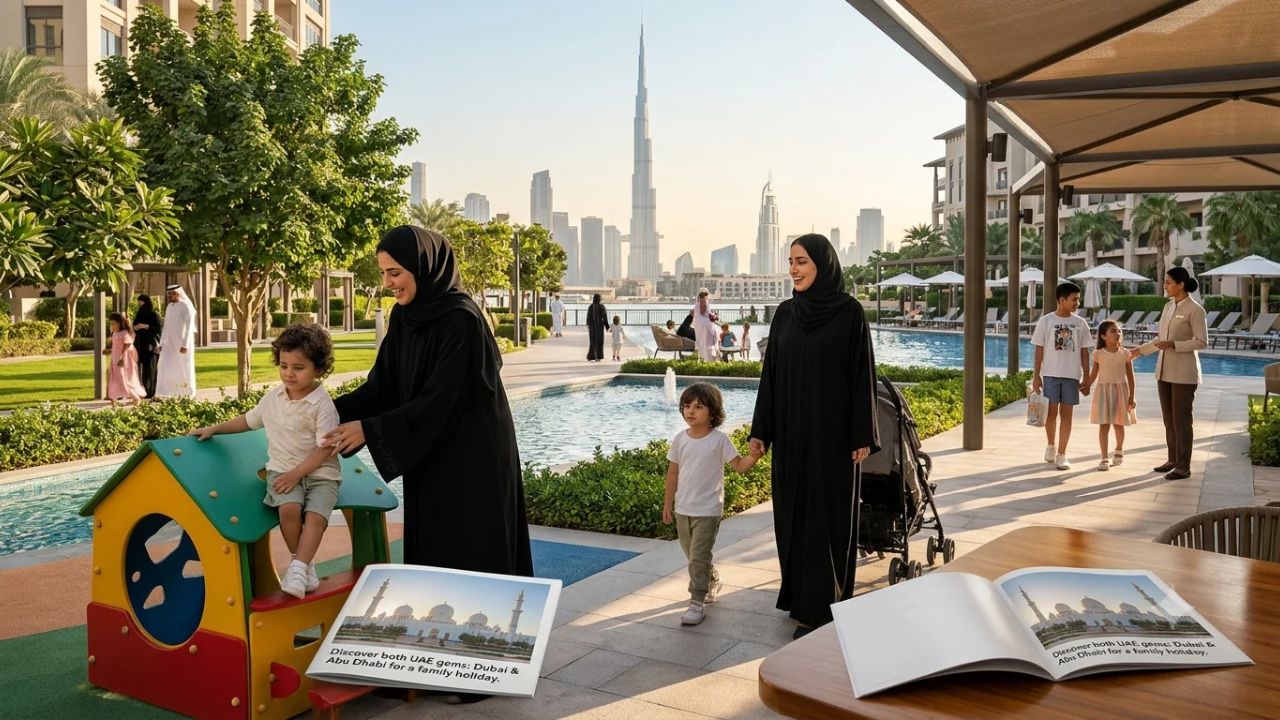
DUBAI, United Arab Emirates — The United Arab Emirates has consolidated its standing as a premier global superpower in family tourism, with Dubai securing second place worldwide and Abu Dhabi tying for fifth in the newly released World’s Most Child-Friendly Cities 2026 benchmark study.
Conducted by international travel research entity Radical Storage across 50 major metropolitan destinations, the comprehensive study evaluates 14 quantitative indicators spanning accommodation affordability, family-friendly hotel inventory, healthcare access, and the concentration of child-friendly attractions.
Dubai earned a global score of 6.5 points, finishing second only to Tokyo (6.8 points) and surpassing long-established family travel destinations including Osaka, Hong Kong, and Singapore. Simultaneously, the UAE federal capital of Abu Dhabi achieved an exceptional fifth-place global finish with 6.1 points, tying directly with Seoul.
Most significantly, both UAE metropolises claimed joint first place in the study’s global safety index, each recording an unprecedented score of 88.7 points on the Numbeo Safety Index. Outperforming international benchmarks such as Kyoto, Taipei, and Munich, the UAE’s twin urban centers demonstrate how rigorous public safety, diverse entertainment infrastructure, and surprisingly accessible hospitality pricing combine to create an optimal environment for multi-generational travelers.
+----------------------------------------------------------------------------------------------------+ | WORLD'S MOST CHILD-FRIENDLY CITIES 2026: STRATEGIC BENCHMARK SCORECARD | +----------------------------------------------------------------------------------------------------+ | Global Study Authority | Radical Storage "World's Most Child-Friendly Cities 2026" | | Study Scope & Methodology | 50 Global Metropolises Evaluated Across 14 Weighted Indicators | | Primary Data Sources | Booking.com (Hotels), Numbeo (Safety/Health), Independent Reviews | | Global Rank: Dubai | #2 in the World (Score: 6.5 / 10.0; Outperforming Singapore & HK) | | Global Rank: Abu Dhabi | #5 in the World (Tie with Seoul; Score: 6.1 / 10.0) | | Safety Index: UAE Cities | Joint #1 Worldwide: 88.7 Points (Ahead of Kyoto 85.8 & Taipei 83.5) | | Child-Friendly Attractions | Abu Dhabi: #2 Globally (29.6% Share); Dubai: #8 (86 Venues) | | Hotel Price Affordability | Dubai: #3 Lowest Average Nightly Rate (€53 / Approx. $59.10 USD) | | Family Hotel Availability | Dubai: #3 Globally (642 Dedicated Family-Certified Properties) | | Data Collection Date | September 2026 Datasets; Currency Converted to Euros & US Dollars | +----------------------------------------------------------------------------------------------------+
The Dual-Emirate Triumph: Breaking Down the Overall Global Standings
The performance of Dubai and Abu Dhabi in the 2026 index highlights the strategic emergence of the United Arab Emirates as a multi-destination family corridor. Rather than functioning solely as brief stopover points between Europe and the Asia-Pacific, the two emirates have successfully built comprehensive holiday ecosystems tailored directly to parents traveling with infants, young children, and teenagers.
In the overall rankings, Asian and Middle Eastern destinations demonstrated marked superiority over traditional European and North American cities:
GLOBAL TOP 6 CHILD-FRIENDLY METROPOLITAN RANKINGS (2026)
=============================================================================================
RANK   DESTINATION                     OVERALL COMPOSITE SCORE   PRIMARY COMPETITIVE STRENGTH
---------------------------------------------------------------------------------------------
1      Tokyo, Japan                    6.8 Points                Family Hotel Volume (1,290)
2      DUBAI, UNITED ARAB EMIRATES     6.5 Points                Safety (88.7) & Affordability (€53)
3      Kuala Lumpur, Malaysia          6.4 Points                Accommodation Value (€47)
4      Osaka, Japan                    6.3 Points                Theme Park & Rail Cleanliness
5 (Tie)ABU DHABI, UAE                  6.1 Points                Safety (88.7) & Child Attractions (29.6%)
5 (Tie)Seoul, South Korea              6.1 Points                Pedestrian Safety & Healthcare
=============================================================================================
Tokyo captured first place with 6.8 points, driven by its massive absolute inventory of family-friendly lodgings and efficient metropolitan railway systems. However, Dubai followed closely behind at 6.5 points, outperforming regional peers like Kuala Lumpur (6.4 points) and Osaka (6.3 points). Abu Dhabi’s joint fifth-place finish alongside Seoul at 6.1 points confirms that the UAE holds two distinct positions within the global top five.
This twin-city positioning gives the UAE an unrivaled competitive advantage. Separated by an easy 75-minute drive along the modern, multi-lane Sheikh Zayed Road (E11 highway), families can easily combine both destinations in a single week-long vacation.
Dubai delivers high-energy theme parks, record-breaking architectural observation decks, expansive beachfront resorts, and world-class retail environments. Meanwhile, Abu Dhabi provides a sophisticated, culture-forward counterpoint, anchored by the cultural institutions of Saadiyat Island, pristine mangrove marine sanctuaries, and the high-octane leisure attractions of Yas Island.
Unrivaled Personal Safety: Dubai and Abu Dhabi Top the World at 88.7 Points
For parents planning vacations abroad, personal safety consistently ranks as the primary consideration when selecting a destination. Concerns regarding petty theft, street harassment, pickpocketing on public transit, and unpredictable civil disruption frequently eliminate otherwise attractive tourist cities from consideration.
In this vital category, Dubai and Abu Dhabi established global leadership, jointly capturing first place with an identical score of 88.7 points on the Numbeo Safety Index.
GLOBAL SAFETY INDEX COMPARISON: TOP RANKED CITIES
=============================================================================================
CITY / DESTINATION              NUMBEO SAFETY INDEX SCORE   GLOBAL RELATIVE POSITION
---------------------------------------------------------------------------------------------
DUBAI (UAE)                     88.7 Points                 Joint #1 Worldwide
ABU DHABI (UAE)                 88.7 Points                 Joint #1 Worldwide
Kyoto (Japan)                   85.8 Points                 #3 Worldwide
Taipei (Taiwan)                 83.5 Points                 #4 Worldwide
Munich (Germany)                78.4 Points                 #5 Worldwide
=============================================================================================
The Numbeo Safety Index evaluates global traveler perceptions across multiple security indicators, measuring fears regarding muggings, robbery, car break-ins, physical assaults, and public disorder. The UAE’s scores of 88.7 placed both cities comfortably ahead of renowned Japanese and European safety models, including Kyoto (85.8 points), Taipei (83.5 points), and Munich (78.4 points).
The Architecture of Safety in the UAE
This high safety rating is rooted in deliberate, systematic urban design and governance:
- Zero-Tolerance Legal Frameworks: Strict enforcement of civil and criminal laws, paired with swift administrative penalties, results in negligible violent crime and virtually nonexistent street theft or tourist scams.
- Advanced Smart City Surveillance: Public spaces across Dubai and Abu Dhabi—including shopping malls, public beaches, hotel districts, and transit stations—are monitored by high-density digital security networks, smart police stations, and AI-enabled traffic control systems.
- Safe Nighttime Environments: Public parks, seaside promenades, and pedestrian boulevards remain well-lit and occupied by families late into the evening. Parents can comfortably walk with strollers along Dubai Marina, the JBR Walk, or the Abu Dhabi Corniche past midnight without encountering anti-social behavior or intoxication.
- Child-Proof Transit Systems: The automated, driverless Dubai Metro and modern public bus fleets in Abu Dhabi feature dedicated carriages reserved exclusively for women and children, monitored by platform security staff and equipped with clear emergency communication lines.
While safety indices reflect reported data and perceived security, travel industry analysts agree that the UAE offers parents a rare sense of peace of mind, allowing families to explore the cities with absolute freedom.
Child-Friendly Attractions: Abu Dhabi Claims World Number Two in Concentration
Beyond safety, a successful family destination must deliver engaging, high-quality entertainment for children across different developmental stages. The Radical Storage study examined thousands of global tourist attractions to calculate the proportion of activities specifically configured for younger visitors.
In this metric, Abu Dhabi achieved an extraordinary result, ranking second worldwide for the concentration of child-friendly attractions:
CHILD-FRIENDLY ATTRACTION CONCENTRATION: GLOBAL LEADERS
=============================================================================================
RANK   METROPOLIS                 CHILD-FRIENDLY VENUE SHARE   ABSOLUTE CERTIFIED VENUES
---------------------------------------------------------------------------------------------
1      Orlando, United States     38.5% of Assessed Venues     Global Theme Park Capital
2      ABU DHABI, UAE             29.6% of Assessed Venues     34 Dedicated Child Attractions
3      Kuala Lumpur, Malaysia     28.7% of Assessed Venues     Extensive Indoor Edutainment
...
8      DUBAI, UAE                 20.2% of Assessed Venues     86 Dedicated Child Attractions
=============================================================================================
Abu Dhabi recorded 34 certified child-friendly attractions, representing 29.6 percent of all tourist sites assessed in the capital. It was outpaced only by Orlando, Florida (38.5 percent), the historic theme park capital of the Western Hemisphere, while edging past Kuala Lumpur (28.7 percent).
Dubai ranked eighth globally by percentage (20.2 percent), but delivered a vastly larger absolute volume, offering 86 certified child-friendly attractions across the emirate.
Abu Dhabi’s Yas Island Entertainment Ecosystem
Abu Dhabi’s high concentration score is anchored by Yas Island, one of the world’s most densely planned leisure clusters:
- Warner Bros. World Abu Dhabi: Recognized as the world’s largest indoor air-conditioned theme park, spanning six immersive lands (including Gotham City, Metropolis, and Cartoon Junction) where toddlers and older children meet iconic DC Comics superheroes and Looney Tunes characters away from the outdoor heat.
- Ferrari World Yas Island: Home to Formula Rossa (the world’s fastest roller coaster) alongside the Family Zone, featuring scaled-down thrill rides and interactive flight simulators designed specifically for younger kids.
- SeaWorld Yas Island: A cutting-edge marine life theme park that combines state-of-the-art animal welfare habitats with interactive edutainment zones and zero-gravity dark rides.
- Yas Waterworld: A sprawling water park incorporating Emirati folklore into 45 exhilarating slides, lazy rivers, and interactive water play areas.
Beyond Yas Island, Abu Dhabi enriches children’s historical and scientific curiosity through the Children’s Museum inside Louvre Abu Dhabi, live falconry demonstrations at the Abu Dhabi Falcon Hospital, and guided kayaking through the lush, biodiverse coastal channels of the Jubail Mangrove Park.
DUBAI'S ICONIC FAMILY ENTERTAINMENT CORRIDORS
| Column 1 |
|---|
| 1. CLIMATE-CONTROLLED MEGA-PARKS |
| - IMG Worlds of Adventure: Enclosed 1.5-million-square-foot indoor theme park featuring |
| Marvel superhero rides, Cartoon Network play zones, and animatronic dinosaur valleys. |
| - The Green Planet: A living four-story vertical indoor rainforest in City Walk, housing |
| over 3,000 species of tropical plants, birds, sloths, and free-roaming primates. |
| 2. MARINE WONDERS & AQUATIC THRILLS |
| - Dubai Aquarium & Underwater Zoo: Located inside Dubai Mall; features a 48-meter |
| walk-through tunnel beneath 10 million liters of water housing 33,000 marine animals. |
| - Aquaventure Waterpark at Atlantis The Palm: The world's largest waterpark, featuring |
| 105 slides, private splash lagoons for toddlers, and shallow dolphin encounter pools. |
| 3. FUTURISTIC EDUTAINMENT & INTERACTIVE DISCOVERY |
| - Museum of the Future: Dedicated "Future Heroes" floor designed for children under 10, |
| encouraging collaborative problem-solving, science exploration, and creative building. |
| - OliOli Experimental Children's Play Museum: Experiential play galleries focused on |
| water kinetics, kinetic air tubes, and giant hand-knitted textile playgrounds. |
The Affordability Paradigm: Dispelling the "Ultra-Luxury Only" Dubai Myth
A common misconception among international travelers is that the UAE—and Dubai in particular—is exclusively a playground for millionaires, dominated by seven-star luxury hotels, private yacht charters, and prohibitive fine-dining prices.
The Radical Storage 2026 data fundamentally challenges this narrative. In the global accommodation affordability ranking, Dubai placed third worldwide among destinations offering the lowest average hotel rates:
GLOBAL HOTEL ACCOMMODATION AFFORDABILITY (AVERAGE NIGHTLY RATE)
=============================================================================================
RANK   METROPOLIS                 AVERAGE NIGHTLY HOTEL RATE   USD EQUIVALENT (SEPT 2026)
---------------------------------------------------------------------------------------------
1      Bangkok, Thailand          €35 / Night                  $39.00 USD
2      Kuala Lumpur, Malaysia     €47 / Night                  $52.40 USD
3      DUBAI, UAE                 €53 / Night                  $59.10 USD
4      Shanghai, China            €71 / Night                  $79.20 USD
=============================================================================================
With an average hotel price of €53 per night (approximately $59.10 USD), Dubai finished immediately behind Southeast Asian value leaders Bangkok (€35) and Kuala Lumpur (€47), and proved significantly more affordable than Shanghai (€71), Tokyo, Paris, or London.
The Rise of Quality Mid-Scale and Family Aparthotels
This price competitiveness stems from a deliberate diversification strategy pursued by the Dubai Department of Economy and Tourism (DET):
- Expansion of Mid-Scale Hotel Brands: Dubai has rapidly grown its inventory of high-quality 3-star and 4-star family properties. Homegrown brands like Rove Hotels provide modern, impeccably clean, and stylistically playful accommodations adjacent to major transit stations and theme parks for €45 to €75 per night, complete with self-service laundromats, game rooms, and family connecting suites.
- Proliferation of Hotel Apartments (Aparthotels): Dubai offers an exceptional density of licensed serviced apartments. In residential and commercial districts such as Al Barsha, Downtown Dubai, and Dubai Marina, families can book multi-bedroom suites featuring full kitchens, private laundry machines, and separate dining rooms. This setup allows parents to prepare meals for young children and manage laundry internally, drastically reducing daily food and dry-cleaning expenses.
- Dedicated Family Hotel Inventory: Dubai ranked third globally for the total availability of family-friendly lodgings, with 642 certified properties catering specifically to family groups, trailing only Tokyo (1,290) and Kuala Lumpur (1,145). These hotels routinely provide complimentary baby cribs, children’s swimming pools, dedicated kids' clubs with supervised activities, and free shuttles to nearby public beaches and shopping centers.
While nightly rates rise during the peak winter holiday season (late December through January), the broad base of accommodation ensures that families traveling on standard household budgets can comfortably experience the emirate.
Methodological Architecture: 14 Indicators Across 50 Global Metropolises
To maintain objective integrity, Radical Storage applied a standardized mathematical evaluation to 50 of the world’s most visited international cities.
The research synthesized three primary data streams:
THE THREE PILLARS OF RADICAL STORAGE METHODOLOGY
=============================================================================================
PILLAR 1: ACCOMMODATION INFRASTRUCTURE (DATA VIA BOOKING.COM)
* Average nightly double-room rate converted into Euros (September 2026 data).
* Total count of properties offering dedicated family suites and connecting rooms.
* Aggregate guest review scores for properties tagged with child-friendly amenities.

PILLAR 2: HEALTHCARE & CIVIC SAFETY (DATA VIA NUMBEO)
* Standardized Numbeo Safety Index measuring crime prevalence, theft, and assault risks.
* Standardized Healthcare Index assessing pediatric emergency access and medical standards.
* Analysis of local public transport cleanliness and family compartment availability.

PILLAR 3: RECREATIONAL SUITABILITY (DATA VIA INDEPENDENT USER REVIEWS)
* Ratio of attractions flagged with high child-satisfaction ratings relative to total venues.
* Availability of shade, air-conditioning, baby changing stations, and stroller access.
* Equal mathematical weighting applied across all 14 evaluated indicators.
=============================================================================================
The resulting index provides a balanced, real-world assessment of destination practicalities, measuring not just marketing claims, but the actual day-to-day conditions encountered by parents pushing strollers through city streets.
Top 10 Global Child-Friendly Cities 2026: Direct Comparison
The following comparative matrix synthesizes performance metrics across the top ten metropolises evaluated in the 2026 benchmark study:
| City | Sovereign Nation | Overall Study Score | Numbeo Safety Index | Average Nightly Hotel Rate | Child-Friendly Attraction Ratio | Certified Family Hotel Count |
|---|---|---|---|---|---|---|
| Tokyo | Japan | 6.8 / 10.0 | 76.5 Points | €88 / Night | 18.4% | 1,290 Properties |
| Dubai | United Arab Emirates | 6.5 / 10.0 | 88.7 Points | €53 / Night | 20.2% | 642 Properties |
| Kuala Lumpur | Malaysia | 6.4 / 10.0 | 47.2 Points | €47 / Night | 28.7% | 1,145 Properties |
| Osaka | Japan | 6.3 / 10.0 | 79.1 Points | €76 / Night | 16.9% | 580 Properties |
| Abu Dhabi | United Arab Emirates | 6.1 / 10.0 | 88.7 Points | €78 / Night | 29.6% | 215 Properties |
| Seoul | South Korea | 6.1 / 10.0 | 74.8 Points | €92 / Night | 17.5% | 490 Properties |
| Singapore | Singapore | 5.9 / 10.0 | 76.2 Points | €145 / Night | 22.1% | 340 Properties |
| Hong Kong | China (SAR) | 5.8 / 10.0 | 78.5 Points | €112 / Night | 19.3% | 410 Properties |
| Orlando | United States | 5.6 / 10.0 | 48.9 Points | €135 / Night | 38.5% | 520 Properties |
| Munich | Germany | 5.4 / 10.0 | 78.4 Points | €128 / Night | 14.2% | 280 Properties |
The data reveals why the UAE cities performed so strongly: while Orlando scored higher in attraction concentration, its low safety score (48.9) and high accommodation costs (€135) pulled down its overall composite standing. Conversely, while Kuala Lumpur offered inexpensive lodging, its safety rating (47.2) was surpassed by Dubai and Abu Dhabi’s world-leading 88.7.
Infrastructure Built for Families: Strollers, Metro, and Indoor Microclimates
A defining strength of the UAE’s urban environment is its purpose-built public infrastructure. Because both Dubai and Abu Dhabi underwent their primary modernization over the past three decades, municipal planners avoided the narrow cobblestones, crumbling staircases, and inaccessible subway systems that frustrate parents traveling through historic European capitals.
THE FAMILY ACCESSIBILITY ARCHITECTURE IN THE UAE
=============================================================================================
CLIMATE-CONTROLLED URBAN DESIGN                 SEAMLESS PUBLIC MOBILITY
* Air-conditioned pedestrian walkways link      * Dubai Metro features level platform boarding
  hotels directly to shopping & attractions.      with zero step-gaps for strollers.
* Shaded park pavilions, outdoor misting fans,  * Every metro station equipped with high-speed
  and temperature-controlled beach lagoons.      elevators and spacious family restrooms.
                     \                                         /
                      \                                       /
                       v                                     v
            +-------------------------------------------------------+
            |      GOLD STANDARD PEDIATRIC & CIVIC SERVICES         |
            | - Free stroller rentals available at mall guest desks |
            | - Dedicated nursing and infant changing parent rooms  |
            | - JCI-Accredited pediatric hospitals & 24/7 pharmacies|
            | - Dubai (DXB) & Abu Dhabi (AUH) family airport lanes  |
            +-------------------------------------------------------+
Navigating the Climate
While mid-summer temperatures (June through August) exceed 42°C, the UAE has engineered an indoor microclimate infrastructure unmatched anywhere on earth. Enclosed entertainment complexes, indoor ski resorts (Ski Dubai), air-conditioned bio-domes, and vast shopping malls connected by sheltered walkways allow families visiting during warmer shoulder months to enjoy active, engaging holidays without prolonged heat exposure.
During the peak tourism window from November through April, the climate is idyllic, offering daytime temperatures between 22°C and 28°C with virtually zero rainfall, creating perfect conditions for open-air beach activities, desert safaris, and al fresco dining.
Actionable Family Travel Blueprint: Planning the Definitive 7-Day UAE Itinerary
To maximize value and experience the full spectrum of both top-ranked cities, families should structure a balanced seven-day itinerary combining Dubai’s dynamic urban attractions with Abu Dhabi’s cultural and leisure landmarks:
THE DEFINITIVE 7-DAY DUBAI & ABU DHABI FAMILY BLUEPRINT
| Column 1 |
|---|
| DAY 1: ARRIVAL & ICONIC DOWNTOWN DUBAI |
| - 10:00: Check into a family-friendly hotel apartment near Downtown Dubai or Al Barsha. |
| - 14:00: Explore Dubai Aquarium & Underwater Zoo inside Dubai Mall. |
| - 17:30: Ascend At The Top - Burj Khalifa (Levels 124/125) for panoramic sunset views. |
| - 19:30: Watch the Dubai Fountain musical show while dining outdoors at Souk Al Bahar. |
| DAY 2: FUTURE TECH & VERTICAL RAINFORESTS |
| - 09:30: Interactive morning at the Museum of the Future (dedicated Future Heroes zone). |
| - 13:00: Lunch at City Walk; explore the tropical canopy inside The Green Planet. |
| - 16:30: Afternoon sensory exploration at OliOli Children’s Museum in Al Quoz. |
| DAY 3: AQUATIC THRILLS ON THE PALM JUMEIRAH |
| - 10:00: Full day at Aquaventure Waterpark at Atlantis The Palm (105+ slides & lagoons). |
| - 17:30: Monorail ride along the Palm trunk; stroll the scenic Palm West Beach promenade. |
| DAY 4: OLD DUBAI HERITAGE & DESERT SUNSET |
| - 09:30: Ride a traditional wooden Abra boat across Dubai Creek for 1 AED (€0.25). |
| - 11:00: Browse colorful displays at the Spice and Gold Souks in Deira. |
| - 15:30: Gentle family desert safari: 4x4 dune drive, camel rides, and Bedouin dinner. |
| DAY 5: TRANSFER TO ABU DHABI & CULTURAL WONDERS |
| - 09:00: Private transfer or taxi along E11 highway to Abu Dhabi (75 minutes). |
| - 11:00: Check into a resort on Yas Island or Saadiyat Island. |
| - 14:00: Visit Louvre Abu Dhabi; explore the interactive Children’s Museum galleries. |
| - 17:00: Marvel at the sunset over the Sheikh Zayed Grand Mosque's white marble domes. |
| DAY 6: YAS ISLAND THEME PARK EXTRAVAGANZA |
| - 10:00: Morning superhero encounters at Warner Bros. World Abu Dhabi (climate-controlled) |
| - 15:00: Cool off at Yas Waterworld or explore polar marine realms at SeaWorld Abu Dhabi. |
| - 19:00: Family dinner at Yas Marina, watching yachts and racing circuits. |
| DAY 7: NATURE MANGROVES & FAREWELL |
| - 09:00: Guided morning boardwalk tour or tandem kayaking at Jubail Mangrove Park. |
| - 13:00: Traditional Emirati lunch at Al Qana waterfront; visit The National Aquarium. |
| - 17:00: Departure via Zayed International Airport (AUH) or return to Dubai (DXB). |
Essential Practical Tips for Parents
- Booking Multi-Park Passes: When visiting Yas Island in Abu Dhabi, purchase a bundled "Multi-Park Ticket" online in advance. Buying a combined 2-Park or 3-Park pass (covering Ferrari World, Warner Bros., Yas Waterworld, or SeaWorld) reduces per-park admission expenses by more than 40 percent compared to single gate tickets.
- Flight Flexibility (Open-Jaw Ticketing): Book an "open-jaw" or multi-city airline ticket, flying into Dubai International (DXB) with Emirates and flying home from Zayed International Airport (AUH) with Etihad Airways. This eliminates the need to backtrack between cities on departure day.
- Dining Strategies: Take advantage of Dubai and Abu Dhabi’s vast international casual dining scene. Global family staples—from authentic Italian pizzerias and Lebanese grill houses to fresh Asian noodle bars—are omnipresent in every mall food court and beachfront promenade, offering nutritious, freshly cooked family meals for €8 to €15 per person.
As Dubai and Abu Dhabi celebrate their high rankings in the World's Most Child-Friendly Cities 2026 study, they reaffirm that thoughtful destination planning, proactive safety management, and diverse hospitality offerings can transform an entire nation into the ultimate playground for global family travelers.
Related Travel Guides
- Navigating Dubai with Children: A Complete Guide to Theme Parks, Beaches, and Transit
- Abu Dhabi Cultural and Island Exploration: Yas Island, Saadiyat, and Historic Forts
- Middle East Aviation Mega-Hubs: Navigating Transit Across Dubai and Abu Dhabi
- Top Global Destinations for Multi-Generational Family Travel: Practical Planning Tips
This article is for informational purposes. Flight routes, passenger regulations, visa rules, and transit advisories are subject to change by airlines and aviation authorities. Readers are advised to verify schedules and travel documentation with relevant carriers and border agencies before departure.
Related Stories
Canada Budget 2026 Unveils Nearly $30 Billion Ten-Year Plan to Tackle Homelessness and Revitalize Urban Destination Hubs
Manila to the Islands: Inside the Battle Over Regional Turboprop Flights at NAIA