Australia and Oceania Transform Destination Marketing as Live-Commerce Super-App Partnerships Route Asian Travel Demand to Regional Tasmania and Beyond

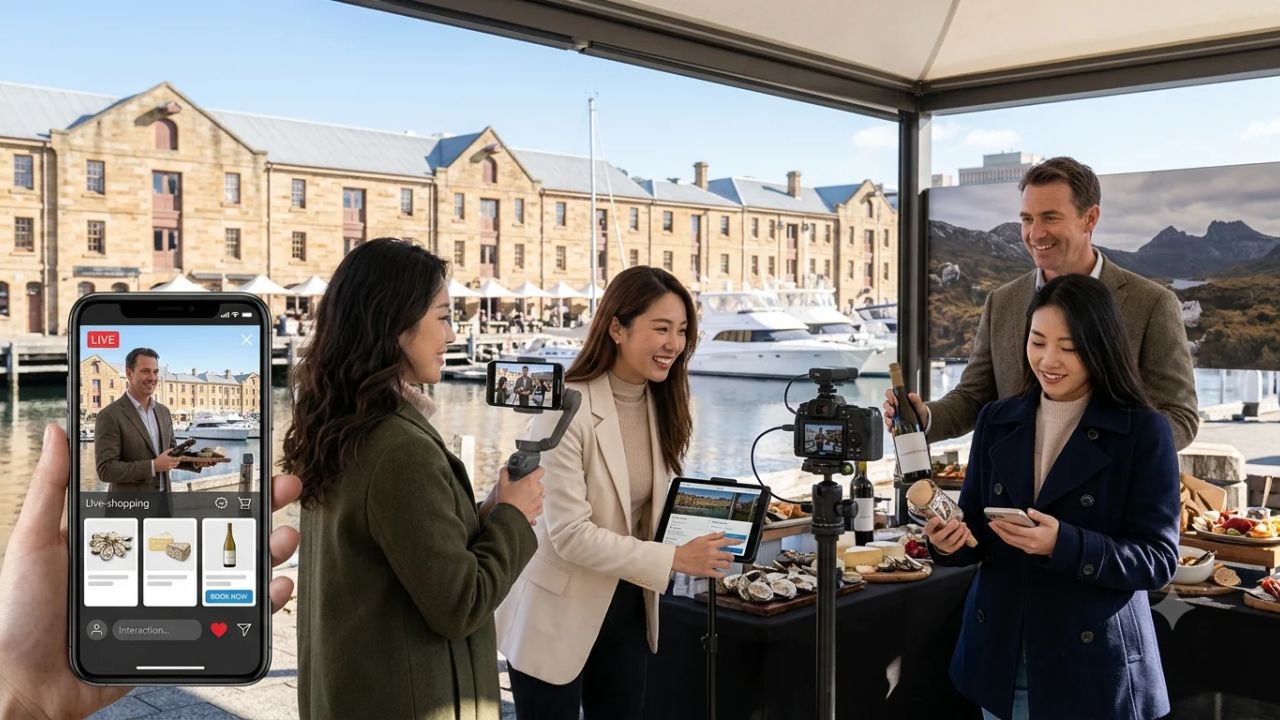
HOBART, Australia — State destination marketing authorities across Australia and New Zealand are overhauling traditional international advertising, executing direct live-commerce partnerships with Asian digital super-apps to channel high-spending visitors into peripheral regional economies.
The strategic transition, led by the Tasmanian Government’s landmark trade mission to mainland China and Hong Kong in November 2026, combines high-definition interactive streaming with closed-loop transaction engines on platforms including Alibaba, Fliggy, and Trip.com.
By replacing passive broadcast promotions with instantaneous mobile checkout architectures, destination leaders are generating immediate booking commitments while actively redirecting travel footfall away from congested metropolitan centers into fragile wilderness areas and rural communities.
The initiative marks an essential realignment in Southern Hemisphere tourism governance. Rather than chasing raw arrival headcounts that risk overwhelming local municipal infrastructure and delicate biomes, regional tourism boards are deploying algorithmically targeted travel incentives to balance severe winter seasonality deficits, elevate net visitor expenditure per capita, and protect natural assets across Oceania.
+----------------------------------------------------------------------------------------------------+ | OCEANIA LIVE-COMMERCE TOURISM DIPLOMACY SCORECARD: NOVEMBER 2026 | +----------------------------------------------------------------------------------------------------+ | Lead Government Entity | Tasmanian State Government (Department of State Growth & Tourism) | | Primary Political Envoy | Premier Jeremy Rockliff (Trade Delegation to China and Hong Kong) | | Core Commercial Partners | Alibaba Group, Fliggy, Trip.com, WeChat Pay, Alipay | | Single Broadcast Reach | 70 Million Home-Screen Impressions on Alibaba; 538,000 Live Viewers | | Key Australian Hubs | Hobart, Launceston (UNESCO Gastronomy), Queenstown (West Coast) | | Trans-Tasman Benchmark | Queenstown Lakes, New Zealand (Destination Carbon Zero by 2030) | | Trail Infrastructure Asset | 400+ km Purpose-Built Mountain Bike Network (Mount Owen Trails) | | Off-Season Mobilization | 700+ Tasmanian Regional Tourism Operators Coordinated in Winter | | Core Statutory Frameworks | 2030 Strong Plan for Tasmania’s Future; 2030 Visitor Economy (T21) | | Regional Dispersal Targets | Tamar Valley, Huon Valley, Atherton Tablelands, Daintree Rainforest | +----------------------------------------------------------------------------------------------------+
The Structural Imperative: Moving Beyond Legacy Tourism Marketing
For more than three decades, tourism boards across Australia and New Zealand relied on an advertising blueprint established during the pre-digital era. Destination marketing organizations spent tens of millions of dollars on television broadcasts, international trade expositions, and print public relations campaigns aimed at building broad brand awareness.
Under this legacy framework, international prospective travelers were funneled through an inefficient, multi-layered consumer journey. Consumers who saw an advertisement were forced to navigate between independent airline ticket websites, wholesale travel package brokers, domestic car rental desks, and third-party hotel consolidators. This friction generated catastrophic drop-off rates between initial destination interest and confirmed booking transactions, stretching average decision cycles over months.
THE STRUCTURAL SHIFT IN DESTINATION MARKETING
=============================================================================================
LEGACY BROADCAST MODEL (PRE-2026)               LIVE-COMMERCE SUPER-APP ARCHITECTURE
* Multi-Month Awareness-to-Booking Funnel       * Instantaneous In-Stream Mobile Checkout
* Passive Television & Print Advertisements     * Interactive High-Definition Live Broadcasts
* High Friction Across Third-Party Booking Sites* Closed-Loop Digital Wallets (Alipay, WeChat)
* Prioritized Raw Arrival Volume Headcounts     * Prioritizes Net Yield & Dispersal Per Capita
* Uncontrolled Seasonal Winter Insecurity       * Algorithmically Directed Counter-Seasonal Stays
=============================================================================================
Simultaneously, the global tourism industry operated under an outdated volume-based metric paradigm. Tourism ministers routinely measured success through gross passenger arrivals rather than net economic yield, average length of stay, or local environmental carrying capacity.
In ecologically sensitive island environments like Tasmania or high-traffic gateways like Tropical North Queensland, this volume obsession created acute structural vulnerabilities:
- Low-Yield Congestion: Large tour buses carrying budget package groups concentrated heavily in narrow urban strips, creating street congestion, wearing down heritage sites, and crowding national park paths without leaving meaningful revenue in regional family-run businesses.
- Extreme Seasonal Boom-and-Bust Cycles: Temperate Southern Hemisphere destinations faced sharp demand drops between May and August. These winter slumps caused severe hospitality layoffs, cash-flow insolvencies among rural operators, and underutilized public capital assets.
To dismantle these structural defects, destination leaders are implementing counter-seasonal digital growth models that replace passive advertising with direct, transactional technology alliances.
Mechanics of Live-Stream Commerce and Digital Ecosystem Integration
Live-stream commerce represents a radical departure from traditional promotional campaigns. In mainland China and across wider East and Southeast Asia, consumer purchasing behavior is dominated by closed-loop digital super-apps.
Platforms such as Fliggy (Alibaba Group’s travel service platform), Trip.com, Douyin, and WeChat seamlessly merge social media content, live algorithmic video streaming, geolocation mapping, and embedded payment systems into a single mobile interface.
CLOSED-LOOP SUPER-APP CONVERSION ENGINE
=============================================================================================
TRADITIONAL PROMOTIONAL CAMPAIGN:
[External Billboard / Video Ad] ---> [Manual Search on Search Engine]
                                ---> [External Hotel Landing Page]
                                ---> [Manual Currency Conversion & Passport Entry]
                                ---> 85%+ DROP-OFF RATE BEFORE FINAL CHECKOUT

CLOSED-LOOP SUPER-APP LIVE-STREAM:
[Interactive 4K Broadcast from Vineyard / Fjord]
                   |
                   v
[Viewer Taps Embedded Interactive Product Widget on Screen]
                   |
                   v
[Biometric Authentication via Alipay / WeChat Pay / Face ID]
                   |
                   v
[CONVERSION COMPLETE IN UNDER 15 SECONDS]
* Open-Dated, Fully Refundable Regional Voucher Locked In
* Immediate Working Capital Transferred to Regional Lodge Operator
* Automated Geofenced Redemptions Valid Across Off-Peak Calendar Windows
=============================================================================================
Closed-Loop Super-Apps Versus Fragmented Multi-Page Funnels
When an Asian consumer watches a live-stream produced on location in Australia, there is no need to switch browser tabs, enter credit card credentials, or calculate exchange rates. Everything is executed within the super-app environment:
- Frictionless Biometric Purchasing: Viewers purchase travel itineraries with a single thumbprint or facial scan, locking in packages in seconds.
- Open-Dated Flexible Vouchers: Travelers purchase modular, open-dated travel vouchers redeemable across designated shoulder and winter periods. The consumer secures competitive early-bird pricing, while the regional hospitality business receives immediate upfront liquidity months before the traveler sets foot in the country.
- Risk-Free Cancellation Policies: Vouchers are fully refundable if unredeemed, removing purchase hesitation while capturing high booking intent.
- Bundled Experiential Packages: Instead of single hotel rooms, broadcasts package multi-night wilderness lodge stays bundled with local car rental, regional national park passes, and boutique farm-gate tasting vouchers.
The November 2026 Alibaba and Fliggy State Mission Benchmark
The commercial power of this digital model was demonstrated during the Tasmanian Government's trade mission to mainland China and Hong Kong. Led by Tasmanian Premier Jeremy Rockliff, the state delegation bypassed conventional trade show booths to negotiate directly with senior executive leadership at Alibaba Group and Trip.com in Hangzhou and Shanghai.
The synchronized digital activation achieved unprecedented exposure across mainland China:
- 70 Million Consumer Impressions: Prime promotional real estate on the Alibaba mobile app homepage exposed Tasmania’s wilderness and culinary assets to seventy million users within a single three-hour operating window.
- 538,000 Concurrent Live Viewers: A dedicated interactive live-stream hosted on Fliggy attracted 538,000 active prospective travelers, who engaged directly with presenters, asked real-time questions about seasonal wildlife, and purchased experiential travel vouchers.
Premier Jeremy Rockliff affirmed that this direct engagement dramatically expanded Tasmania’s global profile, securing high-yield visitors who stay longer, spend more, and distribute capital across local businesses throughout the state.
Urban Curation: Hobart’s Cultural Waterfront and Launceston’s Gastronomy
The success of live-commerce relies on place-based narrative storytelling rather than generic tourism slogans. Broadcasts are formatted to captivate affluent, culturally curious independent travelers living in top-tier Asian metropolitan hubs such as Shanghai, Hangzhou, Beijing, and Shenzhen.
PLACE-BASED NARRATIVE CURATION: TASMANIA'S TWIN HUBS
| Column 1 |
|---|
| 1. HOBART: WATERFRONT HERITAGE & AVANT-GARDE ARTS |
| - Broadcast Locations: Historic 1830s sandstone docks of Salamanca Place and the |
| subterranean galleries of the Museum of Old and New Art (MONA). |
| - Content Focus: Dark Mofo winter festival aesthetics, wild southern rock lobster, |
| single-malt whiskies, and cool-climate Pinot Noir from the Derwent Valley. |
| - Conversion Funnel: Boutique dockside accommodations bundled with private curator |
| tours and culinary masterclasses, routing capital directly to independent restaurants. |
| 2. LAUNCESTON: UNESCO GASTRONOMY & COOL-CLIMATE VITICULTURE |
| - Broadcast Locations: Dramatic cliffs of Cataract Gorge and vineyards of Tamar Valley. |
| - Content Focus: Black Périgord truffle hunting demonstrations, farmhouse cheeses, |
| cool-climate sparkling wines, and heritage orchard heritage. |
| - Conversion Funnel: Real-time reservation links for agritourism lodges, self-drive |
| electric vehicle rentals, and private cellar-door encounters in northern valleys. |
By presenting Launceston through the lens of its designation as a UNESCO City of Gastronomy, live-stream hosts connect viewers directly with artisan producers. When a master truffle hunter displays a freshly unearthed black truffle on camera, viewers can instantly click a screen prompt to reserve a winter harvest experience for July, locking in regional dispersal months in advance.
Engineering Yield-Driven Regional Dispersal Against Overtourism
Unmanaged mass tourism imposes severe ecological and social costs on regional and island ecosystems. The United Nations World Tourism Organization (UNWTO) notes that overtourism occurs when visitor volumes exceed the physical, ecological, or socio-cultural carrying capacity of a destination, degrading resident quality of life and visitor satisfaction. In addition, the World Economic Forum’s Travel & Tourism Development Index underscores that enduring destination resilience depends on containing spatial crowding and dampening demand volatility.
To prevent overtourism while maximizing economic benefits, destination authorities across Oceania utilize dynamic algorithms within super-apps to distribute travelers across peripheral gateways:
| Regional Gateway | Environmental & Structural Pressure Points | Strategic Dispersal Mechanism | Algorithmic Super-App Intervention | High-Yield Target Experience |
|---|---|---|---|---|
| Queenstown (Tasmania) | Historic mining valley; fragile temperate rainforest; remote road infrastructure. | Independent travellers are routed along the West Coast Wilderness corridor. | Geofenced platform vouchers tied to multi-night stays in boutique heritage hotels. | Mountain biking on Mount Owen trails, wilderness river cruising, boutique eco-retreats. |
| Hobart & Southern Regions | Waterfront vehicle congestion; localized heritage site wear at historic precincts. | Dispersal of visitors into Huon Valley, Derwent Valley, and Bruny Island corridors. | Bundled itinerary discounts requiring validation at rural farm-gates and distilleries. | Dark-sky aurora viewing, paddock-to-plate dining, luxury wilderness lodges. |
| Cairns & Tropical North Queensland | Marine park coral stress; inner-reef site overcrowding; urban esplanade congestion. | Redirection of visitor flows to outer-barrier reefs, Atherton Tablelands, and Daintree rainforest. | Priority placement for eco-accredited marine expeditions and rainforest eco-lodges. | Citizen-science marine research diving, private Indigenous cultural rainforest tours. |
| Queenstown Lakes (New Zealand) | Severe pressure on municipal roads, water services, and resident worker housing. | Implementation of the regenerative framework toward Carbon Zero by 2030. | Platform packaging restricted to verified carbon-neutral lodgings and off-peak trails. | Low-impact helihiking glaciology tours, regenerative vineyard retreats. |
ALGORITHMIC DISPERSAL LOGIC WITHIN SUPER-APP PLATFORMS
=============================================================================================
STAGE 1: URBAN SEARCH DETECTION
[Consumer Searches "Hobart Hotel" or "Cairns Resort" on Fliggy / Trip.com]
                   |
                   v
STAGE 2: DYNAMIC INCENTIVE INJECTION
[Platform Pop-Up Unlocks $150 AUD Travel Credit]
* Condition: Booking must include at least 2 nights in Queenstown (Tasmania)
  or Atherton Tablelands (Queensland).
                   |
                   v
STAGE 3: BUNDLED REGIONAL MOBILITY
[Automated Packaging of Self-Drive Rental Vehicle + Regional Heritage Pass]
                   |
                   v
STAGE 4: DECENTRALIZED ECONOMIC YIELD
[Capital Disperses Directly into Remote Lodges, Rural Cafes, and Guiding Operations]
=============================================================================================
Prioritizing Yield Over Arrival Headcounts
Data from Tourism Research Australia confirms that Free Independent Travelers (FIT) display an economic profile vastly superior to budget coach tour groups:
- Extended Length of Stay: Independent travelers remain in regional destinations an average of 3.5 times longer than group coach tourists.
- Higher Spend Per Night: FIT travelers spend substantially more per visitor night on local services, including guided eco-treks, bespoke culinary tastings, and regional vehicle rentals.
- Natural Geographic Spread: Driving private or rental vehicles, independent travelers disperse capital into peripheral rural valleys, staying in boutique bed-and-breakfasts that cannot accommodate 50-passenger tour buses.
Case Study: Mountain Biking and Heritage in Queenstown, Tasmania
In the rugged mining landscape of western Tasmania, Queenstown serves as a primary example of adventure-led regional dispersal. The Tasmanian Government and local councils have developed more than 400 kilometers of purpose-built mountain bike trails across the state, highlighted by the dramatic trail networks carved into the orange-hued slopes of Mount Owen.
State mountain biking analyses confirm that adventure-focused visitors generate high economic returns for local dining, specialized gear rentals, and heritage hotels. Live-commerce broadcasts highlight the stark visual beauty of Mount Owen, the historic steam-powered West Coast Wilderness Railway, and Gordon River eco-cruises, funneling independent travelers into western mining communities that previously struggled to capture international tourist spend.
Tropical North Queensland: Preserving the Great Barrier Reef
In Tropical North Queensland, Cairns faces the ongoing challenge of managing international footfall while safeguarding fragile marine ecosystems. Through strategic coordination between Tourism and Events Queensland and digital booking engines, visitor traffic is systematically diverted away from heavily visited inner reefs toward outer-barrier marine protected zones.
Itineraries promoted during live-stream broadcasts emphasize small-group citizen-science expeditions, luxury eco-resorts in Port Douglas, and Indigenous-guided cultural walks through the ancient Daintree Rainforest, ensuring high economic yields while minimizing environmental wear on sensitive coral systems.
Trans-Tasman Regenerative Benchmark: Queenstown Lakes, New Zealand
Across the Tasman Sea, the Queenstown Lakes District Council and Destination Queenstown have instituted a binding destination blueprint entitled Travel to a Thriving Future, committing the region to achieve Carbon Zero by 2030.
Recognizing that unmanaged visitor numbers strain local road systems, wastewater networks, and worker housing, the district has eliminated mass low-yield tour promotions. Instead, partnerships with digital travel platforms are restricted to certified carbon-neutral accommodation providers, regenerative vineyard stays in Central Otago, and low-impact glaciology heli-hiking expeditions, ensuring that tourism actively supports ecosystem regeneration and community well-being.
Counter-Seasonal Engineering and Flattening the Off-Peak Deficit
Seasonal volatility remains one of the most damaging economic challenges confronting Southern Hemisphere tourism destinations. Between May and August, regional operators in temperate zones experience sharp drops in domestic visitation, leading to seasonal business closures, reduced worker hours, and diminished returns on physical capital.
THE CLIMATIC AND SEASONAL INVERSION ARBITRAGE
=============================================================================================
NORTHERN HEMISPHERE (CHINA / S.E. ASIA)         SOUTHERN HEMISPHERE (TASMANIA / NZ)
* June to August: Scorching Summer Heatwaves    * June to August: Crisp, Invigorating Winter
* Peak Outbound Summer Vacation Window          * Historically Depressed Domestic Visitation
* Urban Residents Seek Cool Escapes             * Abundant Off-Peak Luxury Lodge Capacity
                     \                                         /
                      \                                       /
                       v                                     v
            +-------------------------------------------------------+
            |      STRATEGIC CLIMATIC MATCHMAKING VIA FLIGGY        |
            | Marketing Crisp Southern Winters as a Premium Luxury  |
            | Fireside Storytelling, Truffle Hunts, Dark-Sky Auroras|
            | Off-Peak Hotel Rooms Filled at Premium Yield Rates    |
            +-------------------------------------------------------+
Tourism Tasmania’s "Off Season" Strategy
Rather than attempting to market winter as an artificial summer, Tourism Tasmania’s award-winning Off Season campaign rebrands the cold climate as a distinctive cultural asset.
More than 700 regional tourism operators are organized each winter to create exclusive experiences that celebrate cold weather:
- Fireside Feasting and Foraging: Wild mushroom foraging tours in pine forests, fireside storytelling with local distillers, and wood-fired sauna experiences beside icy alpine tarns.
- Dark-Sky Aurora Expeditions: Nighttime photography masterclasses capturing the Aurora Australis (Southern Lights) across coastal headlands and national parks.
- Midwinter Cultural Gatherings: Aligning travel promotions with winter solstice festivals, celebrating art, light, and gastronomy.
By integrating this winter aesthetic into live-commerce broadcasts streamed during the sweltering East Asian summer, Tourism Tasmania positions the island as an invigorating sanctuary. Thousands of high-value winter packages are booked through platform partnerships, successfully filling hotel rooms and restaurants during historically quiet months.
Sub-National Tourism Diplomacy and Bilateral Tech Missions
The speed of modern digital commerce has exposed the limitations of traditional, multi-tiered diplomatic channels. Broad bilateral tourism declarations signed between national governments often lack the concrete operational tools required to secure commercial placement on competitive overseas super-apps.
To compete effectively, regional jurisdictions are deploying sub-national trade diplomacy, with state premiers and regional tourism ministers acting as chief commercial envoys.
SUB-NATIONAL COMMERCE DIPLOMACY WORKFLOW
=============================================================================================
STATE GOVERNMENT LEADERSHIP (PREMIER & TOURISM MINISTERS)
[Direct Mission to Corporate Headquarters: Hangzhou (Alibaba) & Shanghai (Trip.com)]
                   |
                   v
[EXECUTIVE-LEVEL COMMERCIAL AGREEMENTS]
* Contracted Prime App Homepage Takeovers During Global Shopping Festival (11.11)
* Co-Funded Digital Marketing Pools Combining State Funds with Tech Platform Algorithms
* Priority Search Indexing for State-Accredited Sustainable Regional Lodges
* Real-Time Bilateral Data-Sharing Dashboards (Search Trends, Booking Velocity, Spend)
                   |
                   v
[INTEGRATION WITH STATUTORY EXPANSION BLUEPRINTS]
* 2030 Strong Plan for Tasmania’s Future
* 2030 Visitor Economy Strategy (Delivered via T21 Industry Governance Partnership)
=============================================================================================
By engaging directly with the leadership of Alibaba Group and Trip.com, the Tasmanian delegation secured binding commercial commitments:
- Algorithmic Priority During Mega-Sale Events: Securing prominent promotional placement during Asia's major shopping events, including the 11.11 Global Shopping Festival and Lunar New Year booking periods.
- Co-Invested Digital Marketing Funds: Establishing shared investment pools where state marketing dollars are directly matched by platform promotional credits.
- Real-Time Data Sharing: Giving state economic analysts access to real-time search trends, consumer preferences, and booking velocities, enabling tourism authorities to adjust regional marketing campaigns dynamically.
- Integration with the T21 Visitor Economy Strategy: Aligning digital commerce agreements with Tasmania's statutory 2030 Visitor Economy Strategy, ensuring that incoming visitor flows directly support regional small businesses and environmental protection targets.
Infrastructure, Payment Systems, and Digital Readiness Requirements
Transitioning to a live-commerce-driven destination economy requires comprehensive upgrades to regional infrastructure, payment systems, and visitor services. Welcoming high-value, digitally native independent travelers demands high operational readiness across host communities:
REGIONAL DIGITAL & PHYSICAL INFRASTRUCTURE READINESS
| Column 1 |
|---|
| 1. DIGITAL PAYMENT MODERNIZATION |
| - Equipping regional micro-businesses, farm-gate sheds, and wilderness guiding firms |
| with integrated point-of-sale terminals supporting Alipay, WeChat Pay, and UnionPay. |
| - Eliminating currency friction at checkout to stimulate spontaneous retail and dining. |
| 2. MULTILINGUAL SMART WAYFINDING & SELF-DRIVE NAVIGATION |
| - Installing dynamic QR-code signage at trailheads, scenic lookouts, and historic sites, |
| providing instant multilingual audio and text interpretation. |
| - Equipping regional rental car fleets with integrated multilingual GPS navigation and |
| wildlife safety alerts for driving on rural roads at dawn and dusk. |
| 3. STRATEGIC GATEWAY CAPACITY EXPANSION |
| - Commissioning high-capacity, low-emission passenger and vehicle ferries across the |
| Bass Strait to accommodate self-drive independent touring flows. |
| - Lengthening regional airport runways in Hobart to handle wide-body international |
| aircraft, enabling direct charter and seasonal non-stop flights from Asian hubs. |
| 4. ECOLOGICAL CARRYING CAPACITY SENSORS |
| - Deploying mobile data monitoring and environmental sensors at sensitive wilderness |
| trailheads, allowing national park rangers to manage visitor access permits in real |
| time and prevent localized ecological degradation. |
Why This Matters (Information Gain): The New Paradigm for Global Tourism Governance
The operational success of Tasmania’s live-commerce diplomacy establishes an important new paradigm for destination marketing organizations worldwide. For decades, regional economies were caught in a destructive dilemma: pursue mass volume to support local employment, or restrict tourism to preserve local culture and ecosystems.
The integration of sub-national political leadership with Asian digital super-apps resolves this contradiction through technological precision. By combining interactive streaming with closed-loop booking engines, destination authorities can control not only how many visitors arrive, but where they travel, when they visit, and how much capital they inject into local communities.
THE FUTURE DESTINATION GOVERNANCE BLUEPRINT
=============================================================================================
METRIC REORIENTATION:
Shift from "Gross Visitor Arrivals" to "Net Regional Yield & Ecosystem Health"
                   |
                   v
ALGORITHMIC FOOTFALL MANAGEMENT:
Dynamic platform incentives automatically steer travelers to underutilized regions
                   |
                   v
CLIMATIC SEASONALITY BALANCING:
Counter-seasonal marketing converts dark, cold winters into high-yield luxury assets
                   |
                   v
DIRECT DIPLOMATIC COMMERCE:
State leaders negotiate directly with tech super-apps, bypassing legacy bureaucracies
=============================================================================================
Over the coming decade, as artificial intelligence and predictive algorithms continue to evolve within mobile super-apps, destination marketing organizations will deploy increasingly agile campaigns. Automated systems will adjust travel package pricing, room availability, and promotional incentives in real time based on weather forecasts, hotel occupancy dips, and environmental carrying capacity sensors.
By replacing passive broadcast advertising with direct live-commerce diplomacy, Australia and New Zealand are demonstrating how remote, environmentally fragile destinations can build resilient, sustainable, and high-yield visitor economies for the 21st century.
Related Travel Guides
- Tasmania Wilderness and Culinary Road Trip: A Guide to Hobart, Launceston, and the West Coast
- Sustainable Island Travel: How Communities Balance Tourism and Conservation Across Oceania
- Tropical North Queensland Exploration: Navigating the Great Barrier Reef and Daintree
- New Zealand Regenerative Travel Masterclass: Exploring Queenstown and Central Otago Responsibly
This article is for informational purposes. Flight routes, passenger regulations, visa rules, and transit advisories are subject to change by airlines and aviation authorities. Readers are advised to verify schedules and travel documentation with relevant carriers and border agencies before departure.
Related Stories

Samarkand Marathon 2026: Uzbekistan Attracts 1,500 Athletes from 63 Nations for Sports Tourism

Indonesia Boosts Wellness Tourism as Yogyakarta Hosts 2026 Cultural Wellness Festival