
United States Issues Urgent Border Security Warning as World Cup Fixture Approaches, Urging Travelers to Expect Rigid Cross-Border Logistics and Stay Vigilant: New Travel Alert
The US government enforces strict 24-hour entry rules for the Iranian national team ahead of their World Cup clash in Los Angeles, triggering unprecedented logistical challenges.

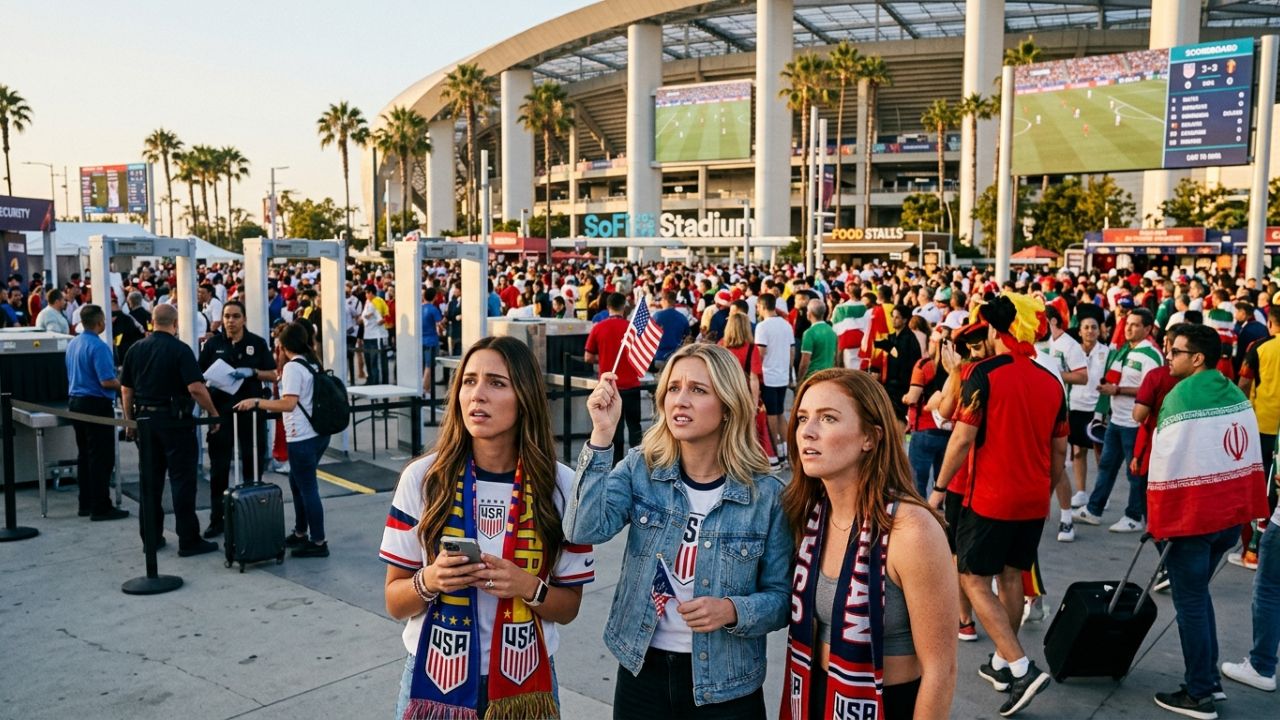
Image generated by AI
The United States government has officially implemented highly restrictive border control measures impacting the Iranian national football team ahead of their crucial 2026 FIFA World Cup Group G fixture against Belgium in Los Angeles. By severely limiting the team's entry into American airspace to a strict 24-hour window before kick-off, federal authorities are aggressively prioritizing national security protocols over standard tournament logistics. As the squad is legally mandated to execute an immediate cross-border flight back to their training base in Mexico right after the final whistle, both athletes and international football fans must navigate these unprecedented travel constraints with extreme vigilance.
Quick Summary
- The US government is enforcing a strict 24-hour entry rule for the Iranian national team before their World Cup matches in Los Angeles and Seattle.
- Players must immediately leave American soil following their matches, taking a mandated 27-minute flight back to their base camp in Tijuana, Mexico.
- The Football Federation of Iran (FFIRI) has lodged a formal technical complaint with FIFA regarding the exhausting travel schedule.
- Political delegates from Iran were flatly denied US visas due to alleged ties to foreign military entities, though all athletes successfully secured entry.
- International travelers and sports fans are urged to expect heightened immigration screening and complex border logistics throughout the tournament.
The background of this unprecedented travel alert is deeply rooted in modern diplomatic friction. The White House FIFA Task Force, explicitly spearheaded by executive director Andrew Giuliani, is completely unwavering in its application of heightened immigration screening for all incoming Iranian delegations. These robust federal measures are fundamentally designed to maintain absolute public safety throughout the multi-city global sporting tournament. Because these highly sensitive national security protocols actively dictate cross-border logistics, understanding the rigid parameters of these flight restrictions is absolutely critical right now for everyone involved in the tournament.
Event and Incident Details
The core logistical crisis centers around the upcoming high-stakes Group G fixture between Iran and Belgium, scheduled to take place in Los Angeles, California. Under the current federal mandate, the Iranian team is legally permitted to land in host cities exactly 24 hours prior to the match. The Football Federation of Iran (FFIRI) had explicitly requested permission to arrive in California 48 hours prior to the match to safely adapt to local climate conditions, but American organizers summarily rejected this reasonable request.
Initially, the Iranian delegation confidently planned to base their entire World Cup campaign in the desert city of Tucson, Arizona. However, realizing the severe logistical limitations imposed by American visa protocols, organizers strategically relocated the entire team camp directly across the southern border to Tijuana, Mexico. Consequently, immediately following the conclusion of their games, the players must board a highly restrictive 27-minute flight back across the Mexican border to return to their Tijuana base camp.
Specific Risks and Passenger Impacts
The grueling logistical itinerary forced upon the Iranian delegation highlights several critical risks that directly impact athletic performance and broader tournament operations.
- Elevated Injury Risks: Team staff highlighted that traveling immediately after ninety minutes of intense physical exertion drastically elevates muscle injury risks for the athletes.
- Exhausting Transit Cycles: This rapid turnaround completely denies elite sportsmen the critical opportunity to sleep in local hotels or utilize specialized post-match physical therapy facilities on American soil.
- Visa Denials: While every single athlete and coaching staff member successfully secured an entry visa, several political delegates were flatly denied access due to derogatory background information.
- Uneven Playing Field: By denying the squad adequate preparation time on American pitches, the current travel framework officially creates an uneven competitive environment, prompting accusations that Iran is the most oppressed team in the tournament.
What Authorities Are Saying
American intelligence agencies have significantly intensified their vigilance to insulate both domestic citizens and international visitors from potential geopolitical disruptions. Consequently, the State Department officially vowed to completely bar any individuals possessing direct ties to foreign military entities like the Islamic Revolutionary Guard Corps. Andrew Giuliani heavily defended the rigid operational framework, explicitly noting that flying from Mexico actually saves the team an entire hour of airborne travel compared to flying out of Arizona.
Conversely, the Football Federation of Iran has formally approached football’s global governing body to demand immediate intervention. Iranian football executives furiously argue that these rigid border regulations violently violate basic fair-play principles by intentionally undermining their tournament preparations. Head coach Amir Ghalenoei expressed profound, highly publicized frustration after his players were forcefully mandated to vacate American soil instantly following their opening match against New Zealand.
Practical Traveler Advice
Navigating international borders during highly publicized, politically sensitive sporting events requires extreme caution. If you are an international traveler, delegate, or football fan attending the 2026 World Cup, you should strictly follow these actionable tips:
- Expect Heightened Security Screening: The US government is heavily applying robust immigration screening. Anticipate longer wait times at border crossings and major airports servicing World Cup host cities.
- Verify Visa Status Constantly: Ensure all your travel documentation is absolutely flawless. Any historical or indirect ties to heavily sanctioned foreign military entities will result in immediate entry denial.
- Monitor Cross-Border Flight Schedules: If you are utilizing cross-border hubs like Tijuana to access Southern California venues, closely monitor your flight status, as the 27-minute transit corridors are subject to strict federal oversight.
- Acknowledge Logistical Exhaustion: Understand that the psychological toll of constantly crossing international borders continues to weigh heavily on travelers; plan your itinerary to allow for adequate rest where permitted.
- Follow Official FIFA Directives: The official FIFA Regulations state that host nations must provide equitable operational environments; however, you must obey all local host nation laws regarding immigration and curfew entirely.
Broader Context of the Disruption
These unprecedented sporting restrictions are unfolding against the incredibly complex backdrop of a real-world conflict that is only recently showing signs of stabilization. The United States and Iran have spent months navigating a deeply volatile modern conflict that has heavily impacted bilateral relations and international travel.
Although both sovereign nations recently signed a historic memorandum of understanding to halt active hostilities, deep systemic distrust still fiercely remains. This lingering political friction directly manifests within the sporting arena, effectively transforming a standard international football match into a highly charged diplomatic standoff. International sports diplomats are watching closely to see if the beautiful game can successfully transcend these rigid borders, but for now, the harsh reality of global politics completely overshadows the festive spirit normally associated with the World Cup.
What to Expect Next and Looking Ahead
As the massive group stage progresses rapidly toward the final round of fixtures, intense pressure is mounting on tournament coordinators to find a viable, humane compromise. Following the conclusion of the highly anticipated Belgium clash in Los Angeles, Iran must immediately prepare for another lengthy journey to face Egypt in the northern city of Seattle.
This upcoming fixture will absolutely trigger the exact same emergency travel protocol, requiring yet another swift cross-border flight immediately after the match. With the situation described as highly dynamic, ongoing discussions between the State Department and terrified sports officials are occurring around the clock. Fans worldwide are hoping that a sensible logistical middle ground can be reached before the knockout stages officially begin. Until FIFA issues a definitive legal ruling, the Iranian national team must continue fighting for survival both on and off the pitch.
Frequently Asked Questions (FAQ)
Why is the US restricting the Iranian football team's travel? Due to national security protocols and deep diplomatic tensions, the US requires Iranian players to enter American soil only 24 hours prior to kick-off and leave immediately after the match to maintain public safety.
Where is the Iranian national team's training base camp located? Initially planned for Tucson, Arizona, the team relocated their primary training operations directly to a secure base camp in Tijuana, Mexico, to minimize exhausting transit windows.
Were any Iranian players denied visas to the United States? No athletes or coaching staff were denied. However, several Iranian political delegates were flatly denied entry by the State Department due to alleged ties to the Islamic Revolutionary Guard Corps.
What is the core of Iran's formal complaint to FIFA? The FFIRI argues that the 24-hour entry rule violates basic fair-play principles, denying players adequate climate adaptation time (they requested 48 hours) and drastically elevating post-match muscle injury risks.
What happens after the Iran vs. Belgium match in Los Angeles? Following the Belgium fixture, Iran will face Egypt in Seattle, which will trigger the exact same emergency travel protocol, requiring another immediate cross-border flight out of the US.
SEO Metadata Suggestions
- Meta Title (Under 60 chars): US Restricts Iran World Cup Travel: Sudden Border Crisis
- Meta Description (Under 155 chars): Urgent travel alert: The US enforces strict 24-hour entry rules on the Iranian World Cup squad, forcing immediate flights to Mexico and sparking a FIFA crisis.
- Article Tags: Belgium vs Iran controversy, Iran football FIFA complaint, US Iran match logistics, World Cup 2026 security, World Cup travel restrictions
Disclaimer
This article is for informational and educational purposes only. It does not constitute legal, financial, or professional advice. While we strive to provide accurate and up-to-date information, travel policies, regulations, and conditions change rapidly. Always verify information with official sources before making travel decisions. Nomad Lawyer makes no representations about the accuracy, reliability, completeness, or suitability of the information provided. Readers should consult qualified professionals for advice specific to their circumstances. The views expressed in this article are those of the author and do not necessarily reflect the views of Nomad Lawyer.
Preeti Gunjan
Contributor & Community Manager
A passionate traveller and community builder. Preeti helps grow the Nomad Lawyer community, fostering engagement and bringing the reader experience to life.
Learn more about our team →