
US Heritage Tourism Growth Driven by Historic Hotel Integration
International visitation to the US is projected at 70.5 million in 2026, with historic hotels in MA, NY, and NM driving growth in cultural tourism.

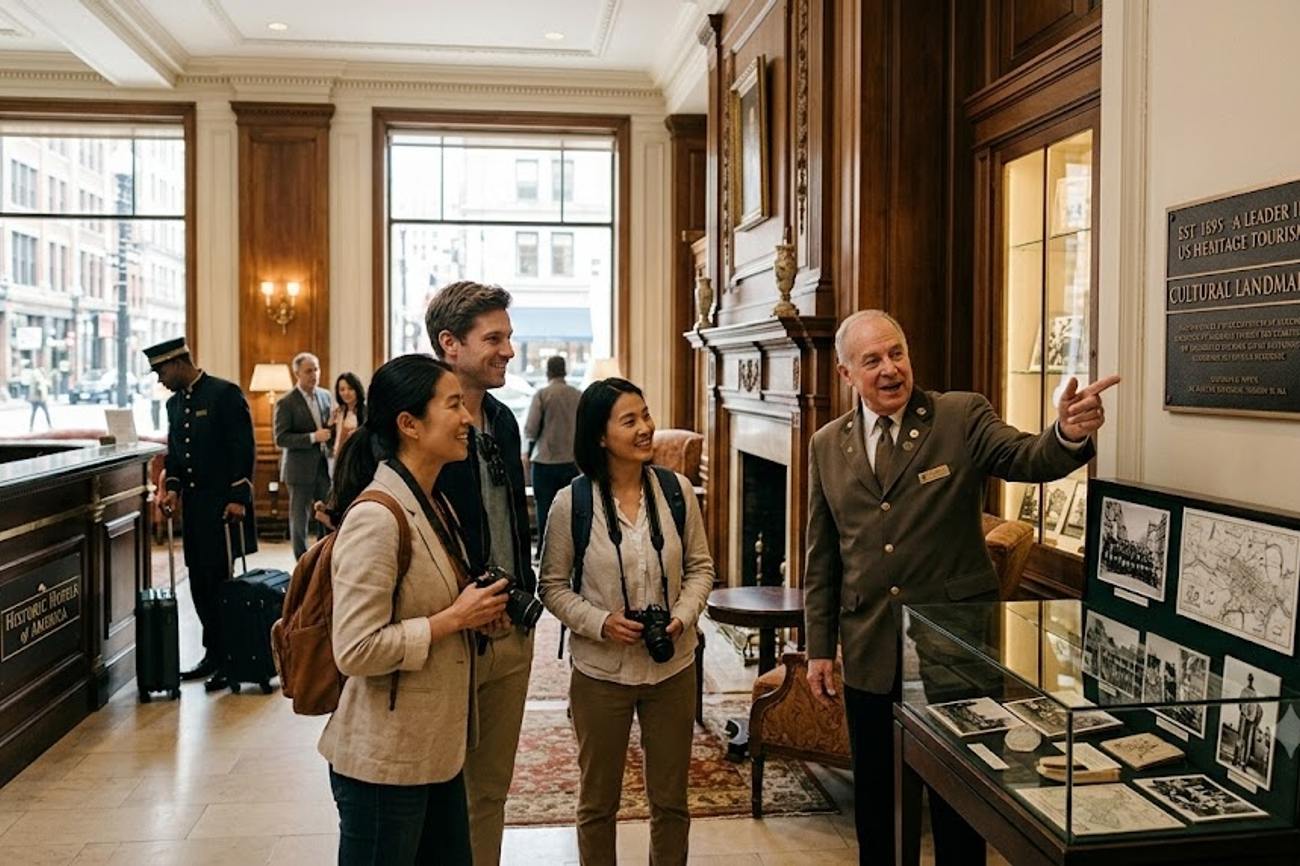
Image generated by AI
The United States is seeing a strategic alignment between regional tourism boards and historic preservation assets to capture the growing demand for immersive cultural travel. Data from the National Travel and Tourism Office (NTTO) indicates a steady climb in international arrivals, with 2026 forecasts placing visitor counts at approximately 70.5 million.
This growth is being fueled by a transition from generic luxury lodging to "heritage properties"—accommodations that serve as primary gateways to a destination's identity. Through the Historic Hotels of America program, managed by the National Trust for Historic Preservation, over 280 properties are now leveraged as anchors for regional economic development, encouraging longer stays and deeper exploration of off-the-beaten-path communities.
Regional Heritage Hubs
In Massachusetts, the focus remains on Revolutionary War and literary narratives. Concord’s Colonial Inn, established in 1716, serves as a primary case study; its historical utility as a military storage site during the 1775 Battle of Concord now attracts educational tourists and literary scholars interested in figures like Henry David Thoreau.
New York has integrated its historic hospitality assets into the broader "I LOVE NY" strategy, specifically within the Hudson Valley. The Beekman Arms and Delamater Inn in Rhinebeck, which originated as a tavern in 1704, acts as a catalyst for rural tourism, drawing visitors away from urban centers and into historic villages and scenic landscapes.
In the Southwest, New Mexico is utilizing properties like the Hilton Santa Fe Historic Plaza to bridge the gap between Spanish colonial history and Indigenous culture. With origins tracing back to a 1625 hacienda associated with the Ortiz family, these properties provide a 400-year narrative context that standard modern hotels cannot replicate.
Heritage Tourism Specifications
| Property | Location | Origin Date | Primary Cultural Connection | Regional Focus |
|---|---|---|---|---|
| Concord’s Colonial Inn | Concord, MA | 1716 | American Revolution / Literary | Colonial New England |
| Beekman Arms & Delamater Inn | Rhinebeck, NY | 1704 | Colonial Tavern / Political | Hudson Valley |
| Hilton Santa Fe Historic Plaza | Santa Fe, NM | 1625 | Spanish Colonial / Indigenous | Southwest Heritage |
Traveler Logistics Guide
From a ground-level perspective, navigating heritage-based travel requires a different approach than standard city hops. These properties are often located in historic districts with limited parking and narrow roads.
- Optimal Connectivity: When visiting the Hudson Valley or Colonial Massachusetts, avoid relying solely on ride-share apps, which can be sparse in rural heritage zones. Renting a vehicle is recommended for "slow travel" exploration between historic inns and nearby landmarks.
- Booking Lead Times: Because recognized Heritage Properties often have fewer rooms than modern chains, book 3-6 months in advance for peak autumn foliage seasons in New England and New York.
- Digital Transit Integration: For international visitors arriving via major hubs (JFK, BOS), utilize digital transit passes and customs pre-clearance to minimize airport dwell time, allowing for more extended stays in regional cultural zones.
- Customs & Entry: Ensure all ETIAS or visa requirements are finalized prior to arrival to avoid delays that could impact tight schedules involving boutique heritage bookings.
Infrastructure Impact Assessment
The shift toward heritage tourism is decentralizing US travel. By positioning historic hotels as primary attractions, tourism revenue is flowing into rural economies (such as Rhinebeck and Concord) rather than being concentrated in Tier-1 cities. This trend necessitates increased investment in regional road infrastructure and the preservation of architectural landmarks to maintain the "authentic" experience that 2026 travelers demand.
Related Travel Guides
Disclaimer
This article is for informational and educational purposes only. It does not constitute legal, financial, or professional advice. While we strive to provide accurate and up-to-date information, travel policies, regulations, and conditions change rapidly. Always verify information with official sources before making travel decisions. Nomad Lawyer makes no representations about the accuracy, reliability, completeness, or suitability of the information provided. Readers should consult qualified professionals for advice specific to their circumstances. The views expressed in this article are those of the author and do not necessarily reflect the views of Nomad Lawyer.
Preeti Gunjan
Contributor & Community Manager
A passionate traveller and community builder. Preeti helps grow the Nomad Lawyer community, fostering engagement and bringing the reader experience to life.
Learn more about our team →