
Heritage Tourism Surge: The Rise of Cinematic Hospitality in the US
Analysis of the 2026 surge in "Wes Anderson style" heritage hotels, exploring the $954B global market shift and US economic impacts.

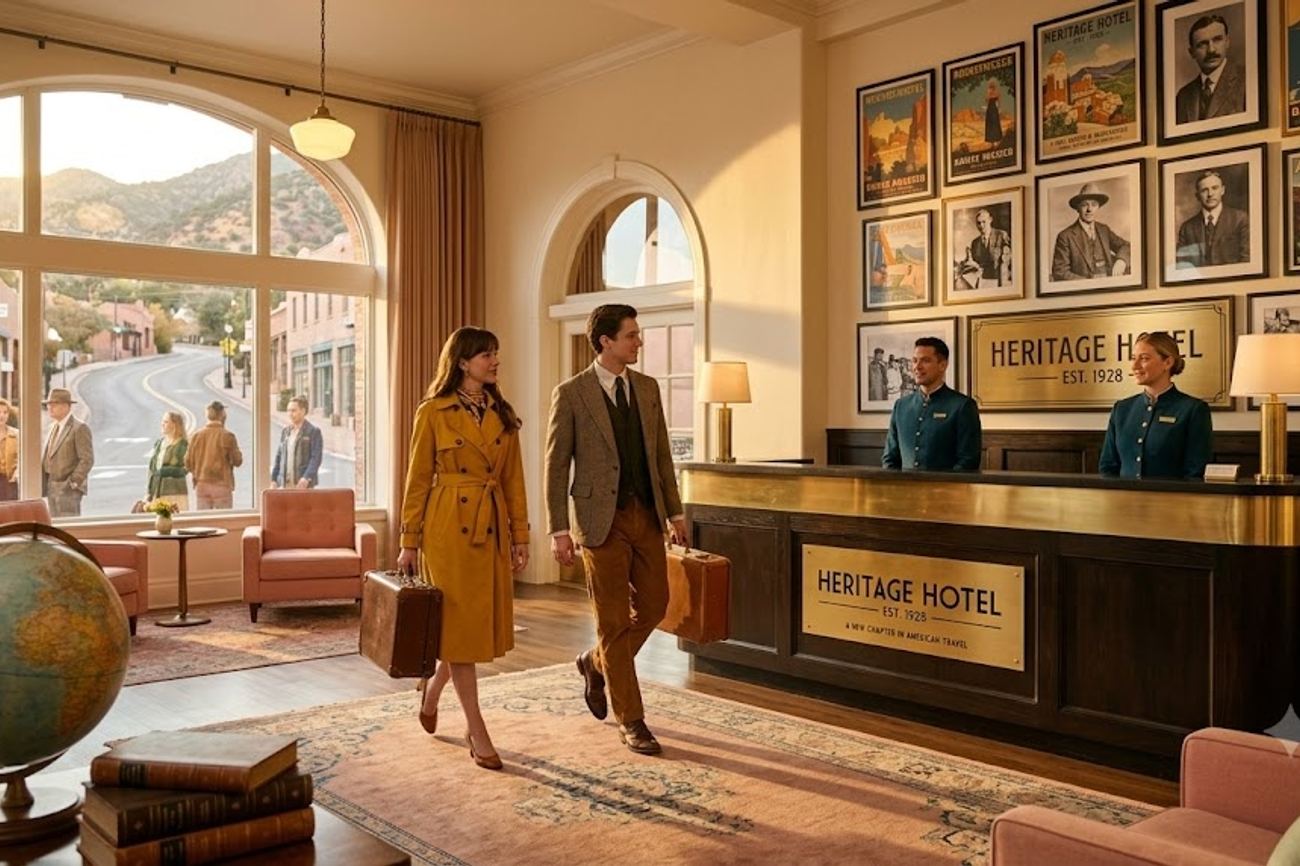
Image generated by AI
The Disruption of Corporate Hospitality
The US hospitality economy is experiencing a pivot away from corporate uniformity toward immersive, curated travel. As of September 7, 2026, there is a documented surge in demand for properties embodying "Wes Anderson" aesthetics—characterized by symmetry, bright color palettes, and analog nostalgia.
This trend transcends simple interior design. "Cinematic hospitality" integrates theatrical service execution, staff uniforms, and the replacement of digital key cards with analog room keys to create a space "out of time."
Economic Impact Breakdown
Our analysis of verified economic forecasts from August 2026 indicates that heritage tourism has become a primary pillar of the global travel economy.
- Global Market Valuation: Valued at USD 638.87 billion in 2025; projected to reach USD 954.07 billion by 2034.
- US Economic Output (2024 Baseline): Visitors to heritage sites and national park gateway communities contributed USD 56.3 billion to the national economy.
- Employment: The sector generated approximately 340,100 jobs in 2024.
- Demographic Shift: 2025 and 2026 surveys confirm Millennials and Gen Z now prefer unique design boutique hotels over traditional luxury resorts.
Passenger & Traveler Advisory: Navigating Boutique Heritage Stays
For the traveler transitioning from corporate chains to independent heritage properties, the experience and legal protections differ. Our analysis of current hospitality trends suggests the following:
- Booking Expectations: Unlike standardized chains, these properties prioritize "thematic consistency." Travelers should expect limited electronic distractions and a focus on analog experiences.
- Service Standards: Be aware that "theatrical service" is a core component of the product. This may result in more structured, formal interactions than those found in modern luxury resorts.
- Consumer Rights: When booking independent boutique hotels, ensure you review the specific cancellation policies. Unlike global brands with unified terms, independent heritage sites often have stricter deposit requirements to manage low-capacity inventory.
- Accessibility: Because these properties are governed by the National Historic Preservation Act (NHPA), some structural modifications for accessibility may be limited by conservation guidelines. Travelers with mobility requirements should verify specific room modifications prior to arrival.
Industry Analyst View
The sustainability of this trend is anchored in government policy rather than mere fashion. The reliance on the National Register of Historic Places and the National Historic Preservation Act (NHPA) creates a regulatory moat; properties must adhere to strict structural conservation to access federal and state tax credits.
By leveraging municipal grants to upgrade "hidden infrastructure" (electrical and plumbing) while preserving vintage facades, these properties are mitigating the risks of aging assets. Furthermore, the strategic promotion of off-season travel is successfully smoothing the traditional boom-and-bust revenue cycles of rural and coastal communities.
Related Travel Guides
Disclaimer
This article is for informational and educational purposes only. It does not constitute legal, financial, or professional advice. While we strive to provide accurate and up-to-date information, travel policies, regulations, and conditions change rapidly. Always verify information with official sources before making travel decisions. Nomad Lawyer makes no representations about the accuracy, reliability, completeness, or suitability of the information provided. Readers should consult qualified professionals for advice specific to their circumstances. The views expressed in this article are those of the author and do not necessarily reflect the views of Nomad Lawyer.
Raushan Kumar
Founder & Lead Developer
Full-stack developer with 11+ years of experience and a passionate traveller. Raushan built Nomad Lawyer from the ground up with a vision to create the best travel and law experience on the web.
Learn more about our team →