San Francisco Airport Hit by FAA Ground Stop as 40 MPH Gales Push Inbound Delays to 658 Minutes

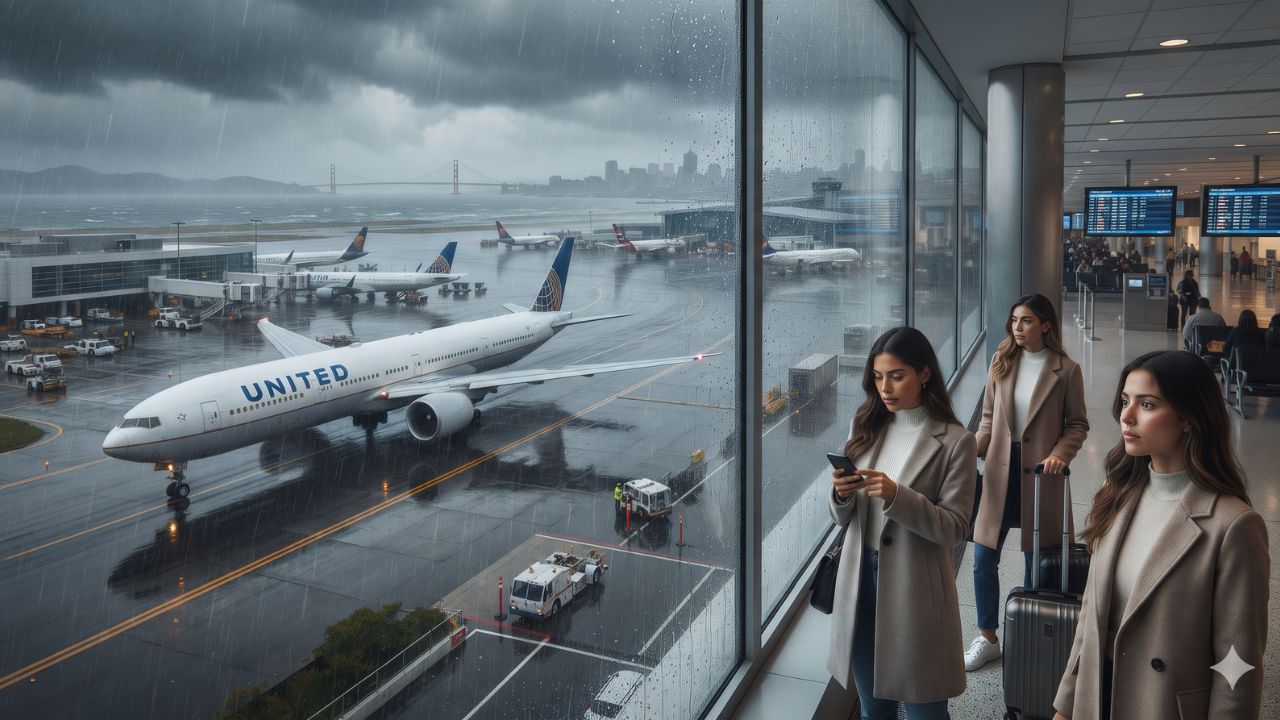
A potent Pacific cold front packing 40 mph gale gusts forced inbound flight delays to stretch up to 658 minutes at San Francisco International Airport as federal regulators froze regional airspace. On 18 November 2026, the Federal Aviation Administration (FAA) instituted an emergency ground stop halting flights destined for San Francisco International Airport from seven western air traffic control sectors and three major Canadian gateways. With intense rain bands dropping cloud ceilings over the San Francisco Bay, arrival demand far outstripped the airfield’s reduced bad-weather runway capacity.
The disruption followed closely on the heels of the 13 November nationwide telecommunications outage that disrupted 17 of 22 federal air route traffic control centers. However, this November 18 emergency stemmed purely from coastal meteorology. Although outbound departures continued operating under metered flow control, travelers heading into Northern California encountered average ground stop holds of 131 minutes that rapidly deteriorated into a ground delay program with average waiting times of 186 minutes and peak holding times approaching eleven hours.
Air Traffic Control Response and Geographic Ground Stop Scope
The atmospheric front made landfall on the morning of 18 November, triggering wind advisories from the National Weather Service Bay Area across San Francisco and northern San Mateo County. Southerly and southeasterly crosswinds exceeding 40 mph disrupted standard dual-parallel runway approaches, forcing controllers to space out arrivals along single-runway approaches.
To prevent airborne holding stacks from circling dangerously above Northern California mountains, the FAA Air Traffic Control System Command Center issued an initial ground stop advisory between 17:20 and 18:45 UTC. As conditions deteriorated, controllers extended the gate hold through 20:00 UTC (noon Pacific Standard Time), posting an estimated average program delay of 131 minutes and a maximum of 275 minutes.
When the ground stop transitioned into a broader Ground Delay Programme (GDP), the geographic net expanded across the western United States and Canada. Originating flights were held on tarmacs managed by air traffic control centers in Oakland, Los Angeles, Seattle, Salt Lake City, Denver, Albuquerque, and Minneapolis. Transborder flights departing Vancouver, Calgary, and Edmonton were also placed under departure metering, leaving thousands of connecting passengers stranded before takeoff.
Analyzing the Timeline and Phased FAA Regulatory Advisories
The phased interventions enforced by the FAA on 18 November 2026 demonstrate how rapidly adverse weather can paralyze flight sequencing across multiple control sectors:
| Operational Advisory Phase | Active Time Window | Average Projected Delay | Maximum Projected Delay | Control Centers & Origin Airports Affected |
|---|---|---|---|---|
| Initial Ground Stop | 17:20 to 18:45 UTC | Metered ground holding | N/A (Immediate hold) | Primary regional feeders in Northern California |
| Expanded Ground Stop | Extended to 20:00 UTC (12:00 PST) | 131 minutes | 275 minutes | Oakland, LA, Seattle, Salt Lake, Denver, Minneapolis, Albuquerque |
| Canadian Gate Extensions | Staggered throughout midday | 131 to 186 minutes | 310 minutes | Vancouver (YVR), Calgary (YYC), Edmonton (YEG) |
| Ground Delay Programme | Afternoon through Evening | 186 minutes | 658 minutes (nearly 11 hrs) | Broad domestic systemwide inbound flow control |
| Outbound Flow Status | Continuous metered operations | Rolling delays | Dependent on incoming aircraft | Outbound flights operating without automatic system halt |
What Makes San Francisco Airport Runway Operations Vulnerable
San Francisco International Airport’s geographical design makes it notoriously susceptible to storm disruptions. The airport features four runways configured as two closely spaced intersecting pairs: Runways 28L/28R for arrivals and Runways 01L/01R for departures. In dry, clear visual flight conditions, aircraft can land side-by-side using parallel approaches, accommodating approximately 60 arrivals per hour.
When heavy rain, low cloud ceilings, or severe southeasterly wind gusts hit the Bay, instrument flight rules (IFR) take effect. Under federal safety separation regulations, the 750-foot gap separating the parallel runways is too narrow for simultaneous instrument landings in low visibility. Arrival capacity instantly drops by roughly 50%, down to approximately 30 to 34 aircraft per hour.
Given that SFO processed approximately 54.1 million passengers during the fiscal year ending 30 June 2025—including 19 million domestic departing and 8 million international departing travelers—halving runway throughput creates an instant backlog. Long-haul transpacific and European wide-bodies receive landing priority, forcing regional and domestic narrow-body aircraft into prolonged origin gate holds.
Visitor Insider Tips for Navigating SFO Storm Disruptions
When winter storms and FAA flow controls stall flights across the San Francisco Bay Area, proactive travelers should utilize alternate transit and routing hacks:
- Pivot to Oakland or San Jose When Ground Stops Loom: If your incoming flight is caught in an SFO ground delay program, contact your airline immediately to check availability into Oakland International Airport (OAK) or San José Mineta International Airport (SJC). East Bay and South Bay runways face fewer low-visibility arrival restrictions and connect directly to San Francisco via Bay Area Rapid Transit (BART) or Caltrain.
- Track Aircraft Inbound Equipment on Origin Tarmacs: During ground stops, departure boards at outstation airports often display "On Time" while FAA systems hold the plane at the gate. Check your flight number on third-party live radar tracking tools to confirm whether the aircraft has been issued an actual ATC wheels-up clearance time (EDCT).
- Secure Hotel Bookings Early Around Millbrae and Burlingame: SFO passenger hotels along Bayshore Highway and the Burlingame waterfront fill up rapidly during multi-hour ground stops. If your evening connection to Asia or Hawaii is officially canceled, book lodging through mobile applications before joining line queues at airport customer service desks.
- Understand Weather Compensation Exclusions: Because high winds and visibility restrictions constitute acts of nature beyond carrier control, US airlines are not legally required under Department of Transportation rules to pay cash compensation or provide complimentary hotel rooms. Maintain travel insurance policies that cover weather-induced trip delays.
Cultural and Environmental Context
The microclimates of the San Francisco Bay Area have shaped Northern California aviation since the dawn of commercial flight. SFO was constructed on filled marshland directly on the edge of the bay, an engineering decision that maximized flat coastal acreage while exposing the airfield to marine fog layers and Pacific winter squalls.
Rising sea levels and intensified winter atmospheric river events have accelerated infrastructure investments across the airport perimeter. SFO has spent hundreds of millions of dollars raising its seawalls and renovating stormwater drainage systems to withstand coastal inundation. Balancing this environmental resilience with the regional economy—where SFO acts as the premier springboard for Silicon Valley commerce and Napa Valley wine tourism—remains a central priority for Bay Area urban planners.
FAQ: San Francisco Airport Flight Disruptions 2026
What caused the FAA to issue a ground stop at SFO on 18 November 2026?
Severe weather, including heavy rainfall, low visibility, and south-easterly wind gusts reaching 40 mph, reduced runway capacity, forcing the FAA to restrict inbound traffic.
How long were the maximum recorded delays during the disruption?
During the subsequent Ground Delay Programme, projected average flight delays reached 186 minutes, with maximum holding times peaking at 658 minutes.
Were departing flights from SFO completely shut down?
No. The FAA ground stop specifically restricted flights departing other airports bound for San Francisco. Departures from SFO continued under metered traffic flow.
Which Canadian airports were included in the flight restrictions?
Selected inbound flights departing Vancouver International (YVR), Calgary International (YYC), and Edmonton International (YEG) were metered under the FAA advisory.
In the dynamic coastal skies of Northern California, a sudden change in bay winds can reshape flight schedules across an entire continent in minutes.
Related Travel Guides
This article is for informational purposes. Flight routes, passenger regulations, visa rules, and transit advisories are subject to change by airlines and aviation authorities. Readers are advised to verify schedules and travel documentation with relevant carriers and border agencies before departure.
Related Stories
FAA Nationwide Ground Stop Grounds Over 12,000 Flights: Cruise and Hotel Travel Disruption Guide

California Storm Warnings and Banff Snow Shortages: Winter 2026 Travel Alert