United Airlines Tech Outage Stalls US Departures: Flight Delay Protections, FAA Context, and Passenger Refund Rules

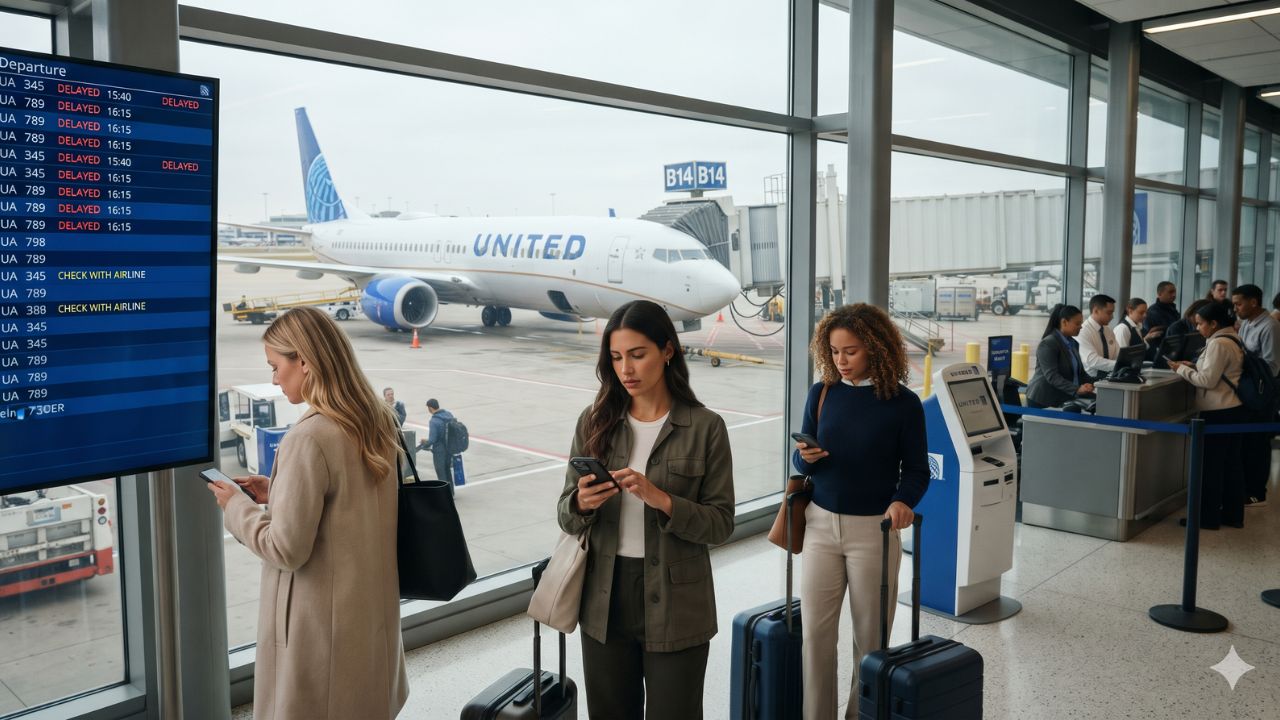
While a major internal software breakdown halted United Airlines mainline departures across the United States on Monday, 16 November 2026, every aircraft already cruising at altitude and all regional flights operated by United Express continued flying completely uninterrupted. The gate-side freeze occurred just 72 hours after an unrelated Federal Aviation Administration telecommunications failure triggered an almost five-hour nationwide ground stop, testing the resilience of American air travel corridors and leaving thousands of travelers scrambling to understand their consumer protections.
The Chicago-based carrier confirmed it was troubleshooting a system failure that prevented gate agents and dispatchers from processing departure manifests, passenger loads, and operational flight plans. Although United affirmed there was no indication of a cybersecurity incident and announced that normal operations resumed later that day, the resulting schedule ripples created missed international connections, stranded baggage, and crew scheduling timeouts across major hubs from Chicago O'Hare and Denver to Houston Intercontinental and Newark Liberty.
Gate Holds vs Airborne Safety: Deconstructing United's Mainline Ground Glitch
The critical distinction during Monday's event lay between aircraft sitting on the apron and those already in flight. Modern commercial aviation operates under strict digital fail-safes: before an airliner pushes back from the gate, dispatch software must finalize fuel calculations, verify passenger weight distribution, confirm crew duty rosters, and file electronic air traffic control clearances. If the data link breaks between central operations and airport workstations, an aircraft cannot legally depart—even if the jet is mechanically flawless and the weather is severe clear.
Because airborne flights already held validated dispatch packets and direct radio communication with FAA controllers, airborne operations proceeded normally. Similarly, United Express regional flights—operated by partner carriers like SkyWest, Republic, and GoJet using independent dispatch software architectures—maintained scheduled departures outside the mainline technical fault.
The outage added pressure to an already strained national aviation network. Just three days earlier, on Friday, 13 November 2026, the Federal Aviation Administration imposed a nationwide ground stop due to critical telecommunications network instability. An official briefing published by the Federal Aviation Administration on 15 November 2026 revealed that telecommunications disruptions began at approximately 3:30 pm Eastern Time before air traffic resumed at 8:15 pm. While the FAA traced its failure to aging legacy infrastructure and heavy data traffic, and emphasized that no official link existed with United's internal problem, the successive failures tested the patience of travelers nationwide.
Travelers can monitor active flight operations and terminal updates directly via United Airlines.
| Regulatory Framework / Situation | Trigger Threshold | Mandatory Passenger Entitlement | Governing Agency / Rule |
|---|---|---|---|
| Domestic Schedule Change / Delay | Arrival delay of 3+ hours | Full cash refund to original payment method | US Department of Transportation (DOT) |
| International Schedule Change / Delay | Arrival delay of 6+ hours | Full cash refund to original payment method | US Department of Transportation (DOT) |
| Refund Processing Timeline | Within 7 business days | Mandatory for credit card purchases (20 days for cash) | 2026 DOT Consumer Rule |
| Controllable Ground Delay Meal Support | Departure wait of 3+ hours | Meal vouchers or food/beverage reimbursement | United Customer Commitment Dashboard |
| Controllable Overnight Stranding | Overnight delay caused by airline | Hotel accommodations and ground transfers | DOT Controllable Delay Commitments |
| Domestic Tarmac Confinement | 2 hours (Food/Water) / 3 hours (Gate Return) | Mandatory deplaning opportunity before hour three | Federal Tarmac Delay Regulations |
| UK / EU Departures on United | Flight departing UK/EU delayed 3–5+ hours | Care, rebooking, or fixed statutory compensation (€250–€600) | UK CAA / EU261 Regulations |
What Makes Aviation IT Breakdowns Different From Mechanical Holds
Unlike a mechanical repair on a single engine or an isolated thunderstorm rolling over a single airfield, a central server failure creates an immediate cascading backlog across multiple time zones:
- The Downstream Aircraft Deficit: An aircraft delayed by 90 minutes at Newark leaves its subsequent scheduled flight from Chicago to San Francisco without an airframe, creating secondary delays that multiply across the schedule until nightfall.
- Pilot and Cabin Crew Duty Limits: Federal aviation regulations enforce strict daily flight and duty limits. When ground holds extend past three hours, flight crews frequently "time out," requiring the airline to scramble reserve crews or cancel flights outright.
- Baggage Sorting Divergence: Automated baggage belts continue moving passenger luggage toward departure gates even when flights are held. In software outages, checked bags often travel ahead of passengers on alternate routes or remain trapped in holding bays.
Detailed federal airline service benchmarks and carrier commitments can be reviewed on the US Department of Transportation Aviation Consumer Protection portal.
Visitor Insider Tips: Navigating Airline Software Outages and Missed Connections
When an airline’s digital core freezes, standard terminal customer service desks develop hour-long queues within minutes. Seasoned travelers employ distinct tactical workarounds:
- Activate Self-Service Rebooking Tools: In October 2026, United enhanced its "Flight Finder" digital feature within the United mobile app, designed to surface alternative itineraries during severe irregular operations. If mobile app access remains sluggish, call United’s international reservation desks (such as support lines in the UK, Australia, or Japan via VoIP apps) where hold queues are frequently shorter than domestic call centers.
- Enforce the Three-Hour Refund Benchmark: Under updated US Department of Transportation regulations, if a flight disruption delays your domestic arrival by three hours or more (or six hours for international journeys), you are legally entitled to abandon the trip and receive a full cash refund to your original payment method. The airline cannot force you to accept an electronic travel credit or voucher. Credit card refunds must be processed within seven business days.
- Beware the Separate-Ticket Trap: If your journey involves separate ticket bookings—such as a United domestic flight connecting to an international carrier in New York or Los Angeles—the second airline is under no legal obligation to protect your booking if the first carrier delivers you late. If delays threaten your connection, inform the second carrier immediately before your flight departs to avoid a "no-show" forfeiture.
- Track the Two-Hour Tarmac Clock: If boarded onto an aircraft that is held on the taxiway, flight attendants are legally obligated to provide drinking water and snacks before the two-hour mark. For domestic sectors, the plane must begin moving toward a gate to allow passengers to deplane before reaching three hours of ground confinement.
- Examine European Departure Protections: If your delayed United flight was scheduled to depart from an airport in the United Kingdom or European Union, local statutory compensation rules apply regardless of United being an American carrier. Under EU261 rules in effect throughout 2026, controllable arrival delays exceeding three hours can warrant cash compensation of €250, €400, or €600, depending on flight distance. (Note that newly adopted EU reforms from September 2026 do not take effect until October 2027).
Cultural and Environmental Context: Aging Infrastructure in an Era of Digital Travel
The dual disruptions of mid-November 2026 underscore the growing tension between hyper-efficient digital airline scheduling and the aging telecommunications infrastructure supporting North American airspace. Commercial carriers have scheduled record passenger volumes into high-density air corridors while relying on interconnected software stacks that leave zero slack for technical hiccups.
When an airline's central database pauses, the shock waves ripple immediately across local tourism ecosystems. Regional hotels near hub airports experience unexpected midnight occupancy surges, cruise lines departing from Florida and California ports must handle late-arriving passengers via water-taxi transfers, and conference venues absorb day-long attendance shortfalls.
As the US Department of Transportation tightens its enforcement of automatic cash refunds and transparent delay reporting, airlines face rising financial penalties for technological failures. True travel resilience in modern aviation requires not just sophisticated mobile apps, but robust offline operational protocols that keep passengers moving when servers go dark.
FAQ: Managing United Airlines Travel Disruptions in 2026
What caused the United Airlines flight delays on 16 November 2026?
United experienced an internal technology breakdown that hindered dispatch and departure processing for mainline flights. Airborne flights and United Express regional services operated normally, with no indication of a cyberattack.
Was United's technical issue connected to the earlier FAA ground stop?
No. While the FAA enacted a nationwide ground stop on 13 November 2026 due to legacy telecommunications instability, there is no official evidence connecting the FAA network failure to United's internal software glitch.
When am I entitled to a full cash refund under US DOT rules?
Under US DOT regulations, passengers are entitled to a full refund to their original payment method if an airline cancellation or significant schedule change (three hours domestic, six hours international) is rejected by the traveler.
Does United provide hotel rooms during technology-related delays?
Yes. Under United's published customer service commitments, the airline provides complimentary hotel accommodations and ground transportation for controllable disruptions that result in an unplanned overnight delay at the airport.
Related Travel Guides
- US Airline Passenger Rights and Mandatory DOT Compensation Rules
- Severe Weather Flight Delays and Airport Contingency Protocols
- Major International Aviation Gateways and Hub Transit Strategies
When digital departure boards freeze, knowing your federal consumer rights turns airport uncertainty into clear travel choices.
This article is for informational purposes. Flight routes, passenger regulations, visa rules, and transit advisories are subject to change by airlines and aviation authorities. Readers are advised to verify schedules and travel documentation with relevant carriers and border agencies before departure.
Related Stories
Malaysia Enters Northeast Monsoon Season as AirAsia Issues Urgent KLIA Terminal 2 Travel Advisory
Asia Aviation Gridlock: 4,461 Delays and 365 Flight Cancellations Hit Mumbai, Tokyo, Dubai, and Regional Hubs