US Hotel Demand Forecast 2026: RevPAR Projected to Climb 5.9% as Room Nights Hit Records

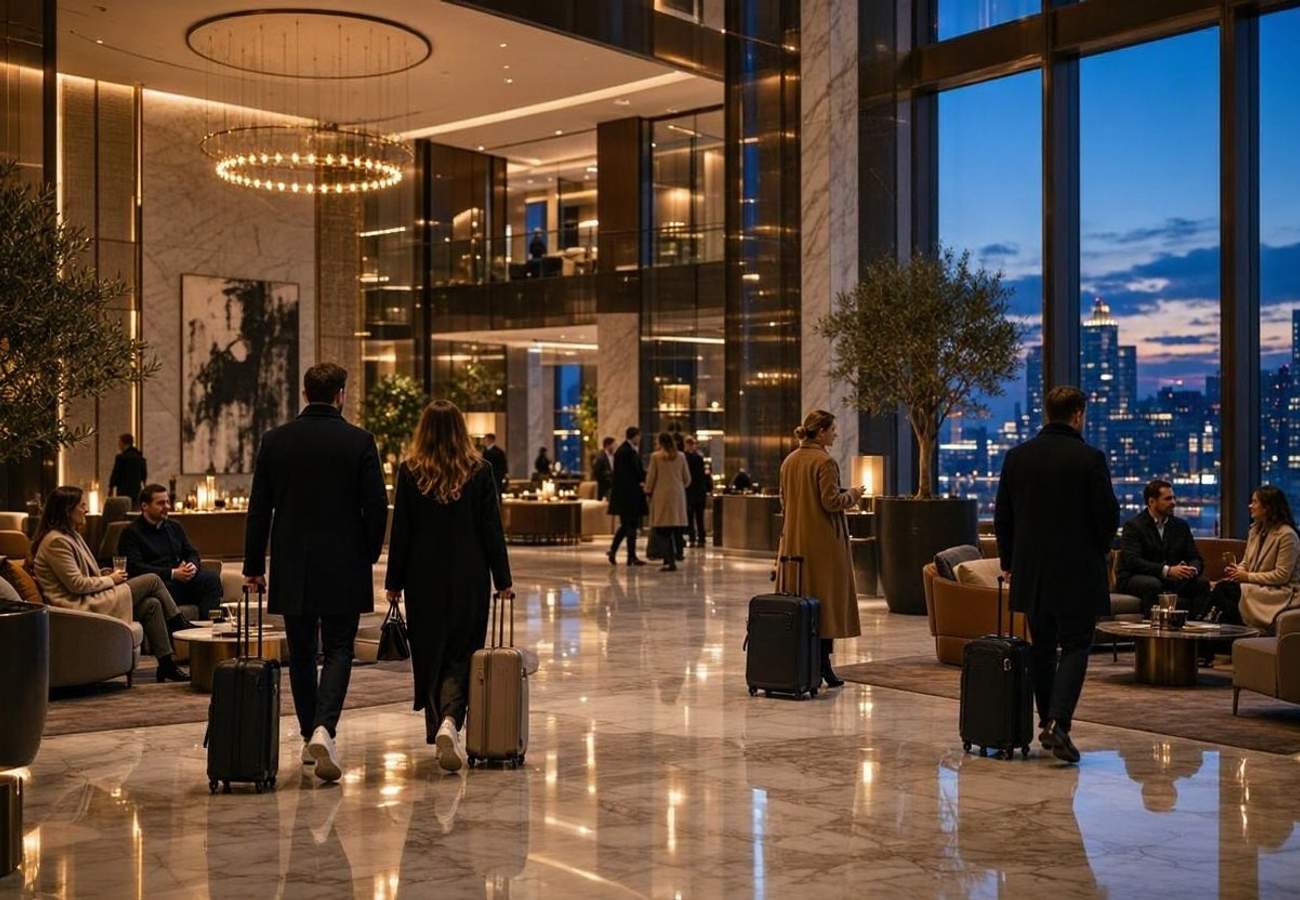
Image generated by AI
US hotel occupancy is projected to reach 63.6% by the end of 2026, a significant climb from the 63.1% previously estimated, signaling a market that is outperforming its own recovery benchmarks. This upward trajectory is not merely a return to form but a push toward new records, with occupied room nights now surpassing pre-pandemic highs.
The 2026 Hospitality Surge in Numbers
Data released on November 20 by CoStar and Tourism Economics indicates a sharp upward revision in the performance of the American accommodation sector. The most critical metric, Revenue per Available Room (RevPAR), has seen its growth forecast jump by 1.5 percentage points, moving from an initial 4.4% to a projected 5.9%.
This growth is fueled by a dual-pronged increase in both volume and pricing. Average Daily Rates (ADR) are now expected to grow by 3.8%, an increase of 0.7 percentage points over previous estimates. The acceleration is particularly striking in the latter half of the year; nearly 50% of the total increase in room demand for 2026 occurred within the two months immediately preceding the November report.
The resilience of this demand is noteworthy given the persistent inflationary pressures on household budgets. According to STR (a division of CoStar), year-to-date demand has already eclipsed the previous pre-pandemic peak, suggesting that travelers are prioritizing overnight experiences over other discretionary spending.
Comparative Performance: 2026 vs. 2027 Projections
While 2026 is characterized by an aggressive surge, the outlook for 2027 suggests a transition toward a more sustainable, moderate growth phase. The industry is shifting from a "recovery and spike" phase into a "stabilization" phase.
The following table breaks down the revised forecasts for the current and upcoming year:
| Metric | 2026 Revised Forecast | 2027 Revised Forecast | Variance (YoY Trend) |
|---|---|---|---|
| RevPAR Growth | 5.9% | 2.7% | -3.2% (Deceleration) |
| Average Daily Rate (ADR) Growth | 3.8% | 1.8% | -2.0% (Stabilizing) |
| National Occupancy Rate | 63.6% | 64.1% | +0.5% (Steady Growth) |
This data indicates that while prices will continue to rise in 2027, the pace of those increases will slow by more than half compared to the 2026 surge. The slight increase in projected occupancy for 2027 (64.1%) suggests that volume, rather than aggressive pricing, will drive the next phase of industry growth.
What This Means for Travelers
For the individual traveler, these data points translate directly into higher costs and tighter availability, particularly in "gateway" cities. The 3.8% increase in ADR is a national average; however, in markets experiencing high demand, these spikes are often more pronounced.
Actionable Booking Strategies:
- Avoid "Peak-on-Peak" Booking: With demand hitting records, booking during major event windows—such as the 2026 FIFA World Cup or America 250 celebrations—will likely result in premiums far exceeding the 3.8% national average.
- Target Non-Gateway Hubs: As major centers like New York, Los Angeles, and Miami absorb the bulk of international recovery and corporate AI-related investment, secondary cities may offer better value.
- Shift Booking Windows: Given that nearly half of the 2026 demand surge happened in a 60-day window, the "last-minute deal" is becoming a rarity. Booking 12-16 weeks in advance is now recommended for peak season stays to avoid the highest ADR tiers.
Forward Projection: The AI and Event Influence
The trajectory of the US hotel market is increasingly tied to non-traditional demand drivers. A significant portion of the current growth is attributed to corporate investment in artificial intelligence, which has spurred a new wave of business travel and technology-sector conferences.
Furthermore, the World Travel & Tourism Council (WTTC) has highlighted the role of large-scale international events in driving regional spikes. The intersection of the 2026 World Cup and the America 250 celebrations has created a "perfect storm" of demand that has pushed room nights beyond historical norms.
Looking toward 2027, the industry's success will depend on the stability of high-income household wealth and the continued recovery of international arrivals. While tensions between the US and Canada remain a potential headwind for cross-border travel, the general trend remains positive. However, analysts warn that any AI-driven stock market correction could rapidly cool the premium travel segment, as this demographic currently underpins much of the ADR growth.
FAQ: US Hotel Trends 2026-2027
Will hotel prices continue to rise in 2027? Yes, but at a slower pace. While 2026 saw a 3.8% increase in average daily rates, the forecast for 2027 is a more moderate 1.8% increase.
Is it better to book US hotels now or wait for last-minute deals? Book now. With occupancy hitting record levels (63.6% in 2026) and demand accelerating rapidly, the likelihood of finding deep last-minute discounts has decreased significantly.
Which cities will be most affected by these price increases? Major gateways including New York, Los Angeles, Miami, Orlando, and San Francisco are expected to see the highest impact due to international tourism and corporate AI investment.
What is driving the record demand in 2026? A combination of the 2026 FIFA World Cup, America 250 celebrations, a surge in AI-related corporate travel, and a strong recovery in group events and conferences.
The American hotel market is no longer recovering from the past—it is aggressively pricing for a high-demand future.
Related Travel Guides
This article is for informational purposes. Flight routes, passenger regulations, visa rules, and transit advisories are subject to change by airlines and aviation authorities. Readers are advised to verify schedules and travel documentation with relevant carriers and border agencies before departure.
Related Stories
US Hotel RevPAR Surges 11% to $114.80 in September 2026: Analyzing the Luxury and Corporate Recovery

California, Texas, and Illinois Unveil Massive Luxury Hotel Expansion Wave for 2027 Travel