
Tunisia's Enfidha Airport Boom: European Surge Transforms Beach Destination Hub
Enfidha-Hammamet International Airport experiences explosive growth as Germany, UK, France, Poland drive charter expansion, delivering 50% passenger increase and 15+ new international routes to Tunisia's premier beach resort district.

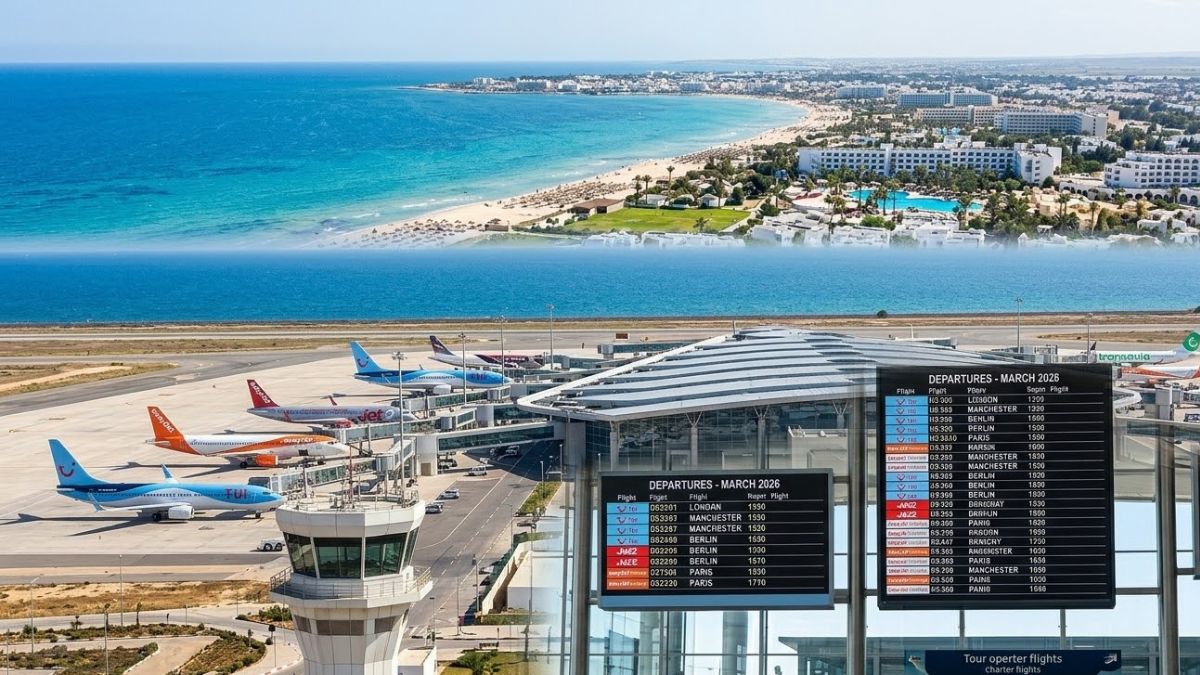
Image generated with AI
Quick Summary
- Enfidha-Hammamet International Airport (central Tunisia coast) records 50% passenger surge in 2024 — reaching 1.3 million travelers, up from 660,000 in 2023; projected 1.5 million by 2025
- 15+ new international destinations and 15+ new routes to existing cities launched in 2024 season, driven by charter operators from Germany, UK, France, Poland, and Nordic countries
- Strategic location between Hammamet, Nabeul, Sousse, Port El Kantaoui, and Monastir resort zones; connected by coastal A1 motorway, enabling seamless resort access from airport in 30–60 minutes
- Airport partnerships with major European tour operators and airlines aligning charter schedules with hotel capacity and ground transportation, transforming Enfidha from underutilized 2009 facility into second-largest Tunisia aviation hub after Tunis-Carthage
Enfidha-Hammamet International Airport, once dismissed as a quiet, underutilized facility struggling to reach modest traffic targets, has emerged as Tunisia's explosive growth story, experiencing a transformational surge in European leisure travel. With 1.3 million passengers recorded in 2024 — a staggering 50% increase from 2023's 660,000 travelers — the airport has repositioned itself as the region's premier beach resort gateway. The growth reflects a broader European appetite for accessible, affordable Mediterranean beach holidays, with travelers from Germany, the United Kingdom, France, Poland, and Scandinavian countries driving a charter flight explosion that has fundamentally reshaped Tunisia's tourism infrastructure.
From Underutilized Hub to Tourism Powerhouse: Enfidha's Transformation
When Enfidha-Hammamet International Airport opened in 2009, it was designed with ambitious capacity: multiple million passengers annually. However, for over a decade, the facility languished far below its potential, operating with modest traffic volumes and struggling to attract consistent international carrier interest. Geography and historical routing patterns favored Tunis-Carthage International Airport (TUN), the nation's primary hub, leaving Enfidha increasingly sidelined.
The turning point came in 2023–2024, when a convergence of factors triggered explosive growth:
1. European Confidence in Tunisia Recovery Following years of geopolitical uncertainty that dampened international tourism, European tour operators and leisure airlines regained confidence in Tunisia as a safe, stable, and culturally rich destination. Germany, the UK, and France — historically Tunisia's largest source markets — reinstated or expanded charter programs.
2. Resort Infrastructure Maturity Modern all-inclusive resort developments in Hammamet, Sousse, Nabeul, and Port El Kantaoui reached full operational maturity, with hundreds of properties offering competitive pricing and package deals attractive to European holiday-seekers.
3. A1 Motorway Connectivity The completed coastal A1 motorway linking Tunisia's major resort zones enabled efficient ground transportation, reducing travel time from Enfidha to beachfront resorts to 30–60 minutes, making the airport genuinely competitive with Tunis-Carthage for resort access.
4. Capacity Scarcity at Tunis-Carthage As Tunis-Carthage neared operational saturation (constrained runways, limited slots for peak-season charter growth), tour operators and airlines redirected overflow traffic to Enfidha, discovering that the airport's underutilized infrastructure offered abundant slot availability and efficient handling.
Passenger Growth Trajectory: The Numbers Behind the Surge
| Year | Passengers | YoY Change | Charter Activity | International Routes |
|---|---|---|---|---|
| 2022 | 480,000 | — | Low (50% of traffic) | 18 destinations |
| 2023 | 660,000 | +37% | Moderate (60% of traffic) | 22 destinations |
| 2024 | 1,300,000 | +97% | High (70% of traffic) | 37 destinations |
| 2025 (Projected) | 1,500,000 | +15% | High (75% of traffic) | 42 destinations |
The 2024 figures represent a historic inflection point: a 97% year-over-year passenger increase in a single season signals not just cyclical tourism recovery, but fundamental repositioning of the airport within Mediterranean aviation networks.
Charter activity emerged as the primary driver, accounting for 70% of 2024 passenger traffic — a stark contrast to traditional hub models where scheduled service dominates. This charter-centric strategy maximizes asset utilization for tour operators (aircraft employed exclusively during peak season, then repositioned) while providing Enfidha predictable, high-volume traffic with minimal scheduling complexity.
15+ New Destinations, 15+ New Routes: The Charter Expansion Blueprint
For the 2024 season, Enfidha launched an unprecedented expansion initiative:
New International Destinations (15+):
- Germany: Berlin (TXL/BER), Cologne (CGN), Hamburg (HAM), Munich (MUC), Hanover (HAJ) — 5 cities
- United Kingdom: London (LGW/STN), Manchester (MAN), Birmingham (BHX), East Midlands (EMA) — 4 cities
- France: Paris (CDG/ORY), Marseille (MRS), Lyon (LYS) — 3 cities
- Poland: Warsaw (WAW), Krakow (KRK) — 2 cities
- Nordic countries: Copenhagen (CPH), Stockholm (ARN), Helsinki (HEL) — 3 cities
- Belgium/Netherlands: Brussels (BRU), Amsterdam (AMS) — 2 cities
15+ New Routes to Existing Routes:
- Expanded frequencies on established German routes (Berlin, Munich)
- Increased UK service capacity (London Gatwick, Manchester, Birmingham)
- Seasonal service expansion to secondary French cities (Marseille, Basel)
- New Polish market penetration (Warsaw, Krakow direct service)
- Nordic capacity increases (Copenhagen +3 weekly frequencies)
This expansion reflects strategic focus on high-volume leisure markets where German, British, and French consumers command discretionary travel budgets and demonstrate consistent demand for Mediterranean beach holidays.
European Tour Operators Anchor Growth: Strategic Resort Partnerships
The growth acceleration is inseparable from major European tour operator strategies concentrating Tunisia programs geographically around Enfidha. Leading operators include:
- TUI Group (Germany, UK, Scandinavia): Largest charter partner, dedicating 40–50 weekly flights to Enfidha during peak season
- Thomas Cook Group (UK, Germany): 20–30 weekly flights to Enfidha-served resorts
- Jet2 Holidays (UK): 15–20 weekly flights focused on Hammamet properties
- Neckermann Reisen (Germany): 12–15 weekly charter frequencies
These operators view Enfidha as strategically advantageous: the airport offers:
- abundant slot availability (vs. Tunis-Carthage's congestion)
- competitive ground handling rates
- direct hotel access via A1 motorway
- fewer scheduling frictions for large-scale charter programs
Operators negotiate multi-year agreements with Enfidha management, committing to volume guarantees in exchange for preferential pricing and scheduling flexibility — arrangements that stabilize revenue forecasts for both parties.
Resort Accessibility: Geographic Advantage Becomes Competitive Edge
Enfidha's location is arguably its most valuable asset. Situated on Tunisia's central coastline, the airport serves as a geo-optimized gateway to four major resort cluster zones:
Zone 1: Hammamet (28 km via A1, ~25 min drive)
- 30+ all-inclusive resorts
- Historic medina and cultural attractions
- Upscale spa and wellness focus
Zone 2: Nabeul (40 km via A1, ~35 min drive)
- Artisan pottery villages
- Nautical sports and water activities
- Family-friendly beach resorts
Zone 3: Sousse (60 km via A1, ~50 min drive)
- Historic medina (UNESCO World Heritage)
- Major shopping and dining districts
- Diverse resort price points
Zone 4: Port El Kantaoui (70 km via A1, ~55 min drive)
- Marina-focused developments
- High-end resort concentration
- Nightlife and entertainment hubs
Collectively, these four zones host 150+ resort properties with combined accommodation capacity exceeding 50,000 beds. Enfidha's sub-60-minute access to all zones provides tour operators with geographic market segmentation flexibility: budget-conscious groups route to Sousse; premium travelers to Port El Kantaoui; families to Nabeul.
Compare this to Tunis-Carthage (70–100 km to major resorts, requiring 90–120 min drive through congested urban areas), and Enfidha's competitive advantage becomes evident.
Infrastructure and Partnership Strategies: Sustaining Growth Beyond Peak Season
While 2024's 97% growth appears explosive, airport leadership recognizes the challenge: leisure travel volatility. Without strategic intervention, Enfidha risks the classic tourism trap — booming peak seasons (June–September) followed by cliff-edge collapses in shoulder and winter seasons.
Sustainability initiatives underway:
1. Shoulder Season Tourism Promotion
- Negotiated hotel discounts for April–May and September–October travel
- Tour operator incentive programs for shoulder-season departures
- Market promotion of spring (Easter holidays, cultural tourism) and fall (weather still favorable) travel
2. Ground Transportation Infrastructure
- Fleet expansion for coach and rental car services
- Technology integration (app-based booking, real-time tracking) for passenger movement efficiency
- Hotel shuttle coordination aligned with flight arrival patterns
3. Year-Round Programming
- Winter sun / warm-weather positioning (December–February)
- Golf tourism partnerships (Tunisia hosts multiple championship courses)
- Cultural tourism tie-ins (Djerba, Douz, Sahara desert experiences accessible from resort base)
4. Infrastructure Upgrade Speculation
- Tunisian government has announced planned facility upgrades, though specifics remain undefined
- Industry speculation about potential consolidation of Enfidha and Monastir airports, though no official decision announced
- Terminal capacity improvements and ground handling enhancements expected to support 1.5–2 million annual passengers
What This Means for Travelers: Expanded Access, Competitive Pricing
The Enfidha expansion transforms the Tunisia holiday equation for European travelers:
Before 2024: Limited flight options, longer schedules, higher prices After 2024: 40+ weekly direct connections from major European cities, competitive pricing, resort access within 1 hour
Pricing implications: Intensified competition among tour operators (all offering similar Enfidha-served resort portfolios) has depressed package holiday pricing by 10–15% versus 2023 rates, benefiting consumers.
Schedule convenience: Morning departures from London, Berlin, or Paris now connect to evening resort check-ins — no overnight stops, no lost day of vacation.
Frequently Asked Questions
Is Enfidha Airport replacing Tunis-Carthage as Tunisia's primary hub? No. Tunis-Carthage (TUN) remains Tunisia's primary international gateway, handling business travel, long-haul connections, and domestic network traffic. However, Enfidha has seized the leisure market niche, specializing in charter-oriented, resort-focused traffic. The two airports now operate complementary roles rather than competitive ones, with Enfidha as the leisure specialist and Tunis-Carthage as the full-service hub.
Which European countries are sending the most tourists to Enfidha-served resorts? Based on 2024 charter activity, the top source markets are: (1) Germany (30% of charter capacity), (2) United Kingdom (28%), (3) France (18%), (4) Poland (12%), (5) Nordic countries combined (12%). This distribution reflects both historical tourism patterns and tour operator market concentration.
What's the best time to visit Enfidha-served resorts? Peak season (June–September) offers warmest weather but highest prices and crowds. Shoulder seasons (April–May, September–October) provide ideal weather, lower prices, and fewer tourists — recommended for most travelers. Winter (December–February) offers warm, sunny weather by European standards, though water temperatures drop to 50–55°F (10–13°C), limiting swimming.
Are there planned infrastructure improvements to Enfidha? The Tunisian government has announced planned upgrades, with industry reports suggesting terminal expansion, additional runway capacity, and modern ground handling facilities. However, specific timelines and investment amounts remain unconfirmed. Speculation about management changes (potential consolidation with Monastir Airport) has not yielded official announcements.
How does ground transportation work from Enfidha to resorts? Tour operators typically include hotel shuttle transfers as part of package deals. Independent travelers can arrange rental cars, private taxis, or coach services through airport vendors. The A1 motorway provides direct 30–60 minute access to all major resort zones; uber-style ride-sharing services operate in major resort towns (Hammamet, Sousse).
Related Travel Guides
Complete Guide to Hammamet Beach Resorts, Medina, & Day Trips
Sousse Tourism: Historic Medina, Beaches, and Resort Districts
Tunisia Visa, Safety, and Travel Planning for European Visitors
Disclaimer
This article is for informational and educational purposes only. It does not constitute legal, financial, or professional advice. While we strive to provide accurate and up-to-date information, travel policies, regulations, and conditions change rapidly. Always verify information with official sources before making travel decisions. Nomad Lawyer makes no representations about the accuracy, reliability, completeness, or suitability of the information provided. Readers should consult qualified professionals for advice specific to their circumstances. The views expressed in this article are those of the author and do not necessarily reflect the views of Nomad Lawyer.
Raushan Kumar
Founder & Lead Developer
Full-stack developer with 11+ years of experience and a passionate traveller. Raushan built Nomad Lawyer from the ground up with a vision to create the best travel and law experience on the web.
Learn more about our team →