
Xiamen Air Launches Direct Cebu-Quanzhou Flights: China's Gateway to the Philippines Opens Today
Xiamen Air officially began twice-weekly direct flights between Mactan-Cebu International Airport and Quanzhou, China on March 29, 2026. This landmark route strengthens tourism and trade ties between Central Visayas and Fujian province, boosted by the Philippines' new Chinese visa-free policy.

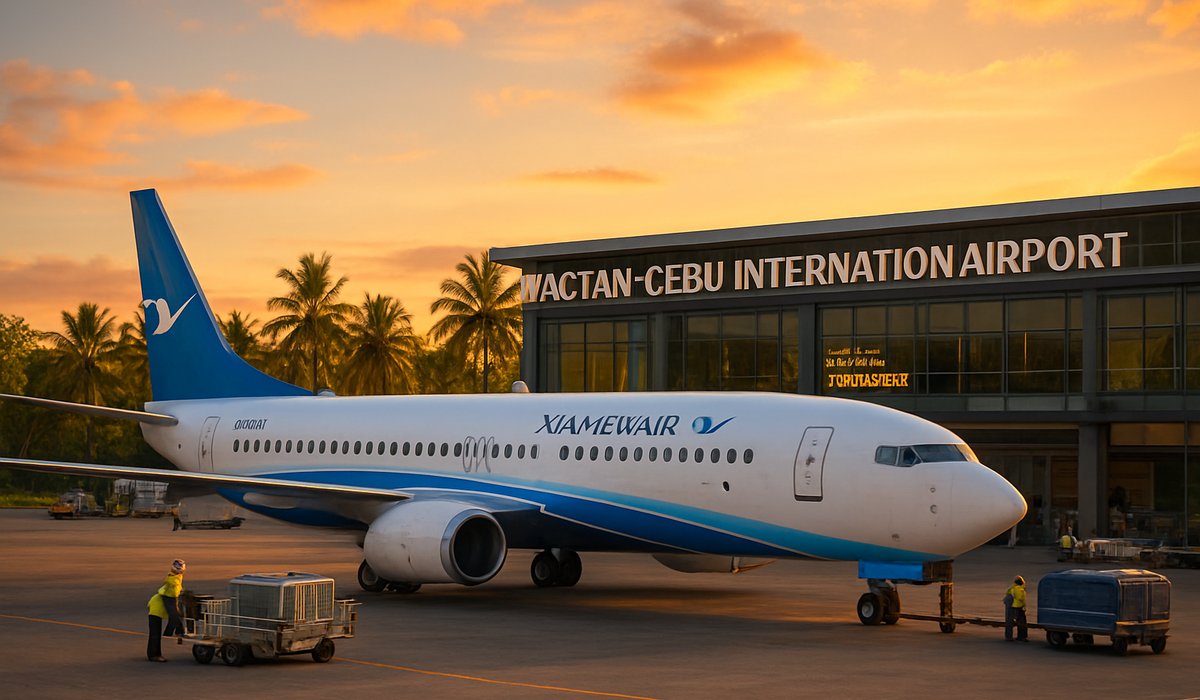
Image generated by AI
Breaking News: Xiamen Air Opens Philippines' Newest Asia-Pacific Route
Quick Summary
- ✈️ Direct flights launched March 29, 2026 between Cebu and Quanzhou, China
- 📅 Twice-weekly service on Tuesdays and Saturdays from Mactan-Cebu International Airport
- ⏱️ 3-hour flight time on Boeing 737-800 aircraft
- 🇵🇭 Powered by Philippines' new visa-free entry policy for Chinese tourists
Mactan-Cebu International Airport just became the gateway to one of China's most important manufacturing and cultural hubs. Xiamen Air officially launched twice-weekly direct service to Quanzhou on March 29, 2026, marking a transformative moment for Philippine-China connectivity. This new route—operating every Tuesday and Saturday—will slash travel times in half and unlock unprecedented opportunities for business travelers and leisure tourists exploring the Visayas region.
The three-hour flight connects Central Visayas directly to Fujian province's economic engine, a region annually driving billions in textile, footwear, and electronics manufacturing. For Chinese visitors, the announcement couldn't come at a better moment: the Philippine government's recent visa-free tourism policy means qualifying arrivals can skip Manila entirely and land directly in Cebu's international gateway.
Why This Route Changes Everything for Cebu's Tourism Future
Cebu has long competed for Chinese tourist arrivals alongside Manila and Boracay. Until now, mainland Chinese visitors flying into the Visayas required either connecting flights through the capital or lengthy domestic transfers. The new Xiamen Air service eliminates that friction entirely.
What makes this route strategically critical:
The partnership was forged during February 2026 diplomatic negotiations. Governor Pamela Baricuatro of Cebu Province led a high-level trade mission to Fujian, establishing the groundwork that led directly to airline negotiations. Quanzhou—a UNESCO-recognized port city with 1,200+ years of maritime heritage—represents more than just a departure point. It's a concentrated population center of 8+ million residents, signifying substantial source market potential for Philippine tourism.
Chinese travelers seeking tropical beaches, Spanish colonial architecture, and world-class dive sites in Cebu no longer face logistical barriers. Direct access means shorter total journey times, lower connection risks, and more appeal to time-constrained business travelers juggling multiple Asian destinations.
Xiamen Air's Fleet and Service Specifications
Xiamen Air operates the route using Boeing 737-800 aircraft, a widely trusted narrow-body jet configured for regional Asia-Pacific routes. The aircraft seats approximately 160–180 passengers in a two-cabin configuration, standard for medium-haul Chinese carriers serving Southeast Asia.
Flight Schedule Highlights:
- Route: Mactan-Cebu International Airport (CEB) ↔ Quanzhou Jinjiang International Airport (XMN)
- Frequency: 2 flights weekly (Tuesdays and Saturdays)
- Block Time: Approximately 3 hours
- Aircraft Type: Boeing 737-800
- Capacity: ~170 passengers per flight
The carrier, based in China's Fujian province, operates 300+ flights weekly across Southeast Asia, making it one of the region's most aggressive expansion-focused Chinese airlines. Xiamen Air's investment in this Cebu route signals confidence in sustained travel demand recovery across Philippine tourism sectors.
Manufacturing & Trade: The Business Catalyst
Beyond tourism, Quanzhou's economic significance cannot be overstated. The city anchors Fujian's industrial complex as a leading producer of:
- Footwear and apparel (43% of China's athletic shoe manufacturing footprint)
- Electronic components (semiconductor assembly, consumer electronics)
- Petrochemicals and refining (supporting broader manufacturing ecosystems)
- Seafood processing (utilizing the city's deep-water port history)
For Philippine exporters and businesses in Cebu—particularly those in agricultural exports, business process outsourcing, and light manufacturing—the direct flight cuts logistics costs significantly. Previously, supply-chain coordination between Cebu-based operations and Fujian manufacturing partners required overnight connections through Shanghai or Canton. Direct routing enables same-day meetings, faster contract negotiations, and tighter inventory management.
Cebu's own export ecosystem (coconut products, bananas, seafood) stands to benefit from improved access to one of China's major import distribution hubs.
The Visa-Free Policy: The Game-Changing Catalyst
The Philippine government's decision to grant visa-free entry to Chinese nationals (effective March 2026) launched hours before this route went operational—perfect timing that amplifies Xiamen Air's market opportunity tenfold.
Chinese travelers on approved business visas, tourist permits, or visa-free eligibility can now expect:
- No embassy pre-approval delays
- Arrival card processing (instead of visa sticker requirements)
- 30-day stay allowances for qualifying visitors
This convergence of airline supply and visa policy removes the final barrier to spontaneous bookings. Travel agents across Fujian can now offer "same-week" Cebu beach packages without the 2-week visa processing window that previously limited demand.
What This Means for Travelers: Practical Impact
For Leisure Tourists:
- Chinese nationals can book Cebu beach holidays, heritage tours, and dive expeditions without Manila connections
- Reduced travel fatigue means more vacation time in-destination
- Airport-to-resort transfers from Mactan (15–45 minutes depending on location) versus Manila (2–3 hours on congested highways)
For Business Travelers:
- Morning departures from Quanzhou allow evening arrivals in Cebu for next-day meetings
- Return flights (Saturdays from Cebu) enable weekend business wrap-ups in Fujian
- Eliminates need for separate visa applications; single passport swipe grants entry
For Regional Airlines & Hotels:
- Xiamen Air's arrival introduces competitive capacity, potentially lowering fares across Asia-Pacific China routes
- Hotels across Cebu (Shangri-La, Crimson Resort, budget chains) expect expanded occupancy from Chinese source-market bookings
- Airport ground-handling services, car rental operators, and tour companies prepare for surge capacity
Inside Mactan-Cebu International Airport's Expansion Plans
Mactan-Cebu has transformed dramatically over the past five years. Terminal 2, opened in 2018, now handles 8.8 million passengers annually. The airport's strategic positioning as a "secondary hub" (not primary like Manila) means:
- Shorter wait times for immigration and customs
- Modern 24-hour facilities with international dining, duty-free retail, and business lounges
- Direct ground connections to island-hopping destinations (Bohol, Negros, Palawan) via ferry or domestic flights
Xiamen Air's entry validates MCIA's vision to become a genuine competing Asian hub—not merely a gateway. As additional carriers launch routes to Chengdu, Dalian, and Shandong in coming quarters, Cebu's infrastructure should handle increased passenger loads without Manila's notorious congestion challenges.
FAQ: Your Top Questions About the Cebu-Quanzhou Route
Q: How much will the Xiamen Air flight cost? A: Pricing hasn't been officially released, but comparable China-Southeast Asia routes average $180–250 round-trip. Early bookings may offer promotional fares ($150–180) during the inaugural 3-month period. Check Xiamen Air's official website or travel agents for current rates.
Q: Do I need a visa to fly from China to Cebu? A: Chinese nationals traveling for tourism (under 30 days) now qualify for visa-free entry. Business travelers should verify their specific purpose with Philippine Bureau of Immigration. All passengers need a valid passport with 6+ months validity.
Q: What's the best time to book this flight? A: Tuesday and Saturday departures from both cities suit leisure travelers. Business travelers should book 2–3 weeks in advance. The route is expected to fill quickly given pent-up demand and the visa policy's fresh rollout.
Q: Can I connect to other Philippine islands from Cebu? A: Yes. Cebu serves as the Visayas' main transport hub. Ferries depart to Bohol (45 min), Negros (1–2 hours), and Camotes Islands (1.5 hours). Domestic flights connect to Iloilo, Davao, and Coron within 1–2 hours.
Q: What attractions should I prioritize in Cebu? A: Beach resorts (Mactan, Moalboal), heritage sites (Fort San Pedro, Metropolitan Cathedral), adventure activities (whale sharks, scuba diving), and cultural experiences (local markets, temples). Plan 3–5 days for a comprehensive visit.
Looking Ahead: More Routes to Come?
Industry analysts expect Xiamen Air's Cebu success will trigger domino effects. Other Chinese carriers (Air China, China Eastern, Air Asia) are reportedly in discussions with MCIA regarding Chengdu, Hangzhou, and Shandong routes over the next 18 months.
For now, this Tuesday-Saturday lifeline represents the clearest signal yet that Philippine-China travel recovery has entered a new competitive era—one where secondary cities like Cebu compete directly for international gateway status.
For travelers, the message is simple: Direct Asia routes once reserved for Manila are now within reach across the provinces.
Pro Tips for Your Cebu-Quanzhou Journey
✅ Book during promotional windows — Inaugural routes typically offer discounts for the first 2–3 months ✅ Download the Xiamen Air app — Mobile passes, seat selection, and real-time updates streamline travel ✅ Arrive 3 hours early — International flights from MCIA require extended check-in for customs pre-clearance ✅ Exchange currency before flying — Cebu's airport has ATMs, but rates are less favorable than city banks ✅ Book ground transport in advance — Uber, Grab, and hotel shuttles book out during peak arrival windows
Disclaimer
This article is for informational and educational purposes only. It does not constitute legal, financial, or professional advice. While we strive to provide accurate and up-to-date information, travel policies, regulations, and conditions change rapidly. Always verify information with official sources before making travel decisions. Nomad Lawyer makes no representations about the accuracy, reliability, completeness, or suitability of the information provided. Readers should consult qualified professionals for advice specific to their circumstances. The views expressed in this article are those of the author and do not necessarily reflect the views of Nomad Lawyer.
Raushan Kumar
Founder & Lead Developer
Full-stack developer with 11+ years of experience and a passionate traveller. Raushan built Nomad Lawyer from the ground up with a vision to create the best travel and law experience on the web.
Learn more about our team →