
Georgia Advances with Texas as Landmark Hubs Anchor the Future of Americas Flight Operations: A Deep Dive into US Airspace Resilience

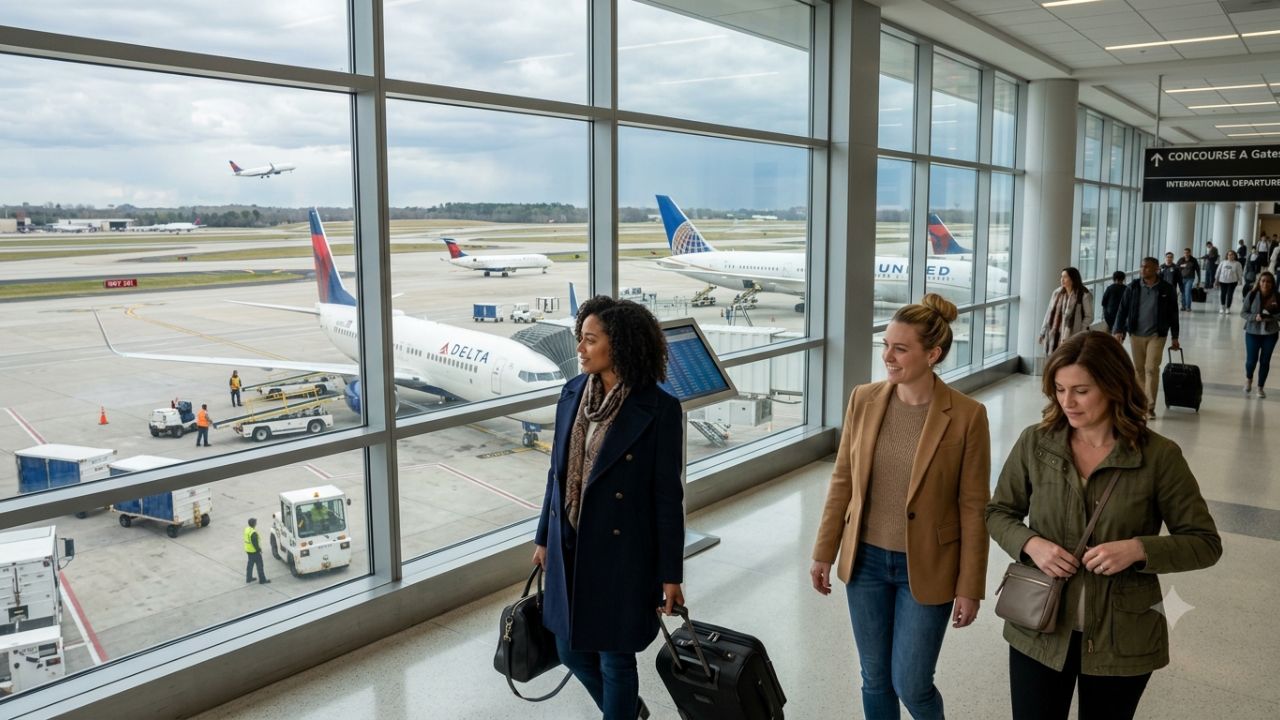
As commercial air traffic across the Americas reaches unprecedented operational density, mega-hubs in Georgia and Texas have cemented their position as the foundational dual anchors of the United States National Airspace System, coordinating tens of thousands of daily passenger, cargo, and transfer movements.
Managing more than 45,000 commercial and general aviation flights every 24 hours nationwide, the Federal Aviation Administration (FAA) oversees a complex aerospace architecture where operational performance in Atlanta (ATL), Dallas Fort Worth (DFW), and Houston (IAH) directly reverberates across every time zone. Whether absorbing severe convective summer thunderstorms across the American South, rerouting transcontinental traffic around Gulf Coast weather systems, or integrating next-generation surface surveillance technologies, Georgia and Texas illustrate how massive hub airports combine scale with operational safety.
Behind these colossal gateway facilities stands a unified federal safety framework shared across all fifty states. By examining the operational profiles of the country’s ten most significant aviation states—spanning the congested urban airspace of New York and New Jersey to the demanding mountainous and oceanic corridors of Colorado, Alaska, and Hawaii—this analysis explores how air traffic controllers, airline dispatchers, and airport authorities maintain systemic reliability while navigating intense weather, crowded runways, and rising passenger demand.
One Unified Federal Standard: The Foundation of American Airspace Safety
A fundamental principle of American commercial aviation is that every scheduled passenger flight operates under identical federal safety standards, regardless of geographic location. Whether an airliner departs from a high-density international hub in Texas or lands at a remote bush airstrip in Alaska, operations are governed by unified FAA regulations.
The core pillars ensuring systemic safety include:
- The FAA National Airspace System (NAS): Provides comprehensive air traffic management to more than 45,000 flights daily. Certified controllers manage aircraft throughout every phase of flight—from pre-departure pushback and active runway sequencing to high-altitude en-route separation and terminal approach vectors.
- Independent Safety Oversight: The National Transportation Safety Board (NTSB) functions as an independent federal agency tasked with investigating every civil aviation accident and serious incident. By identifying probable causes and issuing non-binding safety recommendations, the NTSB creates a non-punitive feedback loop that allows carriers, aircraft manufacturers, and air traffic authorities to refine operating protocols.
- Runway Incursion Mitigation (RIM) Program: Runway safety represents an ongoing operational priority for the FAA. The RIM initiative identifies and reconfigures confusing taxiway geometries, installs elevated runway status lights (RWSL), and deploys advanced surface detection equipment (ASDE-X) to eliminate unauthorized runway crossings by aircraft or ground vehicles.
Georgia and Texas: The Dual Powerhouse Anchors of American Aviation
Georgia and Texas represent the indispensable operational backbones of domestic and hemispheric flight connectivity, serving as massive transfer engines that link secondary cities with global commercial markets.
1. Georgia: The Atlanta Mega-Hub Phenomenon
Hartsfield-Jackson Atlanta International Airport (ATL) has long held distinction as one of the world's highest-volume passenger gateways. Functioning as the primary fortress hub for Delta Air Lines, Atlanta’s commercial model is built on seamless transfer connectivity:
- Connecting Passenger Dominance: The majority of travelers moving through Atlanta neither start nor complete their trips in Georgia. They arrive from hundreds of domestic feeder cities to transfer onto high-frequency transcontinental, transatlantic, and Latin American services.
- Operational Weather Challenges: Summer in Georgia brings intense convective weather. Thunderstorms, sudden cloud-to-ground lightning events, and severe heat density altitude can trigger ramp safety closures and ground stops.
- Mitigation Protocols: Atlanta handles these surges through five parallel, independently operated runways. FAA controllers implement precise miles-in-trail spacing, while airline operations control centers (OCC) coordinate live weather radar sequencing to route flights around isolated storm cells without closing entire arrival corridors.
2. Texas: The Multi-Gateway Titan
Texas is an aviation giant defined by diverse operating environments and massive corporate travel corridors:
- Dallas Fort Worth International Airport (DFW): Serving as the central global fortress hub for American Airlines, DFW spans over 17,000 acres and operates seven active runways, processing hundreds of thousands of daily transfer connections.
- Houston Gateways (IAH and HOU): George Bush Intercontinental Airport (IAH) operates as United Airlines' primary southern international gateway to Latin America and the Caribbean, while William P. Hobby Airport (HOU) anchors major Southwest Airlines domestic operations.
- High-Growth Regional Centers: Austin-Bergstrom International Airport (AUS) and San Antonio International Airport (SAT) have experienced double-digit corporate travel growth fueled by expanding technology and manufacturing sectors.
- Texas Environmental Pressures: The state experiences vast meteorological diversity—ranging from springtime supercell thunderstorms producing damaging hail and wind shear to oppressive midsummer heat exceeding 100°F (38°C) that impacts aircraft takeoff weight calculations, alongside late-summer Atlantic hurricane threats along the Gulf Coast.
Comprehensive Profile: The Top 10 Aviation Powerhouse States
The following section examines how the ten most critical aviation states in the United States balance immense traffic volumes against distinct environmental and geographic operating constraints.
1. New York: Dense Metropolises and Constrained Skies
New York represents the epicenter of global commerce, financial travel, and transatlantic tourism. John F. Kennedy International Airport (JFK) operates as a preeminent global gateway, while LaGuardia Airport (LGA) handles high-frequency domestic and corporate shuttle routes.
- Airspace Complexity: New York’s terminal radar approach control (TRACON) is among the most congested in the world, coordinating flights within immediate proximity of Newark Liberty in New Jersey.
- Weather Bottlenecks: Nor'easter winter blizzards, coastal sea fog, and summer squall lines can trigger extensive Ground Delay Programs (GDP), creating ripple delays across the entire national network.
2. New Jersey: The Transatlantic Gateway at Newark
Newark Liberty International Airport (EWR) anchors international and domestic connectivity for the northern New Jersey and greater Manhattan metropolitan areas.
- Network Role: Serving as a primary transatlantic hub for United Airlines, Newark handles high-density international widebody operations.
- Operational Precision: Operating with just two primary parallel runways alongside a crosswind runway, Newark requires precise air traffic sequencing. A localized ground delay in Newark frequently affects arrival slots in Chicago, Atlanta, and London.
3. California: Multi-Airport Pacific Rim Gateway
Unlike single-hub states, California operates a distributed multi-airport system connecting North America with Asia, Oceania, and Latin America.
- Major Hub Facilities: Los Angeles International (LAX), San Francisco International (SFO), San Diego International (SAN), Oakland (OAK), San Jose (SJC), and Sacramento (SMF).
- Environmental Factors: SFO is famous for summer morning marine stratus layers (coastal fog) that reduce arrival rates from 60 to 30 aircraft per hour due to closely spaced parallel runways. In recent years, seasonal wildfire smoke inversions have introduced visibility challenges, requiring specialized instrument arrival procedures.
4. Florida: Global Tourism, Leisure Travel, and Tropical Weather
Florida is an international leisure capital, with Miami (MIA), Orlando (MCO), Tampa (TPA), and Fort Lauderdale (FLL) handling massive tourist and cruise passenger flows.
- Latin American Commerce: Miami serves as the nation's premier passenger and cargo bridge to South America, Central America, and the Caribbean.
- Convective Storms and Hurricanes: Florida experiences more annual lightning strikes than any other US state. Airlines routinely manage ramp safety halts during afternoon thunderstorms and execute proactive fleet relocations when Atlantic hurricanes threaten coastal corridors.
5. Illinois: The Crossroads of Midwest Transcontinental Flow
Chicago O'Hare International Airport (ORD) and Chicago Midway International Airport (MDW) anchor the mid-continent aviation network.
- Dual Mega-Hub Synergy: O'Hare serves as a dual fortress hub for both United Airlines and American Airlines, while Midway operates as a primary domestic stronghold for Southwest Airlines.
- Winter Operations Excellence: Chicago sets the standard for complex winter operations, deploying coordinated snow-clearing fleets and multi-bay aircraft de-icing pads to keep departure flows active during freezing rain and sub-zero blizzard events.
6. Alaska: Lifeline Aviation and the Global Cargo Crossroads
Alaska presents the most extreme operating environment in the nation, where aviation is an essential survival necessity rather than a convenience.
- Lifeline Communities: Over 80 percent of Alaskan communities are unreachable by road, relying exclusively on scheduled regional air taxis, turboprop services, and bush planes for food, mail, and medical evacuations.
- Global Freight Crossroads: Ted Stevens Anchorage International Airport (ANC) ranks as one of the world’s busiest air cargo hubs, serving as an indispensable refueling and sorting stop between North America and manufacturing centers across Asia.
- Extreme Conditions: Operations must accommodate sub-zero Arctic temperatures, severe wind shear, icing, volcanic ash plumes from the Aleutian Arc, and vast distances between emergency diversion fields.
7. Colorado: High Altitude and Rocky Mountain Wave Dynamics
Denver International Airport (DEN) has grown into one of the country's largest passenger hubs, connecting East and West Coast flows while serving Rocky Mountain ski tourism.
- Density Altitude Factor: Situated at 5,431 feet above sea level, Denver’s high elevation creates thinner air, reducing aircraft lift and engine performance on hot summer afternoons. To compensate, DEN features the longest commercial runway in North America (Runway 16R/34L at 16,000 feet).
- Mountain Wave Turbulence: Proximity to the Continental Divide generates powerful downdrafts, mountain-wave turbulence, and sudden severe convective storms that require specialized pilot training and dispatch flight planning.
8. Hawaii: Extended Oceanic Routing and Island Lifelines
Hawaii’s aviation network combines long-haul transpacific oceanic corridors with high-frequency inter-island air shuttles connecting Honolulu (HNL), Kahului (OGG), Kona (KOA), and Lihue (ITO).
- Oceanic ETOPS Requirements: All twin-engine flights connecting Hawaii to the US mainland operate under Extended-range Twin-engine Operational Performance Standards (ETOPS), requiring strict fuel reserves, en-route diversion airport monitoring, and ocean-tracking satellite navigation.
- Inter-Island Commuting: Island residents depend on Boeing 717 and ATR turboprop shuttles for daily medical, legal, and family transport, requiring exceptional turnaround punctuality from airline ground crews.
Comparative Overview: America's Top 10 Aviation Powerhouse States
The following table synthesizes the operational profiles, primary airport hubs, and key environmental challenges across the ten leading aviation states.
| State | Primary Commercial Airport Hubs | Core Aviation Role | Major Operational & Weather Constraints |
|---|---|---|---|
| Georgia | Atlanta (ATL) | World’s leading transfer mega-hub, Delta primary fortress | Summer convective thunderstorms, lightning ramp stops |
| Texas | Dallas Fort Worth (DFW), Houston (IAH/HOU) | Major connecting mega-hub, Latin America gateway | Extreme heat density altitude, supercell storms, hurricanes |
| New York | New York JFK, New York LaGuardia (LGA) | Global finance, commerce, and overseas tourism | High airspace congestion, winter nor'easters, shared TRACON |
| New Jersey | Newark Liberty (EWR) | Transatlantic gateway, United Airlines Northeast hub | Runway capacity limits, New York metro air traffic flow delays |
| California | Los Angeles (LAX), San Francisco (SFO) | Pacific Rim gateway, distributed multi-airport network | Coastal fog ceiling constraints at SFO, wildfire smoke |
| Florida | Miami (MIA), Orlando (MCO), Fort Lauderdale (FLL) | Latin America/Caribbean cargo, cruise and leisure hub | Intense lightning activity, tropical depressions, hurricanes |
| Illinois | Chicago O'Hare (ORD), Chicago Midway (MDW) | Transcontinental Midwest nexus, dual-carrier mega-hub | Winter de-icing operations, lake-effect snow, squall lines |
| Alaska | Anchorage (ANC), Fairbanks (FAI), Juneau (JNU) | Transpacific cargo crossroads, remote community lifeline | Sub-zero Arctic blizzards, mountain terrain, volcanic ash |
| Colorado | Denver (DEN), Colorado Springs (COS) | Continental connecting hub, mountain tourism gateway | High-elevation density altitude, mountain-wave turbulence |
| Hawaii | Honolulu (HNL), Kahului (OGG), Kona (KOA) | Pacific oceanic gateway, inter-island civic lifeline | Oceanic ETOPS overwater routing, trade winds, volcanic vog |
Traveler Logistics Guide: Navigating Mega-Hub Connections and Weather Delays
Understanding how the National Airspace System operates empowers travelers to manage complex connections and navigate weather disruption proactively:
1. Minimum Connection Times (MCT) at Atlanta and Dallas
- Atlanta (ATL) Transfer Tactics: Atlanta’s terminal layout consists of seven domestic and international concourses linked by the automated subterranean Plane Train. For domestic-to-domestic transfers, book itineraries with at least 50 to 60 minutes. For international-to-domestic arrivals requiring baggage recheck and TSA rescreening, reserve a minimum layover of 90 to 120 minutes.
- Dallas Fort Worth (DFW) Transfer Tactics: DFW operates five semicircular terminals (A through E) connected airside by the elevated Skylink people mover, which circles the entire airport in under 20 minutes. Maintain a minimum connection window of 60 minutes for domestic flights and 2 hours for international arrivals.
2. Differentiating Air Traffic Control Ground Stops from Airline Delays
- FAA Ground Stops (GS): When severe storms or wind shear threaten an airport like Atlanta or Dallas, FAA traffic managers issue temporary ground stops, halting outbound departures at origin cities bound for that specific hub. These delays are instituted strictly for flight safety.
- Ground Delay Programs (GDP): In response to reduced arrival capacity caused by low clouds or fog (common at San Francisco or Newark), the FAA slows incoming traffic by assigning delayed departure slots at originating airports.
- Tracking System Status: Travelers can monitor real-time national airspace constraints directly via the official FAA National Airspace System status dashboard or third-party tracking portals like FlightAware.
3. Understanding Automatic Refund Rights and Rebooking Protections
- Department of Transportation (DOT) Protections: Under US Department of Transportation rules, passengers are entitled to a full cash refund (rather than travel vouchers) if an airline cancels a flight or significantly alters departure times and the traveler chooses not to take the alternative flight.
- Proactive Airline Waivers: When major winter storms in Chicago or hurricanes in Florida are forecast, major airlines typically issue travel advisories allowing passengers to change flight dates without paying fare differences or change fees. Rebooking early—before operations break down—is the most effective strategy to avoid airport stranding.
Looking Ahead: The Technology-Driven Future of American Airspace
To maintain global leadership as air traffic demands expand toward 2030, the United States is investing heavily in controller recruitment, runway modernization, and satellite-based air traffic management:
- Workforce Modernization: The FAA is expanding controller academy enrollment in Oklahoma City to address staffing constraints at high-density en-route centers.
- NextGen Digital Sequencing: Deploying Time-Based Flow Management (TBFM) and Data Communications (Data Comm) allows controllers to send digital flight clearances directly to aircraft cockpits, reducing voice radio frequency congestion and enabling optimized continuous descent approaches that save fuel.
- Sustainable Surface Operations: Implementing electric airport ground service equipment (eGSE) and taxiway routing algorithms to minimize aircraft engine idling times on crowded taxiways at ATL, DFW, and ORD.
Through coordinated investments in infrastructure, skilled human talent, and uncompromised safety standards, Georgia, Texas, and their fellow aviation powerhouse states are ensuring that American skies remain resilient, connected, and prepared for the future.
Related Travel Guides
Disclaimer
This article is for informational and educational purposes only. It does not constitute legal, financial, or professional advice. While we strive to provide accurate and up-to-date information, travel policies, regulations, and conditions change rapidly. Always verify information with official sources before making travel decisions. Nomad Lawyer makes no representations about the accuracy, reliability, completeness, or suitability of the information provided. Readers should consult qualified professionals for advice specific to their circumstances. The views expressed in this article are those of the author and do not necessarily reflect the views of Nomad Lawyer.
Naina Thakur
Contributor & Travel Specialist
Travel enthusiast and legal writer covering visa regulations, responsible tourism, and cultural journeys across global destinations.
Learn more about our team →