
United States Aligns With Canada And More As New York City Drives Global Travel Appeal
United States Aligns With Canada And More As New York City Drives Global Travel Appeal

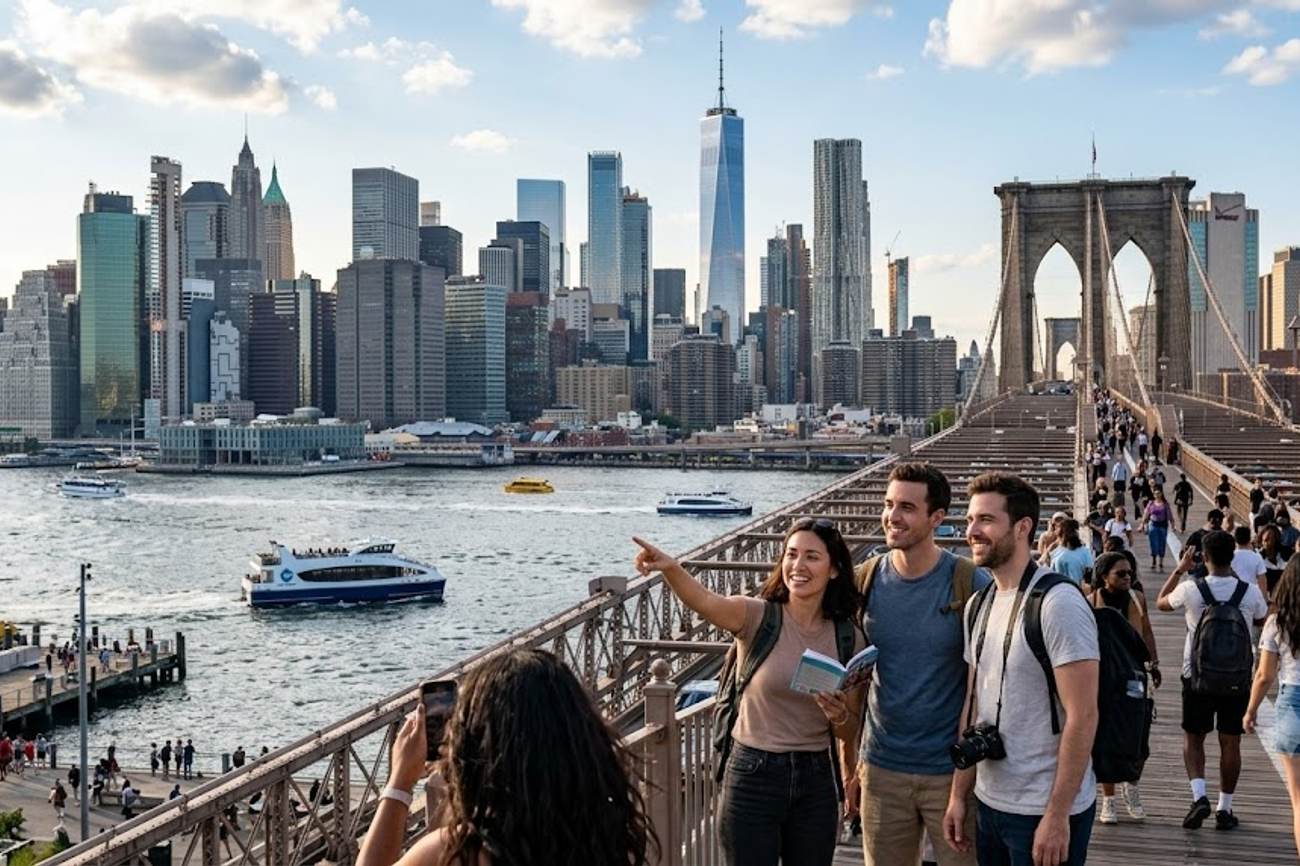
Image generated by AI
Are you planning your first trip to the Big Apple or returning to explore the outer boroughs? Navigating the logistics of New York City requires more than just a map; it demands a strategic approach to ground transport, airport transfers, and neighborhood clustering to avoid spending your entire vacation in traffic.
Optimizing the New York City Transit Experience
New York City operates as a massive hub of five distinct boroughs, with Manhattan serving as the primary nexus for international arrivals. For the modern traveler, the challenge is not finding things to do, but managing the physical movement between the high-density tourist zones of Midtown and the sprawling residential landscapes of Brooklyn, Queens, and Harlem.
The city's infrastructure is designed for high-volume movement. Whether you are visiting the Statue of Liberty or exploring the galleries of SoHo, your primary objective should be minimizing reliance on private vehicles. The urban grid is optimized for pedestrian movement and a comprehensive public transit system that operates 24 hours a day, a rarity among global capitals.
For those arriving via JFK or LaGuardia, the transition from the airport to the city center is the first critical logistical hurdle. Utilizing the MTA (Metropolitan Transportation Authority) is the most efficient way to bypass the notorious congestion of the Van Wyck Expressway or the Queens-Midtown Tunnel.
Route and Connectivity Overview
While New York does not have a single "flight schedule" like a transit hub, the movement between its primary landmarks and boroughs follows specific logistical patterns. To optimize your itinerary, use the following breakdown of primary destination clusters:
| Destination Cluster | Primary Access Mode | Transit Duration (Avg) | Status |
|---|---|---|---|
| Midtown / Times Square | Subway (N, Q, R, W, 1, 2, 3, 7) | 20-40 mins from JFK | High Traffic |
| Lower Manhattan / WTC | Subway (R, W, 4, 5, 2, 3) | 45-60 mins from JFK | Moderate Traffic |
| Brooklyn / Williamsburg | Subway (L, J, M, Z) | 60-90 mins from JFK | Moderate Traffic |
| Queens / Astoria | Subway (N, W, 7) | 30-50 mins from JFK | Variable |
| Upper East Side / MET | Subway (4, 5, 6) | 40-60 mins from JFK | Moderate Traffic |
Traveler Logistics Guide
To navigate New York City without the friction typical of first-time visitors, follow these step-by-step logistics protocols.
1. Digital Payment and Fare Systems
Stop buying individual MetroCards. The city has transitioned to OMNY, a contactless payment system. You can use a contactless credit card, a smartphone wallet (Apple Pay, Google Pay), or a wearable device at any subway turnstile or bus reader. This eliminates the need to navigate vending machines and allows for "fare capping," where you stop paying for rides after a certain number of trips in a week.
2. Airport-to-City Transfer Strategies
If landing at JFK, you have three primary options:
- AirTrain to Jamaica Station: This is the fastest way to connect to the E train or Long Island Rail Road (LIRR) for a direct shot into Manhattan.
- Ride-Share/Taxi: Expect high surge pricing and significant delays during rush hour (07:00-10:00 and 16:00-19:00).
- Private Shuttle: Best for families with heavy luggage, though slower than the rail options.
3. Neighborhood Clustering
To avoid "transit burnout," group your activities by geography. Do not attempt to visit the Statue of Liberty in the morning and a Broadway show in the afternoon without accounting for at least 90 minutes of transit and security time.
- Day 1: Lower Manhattan (One World Trade Center, Brooklyn Bridge, Financial District).
- Day 2: Midtown (Empire State Building, Rockefeller Center, Broadway).
- Day 3: Upper Manhattan/Queens (The MET, Central Park, Astoria food tour).
4. Baggage and Storage Logistics
Most hotels in Manhattan offer luggage storage, but if you are staying in an Airbnb or moving between boroughs, use third-party luggage lockers. Carrying large suitcases on the subway is physically demanding and often prohibited during peak hours due to crowding.
5. Customs and Entry Requirements
Ensure your ESTA or Visa is processed at least 72 hours before departure. For those entering via JFK, ensure you have digital copies of your accommodation address, as this is required for customs declarations.
Regional Connectivity Impact
The integration of the five boroughs creates a unique transit ecosystem where the "center" of the city shifts depending on the traveler's interest. The expansion of transit options into Queens—specifically areas like Jackson Heights and Flushing—has transformed the borough into a primary destination for culinary tourism, shifting the focus away from the traditional Manhattan-centric model.
Furthermore, the connection between Manhattan and Brooklyn via the Brooklyn Bridge and the various subway lines (L, G, J, M, Z) has allowed for the growth of Williamsburg as a creative hub. For the traveler, this means that the "authentic" New York experience is now distributed across a wider geographical area, necessitating a more sophisticated approach to time management and route planning.
The cultural depth provided by institutions like the Metropolitan Museum of Art and the Museum of Modern Art (MoMA) is supported by the city's commitment to public spaces. The proximity of these museums to Central Park allows for a "low-friction" transition between indoor cultural consumption and outdoor recreation, provided the traveler utilizes the cross-town bus routes or the subway lines serving the Upper East and West sides.
FAQ: New York City Transit 2024
Do I need a physical transit card for the subway? No. Use OMNY contactless payment via your phone or credit card. It is faster than the MetroCard and automatically calculates the best fare for your trip frequency.
How long should I allow for airport transfers? From JFK to Midtown, allow 60 to 90 minutes. During peak rush hour, ride-shares can take significantly longer; the AirTrain and LIRR are the most predictable options.
Can I check my bags through to a hotel from the airport? Most airlines do not offer this. You must either transport your luggage via taxi/shuttle or use a specialized luggage delivery service available at some terminals.
Is the subway safe for independent travelers at night? Generally, yes. Stick to well-lit platforms and avoid empty cars. The system is used by millions daily and is the primary mode of transport for locals at all hours.
Master the grid, skip the cabs, and experience the city like a local.
#NYC-Transit-2024 #JFK-Airport-Logistics #MTA-OMNY-Guide #Manhattan-Borough-Connectivity #NYC-Neighborhood-Routing
Related Travel Guides
Disclaimer
This article is for informational and educational purposes only. It does not constitute legal, financial, or professional advice. While we strive to provide accurate and up-to-date information, travel policies, regulations, and conditions change rapidly. Always verify information with official sources before making travel decisions. Nomad Lawyer makes no representations about the accuracy, reliability, completeness, or suitability of the information provided. Readers should consult qualified professionals for advice specific to their circumstances. The views expressed in this article are those of the author and do not necessarily reflect the views of Nomad Lawyer.
Raushan Kumar
Founder & Lead Developer
Full-stack developer with 11+ years of experience and a passionate traveller. Raushan built Nomad Lawyer from the ground up with a vision to create the best travel and law experience on the web.
Learn more about our team →