United Kingdom and Other Leading Destinations Follow Egypt’s 2027 Tourist Hajj Travel Overhaul

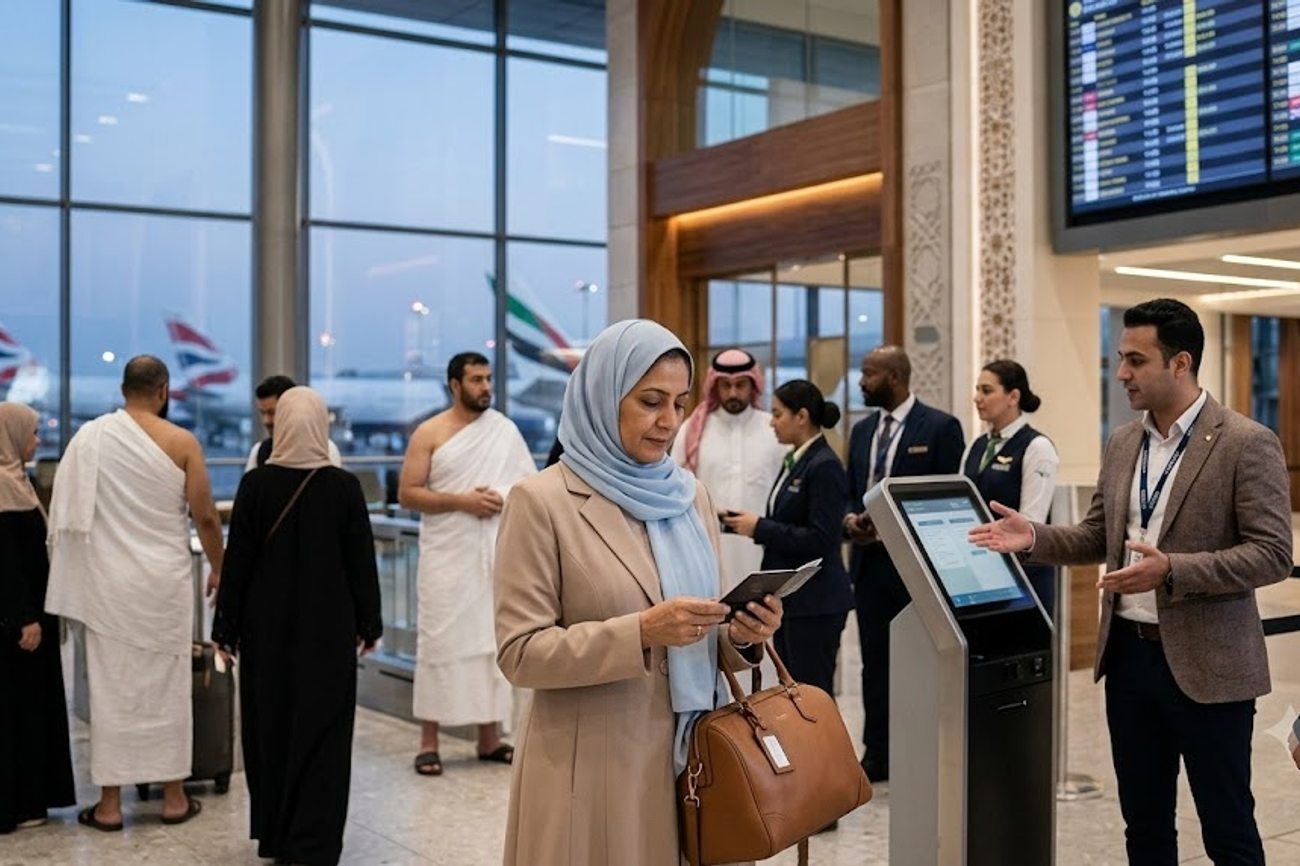
Image generated by AI
[Cairo, October 2024] — Egypt is implementing a comprehensive overhaul of its Tourist Hajj framework for the 2027-2028 cycle, drastically reducing overland pilgrimage capacity in favor of air travel and digitized monitoring. The new regulations, issued by the Ministry of Tourism and Antiquities, shift the logistical burden away from road transport and introduce strict price ceilings and distance-based accommodation mandates to standardize the pilgrim experience.
The reorganization targets the systemic delivery of religious tourism, mandating that all journeys be managed through licensed tourism companies. By integrating information and communication technologies, the Egyptian government aims to tighten oversight of tour operators and protect travelers from service failures. The framework introduces a new digital auditing system and rigid specifications for aircraft-based and camp-based packages, signaling a move toward a more regulated, high-capacity aviation model for the 2027 pilgrimage season.
The Shift to Air-Centric Capacity
The 2027 framework marks a decisive pivot in how the Egyptian government distributes pilgrimage visas. While the total capacity remains stable at 30,500 places—matching the 2026 electronic-lottery scale—the internal distribution has been aggressively redistributed to prioritize air travel and structured camp environments.
The most significant casualty of this shift is the Overland Hajj segment. In the initial 2026 lottery, 5,700 places were allocated for road-based travel. For 2027, this has been slashed to 2,850 visas. However, the actual number of available pilgrim slots is even lower, as 150 of those visas are strictly reserved for bus drivers, leaving only 2,700 places for pilgrims. This represents a net loss of 3,000 road-based positions.
Conversely, Economy Air capacity has expanded to 18,000 visas, an increase of 940 places over the previous cycle. The government has also expanded its "Camp" offerings, introducing "Camps C" to broaden access to structured accommodations.
2027 Visa Allocation Breakdown:
- Economy Air: 18,000 visas
- Tourist Camps (A, B, and C): 7,800 visas (Camps A and B: 4,300; Camp C: 3,500)
- Overland Hajj: 2,700 pilgrim places (excluding 150 driver visas)
- Tourist Towers: 2,000 visas
Price Ceilings and Cost Structures
The Ministry of Tourism and Antiquities has established maximum base price ceilings for 2027. These are not fixed retail prices but rather legal limits that tourism companies cannot exceed. Operators are permitted to offer packages below these ceilings, provided they meet all contractual specifications and service standards.
A critical distinction for travelers is that these ceilings cover the program management and accommodation but do not include airline tickets. For those opting for the remaining overland slots, the price ceilings exclude the cost of the ferry ticket.
Maximum Base Price Ceilings by Category:
- Tourist Towers: EGP 580,000
- Tourist Camps:
- Camp A: EGP 650,000 (The highest overall ceiling)
- Camp B: EGP 545,000
- Camp C: EGP 395,000
- Economy Air: EGP 270,000 to EGP 310,000 (Depending on sub-category A, B, or C)
- Overland: EGP 230,000 to EGP 260,000
Mecca Accommodation and Proximity Mandates
To prevent the common issue of pilgrims being housed in remote areas, the 2027 rules introduce strict distance limits from the Grand Mosque in Mecca and central Medina.
Tourist Towers and "Camps A" are the premium tiers, requiring a minimum of two nights (Towers) or nine nights (Camps A) within 250 meters of the Grand Mosque. "Camps B" allows for a wider range, with accommodations situated between 250 and 1,250 meters. The absolute outer limit for any approved Mecca accommodation under the 2027 framework is 4,000 meters.
For pilgrims in the lower-cost Economy C and Overland C tiers, the government is introducing a "proximity upgrade" system. Travelers can pay an additional fee—either EGP 17,000 or EGP 14,000—to secure a hotel closer to the holy sites, depending on the specific distance option selected. All Tower packages must also include at least three nights in central Medina.
Digital Oversight via the Rafeeq App
The 2027 season marks the full integration of the Rafeeq application, a digital monitoring tool designed to eliminate contract fraud and improve service accountability. Licensed tourism companies are now required to create Rafeeq accounts for every pilgrim during the contracting phase.
The app serves as a digital ledger where pilgrims upload their signed trip contracts and payment receipts. This allows the Ministry to track the journey in real-time, from the moment of departure from Egypt to arrival at accommodations in Mecca and Medina, and finally, the return through Egyptian entry points.
Furthermore, the government has introduced a weighted service-quality assessment to rate tourism companies. The final performance score is calculated as follows:
The United Kingdom and other leading destinations are taking cues from Egypt's 2027 tourist Hajj travel overhaul, which aims to improve the overall experience for pilgrims. For the latest information on travel requirements and regulations, visitors can check the official UK Government website for guidance on traveling to the UK during peak seasons. This overhaul is expected to have a significant impact on tourist traffic and travel arrangements.
- Tourism Company Performance: 50%
- Company Supervisors: 30%
- Pilgrim Feedback/Rating: 20%
Tightened Safety for Overland Transit
Despite the reduction in overland capacity, the safety requirements for the remaining road journeys have been significantly increased. All buses used for the 2027 Hajj must be model year 2023 or newer and maintain a minimum capacity of 40 passengers.
Operators are now legally mandated to provide a reserve driver for every vehicle to prevent fatigue-related accidents. Additionally, all buses must be equipped with active GPS tracking and functioning speed limiters. These vehicles must pass rigorous technical inspections and adhere strictly to the land routes authorized by the Saudi Ministry of Hajj and Umrah. Entry and departure are restricted to the Halat Ammar crossing, with tight coordination required at the Nuweiba terminal.
Practical Traveler Advisory and Strategic Insights
For the average pilgrim, these changes mean that booking a "budget" road trip is becoming significantly harder and more expensive. With a 50% reduction in overland slots, competition for these seats will be intense, and the requirement for 2023-model buses may drive up the base costs of the remaining packages.
Travelers should be aware that the "maximum price" listed by the government is not the final price. Because airline tickets and ferry fares are excluded from the ceilings, the total out-of-pocket cost will be substantially higher than the EGP figures quoted in the Ministry's framework.
The introduction of the Rafeeq app is a major win for consumer protection. Pilgrims no longer have to rely on verbal promises; the digital upload of contracts means the government has a record of exactly what the tourism company promised to provide. If a hotel is further than the mandated distance, the Rafeeq record provides the evidence needed for a formal complaint.
The Future of Religious Tourism 2027-2028
This overhaul is viewed as a blueprint for other leading destinations. By shifting toward "Economy Air" and "Tourist Camps," Egypt is moving away from the logistical volatility of long-distance bus convoys and toward a more scalable, aviation-led model.
The integration of the Rafeeq system suggests that future pilgrimage cycles will be entirely paperless. The government's focus on "information and communication technologies" indicates that we may see real-time crowd management and digital visa integration in the 2028 cycle. For now, the priority remains the transition from road to air and the enforcement of strict accommodation proximity to ensure the health and safety of the 30,500 allocated pilgrims.
FAQ: Egypt Tourist Hajj 2027
Are airline tickets included in the EGP price ceilings? No. The Ministry of Tourism and Antiquities has explicitly stated that the maximum base prices for Tourist Towers, Camps, and Economy Air do not include the cost of airline tickets. These are additional expenses.
How many people can travel via the Overland Hajj in 2027? There are 2,700 available places for pilgrims. While 2,850 visas are allocated for the overland segment, 150 of those are reserved exclusively for bus drivers.
What is the Rafeeq app and is it mandatory? Yes, it is mandatory. Rafeeq is a digital monitoring system where pilgrims upload contracts and payment receipts. It allows the government to track journey stages and rate the performance of tourism companies.
Can I upgrade my hotel if I book an Economy C package? Yes. Pilgrims in the Economy C and Overland C categories can purchase approved proximity upgrades for either EGP 17,000 or EGP 14,000 to secure accommodation closer to the Grand Mosque.
A new era of digitized, air-centric pilgrimage begins in 2027.
Related Travel Guides
- Murphys, June Lake and Nevada City Keep Pace with Other Sierra Destinations as Romantic Small Towns in California Beckon Weekend Travellers
- US Follows Canada as South Wales Travel Expands with Cardiff and Cycling Routes
- United States Joins Canada And More Cities As New York Advances Greener Park Avenue Travel
This article is for informational purposes. Flight routes, passenger regulations, visa rules, and transit advisories are subject to change by airlines and aviation authorities. Readers are advised to verify schedules and travel documentation with relevant carriers and border agencies before departure.
Related Stories

European Mass Protests Disrupt Travel Across France, Italy, Belgium, and Turkey in 2026
The Best Things to Do in Vero Beach with Family: A Local Parent & Traveler's Guide