
United Kingdom And France Are Main Two Tourism Engines For Spain As 58 Million Visitors Push Record Arrivals And Spending Growth
United Kingdom And France Are Main Two Tourism Engines For Spain As 58 Million Visitors Push Record Arrivals And Spending Growth

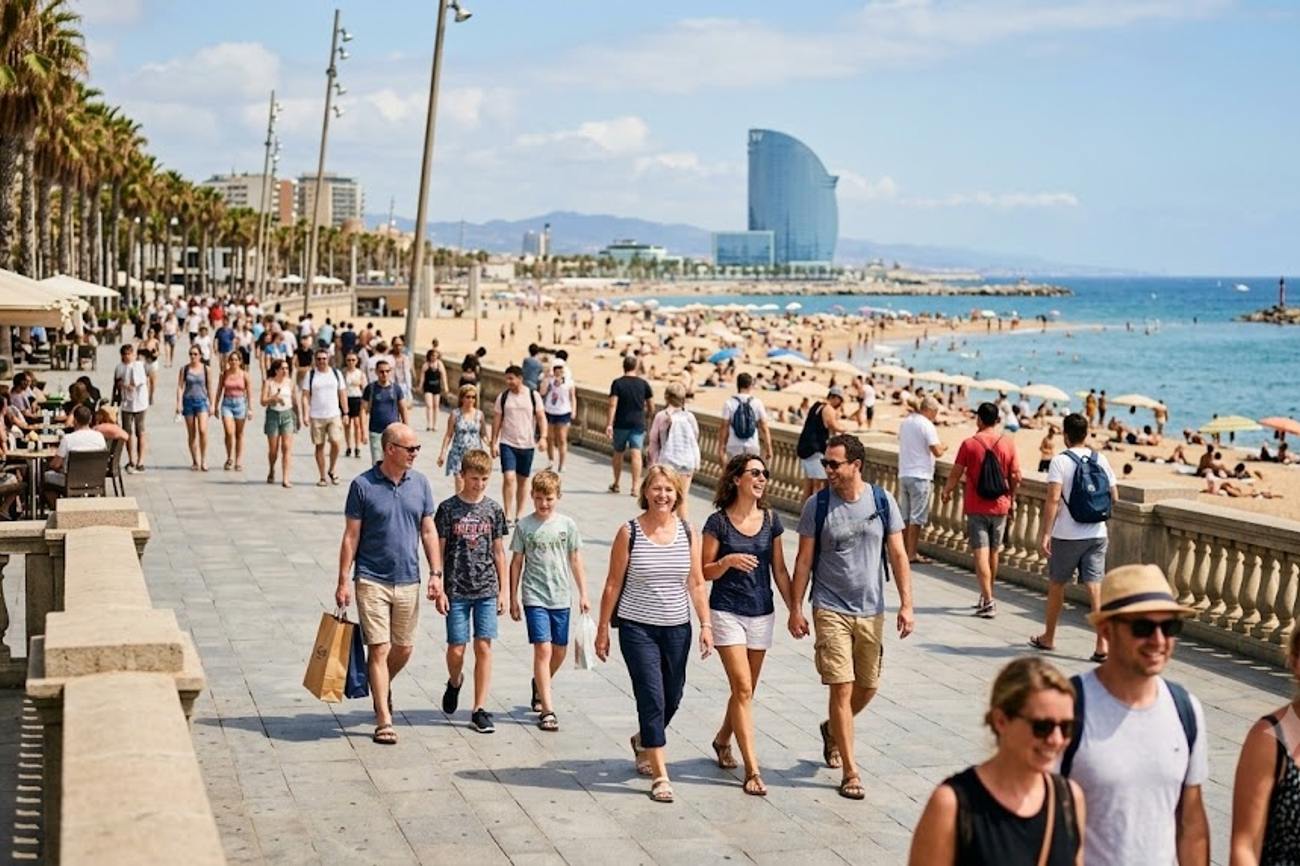
Image generated by AI
[Madrid, August 2026] — Spain has recorded a historic surge in international tourism, welcoming 58.1 million foreign visitors between January and July 2026. This unprecedented influx marks a new record high for the nation's tourism sector, driven primarily by an aggressive increase in arrivals from the United Kingdom and France.
The growth is not limited to volume; the financial impact has scaled proportionally. International tourists injected nearly €82 billion into the Spanish economy during the first seven months of the year, representing a 7.8% increase over the same period in 2025. The month of July alone served as a primary catalyst, drawing 11.5 million arrivals who spent €18.218 billion—a 10.9% year-on-year increase in expenditure.
European Demand Drivers
The record-breaking figures are the result of a strategic combination of expanded air connectivity, high international confidence in Mediterranean destinations, and a growing appetite for Spanish cultural and city-break experiences. Data indicates a structural shift toward "high-value tourism," where the growth in total spending (7.8%) is outstripping the growth in visitor numbers (4.6%). This suggests that travelers are allocating more capital toward premium accommodation, curated local experiences, and high-end gastronomy.
The Ministry of Transport, Mobility and Urban Agenda and various regional authorities have seen this demand manifest across both coastal resorts and urban centers, though the pressure on infrastructure during the July peak has been significant.
Market Breakdown and Impacted Regions
The 2026 surge is dominated by four primary European markets and a growing long-haul presence from North America.
| Source Market | Visitors (Jan-July 2026) | Key Impact Areas | Specific Contribution |
|---|---|---|---|
| United Kingdom | 11.5 Million | Balearic/Canary Islands, Costa del Sol, Madrid, Barcelona | Largest overall market; 2.2M visitors in July alone (19.1% of total) |
| France | 7.2 Million | Catalonia, Barcelona, Valencia, Northern Spain | Second largest market; July spending rose 12.6% to €1.644 billion |
| Germany | 6.9 Million | Mallorca, Balearic Islands, Canary Islands | Primary driver for island tourism and long-term winter stays |
| Italy | 3.5 Million | Madrid, Barcelona, Historic City Centers | Fastest growing market with a 10.3% year-on-year increase |
| United States | Significant (Long-haul) | Madrid, Barcelona | High-spending luxury travel and extended cultural stays |
Beyond these giants, Switzerland, Belgium, and Portugal are expanding Spain's European base, ensuring the industry is not overly dependent on a single nationality. Swiss travelers are currently favoring premium nature and leisure tourism, while Portuguese visitors are driving a rise in cross-border regional mobility.
Practical Traveler Advisory and Strategic Insights
For those currently booking or planning a trip to Spain, these record numbers translate to specific operational realities on the ground:
1. Pricing Pressure: With spending growing faster than visitor counts, there is a clear trend toward "premiumization." Expect higher nightly rates at hotels and increased pricing for "experience-based" tourism in hubs like Barcelona and Madrid.
2. Capacity Constraints: July's 11.5 million arrivals indicate that peak-season infrastructure is operating at maximum capacity. Travelers should anticipate longer queues at Adolfo Suárez Madrid–Barajas Airport and increased crowding at major landmarks.
3. Shift in Availability: The heavy reliance on package holidays from the UK and the rise of short-term "weekend breaks" from France mean that coastal resorts and urban boutique hotels are filling up faster than in previous years. Early booking is no longer optional but necessary for securing competitive rates.
4. Diversified Options: While the "big three" (UK, France, Germany) dominate the coasts, the growth in Italian and American markets is pushing more investment into the interior and historic cities, potentially offering more high-quality cultural tours for the average traveler.
Infrastructure and Future Outlook
The current trajectory suggests that Spain will exceed all previous annual tourism records by the end of 2026. The focus for the remainder of the year will be managing the sustainability of this growth. The Spanish government and regional tourism boards are now tasked with balancing the economic windfall of €82 billion with the environmental and social pressures of hosting nearly 60 million people in a seven-month window.
Spain's record-breaking tourism growth is heavily driven by strong arrivals from the United Kingdom and France, contributing to a total of 58 million visitors. Detailed statistics on these visitor flows and spending patterns are tracked by the National Statistics Institute (INE), which monitors the economic impact of international tourism.
Air connectivity is expected to remain strong through the autumn and winter seasons, particularly for the German and UK markets, which sustain the Canary Islands' economy during the European winter. The continued rise of the US market indicates a long-term shift toward higher-spending, longer-stay visitors who provide a more stable revenue stream than short-term weekend travelers.
FAQ: Spain Tourism 2026
Is it more expensive to visit Spain in 2026? Yes. International spending has increased by 7.8%, and there is a documented shift toward higher-value tourism. Travelers should expect price increases in accommodation and leisure activities, particularly in July and August.
Which regions are the most crowded right now? The Balearic Islands, Canary Islands, and major cities like Barcelona and Madrid are seeing the highest volume. The UK and French markets are heavily concentrated in these coastal and urban hubs.
Are there any emerging destinations for those avoiding crowds? While the coast is saturated, there is growing interest in Northern Spain and rural nature destinations, particularly among German and Swiss travelers seeking alternatives to the Mediterranean beaches.
How has flight connectivity changed in 2026? Connectivity has expanded to support the record influx. There is a specific increase in short-haul road and rail accessibility for French travelers and expanded long-haul luxury corridors for US visitors.
Spain's tourism engine is firing on all cylinders, but the challenge now shifts from attracting visitors to managing the record-breaking volume.
Related Travel Guides
- US and Canada Cross-Border Battle Heats Up as Tourists Chooses Southeast Asian Beach Destinations Over Florida and California in 2026
- Ontario Unites With Quebec and More as New Tourism Taxes Reshape Canada’s Visitor Economy and Revenue in 2026
- Germany Teams with Denmark and Iceland to Lead Greenland Tourism Boom in 2026 as New US Security Pact Rules Out Sovereignty Transfer
Disclaimer
This article is for informational and educational purposes only. It does not constitute legal, financial, or professional advice. While we strive to provide accurate and up-to-date information, travel policies, regulations, and conditions change rapidly. Always verify information with official sources before making travel decisions. Nomad Lawyer makes no representations about the accuracy, reliability, completeness, or suitability of the information provided. Readers should consult qualified professionals for advice specific to their circumstances. The views expressed in this article are those of the author and do not necessarily reflect the views of Nomad Lawyer.
Kunal K Choudhary
Co-Founder & Contributor
A passionate traveller and tech enthusiast. Kunal contributes to the vision and growth of Nomad Lawyer, bringing fresh perspectives and driving the community forward.
Learn more about our team →