
United Express Flight UA4057 Embraer E175 Diverts from Houston to Washington Dulles in 2026
United Express flight UA4057 diverted to Washington Dulles International Airport on August 4, 2026, due to tactical air traffic decisions and operational safety protocols.

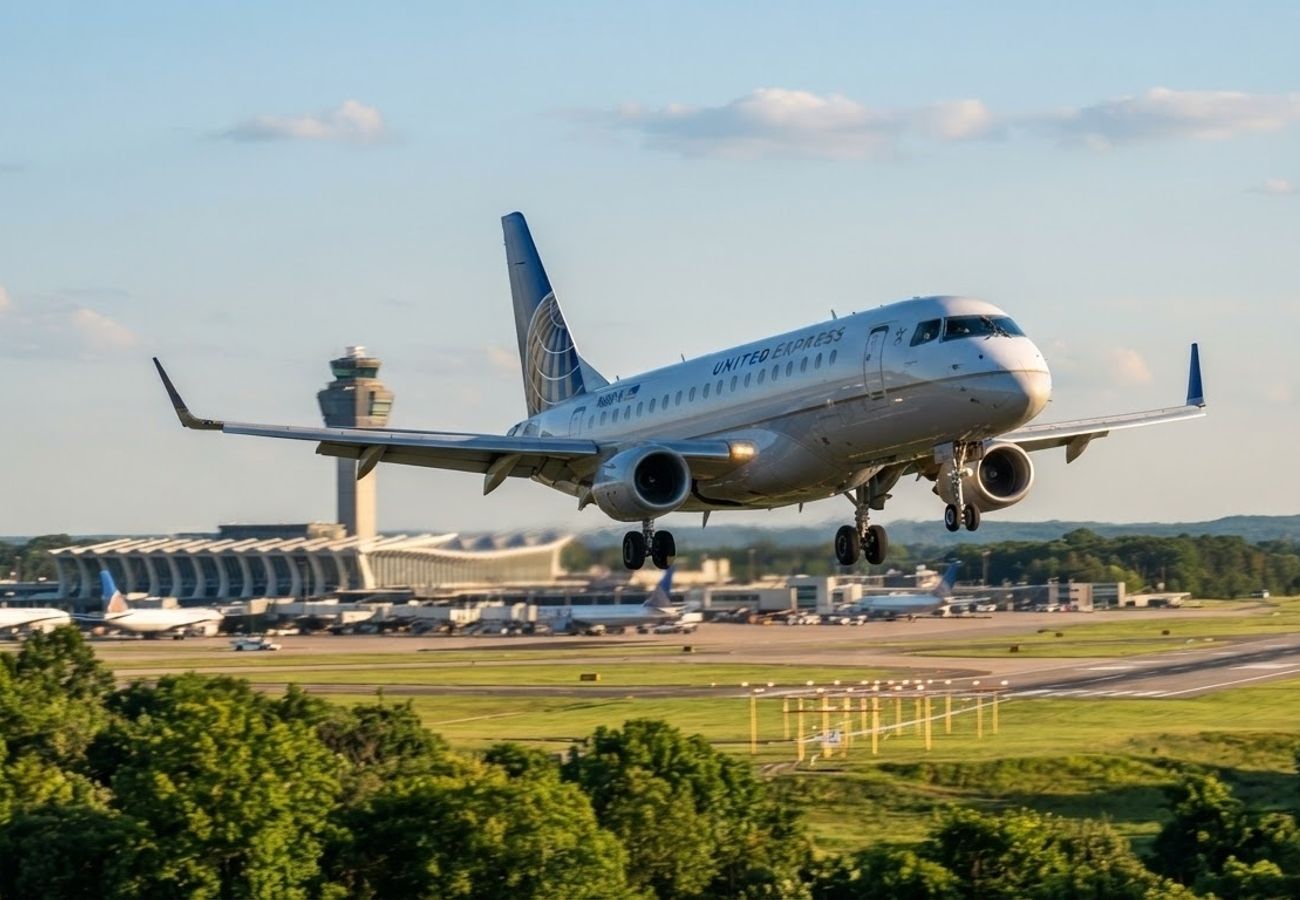
Image generated by AI
Passengers on a regional flight from Houston to Richmond experienced an unplanned detour to Washington Dulles International Airport on August 4, 2026, following tactical air traffic control directives.
On August 4, 2026, United Express flight UA4057, operated by an Embraer E175 (registration N86316), was forced to deviate from its planned flight path while traveling from Houston Bush Intercontinental Airport (IAH) to Richmond International Airport (RIC). The diversion was initiated by air traffic controllers as a precautionary safety measure to avoid complications and weather-related delays near the destination.
The aircraft departed Houston at 12:22 PM CDT. As it approached Virginia airspace, the flight crew executed a tactical route deviation, resulting in a landing at Washington Dulles International Airport (IAD) at 4:11 PM EDT. Following a ground stop for refueling and operational clearance, the flight departed Dulles at 7:22 PM EDT, arriving at its final destination in Richmond at 7:46 PM EDT.
Flight UA4057 Operational Timeline
| Event | Location | Time (Local) | Status |
|---|---|---|---|
| Departure | Houston Bush Intercontinental (IAH) | 12:22 PM CDT | On Schedule |
| Diversion Landing | Washington Dulles International (IAD) | 4:11 PM EDT | Tactical Diversion |
| Diversion Departure | Washington Dulles International (IAD) | 7:22 PM EDT | Resumed Route |
| Final Arrival | Richmond International (RIC) | 7:46 PM EDT | Completed |
Aircraft Specifications: Embraer E175
Official aviation registry records confirm the flight was operated by an Embraer E175 twin-jet, tail registration N86316. The E175 (industry code E75L) is a primary aircraft for North American regional feeder networks. It typically features a 76-passenger configuration split between First and Economy cabins.
Flight tracking logs indicate that the aircraft performed a controlled, standard descent into Dulles without declaring a formal emergency, confirming that the diversion was a routine operational decision managed by flight dispatch and air traffic control.
Tactical Diversion Logic and Hub Utility
Commercial diversions are standard risk mitigation tools used to manage variables such as severe convective weather, airport congestion, or technical alerts. In the case of UA4057, the choice of Washington Dulles (IAD) as the alternate hub was strategic.
Dulles serves as a major hub for United Airlines, providing the flight crew with immediate access to:
- Ground Infrastructure: Dedicated gate space and refueling services.
- Maintenance Support: On-site technical teams to verify aircraft status.
- Crew Management: Facilities to manage duty-time limits for pilots and cabin crew.
- Operational Recovery: Rapid re-clearance with local Air Traffic Control to minimize the delay to the final destination.
Traveler Logistics Guide: Navigating Flight Diversions
From a ground-level perspective, the best way to navigate a sudden diversion is to maintain communication with the airline's mobile app rather than relying solely on cockpit announcements, which can be vague during tactical shifts.
Optimal Connection Strategies:
- Buffer Times: When booking regional connections (like those operated by Embraer jets), allow a minimum of 3 hours for domestic transfers. Regional flights are more susceptible to "tactical deviations" based on weather patterns.
- Digital Transit Tools: Use real-time flight tracking services (e.g., FlightAware or FlightRadar24) to identify if your aircraft has diverted before the airline sends a formal notification.
- Rights and Compensation: Under US Department of Transportation (DOT) guidelines, passengers should verify if a diversion entitles them to meal vouchers or hotel accommodations if the ground stop exceeds a specific duration.
Infrastructure Impact Assessment
This incident highlights the critical role of hub-and-spoke infrastructure in regional aviation. The ability of United Express to utilize Dulles as a safety valve prevented a more significant disruption. By leveraging a primary hub, the airline reduced the turnaround time, ensuring passengers reached Richmond the same evening. This reinforces the necessity of maintaining high-capacity alternate airports in the Mid-Atlantic corridor to shield passengers from the volatility of summer weather patterns.
Safety protocols consistently override timetable adherence in national airspace to ensure zero-incident transit.
Related Travel Guides
Disclaimer
This article is for informational and educational purposes only. It does not constitute legal, financial, or professional advice. While we strive to provide accurate and up-to-date information, travel policies, regulations, and conditions change rapidly. Always verify information with official sources before making travel decisions. Nomad Lawyer makes no representations about the accuracy, reliability, completeness, or suitability of the information provided. Readers should consult qualified professionals for advice specific to their circumstances. The views expressed in this article are those of the author and do not necessarily reflect the views of Nomad Lawyer.
Preeti Gunjan
Contributor & Community Manager
A passionate traveller and community builder. Preeti helps grow the Nomad Lawyer community, fostering engagement and bringing the reader experience to life.
Learn more about our team →