
United Airlines Flight UA1815 Diverts to Huntsville Following Route Change
United Airlines Flight UA1815 from San Francisco to Nashville diverted to Huntsville International Airport on August 4, 2026.

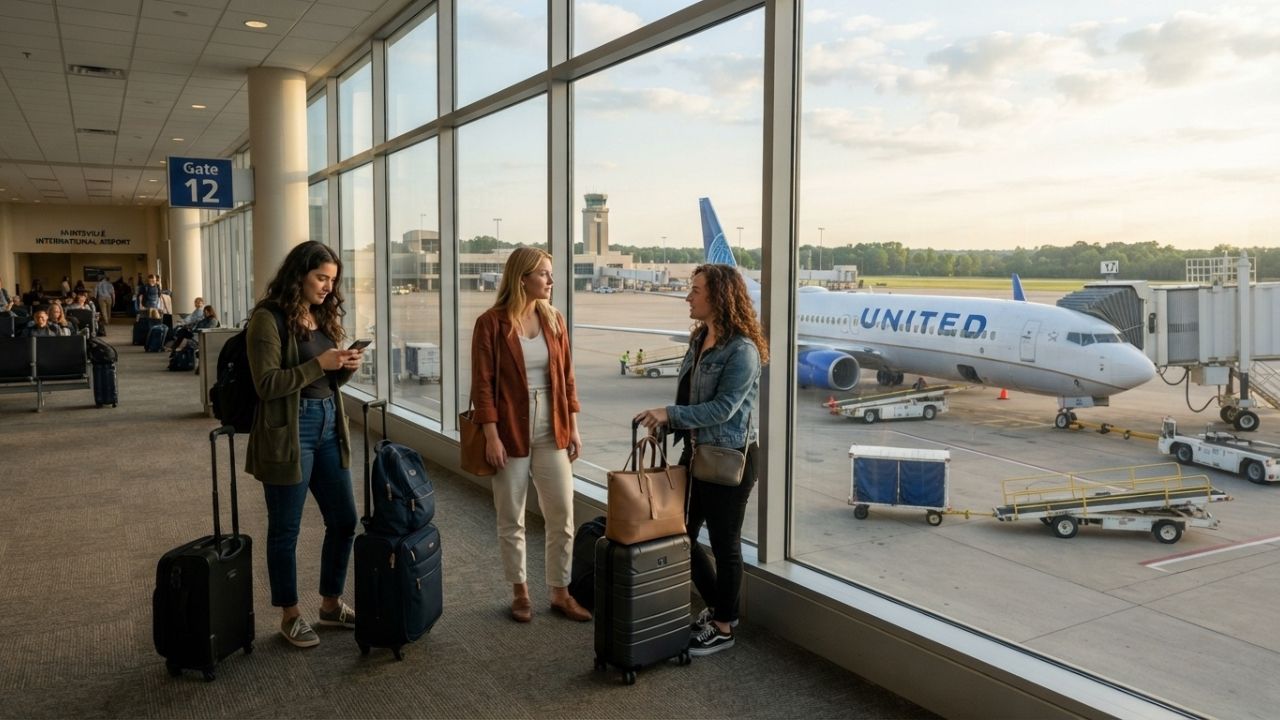
Image generated by AI
United Airlines Flight UA1815 from San Francisco to Nashville diverted to Huntsville International Airport on August 4, 2026, after an unexpected route change. The Boeing 737-900 aircraft landed safely in Alabama, disrupting travel plans for passengers heading to Tennessee's music city.
A westbound flight connecting California's Bay Area with Tennessee's primary nature and cultural tourism gateway experienced an unscheduled landing in the South. On the night of Monday, 3 August 2026, continuing into Tuesday, 4 August 2026, the midnight service departed on schedule but altered its path en route. The modern passenger jet successfully diverted to a regional hub, showing the coordination of regional air networks when route adjustments are required.
Route Interruption and Unscheduled Landing at Huntsville
The flight, operating under the codes UA1815 and UAL1815, was scheduled to carry passengers from San Francisco International Airport (SFO) in California to Nashville International Airport (BNA) in Tennessee. The service was operated by a Boeing 737-900 registered as N81449. The aircraft pushed back from Gate F14 at approximately 12:51 AM PDT before taking off for its eastbound journey.
Instead of continuing directly to Tennessee, the flight crew redirected the aircraft to Huntsville International Airport (HSV) in Alabama. The jet completed a safe landing and arrived at Gate B8 at approximately 7:41 AM CDT. Ground crews and passenger service teams worked alongside the airline to accommodate travelers while evaluating the operational requirements for the next leg of the journey.
Transcontinental Flight Disruptions and Passenger Compensation Protections
For the traveler, this unscheduled stop illustrates the complexities of managing long-haul transcontinental routes. Under the regulatory framework of the U.S. Department of Transportation, airlines are responsible for ensuring passenger safety and providing rebooking options when flights are diverted. Precautionary diversions are routine safety measures executed by flight crews in response to changing weather patterns, air traffic restrictions, or minor mechanical checks.
Our analysis of passenger rights suggests that if a diversion is caused by internal airline factors (such as technical maintenance or crew scheduling limits), the carrier must support passengers during the delay. This support typically includes meal vouchers at the alternate terminal and, in cases of overnight delays, complimentary hotel accommodations and transport. If passengers choose not to complete their journey, they may be eligible for a refund of the unused ticket portion.
Navigation and Transit Alternatives for Nashville-Bound Commuters
For visitors planning a cultural holiday in Nashville, flight disruptions highlight the importance of prepared travel alternatives:
- Track Connecting Services: If you have onward ground transport or lodging bookings in Nashville, immediately update your providers regarding your revised arrival time.
- Baggage Retrieval Policies: During a diversion, checked luggage remains on the aircraft until the final destination is determined. If the flight is cancelled, ground staff will coordinate baggage retrieval in the terminal.
- Aviation Hub Alternatives: Since Huntsville and Nashville are only about 110 miles apart, booking a regional shuttle or rental car can serve as a quick alternative transit option if the flight segment is cancelled.
Regional Tourism and Future Infrastructure Resilience
The safe landing at Huntsville highlights the importance of regional aviation hubs in maintaining the resilience of national travel networks. By routing the aircraft to HSV, the airline ensured access to passenger facilities and maintenance teams, minimizing the long-term impact of the delay. Nashville remains a primary destination for music tourism, and coordinating efficient recovery operations is essential to protect local tourism economies.
Related Travel Guides
Disclaimer
This article is for informational and educational purposes only. It does not constitute legal, financial, or professional advice. While we strive to provide accurate and up-to-date information, travel policies, regulations, and conditions change rapidly. Always verify information with official sources before making travel decisions. Nomad Lawyer makes no representations about the accuracy, reliability, completeness, or suitability of the information provided. Readers should consult qualified professionals for advice specific to their circumstances. The views expressed in this article are those of the author and do not necessarily reflect the views of Nomad Lawyer.
Kunal K Choudhary
Co-Founder & Contributor
A passionate traveller and tech enthusiast. Kunal contributes to the vision and growth of Nomad Lawyer, bringing fresh perspectives and driving the community forward.
Learn more about our team →