
United Airlines Deploys Premium Boeing 787-9 on San Francisco–Sydney Route: Transpacific Luxury Travel Guide 2026

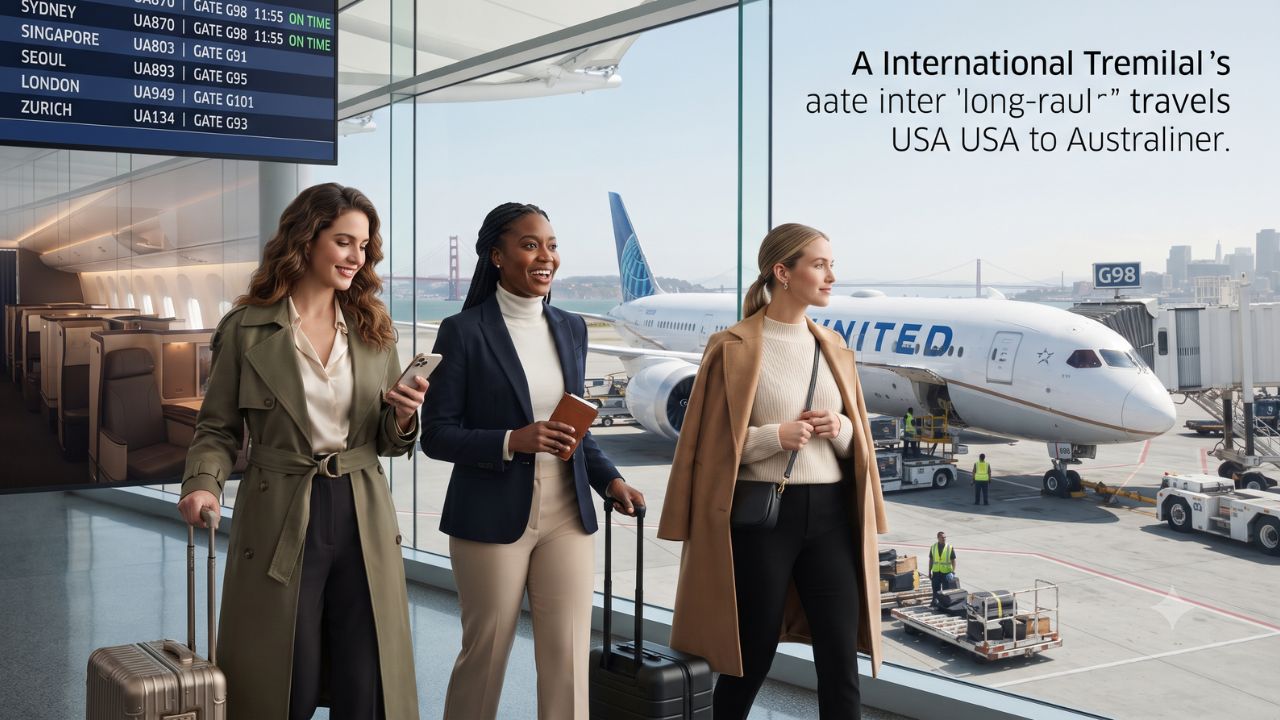
While most international long-haul aircraft cram more than 250 passengers into tightly packed cabins, United Airlines is intentionally stripping out economy seats to create an ultra-premium widebody jet where nearly half of the entire fuselage is dedicated to luxury business and premium economy seating. Commencing December 2, 2026, the carrier will deploy its specially configured "Elevated" Boeing 787-9 Dreamliner on the 7,417-mile transpacific route between San Francisco International Airport (SFO) and Sydney Kingsford Smith Airport (SYD), initially operating three times per week before ramping up to daily departures on December 17, 2026, for the peak holiday season.
This aircraft redesign cuts overall passenger capacity from the standard 257 seats down to just 222, replacing rows of standard coach with 64 Polaris Business Class lie-flat pods (including eight oversized front-row Polaris Studio suites) and 35 Premium Economy recliners, leaving only 123 standard economy seats in the rear cabin. The strategic aircraft deployment positions Australia at the center of an escalating global battle for high-yield transpacific travelers, competing directly with Qantas's ultra-long-haul Project Sunrise and premium flag carriers across the Pacific basin.
Transpacific Route Expansion and the Elevated Dreamliner Architecture
The introduction of the premium-heavy Boeing 787-9 layout marks a fundamental evolution in how long-haul airline economics operate. Rather than competing in low-margin economy fare wars on 14-to-15-hour journeys, airlines are maximizing revenue per available seat mile by courting business executives, affluent leisure tourists, and comfort-focused travelers.
The seat distribution across the Elevated Boeing 787-9 represents one of the highest ratios of premium seating on any twin-engine airliner in commercial service:
- Polaris Business Class: 64 direct-aisle-access lie-flat seats arranged in a 1-2-1 layout, featuring eight expanded Polaris Studio suites equipped with additional companion seating, dual monitors, and extra wardrobe storage.
- Premium Economy: 35 spacious recliners configured in a 2-3-2 layout offering 38 inches of pitch, dedicated footrests, and elevated dining services.
- Economy Class: 123 seats arranged 3-3-3, providing standard long-haul amenities for budget travelers.
- Total Capacity: 222 passengers (a 35-seat reduction compared to standard 787-9 variants).
With the addition of San Francisco–Sydney, Sydney becomes the ninth international destination integrated into the carrier's global Elevated 787-9 network. The dedicated fleet now serves major business and financial gateways departing from two primary US hubs:
- From San Francisco (SFO): London Heathrow (LHR), Seoul Incheon (ICN), Singapore Changi (SIN), Zurich (ZRH), and Sydney (SYD).
- From Houston Intercontinental (IAH): São Paulo Guarulhos (GRU), Sydney (SYD), Tokyo Narita (NRT), and London Heathrow (LHR).
What Makes the Transpacific Crossing Between California and Sydney Unique
The nonstop journey between Northern California and New South Wales crosses multiple time zones, the international date line, and the equator, spanning over 14 hours in the air.
Arriving at Sydney Airport, international passengers land right on the shores of Botany Bay, minutes from Sydney's iconic coastal harbor. Travelers consulting Tourism Australia will discover that landing in December places visitors in the heart of the Southern Hemisphere summer. The contrast with winter in North America is immediate, as travelers trade chilly San Francisco fog for coastal ocean baths at Bondi, ferry rides past the Sydney Opera House to Manly, and wine tastings across the Hunter Valley.
The competition along this corridor is fierce. Australia's national carrier Qantas is preparing its Airbus A350-1000 fleet for nonstop Project Sunrise flights connecting Sydney with New York and London, featuring dedicated onboard wellness zones. Meanwhile, carriers like Air New Zealand, Singapore Airlines, Qatar Airways, and Emirates continue elevating their premium cabins. By offering direct-aisle business suites and lower cabin pressurization on the Dreamliner (pressurized to 6,000 feet rather than 8,000 feet), United aims to significantly reduce jet lag on arrival.
Visitor Insider Tips for Flying SFO–SYD and Arriving in Sydney
Navigating a 14-hour transpacific flight and arriving smoothly in Australia requires tailored insider preparation:
- Polaris Studio Suite Booking Hack: When booking Polaris Business Class on the Elevated 787-9, aim for Rows 1 and 9. These front-row bulkhead suites offer substantial extra legroom, wider ottomans, and larger personal storage compartments compared to standard Polaris seats.
- Sydney Airport Train Transfer: Avoid sitting in morning peak-hour highway traffic on the M1 into central Sydney. The Airport Link train departs every 10 minutes from the International Terminal basement, reaching Central Station and Circular Quay in under 18 minutes for approximately 20 AUD.
- Biosecurity Compliance at Customs: Australia enforces some of the strictest agricultural biosecurity laws in the world. Declare all fresh food, fruit, nuts, wooden souvenirs, and hiking boots with soil residue on your Incoming Passenger Card. Failure to declare items can lead to instant on-the-spot fines exceeding 1,000 AUD.
- SFO Polaris Lounge Access: Polaris ticket holders departing San Francisco have complimentary access to the multi-level SFO Polaris Lounge in International Terminal G, which features private daybeds, shower suites with Saks Fifth Avenue amenities, and a sit-down à la carte restaurant (The Dining Room) serving seasonal California cuisine before boarding.
- Adapting to the Sydney Time Zone: To beat the severe 17-to-19-hour time difference from Pacific Time, sleep during the middle section of the flight and remain awake in the natural sunlight of Sydney until at least 21:00 on your arrival evening.
Cultural and Environmental Context: Sustainable Aviation on Ultra-Long-Haul Corridors
Flying nonstop over 7,400 miles across the Pacific Ocean requires careful environmental stewardship. While premium-configured aircraft carry fewer total passengers, modern composite airframes like the Boeing 787-9 utilize advanced carbon-fiber wings, aerodynamic raked wingtips, and General Electric GEnx engines to reduce fuel burn and carbon dioxide emissions by 25% compared to previous-generation widebody aircraft like the Boeing 747-400.
In Australia, local tourism authorities and conservation organizations are channeling visitor spending into environmental preservation, from coral restoration projects on the Great Barrier Reef to indigenous-led cultural tours in the Blue Mountains and Ku-ring-gai Chase National Park. By investing in modern, fuel-efficient aircraft fleets, international airlines support long-distance global mobility while minimizing the per-seat carbon impact of cross-continental travel.
FAQ: Flying San Francisco to Sydney 2026
When does the Elevated Boeing 787-9 launch on the SFO–Sydney route?
Flights begin on December 2, 2026, operating three times weekly before expanding to daily service on December 17, 2026.
How many total seats are on the Elevated Boeing 787-9?
The aircraft features 222 seats: 64 Polaris Business Class, 35 Premium Economy, and 123 Economy Class seats.
What other destinations are served by United's Elevated 787-9 fleet?
The fleet serves London Heathrow, Seoul Incheon, Singapore, Zurich, São Paulo, Tokyo Narita, and Sydney from San Francisco and Houston hubs.
What is the fastest way to get from Sydney Airport to Circular Quay?
The elevated Airport Link suburban train runs directly from the international terminal to Circular Quay in 18 minutes.
As luxury cabins redefine the transpacific corridor, crossing the Pacific from the Golden Gate to Sydney Harbor becomes an elevated journey in its own right.
Related Travel Guides
- Grenada-Guyana Corridor: InterCaribbean Airways Launches Direct Flights
- Nationwide Meltdown: Severe Thunderstorms Trigger 4,879 Delays and 674 Flight Cancellations, Trapping Thousands in Unprecedented Travel Chaos
- Global Race for 6th-Generation Fighter Jets Intensifies as Nations Compete for Air Superiority
Disclaimer
This article is for informational and educational purposes only. It does not constitute legal, financial, or professional advice. While we strive to provide accurate and up-to-date information, travel policies, regulations, and conditions change rapidly. Always verify information with official sources before making travel decisions. Nomad Lawyer makes no representations about the accuracy, reliability, completeness, or suitability of the information provided. Readers should consult qualified professionals for advice specific to their circumstances. The views expressed in this article are those of the author and do not necessarily reflect the views of Nomad Lawyer.
Naina Thakur
Contributor & Travel Specialist
Travel enthusiast and legal writer covering visa regulations, responsible tourism, and cultural journeys across global destinations.
Learn more about our team →