
Ultimate 11-Day UAE Grand Tour: Discover All Seven Emirates in Ultimate Luxury
Ultimate 11-Day UAE Grand Tour: Discover All Seven Emirates in Ultimate Luxury

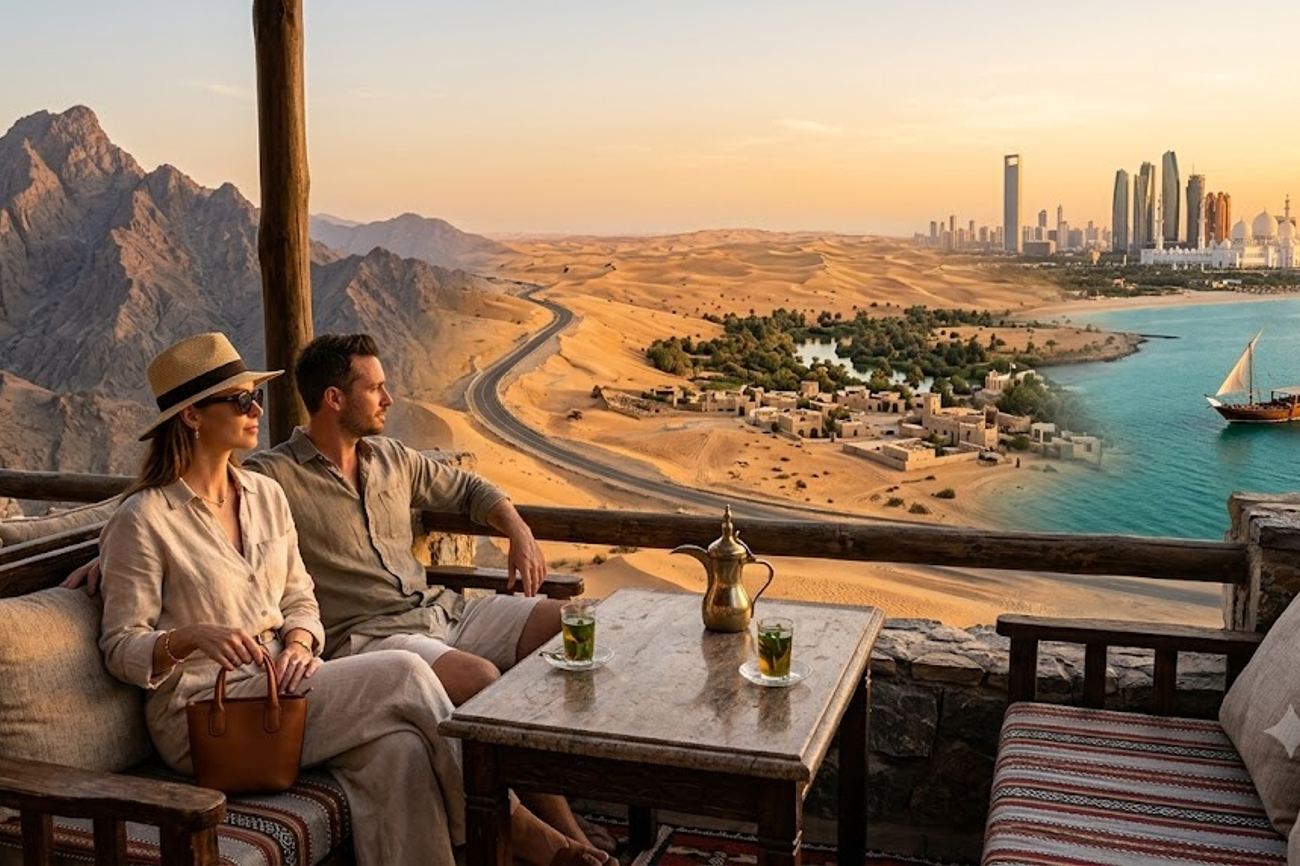
Image generated by AI
title: "Beyond the Skyline: Navigating the Seven Emirates of the UAE Grand Tour" date: 2024-05-20 category: Destination Features tags: [UAE Grand Tour 2024, Hajar Mountains Travel, Fujairah Diving, Abu Dhabi Cultural Tourism]
Most travelers to the Emirates never leave the axis of Dubai and Abu Dhabi, yet the nation's true identity is split across seven distinct territories, some of which are defined by volcanic peaks and ancient mangroves rather than skyscrapers. The recently launched UAE Grand Tour attempts to shatter this binary perception by stitching together all seven emirates—Abu Dhabi, Dubai, Sharjah, Ajman, Umm Al Quwain, Ras Al Khaimah, and Fujairah—into a single, continuous 11-day luxury circuit.
The Shift Toward Cross-Regional Discovery
For years, the international perception of the UAE has been dominated by the "bling" factor—the record-breaking heights of Dubai and the sovereign grandeur of Abu Dhabi. While these cities are architectural marvels, treating the other five emirates as mere day-trip add-ons has historically obscured the country's topographical variety. The UAE Grand Tour represents a strategic pivot in how the region presents itself to the world. Instead of isolated urban vacations, the focus has shifted to an immersive, multi-destination narrative.
This 11-day itinerary is not merely a transport plan; it is a curated sequence designed to showcase the transition from hyper-modernity to ancestral heritage. By linking urban metropolises with rugged mountain ranges and coastal sanctuaries, the tour aims to distribute the economic benefits of tourism more equitably across all seven member states of the federation. It moves the traveler from the Michelin-starred dining rooms of the cities to the quiet, salt-sprayed shores of the Gulf of Oman, providing a full spectrum of the Emirati experience.
What Makes the Seven Emirates Different
The brilliance of a full-circuit journey is the realization that the UAE is not a monolith. The experience is divided into three distinct phases, each offering a different sensory and cultural palette.
The first three days are an exercise in urban opulence. Starting in Abu Dhabi, the focus is on the intersection of faith and art. Saadiyat Island serves as the anchor here, housing contemporary art museums and grand places of worship that redefine the capital's skyline. As the route moves into Dubai on day three, the contrast is sharp. The itinerary balances the avant-garde design of the city's observation decks with the tactile, aromatic reality of the gold and spice souks. Here, the luxury is found in bespoke concierge services and high-concept architecture.
From day four to six, the pace slows significantly as the journey enters the cultural heartland. Sharjah, the region's recognized cultural capital, offers a glimpse into the soul of the Emirates through restored heritage districts and museums housing rare artifacts. This phase continues into Ajman and Umm Al Quwain, where the narrative shifts to the sea. These emirates are defined by their maritime history and mangrove ecosystems. Rather than skyscrapers, the landmarks here are traditional dhow-building sites and serene coastal lagoons.
The final leg, spanning days seven through eleven, is a dramatic departure from the coast. The journey ascends into the Hajar Mountains of Ras Al Khaimah. This is a land of deep canyons and ancient fortresses, where high-altitude wellness resorts offer a sanctuary from the heat. The loop concludes in Fujairah, the only emirate facing the Gulf of Oman. The scenery here is defined by dark volcanic rock meeting azure waters, offering some of the most pristine diving sites in the region.
Visitor Insider Tips
Navigating all seven emirates requires a different mindset than a standard Dubai city break. To truly experience the Grand Tour, consider these local nuances:
Timing and Logistics The 11-day structure is precise, but the heat is the primary variable. To avoid the oppressive humidity of the coastal plains, schedule your visits to the mangroves of Umm Al Quwain and the souks of Dubai for the early morning hours (6:00 AM to 10:00 AM). For the Hajar Mountains in Ras Al Khaimah, late afternoon is the ideal window for exploration to catch the light hitting the canyon walls.
Local Etiquette and Dress While Dubai and Abu Dhabi are highly cosmopolitan, the northern emirates—particularly Sharjah—are more conservative. When visiting heritage districts or local artisans, ensure shoulders and knees are covered. In Sharjah’s arts districts, a respectful, understated dress code is not just a courtesy but a sign of cultural literacy.
Regional Specialties Move beyond the international menus of five-star hotels. In the northern emirates, seek out traditional Emirati seafood, specifically the locally caught kingfish. In the mountains of Ras Al Khaimah, try the local honey and dates, which are prized for their purity and distinct flavor profiles.
Transport Hacks While the Grand Tour is a luxury experience, those venturing out independently should utilize the official Visit Abu Dhabi and Visit Dubai portals for updated transit links. For the eastern coast of Fujairah, a private 4x4 is non-negotiable if you plan to explore the volcanic foothills away from the main resorts.
Cultural and Environmental Context
The UAE Grand Tour is more than a luxury product; it is a tool for sustainable regional development. By directing high-spending travelers toward Umm Al Quwain and Fujairah, the government is actively working to prevent "over-tourism" in Dubai while stimulating growth in smaller communities. This redistribution helps preserve the authentic, slower-paced coastal lifestyles that existed long before the oil boom.
Environmentally, the focus on eco-kayaking in the mangroves and sustainable wellness in the mountains reflects a growing national commitment to conservation. The mangroves of the northern emirates act as critical carbon sinks and nurseries for marine life. By integrating these into a luxury itinerary, the tour promotes the value of these ecosystems to a global audience, framing environmental preservation as a luxury asset. Furthermore, the promotion of the Hajar Mountains encourages a shift toward "slow travel," where the value is found in the silence of the peaks rather than the noise of the city. For those interested in the broader preservation of the region's history, the UNESCO World Heritage Centre provides context on the archaeological significance of the Arabian Peninsula's ancient trade routes.
FAQ: Visiting the UAE 2024
What is the best time to visit for the Grand Tour? The window between November and March is optimal. During these months, the temperatures in the Hajar Mountains and the coastal mangroves are mild, making outdoor exploration and diving in Fujairah comfortable.
Do I need a visa for all seven emirates? A single UAE tourist visa grants you entry to all seven emirates. There are no internal border checks between the emirates, as they are all part of the same federation.
How do I get to the starting point of the tour? Most luxury itineraries begin in Abu Dhabi. The easiest access is via Abu Dhabi International Airport (AUH) or by taking a private transfer from Dubai International Airport (DXB), which is approximately a 90-minute drive.
Is it safe for solo travelers to explore the northern emirates? Yes, the UAE is one of the safest destinations globally. However, when exploring the rugged terrain of Ras Al Khaimah or the coast of Fujairah, it is highly recommended to use licensed guides for safety and navigation.
The true luxury of the Emirates is not found in the gold of the souks, but in the silence of the volcanic peaks.
UAE-Grand-Tour-2024, Hajar-Mountains-Adventure, Fujairah-Coastline, Emirates-Cultural-Circuit
Related Travel Guides
Disclaimer
This article is for informational and educational purposes only. It does not constitute legal, financial, or professional advice. While we strive to provide accurate and up-to-date information, travel policies, regulations, and conditions change rapidly. Always verify information with official sources before making travel decisions. Nomad Lawyer makes no representations about the accuracy, reliability, completeness, or suitability of the information provided. Readers should consult qualified professionals for advice specific to their circumstances. The views expressed in this article are those of the author and do not necessarily reflect the views of Nomad Lawyer.
Raushan Kumar
Founder & Lead Developer
Full-stack developer with 11+ years of experience and a passionate traveller. Raushan built Nomad Lawyer from the ground up with a vision to create the best travel and law experience on the web.
Learn more about our team →