
Jordan’s Petra Expands Beyond Ruins With New Beidha Heritage Exhibition
Jordan’s Petra Expands Beyond Ruins With New Beidha Heritage Exhibition

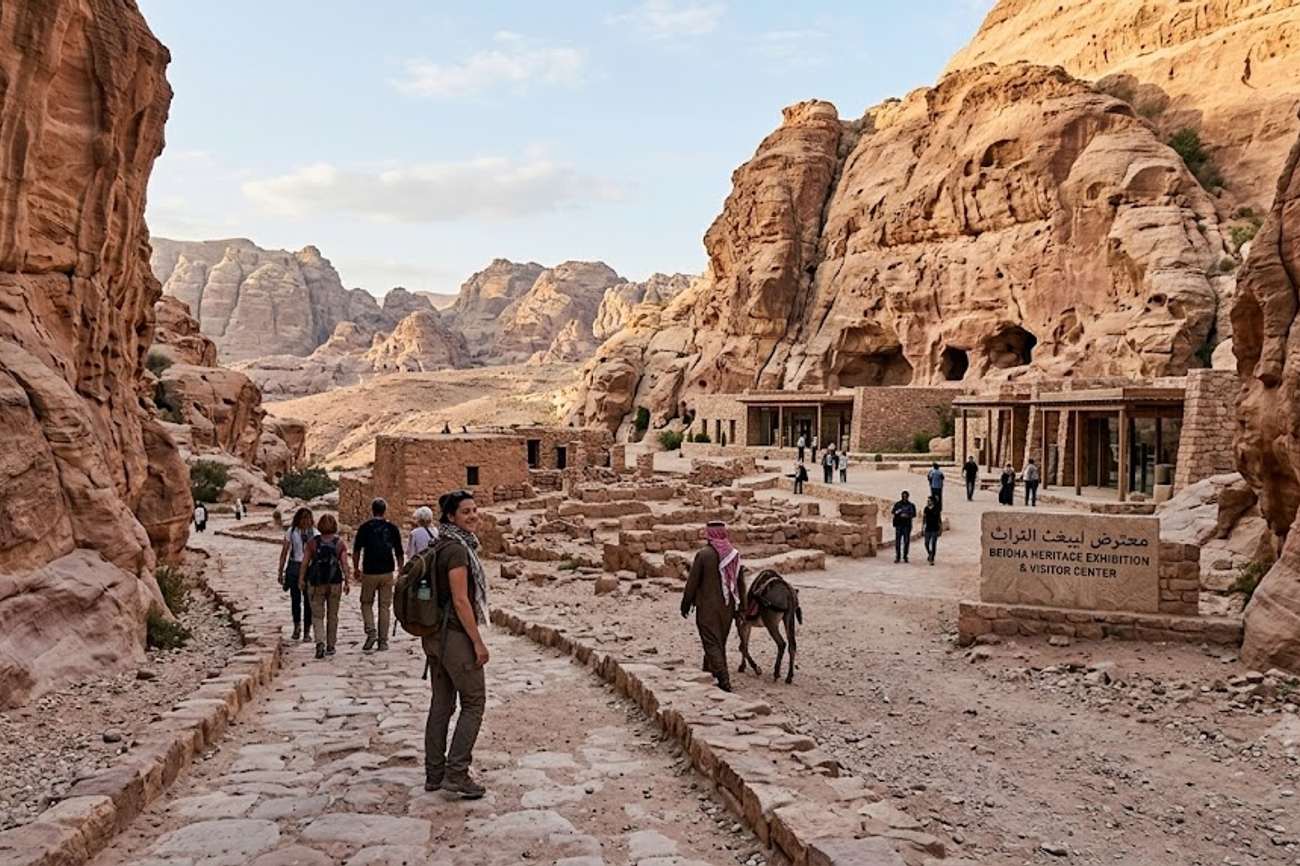
Image generated by AI
title: "The Ecological Pivot: Analyzing Jordan's Shift from Archaeological to Biodiversity Tourism" date: 2024-05-22 author: "Travel Industry Trend Analyst" category: "Destination Management"
While the Treasury and the Siq have historically captured nearly 100% of international tourist attention in Petra, the launch of the Petra Biodiversity and Natural Heritage Exhibition signals a strategic pivot toward diversifying the visitor experience. This shift mirrors a broader global movement toward "Integrated Heritage Management," where destinations move away from single-point attractions to distributed, multi-disciplinary circuits. By establishing a dedicated scientific hub at the Nabataean Cultural Village in Beidha, Jordan is attempting to decouple its tourism revenue from the physical wear and tear of its primary rock-cut facades, effectively expanding the "Petra experience" into the surrounding ecological highlands.
The Beidha Initiative in Numbers: Quantifying the Pivot
The introduction of the Petra Biodiversity and Natural Heritage Exhibition at the Nabataean Cultural Village represents a calculated move to redistribute tourist density. For years, the concentration of foot traffic within the narrow corridors of the Siq has created a high-pressure environment for both the sandstone structures and the visitor experience. The Beidha initiative introduces a new data set to the regional tourism mix: biological and ecological metrics.
The exhibition's infrastructure is built around several key scientific pillars:
- Live specimen displays and preserved wildlife archives.
- Fossil collections providing a geological timeline of the region.
- Freshwater aquariums demonstrating the rare aquatic life of the arid highlands.
- Interactive scientific installations focused on adaptation and climate resilience.
From a destination management perspective, this is not merely a museum opening; it is a strategy to increase the "Average Length of Stay" (ALOS) for visitors to southern Jordan. By offering a scientific counterpoint to the archaeological narrative, the Jordan Tourism Board can now market the region to a wider demographic—specifically the growing "Eco-Scientific" traveler segment. This segment typically exhibits a higher spend-per-day and a lower environmental impact than the mass-market day-tripper. According to data trends tracked by the World Travel & Tourism Council (WTTC), sustainable and nature-based tourism is one of the fastest-growing sectors in the Middle East, as travelers increasingly seek "authentic" and "educational" interactions over traditional sightseeing.
Comparative Context: Archaeological vs. Integrated Tourism
Historically, Jordan's tourism model has been "Site-Centric," meaning the value was tied to a specific physical monument. The new model is "Region-Centric," where the value is tied to the entire ecosystem. This transition is a response to the vulnerability of the Petra site. When 100% of visitors converge on the same 2-3 square kilometers, the risk of habitat fragmentation and structural degradation increases exponentially.
The table below compares the traditional archaeological-only approach against the new integrated model being implemented in the Petra/Beidha corridor:
| Metric | Traditional Archaeological Model | Integrated Biodiversity Model (Beidha) |
|---|---|---|
| Primary Focus | Rock-cut architecture & Trade routes | Flora, Fauna, & Ecosystem services |
| Visitor Distribution | Concentrated (The Siq/Treasury) | Distributed (Petra $\rightarrow$ Beidha) |
| Educational Scope | Human History & Engineering | Co-evolution of Humans & Nature |
| Environmental Impact | High site-specific degradation | Lowered footprint via visitor dispersal |
| Target Demographic | History enthusiasts / General tourists | Science enthusiasts / Eco-travelers |
| Asset Type | Non-renewable (Stone) | Renewable (Biodiversity/Living specimens) |
This shift aligns with the International Air Transport Association (IATA) observations regarding the rise of "Slow Travel," where passengers are booking longer stays in single regions to explore diverse attractions rather than hopping between capital cities. By adding the Nabataean Cultural Village as a primary node, Jordan is creating a "tourism cluster" that encourages overnight stays in the southern region rather than quick excursions from Amman.
What This Means for Travelers: Data-Driven Booking Advice
For the individual traveler, the opening of the Beidha exhibition changes the optimal way to structure a visit to southern Jordan. The "standard" Petra itinerary—which often consists of a single day spent rushing from the Treasury to the Monastery—is now outdated and inefficient.
1. Itinerary Expansion: Travelers should now allocate a minimum of 2.5 to 3 days to the Petra region. Day one should remain focused on the primary archaeological site, but day two should be dedicated to the Nabataean Cultural Village in Beidha. This prevents "site fatigue" and allows for a more comprehensive understanding of why the Nabataeans were able to build a city in the desert (i.e., their mastery of the very biodiversity and water systems showcased in the exhibition).
2. Timing and Logistics: To avoid the peak crowds that still plague the main Petra entrance, travelers should schedule their visit to the Beidha exhibition during the mid-day peak of the main site. Because the exhibition is a controlled environment with interactive installations, it provides a climate-controlled refuge during the hottest parts of the day, making the overall trip more physically sustainable.
3. Booking Windows: As Jordan pushes toward a more sustainable, lower-impact model, there is a trend toward limiting permits for certain sensitive areas. If you are planning a visit in Q3 or Q4, booking your accommodations in the Wadi Musa or Beidha areas 10-12 weeks in advance is now recommended. The shift toward "distributed tourism" is increasing the demand for boutique stays outside the immediate hotel hubs of the main city.
Forward Projection: The Future of the Petra Corridor
Based on current trajectory and the integration of biodiversity data into the tourist experience, we can project that Jordan will move toward a "Zoned Access" model. In this scenario, the main archaeological site of Petra may eventually implement stricter capacity limits to protect the sandstone, while the Beidha exhibition and other ecological sites become the primary "entry points" for education.
We expect to see the following developments over the next 24-36 months:
- Digital Integration: The use of AR (Augmented Reality) to link the live specimens in Beidha to the specific locations in the Petra canyons where those species are found.
- Eco-Certification: The Nabataean Cultural Village may serve as the hub for a new "Certified Sustainable Guide" program, where guides are trained in both archaeology and ecology.
- Revenue Diversification: A shift in ticket bundling, where a "Heritage Pass" includes both the archaeological site and the biodiversity exhibition, ensuring a steady stream of funding for conservation efforts.
As noted in reports from Statista regarding global travel preferences, the "educational value" of a trip is now a primary driver for Gen Z and Millennial travelers. By pivoting toward biodiversity, Jordan is not just saving its rocks; it is capturing a new generation of high-value travelers.
FAQ: Petra Biodiversity Tourism 2024
Will the new exhibition increase the cost of visiting Petra? While the exhibition is a separate entity at the Nabataean Cultural Village, it is designed to add value. Travelers should check for bundled "Heritage Passes" which often reduce the per-site cost compared to individual ticket purchases.
Is the Beidha exhibition suitable for all ages? Yes. The use of interactive scientific installations and freshwater aquariums makes it particularly effective for families and students, providing a more tactile experience than the purely visual nature of the rock-cut facades.
Which airlines are best for accessing this new circuit? Royal Jordanian continues to be the primary carrier, but the increase in "Slow Travel" to the south makes regional flights into Aqaba more attractive than flying into Amman, as it places travelers closer to the Beidha and Petra cluster.
Does this mean the main Petra site is too crowded to visit? No, but it means the experience is changing. The Beidha exhibition provides a necessary "pressure valve" for the main site, allowing visitors to gain a deeper understanding of the region without contributing to the overcrowding of the Siq.
The transition from admiring ruins to understanding ecosystems marks the maturity of Jordan's tourism strategy—moving from a museum of the dead to a showcase of the living.
#PetraBiodiversity2024 #BeidhaEcoTourism #JordanDestinationManagement #NabataeanCulturalVillage #SustainableHeritageGrowth
Related Travel Guides
- Chapada Diamantina Mirrors Caldas Novas and More as Brazilian Wellness Destinations Beckon Global Travellers
- New York Aligns Connecticut and More US States as Floods Disrupt Travel Throughout Major Highway
- Qatar Travel Technology Highlights Doha And Al Khor Nature Experiences Through Official App Deals
Disclaimer
This article is for informational and educational purposes only. It does not constitute legal, financial, or professional advice. While we strive to provide accurate and up-to-date information, travel policies, regulations, and conditions change rapidly. Always verify information with official sources before making travel decisions. Nomad Lawyer makes no representations about the accuracy, reliability, completeness, or suitability of the information provided. Readers should consult qualified professionals for advice specific to their circumstances. The views expressed in this article are those of the author and do not necessarily reflect the views of Nomad Lawyer.
Kunal K Choudhary
Co-Founder & Contributor
A passionate traveller and tech enthusiast. Kunal contributes to the vision and growth of Nomad Lawyer, bringing fresh perspectives and driving the community forward.
Learn more about our team →