
Chapada Diamantina Mirrors Caldas Novas and More as Brazilian Wellness Destinations Beckon Global Travellers
Chapada Diamantina Mirrors Caldas Novas and More as Brazilian Wellness Destinations Beckon Global Travellers

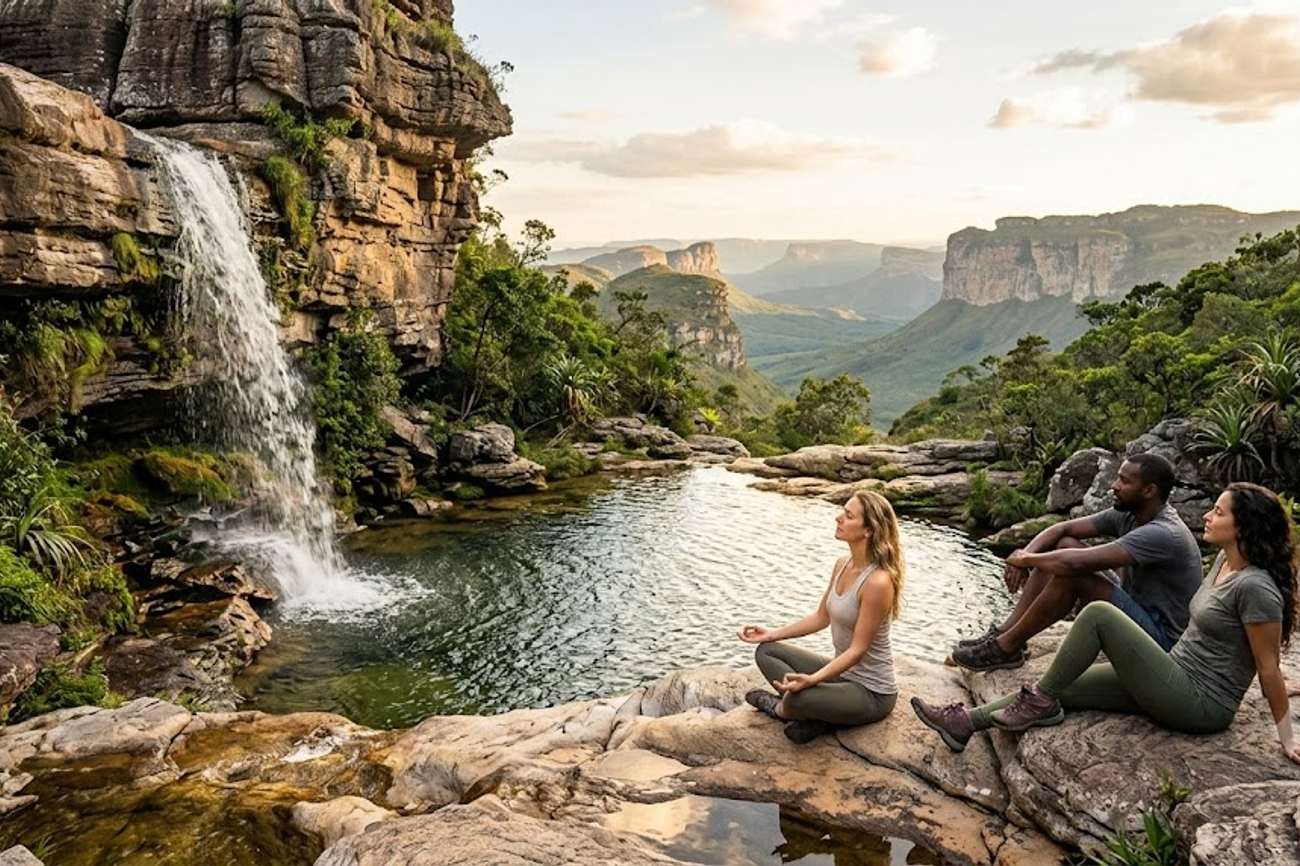
Image generated by AI
9,287,196 international visitors entered Brazil in 2025, marking the strongest annual result in the country's official statistical history. This surge represents a 37.1% increase over the previous year and signals a fundamental shift in how global travelers are utilizing the South American giant not just for urban hubs, but as a primary destination for high-end wellness and restorative travel.
The Macro-Shift in Brazilian Tourism Volume
The recovery of Brazil's tourism sector has followed a steep upward trajectory over the last five years, moving from a pandemic-era low of 745,871 arrivals in 2021 to the current record high. The data reveals a massive 386.4% jump in 2022 as borders reopened, followed by steady growth in 2023 (+62.8%) and 2024 (+14.6%). This momentum has culminated in the 2025 peak, suggesting that Brazil has not only recovered its pre-pandemic baseline but has expanded its market reach.
The geographical distribution of these visitors highlights a heavy reliance on regional proximity, with South America providing 64.48% of the total arrivals (nearly 6 million people). However, the long-haul markets are showing significant presence: Europe contributed 1.77 million visitors, while North America provided 984,684. Asia, while the smallest segment, still accounted for 312,438 arrivals.
From a logistical standpoint, the International Air Transport Association (IATA) standards for international transit are reflected in Brazil's entry data: 66% of visitors arrived via air, while 31% entered by land. This disparity underscores the critical role of major airport hubs as the primary gateways for wellness tourists who often combine multiple regional destinations into a single itinerary.
Thermal Powerhouses and Regional Hubs
Brazil is diversifying its wellness offering by leveraging distinct geological assets, specifically in the states of Goiás and São Paulo. The shift toward "slow travel" is most evident in the development of thermal-water clusters.
Caldas Novas in Goiás has emerged as a dominant force in this sector. According to the Goiás State Government, the destination attracts approximately 2 million tourists annually. While the Ministry of Tourism’s 2026 travel-search data shows a 11.5% dip in search volume—dropping from 137,133 searches in 2024 to 121,413 in 2025—the destination maintains its position as the second most searched attraction in the country. This suggests that while "discovery" searches may have plateaued, the actual visitation numbers remain robust due to established loyalty and infrastructure.
In São Paulo, the strategy has shifted toward integrated tourism districts. The newly formed Águas e Aventuras Tourist District—which unites Águas de São Pedro, São Pedro, and Brotas—is an attempt to institutionalize wellness tourism. This region now manages 177 attractions and saw approximately 1.5 million tourists in 2025.
| Águas e Aventuras Metric | 2025/2026 Official Figure |
|---|---|
| Combined Tourist Flow | ~1.5 Million |
| Annual Visitor Target | 3 Million |
| Average Hotel Occupancy | ~60% |
| Direct Tourism Jobs | ~5,000 |
| Total Employment (Direct/Indirect) | 8,000+ |
| Planned Investment | R$1 Billion+ |
Expert Analysis: The Institutionalization of Wellness
For the luxury and nomad traveler, the transition of Brazilian wellness from "hidden gems" to "integrated districts" like Águas e Aventuras is a double-edged sword. The investment of over R$1 billion into the São Paulo region indicates a move toward professionalization and standardized luxury. For travelers booking these routes, the direct consequence is a significant increase in reliability and infrastructure, but a potential decrease in the "authentic" isolation that originally drove the slow-travel movement.
The data regarding Caldas Novas is particularly telling. The 11.5% decline in search interest despite high visitation suggests a "mature market" phase. Caldas Novas is no longer a destination people are searching for to discover; it is a destination they book because it is a known commodity. This creates a pricing pressure where resorts can maintain high rates based on volume and brand recognition rather than novelty.
Furthermore, the reliance on air travel (66%) for international entries means that the "wellness" experience begins and ends with the aviation logistical chain. Travelers seeking the "slow travel" ethos of Águas de São Pedro must still navigate the high-stress environment of major Brazilian airports. The gap between the arrival experience and the destination experience is where the greatest friction exists for the high-net-worth traveler. To mitigate this, we are seeing a trend toward "wellness corridors" where regional gateways are being upgraded to match the luxury of the resorts they serve.
Key Takeaways
- Record-Breaking Growth: Brazil hit a historical peak of 9,287,196 international arrivals in 2025, driven by a 37.1% year-on-year increase.
- Market Dominance: South American travelers comprise the vast majority of visitors (64.48%), though European and North American markets remain significant contributors.
- Infrastructure Investment: The Águas e Aventuras district is targeting 3 million annual visitors, backed by an investment plan exceeding R$1 billion.
- Thermal Specialization: Caldas Novas remains a primary wellness hub with 2 million annual visitors, despite a slight cooling in digital search trends.
- Logistical Dependency: With 66% of international tourists arriving by air, regional airport efficiency is the primary bottleneck for expanding wellness tourism.
FAQ: Brazil Wellness Tourism 2026
What is the best way to reach wellness hubs like Caldas Novas? Most international travelers arrive via major airports (66% of total entries) and then utilize regional flights or private transfers. For Caldas Novas, flying into Goiânia or Brasília and arranging a ground transfer is the standard professional route.
How does Águas de São Pedro differ from Caldas Novas? Caldas Novas is a high-volume "powerhouse" with extensive resort networks and 2 million annual visitors. Águas de São Pedro is a smaller, quieter retreat focused on specialized thermal therapy, including a public SPA offering 20 different massage types.
Is the Águas e Aventuras region suitable for families? Yes. The district integrates wellness (Águas de São Pedro) with adventure sports like rafting in Brotas and rural tourism in São Pedro, making it a versatile choice for multi-generational travel.
When is the best time to visit Brazilian thermal destinations? While these destinations are year-round, the Goiás government notes peak volumes during holiday periods. To avoid the crowds seen in the 2 million-visitor annual flow of Caldas Novas, mid-week bookings during shoulder seasons are recommended.
The shift from accidental discovery to engineered wellness districts marks Brazil's entry into the global tier of restorative tourism.
Tags: Caldas Novas, Águas de São Pedro, Embratur, Brazil Wellness Tourism 2026, Águas e Aventuras District
Related Travel Guides
- New York Aligns Connecticut and More US States as Floods Disrupt Travel Throughout Major Highway
- Qatar Travel Technology Highlights Doha And Al Khor Nature Experiences Through Official App Deals
- Travel Technology Enters a New Era as Zeal Connect Unveils AI-First CRM Built for Global Travel Companies
Disclaimer
This article is for informational and educational purposes only. It does not constitute legal, financial, or professional advice. While we strive to provide accurate and up-to-date information, travel policies, regulations, and conditions change rapidly. Always verify information with official sources before making travel decisions. Nomad Lawyer makes no representations about the accuracy, reliability, completeness, or suitability of the information provided. Readers should consult qualified professionals for advice specific to their circumstances. The views expressed in this article are those of the author and do not necessarily reflect the views of Nomad Lawyer.
Preeti Gunjan
Contributor & Community Manager
A passionate traveller and community builder. Preeti helps grow the Nomad Lawyer community, fostering engagement and bringing the reader experience to life.
Learn more about our team →