
New York Aligns Connecticut and More US States as Floods Disrupt Travel Throughout Major Highway
New York Aligns Connecticut and More US States as Floods Disrupt Travel Throughout Major Highway

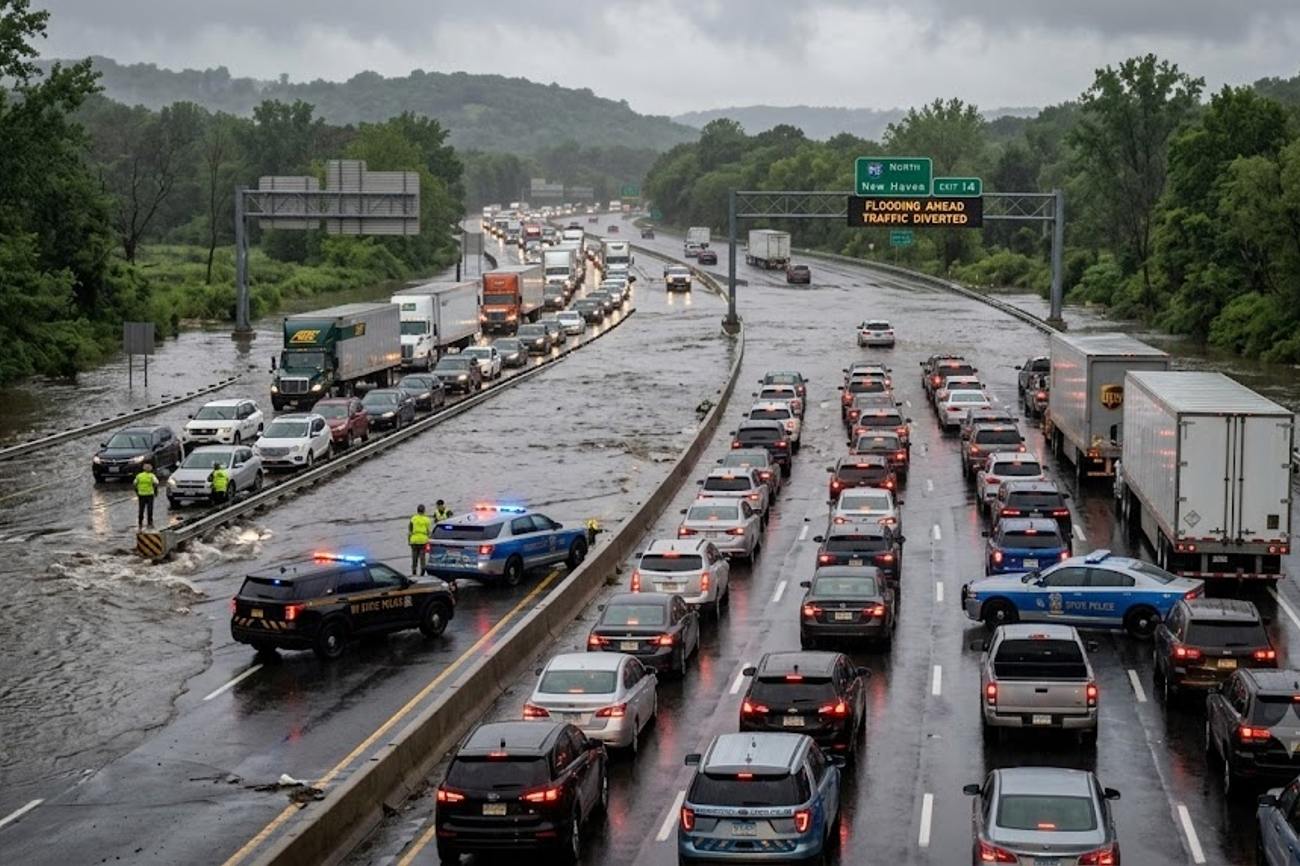
Image generated by AI
[Old Saybrook, September 13, 2026] — Severe flash flooding has paralyzed the I-95 corridor, triggering emergency rescues and shutting down critical transportation hubs across the Northeast. A slow-moving storm system dumped intense rainfall across New York, Connecticut, Massachusetts, and Rhode Island, overwhelming municipal drainage systems and rendering major highway segments impassable.
The weather event peaked Sunday morning, September 13, as repeated rounds of thunderstorms stalled over the region. Rainfall rates reached between 1 and 2 inches per hour in multiple locations, with coastal Connecticut recording extreme surges of 3 to 4 inches per hour. The resulting deluge has severed primary transit links between Washington, Philadelphia, New York, and Boston, creating a logistical crisis for millions of commuters and travelers.
The Atmospheric Trigger
The crisis was precipitated by a powerful, slow-moving atmospheric system that trapped moisture over the Northeast. Unlike fast-moving fronts, this system remained stationary, allowing the same communities to be hit by successive waves of heavy rain.
In coastal Connecticut, the situation escalated rapidly as some areas recorded total rainfall accumulations of 6 to 7 inches. The severity of the flooding was compounded by a combination of extreme precipitation volumes, dense urban development, and insufficient drainage capacity. Stormwater systems in several municipalities reached a breaking point, causing water to back up into underpasses, low-lying neighborhoods, and primary arterial roads. The National Weather Service (NWS) issued urgent flash flood warnings as rapidly moving water created lethal conditions for both pedestrians and motorists.
Regional Impact and Casualty Reports
The flooding affected a vast geographic area, with specific intensities varying by state:
- Connecticut: The epicenter of the emergency. In Fairfield County, specifically Westport and Norwalk, drainage systems failed completely. Emergency responders in Westport conducted 13 rescues of individuals trapped in vehicles. In Bridgeport, rescue teams deployed boats to evacuate residents from submerged homes.
- New Jersey: Northern regions saw early impacts. In Paterson, emergency crews rescued approximately 20 people trapped by rising waters. In Paramus, a scheduled half marathon was interrupted when floodwaters surged across the race route. Infrastructure failures left approximately 5,600 homes and businesses without power.
- New York: Westchester County and the broader metropolitan area reported flooded roadways and significant traffic congestion, cascading into the interconnected transit networks of neighboring states.
- Rhode Island & Massachusetts: Both states remained under high-alert flood warnings as the system migrated north, with officials warning of rapid urban flooding.
What This Means for Travelers
For anyone currently traveling or booking transit through the Northeast corridor, the impact is immediate and severe. This is not merely a traffic delay; it is a systemic failure of regional transport.
Road Travel: The I-95 is experiencing intermittent closures and hazardous standing water. Motorists are warned that flooded roads often conceal structural damage or fast-moving currents capable of sweeping vehicles off the road. Avoid low-lying underpasses and follow diversions provided by state police.
Rail Transit: Both Amtrak and Metro-North have reported significant delays and cancellations. Because the Northeast Corridor (NEC) is a linear system, a flood-related blockage in one sector creates a ripple effect of cancellations from Boston to Washington D.C. Passengers should expect stranded trains and limited ticketing availability.
Air Travel: Aviation operations have been compromised. Tweed New Haven Airport was forced to temporarily close its departures terminal due to flooding. Across the broader U.S. network, thousands of flights were delayed on September 13 as the storm disrupted the high-volume airspace of the Northeast. Travelers should monitor their flight status via the Federal Aviation Administration (FAA) or their specific airline's mobile app.
Recovery and Infrastructure Outlook
Recovery operations are currently underway, with municipal crews working to clear debris and pump water from critical junctions. However, the event has reignited a debate regarding the resilience of Northeast infrastructure. The failure of drainage systems in developed areas like Fairfield County suggests that existing stormwater management is inadequate for the increasing frequency of extreme rainfall events.
Authorities are continuing to monitor weather developments to ensure essential services are restored. While the immediate rain has subsided in some areas, the ground remains saturated, meaning even light rainfall in the coming days could trigger additional flash floods. Transit agencies are expected to provide a full schedule of restored services only after safety inspections of rail beds and highway bridges are completed.
FAQ: Northeast Flooding 2026
Is I-95 currently open for travel? Many segments remain hazardous or closed. Travelers should check real-time traffic maps and avoid low-lying areas in Connecticut and New Jersey. Expect significant delays across the entire corridor.
What should I do if my Amtrak or Metro-North train is cancelled? Check the official carrier websites for rebooking options. Due to the scale of the disruption, expect long queues at stations and limited alternative transport.
Are flights still departing from New Haven? Tweed New Haven Airport experienced a temporary closure of its departures terminal. Passengers must contact their airline or check the airport's official status before heading to the terminal.
How can I check for power outages in New Jersey? Contact your local utility provider. Approximately 5,600 customers were affected; restoration times vary by municipality.
Regional transit remains in a state of recovery as the Northeast assesses the damage.
#I95Flooding2026 #TweedNewHavenAirport #NortheastCorridor #ConnecticutFlashFlood #AmtrakDelays #Sept13Storm
Related Travel Guides
- Qatar Travel Technology Highlights Doha And Al Khor Nature Experiences Through Official App Deals
- Travel Technology Enters a New Era as Zeal Connect Unveils AI-First CRM Built for Global Travel Companies
- Castle of Good Hope 2026 Heritage Month: How AI and Digital Tours Are Transforming South Africa’s Oldest Fort
Disclaimer
This article is for informational and educational purposes only. It does not constitute legal, financial, or professional advice. While we strive to provide accurate and up-to-date information, travel policies, regulations, and conditions change rapidly. Always verify information with official sources before making travel decisions. Nomad Lawyer makes no representations about the accuracy, reliability, completeness, or suitability of the information provided. Readers should consult qualified professionals for advice specific to their circumstances. The views expressed in this article are those of the author and do not necessarily reflect the views of Nomad Lawyer.
Preeti Gunjan
Contributor & Community Manager
A passionate traveller and community builder. Preeti helps grow the Nomad Lawyer community, fostering engagement and bringing the reader experience to life.
Learn more about our team →