
Portugal Expands Accessible Tourism Facilities with 300% Growth in Adapted Accommodations and Regional Infrastructure Upgrades
Portugal expands accessible tourism as adapted hotel accommodations grow from 60 to 219 establishments across key regions like Northern Portugal and the Algarve.

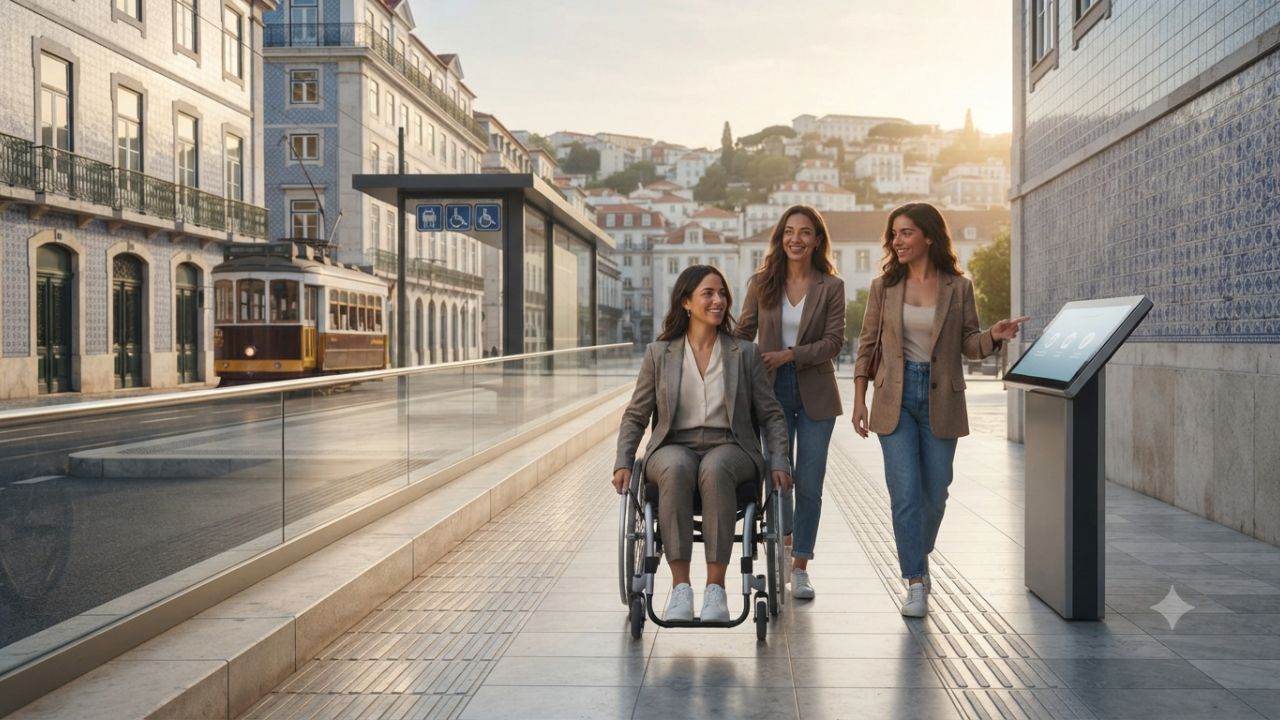
Image generated by AI
Portugal is advancing its accessible travel infrastructure as official tourism evaluations confirm a more than threefold increase in certified accessible accommodation establishments. The expansion boosts adapted hotel inventory across major tourist regions, supported by updated urban planning, digital accessibility tools, and expanded mobility services for international travelers requiring specialized assistance.
Expanded Accessible Accommodations & Regional Distribution
A primary metric of Portugal’s inclusive travel progress is the growth of hotel establishments providing adapted rooms and accessible bathroom facilities. National tourism figures tracking properties offering at least three fully adapted units for travelers with reduced mobility demonstrate significant long-term growth.
In 2005, Portugal recorded just 60 establishments meeting these specific accessibility criteria, representing roughly 3 percent of evaluated national accommodations. By 2025, that figure rose to 219 properties, expanding the national proportion to 9.8 percent.
The regional distribution of qualifying accessible accommodations highlights distinct inventory patterns across the mainland and island autonomous regions:
| Tourist Region | Qualifying Establishments (2025) | Primary Accessibility Assets |
|---|---|---|
| Northern Portugal | 60 | Modern riverfront hotels, accessible Porto metro stations |
| Centre Region | 45 | Step-free heritage routes, adapted thermal bath resorts |
| Algarve | 37 | Accessible beach boardwalks, beach wheelchair services |
| Lisbon Region | 27 | Low-floor bus fleets, step-free museum entrances |
| Alentejo | 26 | Highest regional percentage of newly built adapted rooms |
| Madeira | 18 | Cable car accessibility, adapted coastal promenades |
| Azores | 6 | Accessible visitor centers at volcanic nature parks |
While newer resort developments in Alentejo and the Algarve incorporate step-free design from initial construction phases, older urban hubs face renovation challenges due to historic preservation rules and structural constraints.
Academic Research and Professional Accessibility Training
Between 2011 and 2025, specialized research at Portuguese academic institutions focused on evaluating travel barriers across historic monuments, castles, museums, and nature trails. Studies centered on improving experiences for visitors with mobility impairments, visual limitations, and neurodivergent travel requirements.
However, industry evaluations highlight a remaining gap between academic research and operational hospitality training. Key areas identified for future industry development include:
- Staff Competency: Integrating mandatory accessibility and disability-awareness modules into vocational tourism curricula.
- Digital Tools: Expanding mobile applications offering verified audio descriptions, screen-reader compatibility, and room layout schematics.
- Third-Party Verification: Transitioning from self-declared hotel accessibility features to independent, audited certification systems.
- Heritage Retrofitting: Developing non-invasive ramps and tactile paving suitable for historic architectural sites.
Planning Frameworks and Infrastructure Standards
To ensure a consistent travel experience, Portuguese urban planners and municipal tourism boards are establishing broader criteria for inclusive destination management. Rather than focusing solely on hotel room design, updated guidelines incorporate end-to-end travel chain mobility.
Key evaluation criteria currently being implemented across municipal transit and tourism hubs include:
- Step-Free Building Access: Mandatory automated doors, wide elevator cabins, and compliant ramp gradients at public attractions.
- Public Transit Integration: Low-floor urban buses, tactile boarding platforms, and step-free train station transfers.
- Clear Communication Infrastructure: High-contrast directional signage, Braille panels, and hearing loop installations at visitor centers.
- Accessible Web Services: Ensuring public tourism portals and booking platforms comply with global Web Content Accessibility Guidelines (WCAG).
Traveler Logistics & Accessible Mobility Guide
For travelers with mobility needs planning a trip to Portugal in 2026, practical logistics planning ensures smooth navigation across the country's diverse topography.
- Airport Assistance (MyWay Service): ANA Airports of Portugal operates the dedicated "MyWay" assistance service at Lisbon (LIS), Porto (OPO), Faro (FAO), Funchal (FNC), and Ponta Delgada (PDL). Passengers requiring wheelchair transport or guided boarding must request the service through their airline at least 48 hours prior to departure.
- Urban Navigation & Cobblestones: Historic districts in Lisbon (Alfama, Bairro Alto) and Porto (Ribeira) feature steep gradients and traditional basalt cobblestones (calçada portuguesa). Travelers using manual wheelchairs or mobility scooters should plan routes using low-floor metro lines or modern flat corridors along the Tagus and Douro riverfronts.
- Accessible Beach Program: During the official bathing season (June to September), over 200 beaches across Portugal display the "Accessible Beach" flag (Praia Acessível). These locations offer amphibious wheelchairs (tiramôche), ramp access down to the sand, adapted restrooms, and reserved parking.
- Train & Intercity Bus Transit: Comboios de Portugal (CP) provides a specialized Integrated Mobility Service (SIM) for train passengers requiring ramp assistance and designated wheelchair spaces on Alfa Pendular and Intercidades trains. Advance booking via the CP call center or online portal is mandatory.
Related Travel Guides
Disclaimer
This article is for informational and educational purposes only. It does not constitute legal, financial, or professional advice. While we strive to provide accurate and up-to-date information, travel policies, regulations, and conditions change rapidly. Always verify information with official sources before making travel decisions. Nomad Lawyer makes no representations about the accuracy, reliability, completeness, or suitability of the information provided. Readers should consult qualified professionals for advice specific to their circumstances. The views expressed in this article are those of the author and do not necessarily reflect the views of Nomad Lawyer.
Kunal K Choudhary
Co-Founder & Contributor
A passionate traveller and tech enthusiast. Kunal contributes to the vision and growth of Nomad Lawyer, bringing fresh perspectives and driving the community forward.
Learn more about our team →