
UK and EU Issue Do Not Travel Warnings for Middle East Amid 2026 US-Iran Conflict and Flight Chaos
European governments, including the UK and Germany, have issued urgent 'Do Not Travel' advisories across the Middle East following the collapse of a US-Iran peace deal and widespread aviation disruptions.

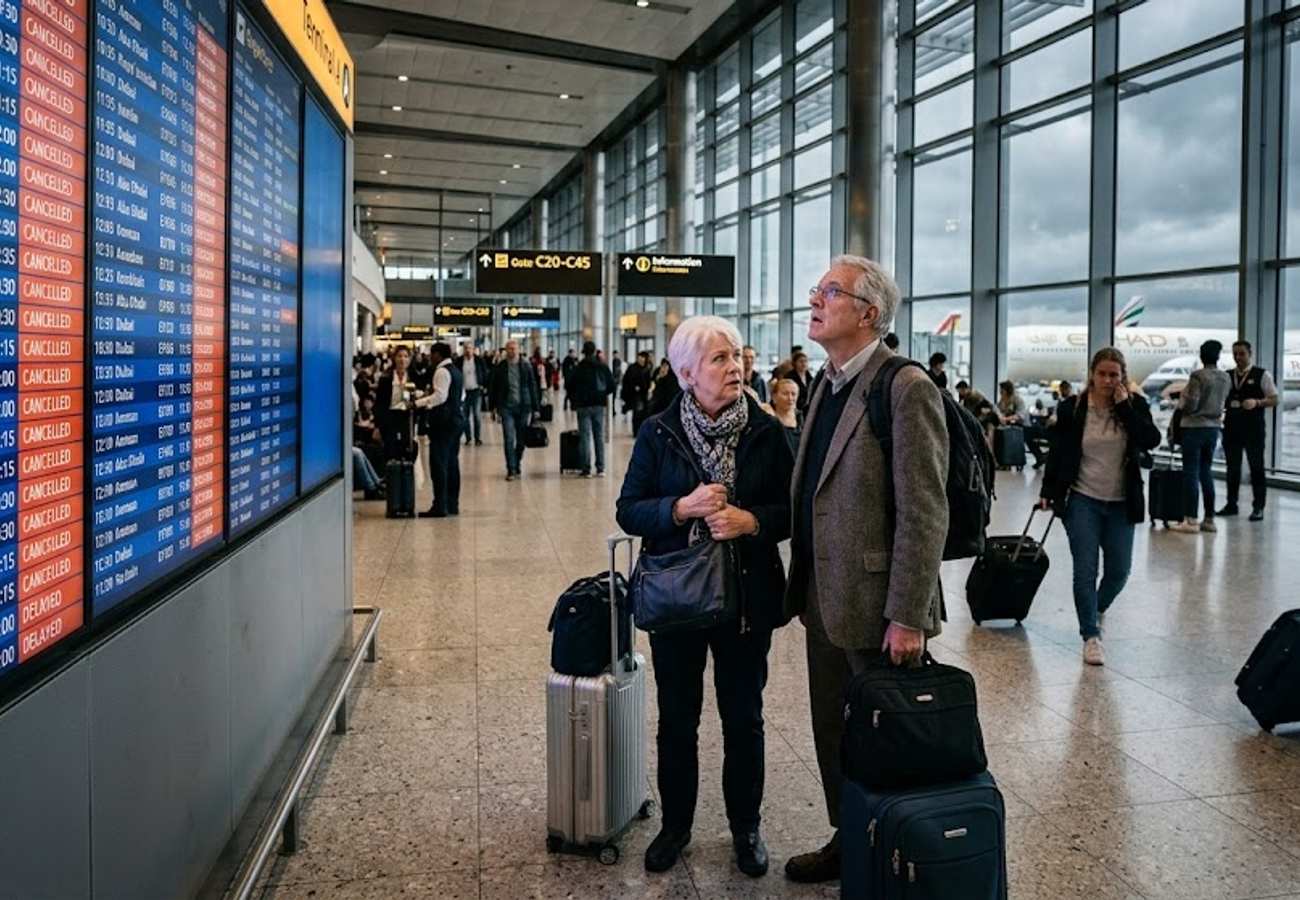
Image generated by AI
[London, July 26, 2026] — A rapid deterioration of security across the Middle East has triggered a wave of unprecedented "Do Not Travel" advisories from European governments, effectively isolating several of the world's most critical transit hubs. Following the collapse of a fragile interim ceasefire, nations including the United Kingdom, Germany, and France are warning citizens against non-essential travel to the Gulf and Levant regions due to imminent military escalations and severe aviation risks.
Breakdown of the July 2026 Security Crisis
The current instability is rooted in the failure of a peace agreement between the United States and Iran on July 8, 2026. Disagreements regarding the strategic control of the Strait of Hormuz led to the immediate dissolution of the deal, transitioning the region back into a state of active military hostility.
By mid-July, the situation shifted from diplomatic tension to kinetic warfare. The United States initiated a series of targeted strikes against Iranian military assets, marking its 13th consecutive night of operations by July 23. In response, Iran and its regional proxies launched drone campaigns targeting US military installations in Bahrain, Kuwait, and Jordan.
The conflict has not remained confined to land bases. On July 13, two commercial tankers linked to the UAE were attacked in Omani waters, resulting in one confirmed death and several injuries. This expansion into maritime territories has signaled to European intelligence agencies that the risk to civilian nationals and commercial shipping has reached a critical threshold, necessitating immediate government intervention.
Chronology of Regional Escalation in July 2026
| Date | Event | Impact |
|---|---|---|
| July 8, 2026 | US-Iran Peace Agreement Collapses | Resumption of military posturing in the Gulf region |
| July 12, 2026 | US Military Campaign Begins | Renewed strikes targeting Iranian military infrastructure |
| July 13, 2026 | Maritime Attacks in Omani Waters | UAE tankers hit; Germany issues urgent Bahrain warning |
| July 22, 2026 | EASA Airspace Update | Conflict Zone Information Bulletin extended to August 31 |
| July 23, 2026 | Jordan Added to High-Risk List | EASA warns of airspace threats following proxy drone strikes |
European Governments Implement Strict Travel Bans
European foreign ministries have responded to the escalating violence with a tiered system of restrictive advisories. While intelligence is shared across the EU, individual nations have adopted varying levels of severity in their public warnings.
Austria's Level 4 Mandate
The Austrian Federal Ministry for European and International Affairs (BMEIA) has implemented one of the most stringent policies, designating ten Middle Eastern countries as Level 4 ("Do Not Travel"). This designation indicates that travel is unjustifiable for any reason. The affected nations include:
- Conflict Zones: Iran, Lebanon, Israel, Iraq, and Syria.
- Elevated Gulf Risks: UAE, Jordan, Kuwait, Bahrain, and Qatar.
German and French Security Alignment
Germany's Auswärtiges Amt and France's Ministère de l’Europe et des Affaires étrangères have closely mirrored Austria's risk assessments. Germany specifically issued an urgent warning on July 13 against all travel to Bahrain. Both nations have effectively placed the same ten regional countries off-limits for non-essential travel.
The Netherlands' Color-Coded System
The Dutch government utilizes a color-coded risk scale to guide its citizens. Bahrain has been placed under a "Red" advisory, meaning a total ban on travel. Meanwhile, the UAE, Qatar, Saudi Arabia, Jordan, and Kuwait are under "Orange" advisories, meaning travel should only occur if absolutely necessary.
United Kingdom's FCDO Reversal
The UK Foreign, Commonwealth & Development Office (FCDO), which had slightly relaxed guidelines in June, has now pivoted to a high-alert status. The FCDO currently advises against "all but essential travel" to Kuwait and Bahrain. Additionally, the UK has issued strengthened warnings for the UAE, citing the high probability of sudden airspace closures and flight disruptions.
Aviation Sector Paralyzed by Airspace Restrictions
The diplomatic warnings are mirrored by operational chaos in the skies. The European Union Aviation Safety Agency (EASA) has extended its Conflict Zone Information Bulletin (CZIB) until August 31, 2026. This directive serves as a critical warning to European carriers to avoid or perform exhaustive risk assessments before entering the airspace of Bahrain, Iran, Iraq, Jordan, Kuwait, Lebanon, Qatar, the UAE, and the Gulf of Oman.
Jordan was formally added to this high-risk list on July 23, following the surge in proxy drone activity. This regulatory move has severely impacted the business models of major Middle Eastern carriers, such as Qatar Airways, Etihad, and Emirates, who rely heavily on European transit passengers.
Major Airline Suspensions and Route Cuts
The aviation industry has responded with sweeping cancellations to ensure passenger safety:
- Lufthansa Group: Including SWISS, Brussels Airlines, and Austrian Airlines, the group has halted flights to Tehran, Beirut, Dammam, Muscat, Amman, Abu Dhabi, and Dubai.
- KLM Royal Dutch Airlines: All flights to Riyadh, Dammam, and Dubai are suspended until September 6, 2026. The airline is actively rerouting aircraft to avoid the Gulf region and the airspace of Israel, Iraq, and Iran.
- Air France: Suspensions for flights to Dubai, Riyadh, and Beirut have been extended indefinitely.
- Regional Carriers: Aegean Airlines (Greece) has canceled Dubai flights through August 31, while airBaltic (Latvia) has suspended Dubai routes until October 24, 2026.
Why This Matters: The Traveler's Perspective
For the modern traveler, this crisis represents more than just a set of warnings; it is a total disruption of global mobility. The shift from "exercise caution" to "Do Not Travel" creates immediate legal and financial complications. Travelers currently in these regions may find themselves stranded as European carriers unilaterally suspend flights, leaving them dependent on local airlines that may be operating under extreme military pressure.
From a logistical standpoint, the EASA restrictions mean that even flights not landing in the conflict zones may face massive delays or circuitous routing to avoid high-risk airspace. This increases fuel costs, flight times, and ticket prices globally. Furthermore, the "Red" and "Level 4" warnings often trigger the automatic cancellation of travel insurance policies, leaving tourists without coverage for medical emergencies or trip interruptions.
For those with business interests in the Gulf, the "Orange" and "Essential Travel" designations create a precarious environment where corporate duty-of-care requirements may forbid employees from entering the region, potentially stalling trade and diplomatic efforts during an already volatile period.
The volatility of the Gulf airspace suggests that stability will not return before the end of the third quarter of 2026.
Related Travel Guides
Disclaimer
This article is for informational and educational purposes only. It does not constitute legal, financial, or professional advice. While we strive to provide accurate and up-to-date information, travel policies, regulations, and conditions change rapidly. Always verify information with official sources before making travel decisions. Nomad Lawyer makes no representations about the accuracy, reliability, completeness, or suitability of the information provided. Readers should consult qualified professionals for advice specific to their circumstances. The views expressed in this article are those of the author and do not necessarily reflect the views of Nomad Lawyer.
Preeti Gunjan
Contributor & Community Manager
A passionate traveller and community builder. Preeti helps grow the Nomad Lawyer community, fostering engagement and bringing the reader experience to life.
Learn more about our team →