
UK Aviation Network Transforms As Virgin Atlantic Heathrow Route Changes Redefine Long Haul Travel
UK Aviation Network Transforms As Virgin Atlantic Heathrow Route Changes Redefine Long Haul Travel

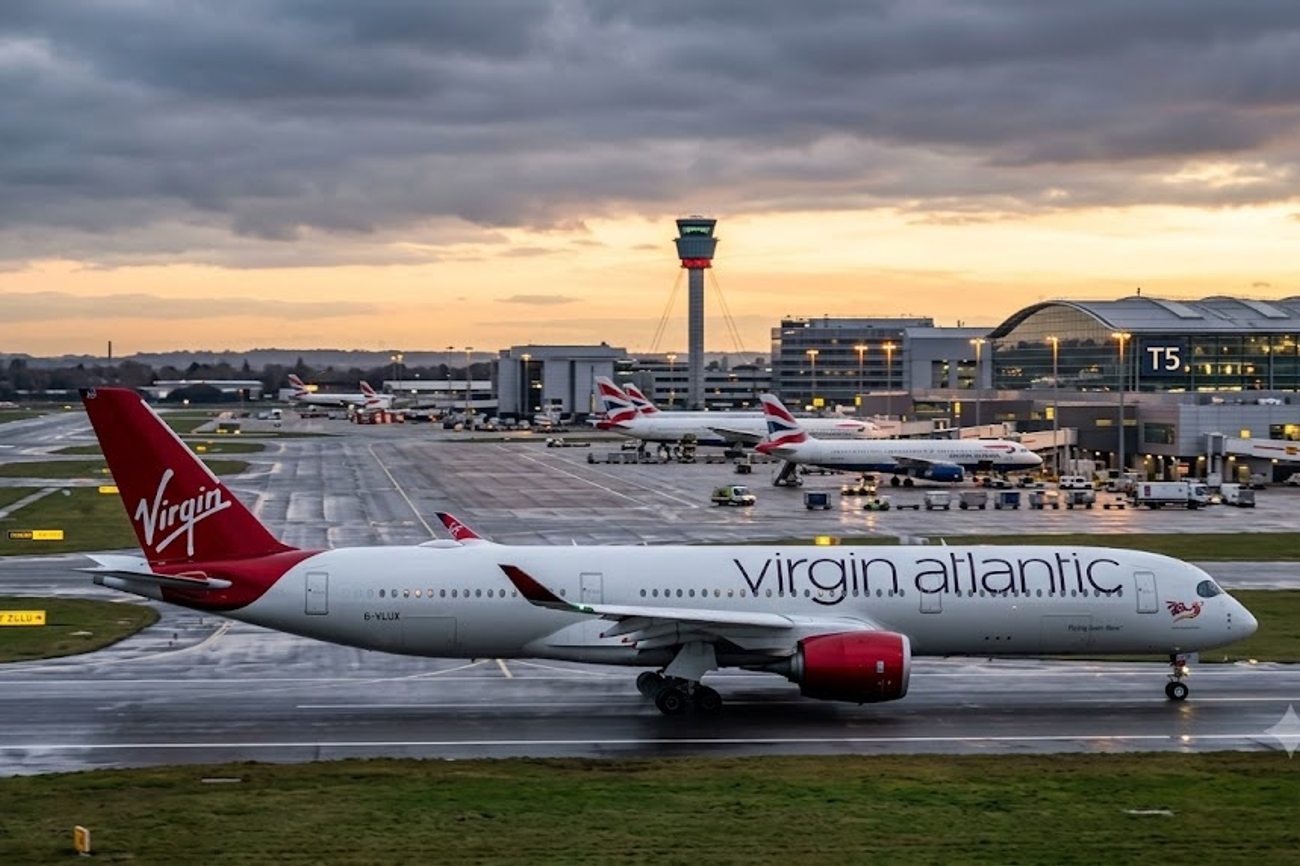
Image generated by AI
Five long-haul routes are being excised from Virgin Atlantic’s London Heathrow schedule, signaling a strategic pivot toward high-yield profitability over broad network coverage. This reduction is not a retreat from the UK’s primary hub but a calculated realignment of capacity in an era of volatile operational costs and shifting passenger demographics. By pruning underperforming services, the carrier is optimizing its deployment of high-efficiency wide-body aircraft to ensure that every slot at one of the world's most congested airports generates maximum revenue.
The Economics of Slot Optimization at LHR
The decision to cut five international services from London Heathrow (LHR) is a direct response to the brutal mathematics of hub operations. At Heathrow, airport slots are among the most valuable real estate in global aviation; holding a slot for a route that is "popular" but not "profitable" is a strategic failure. Virgin Atlantic is currently balancing a delicate equation: rising fuel expenses, aircraft availability constraints, and a post-pandemic recovery that has seen demand return unevenly across different global regions.
The airline is shifting its focus toward "stronger-performing markets," a corporate euphemism for routes with higher premium cabin uptake and better load factors. This restructuring is particularly evident in the way the carrier manages its fleet. Long-haul aviation requires massive upfront investment in crew, marketing, and aircraft. When operational costs spike, airlines must decide whether to absorb the loss or reallocate the aircraft to a route where the yield per seat is higher.
Fleet Dynamics and Capacity Allocation
The ability to execute these network changes depends entirely on the versatility of the fleet. Virgin Atlantic utilizes a sophisticated mix of wide-body aircraft to balance capacity and efficiency. The strategic deployment of these assets is the primary driver behind the current route cuts.
| Aircraft Model | Strategic Role | Primary Advantage |
|---|---|---|
| Airbus A350-1000 | High-Capacity Flagship | Maximum efficiency on ultra-long-haul, high-demand corridors |
| Airbus A330neo | Mid-Range Flexibility | Modern technology with lower trip costs for secondary markets |
| Boeing 787-9 | Long-Range Efficiency | Optimized fuel burn for thinner long-haul routes |
Because a wide-body aircraft cannot serve two markets simultaneously, the removal of five routes allows the carrier to move these hulls to destinations where demand is surging. This is a common pattern seen across the International Air Transport Association (IATA) member airlines, where the focus has shifted from "market share" to "margin per available seat kilometer."
Expert Analysis: The "Premium Pivot" and Traveler Fallout
For the seasoned traveler, the direct consequence of these changes is a reduction in direct-flight optionality. When a carrier like Virgin Atlantic cuts a route, it rarely leaves a vacuum; instead, it forces a shift in consumer behavior. Passengers who previously relied on a direct LHR departure will now be pushed toward connecting flights or partner carriers.
The pricing pressure created by this consolidation is significant. As direct capacity decreases on specific routes, the remaining carriers—often including Delta Air Lines or Air France-KLM—gain increased pricing power. For the business traveler, the loss of a direct flight often means an additional 4-8 hours of travel time via a hub, which can diminish the commercial viability of a trip.
Furthermore, this move highlights a broader trend of "network pruning." Airlines are no longer interested in maintaining "prestige routes" that serve a diplomatic or historical purpose but fail to meet strict financial KPIs. By leaning on partnerships with Delta, Air France, and KLM, Virgin Atlantic is effectively outsourcing the risk of lower-demand destinations while retaining the high-margin traffic at the Heathrow hub. This allows the airline to maintain its brand presence in North America, the Caribbean, Africa, and Asia without the operational burden of flying every single leg themselves.
Key Takeaways
- Capacity Reduction: Five long-haul routes have been eliminated from the London Heathrow schedule to prioritize profitability over volume.
- Fleet Reallocation: Modern assets, specifically the A350-1000 and A330neo, are being shifted to higher-yield markets to optimize aircraft utilization.
- Partner Reliance: Travelers on affected routes will see an increased reliance on the Flying Club partner network, including Delta and KLM, for connectivity.
- Strategic Focus: Heathrow Terminal 3 remains the central gateway, but the strategy has shifted toward high-value passenger segments (Business and Premium Leisure).
- Market Volatility: The cuts reflect a wider UK aviation trend of restructuring schedules to combat rising operational costs and uneven global demand recovery.
FAQ: Virgin Atlantic Heathrow Changes 2026
What happens to my flight if my route was one of the five cut? Passengers with existing bookings on cancelled routes are typically offered re-routing via partner airlines or full refunds. Check your email for notifications from Virgin Atlantic or your travel agent regarding alternative flight options.
Will this lead to higher ticket prices on remaining routes? Potentially. When capacity is reduced on specific corridors, the remaining seats often command a premium. However, the reallocation of more efficient aircraft (like the A350-1000) can sometimes offset this through lower operational costs.
Are these cuts a sign that Virgin Atlantic is leaving Heathrow? No. The airline has explicitly stated that Heathrow remains its primary UK gateway. The changes are about optimizing which destinations are served from the hub, not reducing the hub's importance.
How does this affect Virgin Atlantic Flying Club members? Frequent flyers may find fewer direct options for earning and redeeming points on specific routes, but they can still utilize partner networks (Delta, Air France, KLM) to maintain their travel patterns.
The era of the "prestige route" is ending, replaced by a cold, data-driven approach to the skies.
Tags: Virgin Atlantic, London Heathrow, LHR Route Changes, UK Aviation 2026, Long-Haul Connectivity, Airbus A350-1000
Related Travel Guides
Disclaimer
This article is for informational and educational purposes only. It does not constitute legal, financial, or professional advice. While we strive to provide accurate and up-to-date information, travel policies, regulations, and conditions change rapidly. Always verify information with official sources before making travel decisions. Nomad Lawyer makes no representations about the accuracy, reliability, completeness, or suitability of the information provided. Readers should consult qualified professionals for advice specific to their circumstances. The views expressed in this article are those of the author and do not necessarily reflect the views of Nomad Lawyer.
Kunal K Choudhary
Co-Founder & Contributor
A passionate traveller and tech enthusiast. Kunal contributes to the vision and growth of Nomad Lawyer, bringing fresh perspectives and driving the community forward.
Learn more about our team →