
Uber and Wayve Launch UK's First AI Self-Driving Ride Service in London Using Ford Mustang Mach-E
Uber and Wayve have debuted the first autonomous ride-hailing service in London, deploying AI-powered electric Ford Mustang Mach-E vehicles across central London to test urban autonomous mobility.

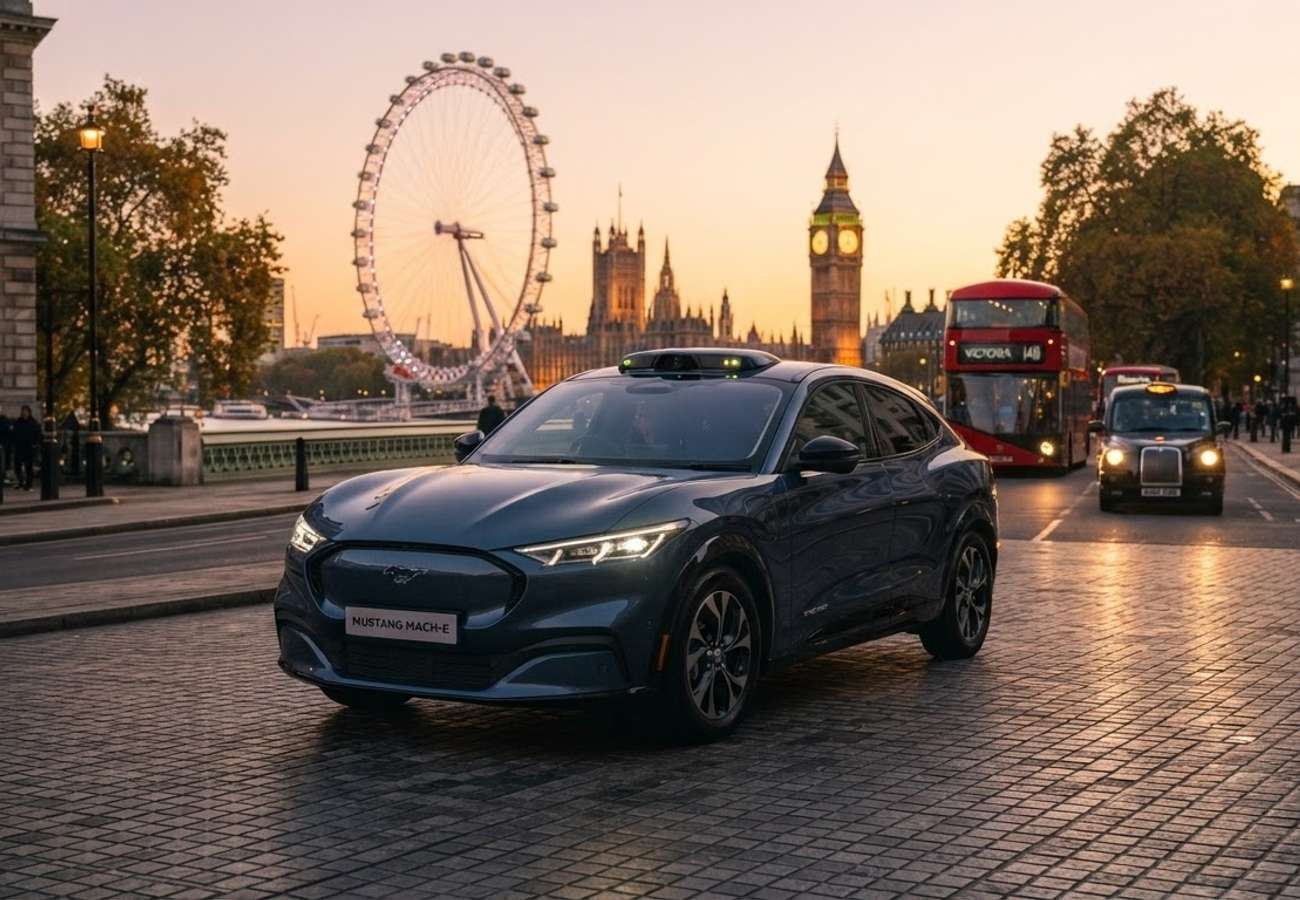
Image generated by AI
Uber and British AI firm Wayve have launched the United Kingdom's first self-driving ride-hailing service in London, integrating autonomous electric vehicles directly into the Uber app.
The rollout began on September 3, 2026, utilizing Ford Mustang Mach-E electric vehicles equipped with Wayve’s proprietary AI Driver technology. The service is currently restricted to central London and operates within a strictly controlled environment.
To ensure safety and regulatory compliance, every vehicle carries a safety driver holding a private hire license issued by Transport for London (TfL). These professionals monitor the AI's performance and maintain the ability to intervene immediately.
Integration and Passenger Access
The service is seamlessly embedded into the existing Uber ecosystem. Passengers requesting UberX, Uber Electric, or Uber Comfort may be matched with a Wayve-powered vehicle. There is no additional cost for this experience, as pricing is provided upfront.
Uber has introduced a specific preference setting within the app to allow users to opt-in for autonomous rides. Data indicates significant market appetite, with over 140,000 users already activating this preference.
How to request an autonomous vehicle:
- Open the Uber app.
- Navigate to "Ride Requests" or ride preferences.
- Enable the autonomous vehicle option to increase matching probability.
Technical Specifications and Fleet Data
The fleet consists of fully electric Ford Mustang Mach-E vehicles. Unlike traditional autonomous systems that rely on high-definition (HD) mapping and expensive hardware, Wayve utilizes an AI-based approach that learns from driving experience to adapt to new environments.
Vehicle Equipment:
- Wayve AI Driver technology.
- Comprehensive surrounding sensor systems.
- Integrated in-car passenger displays.
- App-based vehicle unlocking.
Operational Parameters
| Service Detail | Information |
|---|---|
| Launch Date | September 3, 2026 |
| Location | Central London, UK (Excluding Airports) |
| Platform | Uber App |
| Technology Partner | Wayve |
| Vehicle Model | Ford Mustang Mach-E (Electric) |
| Operation Mode | Supervised Autonomous |
| Safety Requirement | TfL-licensed driver onboard |
| Eligible Categories | UberX, Uber Electric, Uber Comfort |
| Passenger Cost | No extra charge |
Wayve’s AI Approach vs. Traditional Autonomy
Founded in 2017, Wayve distinguishes itself by reducing reliance on the "brute force" mapping used by many competitors. Their system is designed to be flexible, allowing vehicles to operate in different cities without requiring exhaustive, street-by-street HD map updates. This scalability is a primary reason for the partnership with Uber.
Wayve Technology Profile:
- Core Logic: AI-based learning system.
- Mapping: Reduced reliance on HD maps.
- Hardware: Optimized to avoid overly expensive specialized sensors.
- Investment: Backed by major entities including SoftBank Group.
Why This Matters: Industry Analysis
From a logistical perspective, launching in London is a high-stakes move. London represents one of the most complex urban environments globally due to narrow streets, erratic pedestrian behavior, and high cyclist density. If Wayve's AI can navigate these conditions without HD maps, it proves the technology is scalable to other global megacities without massive infrastructure investment.
For the traveler, the real impact is the normalization of "hybrid" autonomy. By keeping the safety driver in the loop and removing the price premium, Uber is lowering the psychological barrier to autonomous transport. This is not a luxury product launch; it is a mass-market stress test.
The exclusion of airport transfers is a telling detail. Airport routes are predictable and linear; central London is chaotic. By focusing on the city center, Uber and Wayve are tackling the hardest part of the journey first to prove the AI's robustness.
Forward Outlook
The current supervised model is an early-stage deployment. While the companies have not provided a specific date for the removal of safety drivers, the gradual increase in fleet size will depend on three factors:
- Regulatory Evolution: TfL's comfort level with AI-led navigation.
- Infrastructure: The integration of V2X (Vehicle-to-Everything) communication in London.
- User Data: Analysis of the 140,000+ users currently opting into the service.
Expect the service to expand its geographic footprint within London before any attempt is made to move toward fully driverless "Robotaxi" operations.
The London streets are now the ultimate laboratory for the future of urban mobility.
Related Travel Guides
Disclaimer
This article is for informational and educational purposes only. It does not constitute legal, financial, or professional advice. While we strive to provide accurate and up-to-date information, travel policies, regulations, and conditions change rapidly. Always verify information with official sources before making travel decisions. Nomad Lawyer makes no representations about the accuracy, reliability, completeness, or suitability of the information provided. Readers should consult qualified professionals for advice specific to their circumstances. The views expressed in this article are those of the author and do not necessarily reflect the views of Nomad Lawyer.
Kunal K Choudhary
Co-Founder & Contributor
A passionate traveller and tech enthusiast. Kunal contributes to the vision and growth of Nomad Lawyer, bringing fresh perspectives and driving the community forward.
Learn more about our team →