
UAE Travel Future Accelerates as EuroGulf Builds New Aviation and Hospitality Mobility Network
UAE Travel Future Accelerates as EuroGulf Builds New Aviation and Hospitality Mobility Network
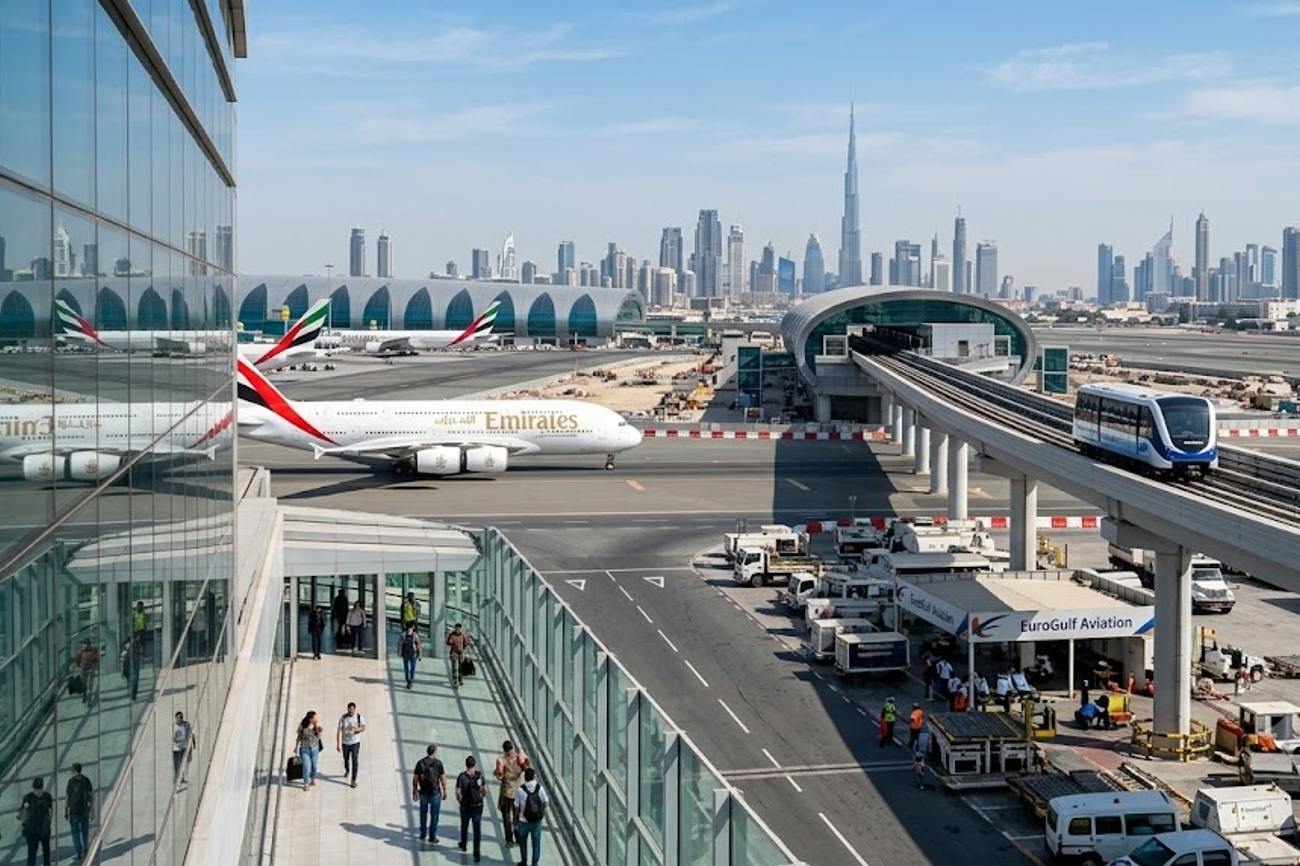
Image generated by AI
Dubai’s international visitor arrivals have consistently outpaced global recovery averages, with the city now positioning its ground infrastructure to match its aviation capacity. While Dubai International Airport (DXB) continues to dominate as a primary global gateway, the shift in the UAE market is no longer about simply landing passengers; it is about the "last-mile" integration. The emergence of EuroGulf Mobility Group (EGMG) as an integrated ecosystem provider signals a pivot from fragmented transport services to a unified mobility model that merges aviation, hospitality, and corporate logistics.
The Integrated Mobility Shift in Numbers
The strategic expansion of EuroGulf Mobility Group (EGMG) is a direct response to the scaling demands of the UAE's tourism economy. Rather than operating as a standalone rental or chauffeur agency, EGMG has structured its portfolio to cover every touchpoint of the traveler's journey. This ecosystem is comprised of seven distinct service verticals:
- Car rentals for independent exploration.
- Professional chauffeur services for premium transit.
- Comprehensive fleet management for corporate partners.
- Dedicated corporate transportation for business hubs.
- Bus and coach services for high-volume tourist groups.
- Commercial vehicle solutions for logistics.
- Specialized airport mobility support.
This diversification allows the provider to scale operations based on the volatility of Dubai's tourism calendar. For instance, during major international exhibitions or seasonal peaks, the ability to pivot from executive chauffeur services via their Royal Limousine division to high-capacity coach services allows for a fluidity in supply that fragmented providers cannot match. According to data from the World Travel & Tourism Council (WTTC), the integration of transport and hospitality is a primary driver in increasing the average length of stay for high-net-worth individuals.
Comparative Mobility Context: Fragmented vs. Ecosystem Models
Historically, the UAE transport market operated on a siloed basis. A traveler would book a flight via one carrier, a hotel through a second agent, and an airport transfer through a third-party taxi or limousine service. The EGMG model represents a transition toward "Mobility-as-a-Service" (MaaS), where the transportation layer is embedded into the hospitality and aviation experience.
When comparing the traditional fragmented model to the emerging integrated ecosystem, the operational efficiency gains are significant, particularly for the B2B sector (hotels and corporate event planners).
| Metric | Fragmented Model (Traditional) | Integrated Ecosystem (EGMG Model) | Impact on Traveler |
|---|---|---|---|
| Provider Coordination | Multiple vendors per trip | Single point of contact | Reduced friction/wait times |
| Fleet Scalability | Limited to specific vehicle types | Multi-modal (Coach to Limousine) | Better alignment with group size |
| Booking Flow | Separate apps/contracts | Unified mobility platform | Seamless transition from DXB to Hotel |
| Service Standard | Variable by provider | Standardized across portfolio | Consistent luxury experience |
| Corporate Billing | Multiple invoices/vendors | Consolidated fleet management | Simplified expense reporting |
This shift mirrors broader trends seen in global aviation hubs. Data from OAG suggests that as airport capacities increase, the bottleneck shifts to ground mobility. By consolidating these services, EGMG is attempting to remove the "transfer friction" that often degrades the first impression of a luxury destination.
What This Means for Travelers
The professionalization and integration of ground transport in the UAE provide clear advantages for different traveler segments. If you are planning a trip to Dubai or the wider UAE in the coming quarters, the following data-driven advice applies:
For Luxury and High-Net-Worth Travelers: The growth of specialized divisions like Royal Limousine indicates a move toward hyper-personalized transit. Travelers should now look for "end-to-end" mobility packages rather than booking standalone airport pickups. Because these services are increasingly integrated with luxury hotels, booking your transport through your hospitality provider is now more likely to result in a seamless, pre-coordinated experience than booking a third-party app.
For Corporate Travelers and MICE (Meetings, Incentives, Conferences, Exhibitions) Attendees: With the UAE remaining a top global business hub, the availability of consolidated fleet management means that corporate groups can now secure guaranteed capacity for large-scale movements. If attending a major exhibition, it is advisable to secure corporate transport contracts 4-6 weeks in advance, as the integrated model allows providers to allocate fleet capacity more rigidly during peak event windows.
For Leisure Groups: The expansion of coach and bus services within a larger mobility group means better reliability for group tours. Travelers should prioritize operators who can offer multi-modal shifts—such as a coach for city tours combined with smaller executive vehicles for private excursions—to maximize time efficiency.
Forward Projection: The Path to Sustainable Mobility
The trajectory of UAE mobility is moving toward a convergence of luxury and sustainability. EGMG has already signaled that fuel-efficient fleet management and greener operations are central to its long-term vision. This is not merely a corporate social responsibility goal but a market necessity.
As documented by IATA, there is a growing global demand for "green corridors" in travel. In the UAE, this will likely manifest as a rapid transition of the premium chauffeur fleet toward Electric Vehicles (EVs) and hydrogen-powered coaches. We can expect the following developments over the next 24-36 months:
- EV Integration: A significant percentage of the Royal Limousine fleet will likely transition to high-end EVs to align with Dubai's sustainability targets.
- AI-Driven Dispatch: The use of predictive analytics to move fleets between DXB and luxury hotel clusters before the demand peaks, reducing idling time and emissions.
- Hospitality API Integration: Direct integration between hotel booking engines and mobility platforms, where a room reservation automatically triggers a tailored transport profile based on the guest's previous preferences.
FAQ: UAE Mobility Trends 2026
Will integrated mobility services increase the cost of travel? While premium chauffeur services maintain a high price point, the integrated model often reduces overall costs for corporate and group travelers by eliminating multiple vendor markups and improving operational efficiency.
Is it better to use ride-sharing apps or integrated providers like EGMG? For standard transit, apps remain viable. However, for luxury, corporate, or high-volume group travel, integrated providers offer superior reliability, professional chauffeur standards, and guaranteed vehicle availability that apps cannot promise.
How does this affect airport wait times at DXB? Integrated mobility ecosystems reduce wait times by coordinating vehicle arrivals with flight data in real-time, ensuring that executive and group transport is staged and ready the moment passengers clear customs.
Which services are expanding most rapidly in the UAE? Premium chauffeur services and corporate fleet management are seeing the fastest growth, driven by the UAE's status as a global hub for luxury tourism and international business events.
The future of travel is no longer about the destination, but the seamlessness of the movement between the points of arrival.
#UAEMobility2026 #DubaiTourismGrowth #EGMG #LuxuryTransportTrends #DXBGroundTransit #HospitalityMobility
Related Travel Guides
Disclaimer
This article is for informational and educational purposes only. It does not constitute legal, financial, or professional advice. While we strive to provide accurate and up-to-date information, travel policies, regulations, and conditions change rapidly. Always verify information with official sources before making travel decisions. Nomad Lawyer makes no representations about the accuracy, reliability, completeness, or suitability of the information provided. Readers should consult qualified professionals for advice specific to their circumstances. The views expressed in this article are those of the author and do not necessarily reflect the views of Nomad Lawyer.
Naina Thakur
Contributor & Travel Specialist
Travel enthusiast and legal writer covering visa regulations, responsible tourism, and cultural journeys across global destinations.
Learn more about our team →