
Kauai Travel Update: Visitors Face Delays as Hurricane Lowell Recovery Efforts Continue
Kauai Travel Update: Visitors Face Delays as Hurricane Lowell Recovery Efforts Continue

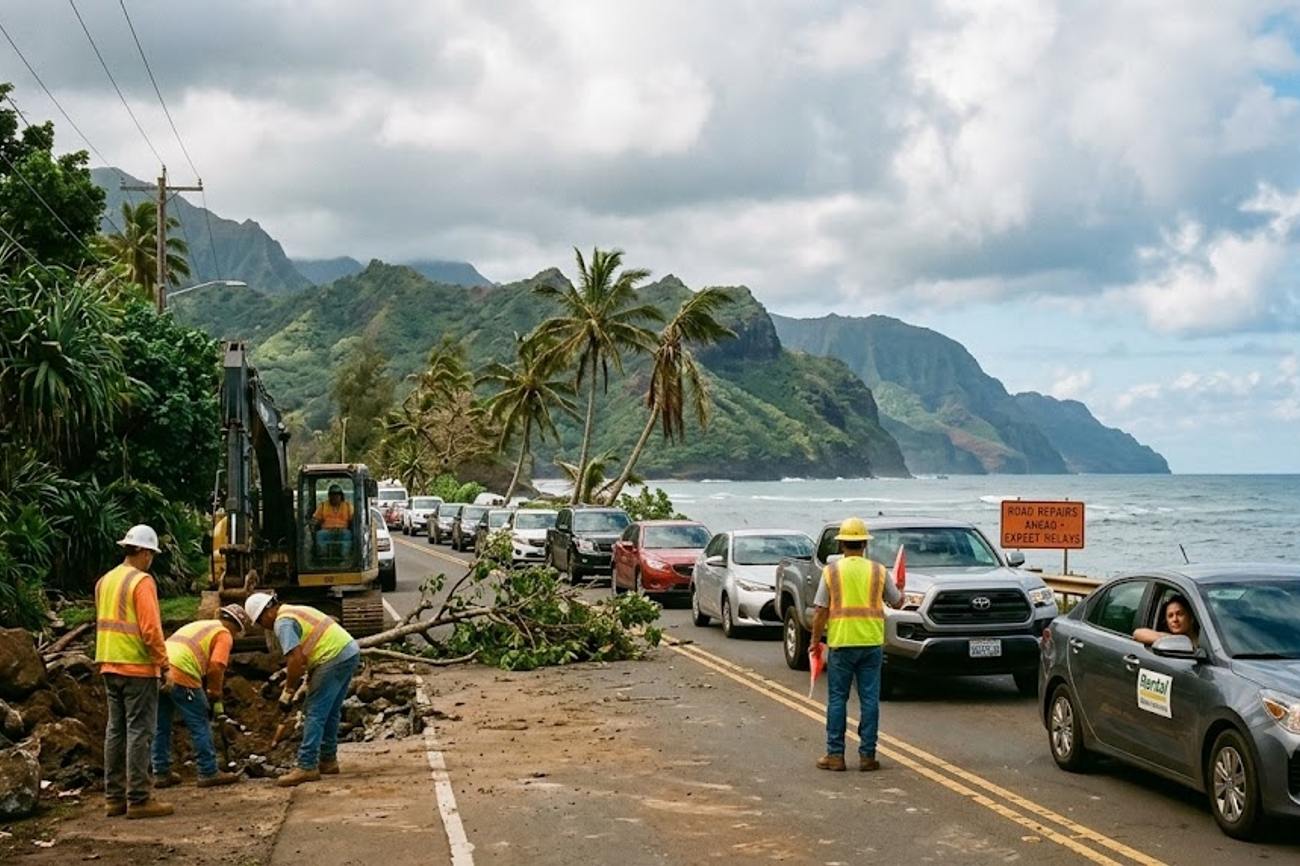
Image generated by AI
Thousands of power outages and widespread utility failures across Kaua‘i signal a precarious recovery phase for the island following the impacts of Hurricane Lowell. While the storm avoided a direct landfall, the resulting atmospheric volatility triggered a systemic breakdown of transportation and utility networks, forcing local authorities to implement strict movement restrictions to facilitate emergency repairs. For the high-end traveler and the digital nomad, this represents a shift from a luxury getaway to a logistical navigation exercise, as the island's infrastructure struggles to return to baseline operations.
The Logistics of a Near-Miss Disaster
Hurricane Lowell serves as a case study in how "indirect" weather events can paralyze an island economy. Despite the absence of a direct hit, the storm's outer bands delivered a combination of torrential rainfall, high-velocity winds, and dangerous coastal surges. The result was a cascade of infrastructure failures: flooded arterial roads, fallen timber blocking primary transit routes, and a crippled power grid.
The Kaua‘i Island Utility Cooperative reported widespread electricity interruptions affecting thousands of customers. In an island ecosystem, power failure is rarely isolated; it triggers a secondary collapse in water pumping stations, cellular tower reliability, and hotel operational capacity. Consequently, Kaua‘i County officials issued directives for both residents and tourists to cease all non-essential travel. This was not merely a safety suggestion but a tactical necessity to clear the limited road network for emergency vehicles and utility crews tasked with restoring the grid.
Gateway Constraints at Lihue Airport
Lihue Airport, the sole primary entry point for the vast majority of international and mainland U.S. arrivals, has become a bottleneck in the recovery process. While the facility has resumed operations, it is doing so under compromised conditions. The airport has been forced to rely on backup power systems, which inherently limits the facility's total operational capacity and processing speed.
For passengers, this translates to a volatile scheduling environment. Airlines are adjusting flight frequencies based on the airport's real-time ability to handle arrivals and departures. The reliance on backup power often means that ancillary services—such as baggage handling systems or digital check-in kiosks—may experience intermittent downtime. Travelers are now facing a reality where a confirmed ticket does not guarantee a timely departure or arrival.
| Impact Area | Current Status | Primary Driver |
|---|---|---|
| Air Travel | Operational / Limited | Backup power constraints at Lihue Airport |
| Power Grid | Partial Recovery | Widespread outages via Kaua‘i Island Utility Cooperative |
| Road Networks | Restricted | Debris removal and emergency vehicle priority |
| Outdoor Tourism | High Risk | Unstable terrain, flooding, and brown water runoff |
| Public Health | Warning Issued | Increased pollution in runoff waters |
Expert Analysis: The "Brown Water" Economic Trap
From a journalistic and logistical perspective, the most critical risk for travelers currently is not the wind, but the aftermath of the rain. The Hawaii Department of Health has issued warnings regarding "brown water" conditions—a phenomenon where heavy rainfall flushes land-based pollutants, bacteria, and debris into the ocean and streams.
For the tourism sector, this creates a "hidden" disruption. While a hotel may have restored its power and a flight may have landed, the primary product of Kaua‘i—its nature—remains hazardous. The Nā Pali Coast and Waimea Canyon are not merely scenic vistas; they are geological structures that become unstable during saturation events. The pricing pressure this creates is subtle: travelers may arrive and find that 70% of their paid excursions (hiking, swimming, surfing) are canceled due to safety mandates, leading to a surge in refund requests and a decline in local spending.
Furthermore, the tension between the "visitor economy" and "community recovery" is palpable. When emergency resources are diverted to food distribution via the Hawai‘i Foodbank, the labor pool available for tourism services shrinks. Travelers booking during this window will likely encounter staffing shortages in hotels and restaurants, as employees prioritize their own homes and families over hospitality duties.
Key Takeaways
- Infrastructure Fragility: Lihue Airport is operating on backup power, meaning flight delays are likely regardless of current weather conditions.
- Health Hazards: Avoid all swimming and surfing in "brown water" or flooded streams due to high pollution and bacteria risks.
- Operational Volatility: Confirm the utility status (power and water) of your specific accommodation before departure; "open" does not mean "fully functional."
- Movement Restrictions: Adhere to Kaua‘i County's requests to limit travel to ensure emergency crews can access damaged utility corridors.
- Activity Cancellations: Expect significant disruptions to outdoor tours, particularly those involving hiking in Waimea Canyon or coastal activities.
FAQ: Kauai Travel 2026
Is it safe to fly into Lihue Airport right now? Yes, the airport is operational, but you should expect delays. Because the facility is utilizing backup power, processing times are slower. Always verify your flight status directly with your airline before heading to the airport.
Can I still visit the Nā Pali Coast or Waimea Canyon? Many trails and coastal access points are currently restricted due to unstable terrain and flooding. Check with your tour operator and local authorities, as many outdoor activities are suspended until safety assessments are complete.
What is "brown water" and why is it dangerous? Brown water occurs when heavy rain washes soil and pollutants into the ocean. The Hawaii Department of Health warns that these waters often contain high levels of bacteria and runoff, making swimming or surfing a health risk.
Should I cancel my trip to Kaua‘i? If your trip relies heavily on outdoor adventures or luxury amenities, postponing may be the best option. If you choose to go, ensure your hotel has confirmed power and water services are fully restored.
The balance between welcoming the world and repairing the home is a fragile one on an island in recovery.
#HurricaneLowell2026 #LihueAirport #KauaiRecovery #HawaiiTourismSafety #KauaIslandUtilityCooperative #VisitKauai2026
Related Travel Guides
- Europe Travel Faces New Border Shift as France and Italy Delay Full EES Biometric Checks
- Lithuania Rises With Slovenia as Curonian Trails and Alpine Routes Challenge Famous Cycling Hotspots of Europe
- Saudi Arabia Creates 4,310 Sq Km Nature Reserve Near Riyadh To Transform Desert Tourism And Protect Biodiversity
Disclaimer
This article is for informational and educational purposes only. It does not constitute legal, financial, or professional advice. While we strive to provide accurate and up-to-date information, travel policies, regulations, and conditions change rapidly. Always verify information with official sources before making travel decisions. Nomad Lawyer makes no representations about the accuracy, reliability, completeness, or suitability of the information provided. Readers should consult qualified professionals for advice specific to their circumstances. The views expressed in this article are those of the author and do not necessarily reflect the views of Nomad Lawyer.
Naina Thakur
Contributor & Travel Specialist
Travel enthusiast and legal writer covering visa regulations, responsible tourism, and cultural journeys across global destinations.
Learn more about our team →