
UAE and Saudi Arabia Turbocharges with New Robotic and AI Integration to Boom Travel Technology to These Surprising Levels
UAE and Saudi Arabia Turbocharges with New Robotic and AI Integration to Boom Travel Technology to These Surprising Levels

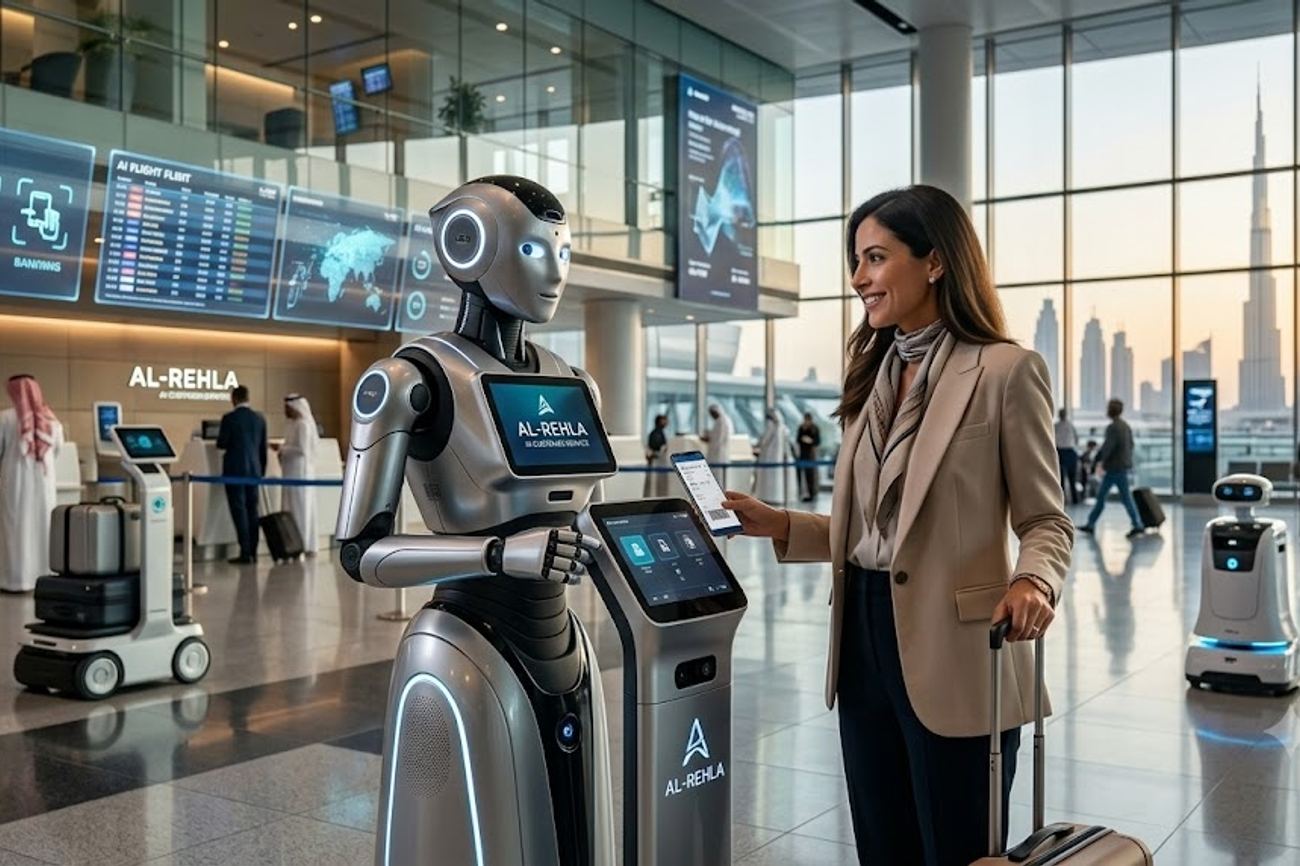
Image generated by AI
Are you planning a trip to the UAE or Saudi Arabia in 2026 and wondering how the surge in AI and robotics will change your arrival and hotel experience? From humanoid cultural ambassadors in Dubai to fully autonomous service hubs in NEOM, the Middle East is fundamentally restructuring its hospitality logistics to prioritize automation and high-tech efficiency.
The Shift to Autonomous Hospitality 2026
Starting in 2026, travelers visiting the United Arab Emirates and Saudi Arabia will encounter a service environment where traditional human-led concierge desks are being augmented or replaced by physical AI. This transition is driven by the Saudi Vision 2030 and UAE modernization mandates, which aim to shift these economies away from oil dependency and toward a technology-led tourism model.
The goal is not the total removal of humans, but a "hybrid service model." Robots are now tasked with repetitive, data-heavy, and physically demanding logistics—such as luggage handling, check-in processing, and venue navigation—leaving human staff to manage complex, emotionally intelligent guest relations. For the traveler, this means faster processing times at airports and hotels, but a requirement to interact with digital interfaces and humanoid robots for basic requests.
Robotic Integration and Service Capabilities
The deployment of these technologies varies by region. The UAE is focusing on "Cultural Ambassadors" and event-based navigation to handle massive international crowds. Saudi Arabia is focusing on "Structural Automation," building proprietary robots designed for the specific linguistic and cultural needs of the Kingdom.
| Robot/System | Primary Location | Function | Key Capability | Status |
|---|---|---|---|---|
| Bu Sunaidah | UAE (Dubai) | Cultural Ambassador | Heritage storytelling & education | Active |
| Mornine | UAE (Events) | International Hosting | Natural speech in 11 languages | Active |
| Argos | UAE (Events) | Mobile Assistance | Autonomous venue navigation | Active |
| RoboNex | Saudi Arabia (Riyadh) | Service Host/Cashier | Localized Arabic voice processing | Active |
| YOTEL OXAGON | Saudi Arabia (NEOM) | Hyper-automated Stay | Fully autonomous hotel logistics | In Deployment |
Traveler Logistics Guide
Navigating a robotic-integrated transit environment requires a different approach than traditional travel. To optimize your experience in the UAE and Saudi Arabia in 2026, follow these logistical steps:
1. Digital Pre-Clearance and Check-in With the rise of robots like RoboNex and the automated systems at OXAGON, physical paperwork is becoming obsolete. Ensure all your travel documents are uploaded to official government portals before arrival. For those entering the UAE, utilizing Dubai Airports smart gates will significantly reduce your time from the aircraft to the taxi stand.
2. Interacting with Humanoid Concierges When encountering robots like Mornine or Bu Sunaidah, remember that they are programmed for specific data-driven tasks. Use them for:
- Venue directions and map navigation.
- Basic cultural information and heritage queries.
- Language translation (Mornine supports 11 languages). If your request requires a nuanced decision or a complex complaint, explicitly ask the robot to "request a human supervisor."
3. Navigating NEOM and OXAGON If your itinerary includes the OXAGON floating city, be prepared for a "frictionless" environment. This means your room key, payment methods, and transport requests will likely be integrated into a single biometric or digital ID. Check the NEOM official portal for the latest requirements on digital IDs required for entry into automated zones.
4. Ground Transport Connections Robotic integration extends to the logistics of moving between cities. While humanoid robots handle the hospitality side, the integration of AI in traffic management in Riyadh and Dubai means that ride-sharing and autonomous shuttles are more synchronized. Always use official apps for transport to ensure your digital token is recognized by the automated boarding systems.
Regional Connectivity Impact
The aggressive adoption of AI is reshaping how travelers move through the GCC (Gulf Cooperation Council) region. By automating the "first mile" and "last mile" of the guest experience—from the airport greeting to the hotel room—the region is reducing the bottleneck caused by traditional staffing shortages during peak tourism seasons.
In the UAE, the use of quadruped robots like Argos in exhibition halls means that large-scale events (such as those at the Dubai World Trade Centre) can now handle higher passenger volumes without increasing wait times for information. In Saudi Arabia, the development of the RoboNex system by QSS AI & Robotics ensures that the transition to automation does not alienate local visitors, as the AI is specifically tuned to regional Arabic dialects.
This technological leap makes the region a primary hub for "smart transit," where the logistics of a trip are managed by a coordinated network of AI, reducing the reliance on manual queues and physical ticketing.
FAQ: Middle East Transit AI 2026
Do I need a special app to interact with hotel robots? Most systems, including those in NEOM and Dubai, are integrated into the hotel's own app or the national tourism portal. However, humanoid robots like Mornine use voice recognition and do not require a separate app for basic interaction.
Will robots replace all human staff at hotels? No. The region is using a hybrid model. Robots handle repetitive tasks (check-in, directions, luggage), while human staff are repurposed for high-value guest services and complex problem-solving.
Can these robots help with visa or customs queries? While robots like Bu Sunaidah provide cultural and educational info, official customs and visa matters should still be handled through Saudi Visa or UAE government portals to ensure legal accuracy.
How do I handle payments with a robotic cashier like RoboNex? RoboNex and similar systems are designed for digital-first payments. Ensure you have a functioning digital wallet or a contactless credit card, as these autonomous systems are moving away from cash transactions.
Prepare for a journey where the concierge is a humanoid and the hotel is a smart-city node.
#UAE_SmartTourism2026 #SaudiVision2030_Robotics #NEOM_OXAGON_Logistics #Dubai_AI_Hospitality #RoboNex_Riyadh
Related Travel Guides
- Canada’s Vancouver International Airport Revolutionises Passenger Travel With Powerful Digital Map Technology For Faster And Stress-Free Journeys
- Cyprus Travel Secrets Revealed As Larnaca And Paphos Airports Unlock Smarter Savings And Stress Free European Journeys
- Dubai Launches My Syria App To Transform Damascus Tourism With Digital Travel Experiences
Disclaimer
This article is for informational and educational purposes only. It does not constitute legal, financial, or professional advice. While we strive to provide accurate and up-to-date information, travel policies, regulations, and conditions change rapidly. Always verify information with official sources before making travel decisions. Nomad Lawyer makes no representations about the accuracy, reliability, completeness, or suitability of the information provided. Readers should consult qualified professionals for advice specific to their circumstances. The views expressed in this article are those of the author and do not necessarily reflect the views of Nomad Lawyer.
Kunal K Choudhary
Co-Founder & Contributor
A passionate traveller and tech enthusiast. Kunal contributes to the vision and growth of Nomad Lawyer, bringing fresh perspectives and driving the community forward.
Learn more about our team →