
Chicago O'Hare Airport Halts Hundreds of Flights Amid Prolonged 2026 FAA Ground Stoppages
FAA-ordered ground stoppages at Chicago O'Hare International Airport have entered a second day, triggering hundreds of cancellations and widespread domestic delays.
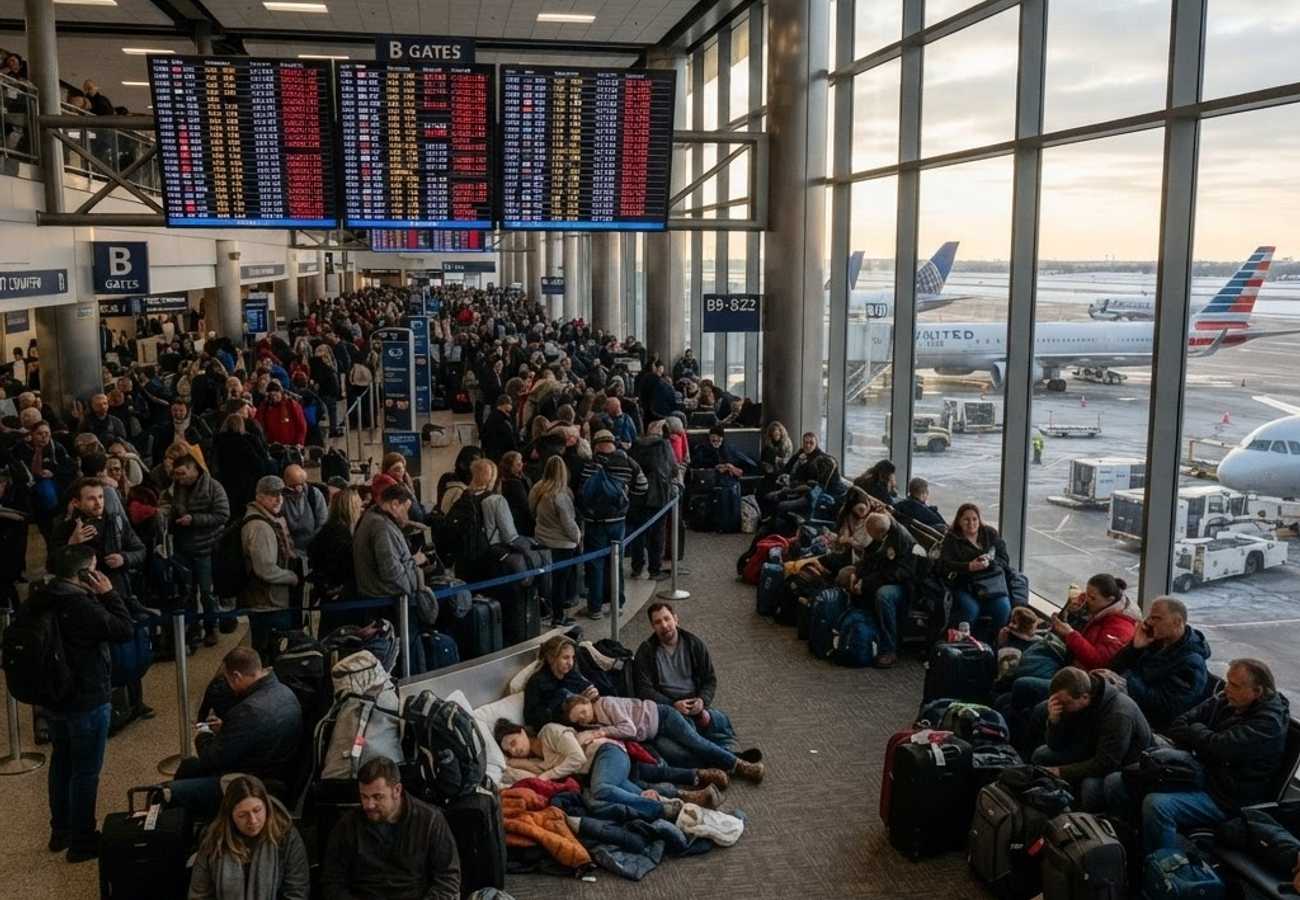
Image generated by AI
FAA-ordered ground stoppages at Chicago O'Hare International Airport have entered a second consecutive day, triggering hundreds of cancellations and systemic delays across the U.S. domestic network.
The disruption, which began on September 1 and persisted through September 2, 2026, has left thousands of passengers stranded at one of the nation's most critical aviation hubs. The situation highlights a growing tension between aggressive airline scheduling and the actual physical capacity of U.S. air traffic infrastructure.
Operational Gridlock at Chicago O'Hare
Public operations data confirms that Chicago O'Hare International Airport (ORD) is the epicenter of the current crisis. The Federal Aviation Administration (FAA) has repeatedly implemented ground stoppages, pausing both arriving and departing traffic to manage severe airfield constraints and congestion.
These stoppages have crippled the ability of major carriers to rotate aircraft and crews through the Midwest. Because O'Hare functions as a primary connecting point for both domestic and international networks, the localized stoppage has created a "ripple effect," delaying flights in cities far removed from Chicago.
Federal notices issued earlier in the summer of 2026 had already warned that projected flight operations would likely exceed the airfield's reliable capacity. These warnings have now materialized into a full-scale operational crisis.
Quantifying the Disruption
By the afternoon of September 2, the scale of the failure became evident through independent flight-tracking data. The disruption is not merely a local issue but a national network strain.
- Total National Cancellations: Approximately 200 flights.
- Total National Delays: Nearly 900 flights.
- Primary Driver: A disproportionate number of these disruptions are tied directly to O'Hare's inbound and outbound schedules.
The impact is most severe for passengers on key business and leisure corridors. When a hub like O'Hare freezes, aircraft are displaced from their intended destinations, and flight crews frequently "time out" of their legal duty windows, leading to further cancellations even after ground stops are lifted.
Infrastructure Strain and Capacity Limits
This collapse is not an isolated incident but the result of long-term systemic pressure. In April 2026, regulators released a detailed order stating that summer operations at O'Hare were projected to exceed sustainable bounds.
Several factors have contributed to this fragility:
- Airfield Construction: Ongoing projects have reduced the practical throughput of the airport.
- Surface-Movement Constraints: Bottlenecks in taxiways and runways have limited the speed at which aircraft can move.
- Staffing Margins: National debates regarding air traffic control staffing levels suggest that the system has very little room for error during peak demand.
The current crisis mirrors previous system failures, such as the 2023 outage of the federal notice-to-air-missions database, proving that the U.S. aviation infrastructure remains vulnerable to cascading failures when operating at peak capacity.
Impact on Passenger Rights and Logistics
For the thousands of travelers affected, the operational failure translates to missed connections, lost business opportunities, and unplanned overnight stays.
Rebooking Challenges
Airlines are directing passengers toward digital rebooking tools and same-day change policies. However, because the disruption has compressed demand onto a shrinking number of available seats, many travelers on lower-frequency domestic routes are being pushed to flights the following day.
Compensation Grey Areas
Passenger advocates warn that securing compensation may be difficult. When disruptions are caused by "airspace management decisions" or "system constraints" rather than specific weather events at the origin or destination, airlines often operate in a regulatory grey area regarding meal and hotel vouchers.
Recovery Outlook and Future Projections
As of the late afternoon on September 2, the FAA continues to report intermittent ground stops and arrival management programs. While some off-peak flights are returning to schedule, the recovery will be slow.
The "residual effect" of a multi-day stoppage usually lasts longer than the stoppage itself. Aircraft are often out of position for the following morning's first-wave departures, and exhausted crews may be unavailable, meaning delays could persist well into September 3.
Summary of Disruption Data
| Metric | Status/Value (as of Sept 2, 2026) |
|---|---|
| Primary Affected Hub | Chicago O'Hare International Airport (ORD) |
| Duration of Stoppages | 2 Consecutive Days (Sept 1–2) |
| Nationwide Cancellations | ~200 flights |
| Nationwide Delays | ~900 flights |
| Root Cause | FAA ground stops / Airfield capacity limits |
Key Takeaways
- Systemic Fragility: O'Hare's current crisis confirms that the airport is operating beyond its sustainable capacity limits.
- Network Effect: Ground stops at a major hub like ORD trigger delays across the entire U.S. domestic network due to aircraft and crew displacement.
- Infrastructure Warning: The event validates April 2026 regulatory warnings about runway and taxiway bottlenecks.
- Passenger Risk: Travelers should expect residual delays for 24–48 hours after formal stoppages are lifted.
FAQ
Why are flights being canceled if the weather is clear? Cancellations are occurring due to FAA-ordered ground stoppages designed to manage congestion and airfield constraints, not necessarily due to weather.
Am I entitled to a hotel voucher? Compensation varies by airline. Because these delays are linked to system-wide airspace management rather than weather, some carriers may be less inclined to provide automatic vouchers.
How can I track my flight status accurately? Use official airline apps or third-party trackers that pull live FAA data, as ground stops can be imposed or lifted with very little notice.
The aviation industry now faces intensified scrutiny over how flight schedules are constructed at capacity-limited airports.
Related Travel Guides
Disclaimer
This article is for informational and educational purposes only. It does not constitute legal, financial, or professional advice. While we strive to provide accurate and up-to-date information, travel policies, regulations, and conditions change rapidly. Always verify information with official sources before making travel decisions. Nomad Lawyer makes no representations about the accuracy, reliability, completeness, or suitability of the information provided. Readers should consult qualified professionals for advice specific to their circumstances. The views expressed in this article are those of the author and do not necessarily reflect the views of Nomad Lawyer.