
Typhoon Saudel Disrupts Asian Aviation with 9718 Flight Delays
Typhoon Saudel triggers 9,718 flight delays and 693 cancellations across Asia, affecting Wenzhou, Shanghai, Tokyo Haneda, and Dubai airport hubs.

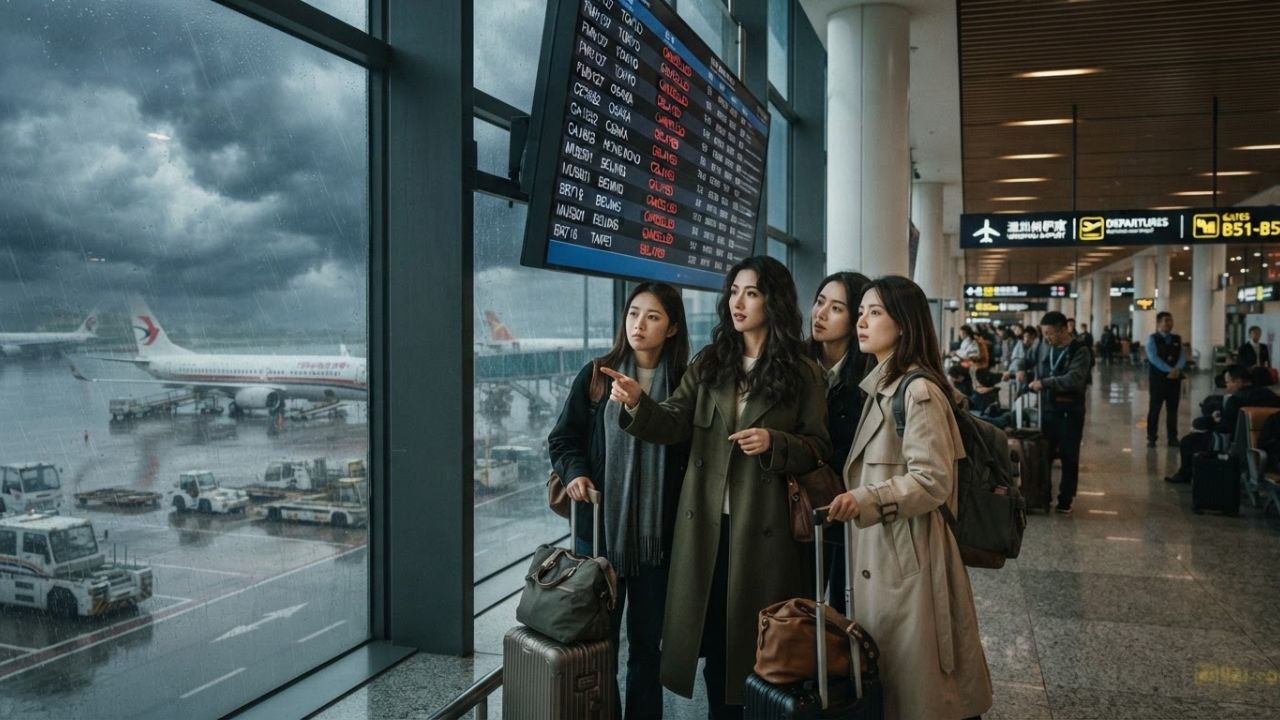
Image generated by AI
Typhoon Saudel has caused major disruptions across Asian aviation networks, triggering 9,718 flight delays and 693 cancellations. According to real-time flight tracking data, eastern China’s coastal airports and Japanese hubs have faced the heaviest operational impacts.
The Local Trend Revealed
Severe weather systems are creating significant scheduling uncertainty for international travel corridors. Verified data from FlightAware on August 27, 2026, at 4:09 PM ET (August 28, 2026, at 12:09 AM GST) outlines the localized impacts:
- China Aviation Impacts: Chinese airports recorded 7,444 delays and 593 cancellations. Wenzhou International Airport reported 124 cancellations and 40 delays, while Ningbo Lishe International Airport reported 100 cancellations and 96 delays. Major gateways also experienced disruptions:
- Guangzhou Baiyun International Airport: 759 delays, 39 cancellations
- Shanghai Pudong International Airport: 622 delays, 51 cancellations
- Shenzhen Bao’an International Airport: 299 delays, 11 cancellations
- Shanghai Hongqiao International Airport: 291 delays, 6 cancellations
- Chengdu Tianfu International Airport: 232 delays, 14 cancellations
- Hangzhou Xiaoshan International Airport: 230 delays, 5 cancellations
- Kunming Changshui International Airport: 191 delays, 21 cancellations
- Beijing Capital International Airport: 179 delays, 18 cancellations
- Chongqing Jiangbei International Airport: 179 delays, 17 cancellations
- Xiamen Gaoqi International Airport: 170 delays, 14 cancellations
- Japan Regional Delays: Japan recorded 897 delays and 33 cancellations. Tokyo Haneda reported 576 delays and 14 cancellations, Fukuoka Airport saw 207 delays and 8 cancellations, and Osaka Itami reported 114 delays and 11 cancellations.
- Southeast Asia & Middle East Disruption:
- Indonesia reported 336 delays and 31 cancellations (Jakarta Soekarno-Hatta: 186 delays, 18 cancellations; Juanda: 93 delays, 6 cancellations; Sultan Hasanuddin: 57 delays, 7 cancellations).
- The UAE recorded 614 delays and 9 cancellations (Dubai International Airport: 507 delays, 5 cancellations).
- Saudi Arabia saw 285 delays and 26 cancellations (King Khalid: 151 delays, 9 cancellations; King Abdulaziz: 119 delays, 5 cancellations).
- Qatar’s Hamad International Airport recorded 142 delays and 1 cancellation.
Affected Airlines and Peak Delay Rates
The operational gridlock has directly impacted carrier schedules across the Asia-Pacific region:
- Chinese Carriers: China Eastern reported 672 delays and 121 cancellations, followed by China Southern Airlines (531 delays, 55 cancellations) and Air China (269 delays, 42 cancellations). Shenzhen Airlines saw 267 delays and 11 cancellations, Sichuan Airlines reported 216 delays and 15 cancellations, and XiamenAir logged 206 delays and 12 cancellations.
- Japanese Carriers: Japan Airlines reported 329 delays and 9 cancellations, while All Nippon Airways (ANA) reported 206 delays and 4 cancellations.
- Peak Carrier Delay Rates: FlyDubai recorded 200 delays (59 percent delay rate), Mandarin Airlines logged 61 delays (56 percent delay rate), Japan Air Commuter saw 38 delays (50 percent delay rate), Air Do Japan logged 33 delays (50 percent delay rate), and SpiceJet India reported 49 delays (49 percent delay rate).
Local Community & Environmental Value
For the visitor, the real impact of weather-related delays is the chance to redirect support toward local businesses. Spending waiting hours purchasing meals from family-run airport cafes, buying crafts from independent regional kiosks, or staying at neighborhood guesthouses near the airport keeps tourism spending in local hands during travel crises.
Environmental sustainability is supported by using low-emission transit alternatives. When coastal flights are canceled, choosing high-speed rail systems—such as China's CRH bullet train connecting Ningbo, Wenzhou, and Shanghai, or Japan's Shinkansen train connecting Tokyo and Osaka—provides a reliable travel backup that bypasses atmospheric storms, reducing the carbon footprint of regional transit. These green options align with guidelines monitored by the Civil Aviation Administration of China (CAAC) and the Japan Civil Aviation Bureau (JCAB).
Visitor Insider Tips for Typhoon Travel
Aviation specialists recommend the following practices during severe weather events:
- Use Mobile Apps and International Lines: Skip the long airport customer service lines during cancellations. Use the airline's mobile app to rebook, or call their international customer support desks (like their U.S. or European centers), which often have shorter phone queue wait times.
- Avoid Peak Typhoon Season: Typhoon activity in East Asia peaks from July to September. Plan your coastal China and Japan visits for the autumn shoulder months of October and November, when weather is historically stable and hotel prices are lower.
- Observe Airport Etiquette: Keep your composure with airline staff. Ground crews have no control over weather safety groundings. Tipping is not customary in China or Japan; attempting to tip airport porters or taxi drivers in Tokyo or Shanghai can cause confusion.
- Sample Regional Culinary Specialties:
- In Wenzhou: Try Wenzhou Fish Ball Soup (fresh fish paste strips served in a light vinegar and scallion broth) at local diners.
- In Tokyo: Warm up with a bowl of Tonkotsu Ramen or Tempura Soba at airport noodle stalls.
- Explore Under-the-Radar Stops: If delayed at Shanghai Pudong, take the high-speed Maglev train into the city to explore the historic Yuyuan Garden or walk the quiet tree-lined streets of the former French Concession rather than waiting in the terminal.
Tourism Outlook
The long-term impact of severe seasonal storms will drive investment in climate-resilient transport infrastructure. By coordinating flight schedules with high-speed rail backups, regional aviation authorities and the International Air Transport Association (IATA) aim to protect passenger mobility, ensuring that trade and tourism continue to flow during monsoonal weather cycles.
FAQ: Typhoon Saudel Flight Disruptions
How many delays and cancellations were caused by Typhoon Saudel? Typhoon Saudel triggered 9,718 delays and 693 cancellations across Asian and regional aviation networks.
Which airports in China experienced the highest number of cancellations? The highest cancellation numbers were reported at coastal airports, with Wenzhou International recording 124 cancellations and Ningbo Lishe reporting 100 cancellations.
Which Japanese airport was most affected by flight delays? Tokyo Haneda International Airport was the hardest hit in Japan, recording 576 delays and 14 cancellations.
How can stranded passengers bypass long rebooking lines? Travelers can use the airline’s mobile app or call their international customer service lines to secure alternative routes faster.
Related Travel Guides
Disclaimer
This article is for informational and educational purposes only. It does not constitute legal, financial, or professional advice. While we strive to provide accurate and up-to-date information, travel policies, regulations, and conditions change rapidly. Always verify information with official sources before making travel decisions. Nomad Lawyer makes no representations about the accuracy, reliability, completeness, or suitability of the information provided. Readers should consult qualified professionals for advice specific to their circumstances. The views expressed in this article are those of the author and do not necessarily reflect the views of Nomad Lawyer.
Raushan Kumar
Founder & Lead Developer
Full-stack developer with 11+ years of experience and a passionate traveller. Raushan built Nomad Lawyer from the ground up with a vision to create the best travel and law experience on the web.
Learn more about our team →