
Typhoon Dolphin Triggers 8,207 Flight Delays and 761 Cancellations Across Asia Airports in 2026
Severe weather from Typhoon Dolphin has paralyzed Asian aviation, causing 8,207 delays and 761 cancellations across major hubs in China, Japan, India, and Indonesia.

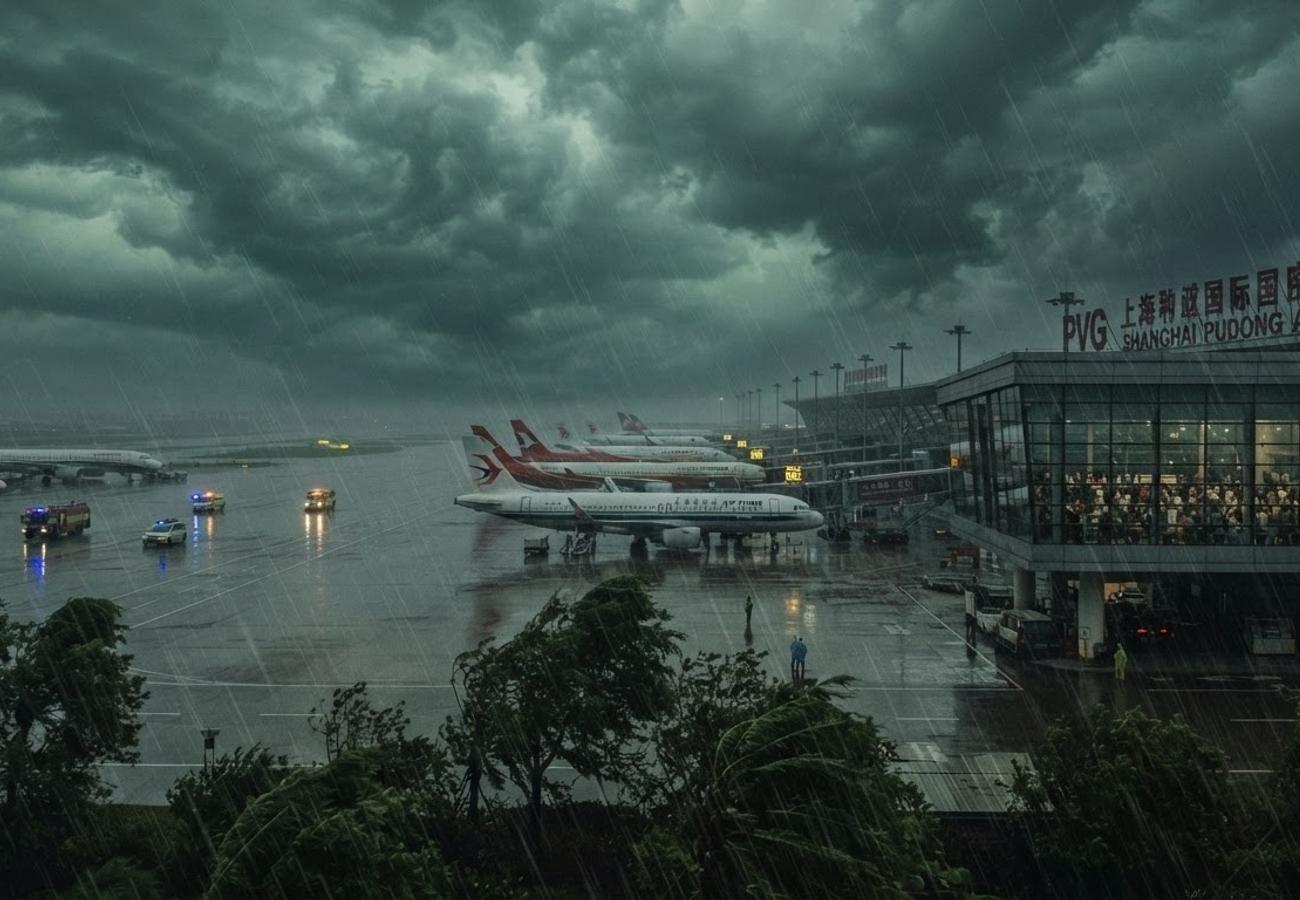
Image generated by AI
Severe weather from Typhoon Dolphin has paralyzed Asian aviation, resulting in 8,207 flight delays and 761 cancellations across the region's primary hubs. The disruption has centered on China's eastern coast, with Shanghai and Beijing facing the brunt of the operational collapse.
The Regional Aviation Crisis Revealed
The Asian aviation network is currently grappling with a systemic failure triggered by Typhoon Dolphin. The storm has brought extreme rainfall and flooding risks, severely limiting airport capacity and visibility. While the storm's eye has moved inland, the ripple effects continue to destabilize flight schedules across East and Southeast Asia.
China has emerged as the epicenter of this crisis. In Beijing, forecasts indicated more than 150mm of rain within a 24-hour window, prompting several districts to activate emergency flood responses. This atmospheric volatility has translated into massive passenger congestion and aircraft rotation failures at the region's most critical gateways.
Airport Impact Breakdown
The concentration of disruptions is most evident in China's Tier-1 cities, though the impact has radiated outward to Japan, South Korea, India, and Indonesia. Shanghai Pudong International Airport currently holds the highest volume of delays in the region.
Primary Disruption Data by Airport
| Airport | City | Delays | Cancellations |
|---|---|---|---|
| Shanghai Pudong International | Shanghai | 664 | 20 |
| Beijing Capital International | Beijing | 645 | 85 |
| Beijing Daxing International | Beijing | 524 | 71 |
| Guangzhou Baiyun International | Guangzhou | 450 | 25 |
| Shenzhen Bao’an International | Shenzhen | 406 | 16 |
| Shanghai Hongqiao International | Shanghai | 381 | 27 |
| Chengdu Tianfu International | Chengdu | 355 | 21 |
| Nanjing Lukou International | Nanjing | 297 | 4 |
| Chongqing Jiangbei International | Chongqing | 291 | 9 |
| Hangzhou Xiaoshan International | Hangzhou | 268 | 12 |
| Xiamen Gaoqi International | Xiamen | 259 | 6 |
| Chengdu Shuangliu International | Chengdu | 258 | 15 |
Outside of China, Tokyo Haneda International Airport recorded 405 delays and 50 cancellations, marking it as the most impacted non-Chinese hub. Other significant disruptions include Jakarta Soekarno-Hatta (239 delays, 14 cancellations), Delhi Indira Gandhi (208 delays, 15 cancellations), and Incheon International (193 delays, 6 cancellations).
Carrier Performance and Operational Strain
The disruption pattern mirrors the airport data, with Chinese carriers bearing the heaviest operational load. China Eastern is the most affected airline, reporting 877 delays and 84 cancellations.
Impact on Major Airlines
| Airline | Country | Delays | Cancellations |
|---|---|---|---|
| China Eastern | China | 877 | 84 |
| Air China | China | 666 | 93 |
| China Southern | China | 622 | 76 |
| Shenzhen Airlines | China | 319 | 4 |
| Sichuan Airlines | China | 302 | 2 |
| XiamenAir | China | 271 | 4 |
| IndiGo | India | 268 | 2 |
| Hainan Airlines | China | 250 | 9 |
| Japan Airlines | Japan | 246 | 9 |
| Spring Airlines | China | 211 | 8 |
| All Nippon Airways | Japan | 151 | 31 |
| Batik Air | Indonesia | 106 | 17 |
| ANA Wings | Japan | 102 | 10 |
| Air India | India | 84 | 3 |
| SpiceJet | India | 37 | 16 |
Cultural & Environmental Value: The Human Impact
For the visitor, the real impact extends beyond a delayed flight. The sheer scale of these disruptions highlights the vulnerability of Asia's hyper-connected aviation hubs to climate volatility. In cities like Shanghai and Tokyo, the response to Typhoon Dolphin showcases a high level of coordination between regional aviation authorities and emergency management bodies, such as the local flood response teams in Beijing.
Supporting local economies during these periods is vital. When flights are grounded, the sudden influx of stranded passengers often puts pressure on local hospitality sectors. Travelers are encouraged to support small-scale local businesses and boutique hotels rather than relying solely on oversized airport chains, distributing the economic impact of the disruption more equitably across the community.
Visitor Insider Tips
Navigating a regional aviation collapse requires a strategic approach to avoid prolonged airport stays.
- The "Buffer" Rule: When connecting through Beijing, Shanghai, or Tokyo during typhoon season, add a minimum of 6 hours to your layover. Aircraft rotation delays often persist 24-48 hours after the weather clears.
- Digital First: Do not rely on airport screens, which can become overcrowded and outdated. Use official airline apps and the FlightAware tracking tool for real-time airspace data.
- Local Etiquette: During mass cancellations, airport staff are under extreme pressure. In Japan and China, maintaining a calm, patient demeanor (avoiding loud confrontations) often results in better assistance from ground crew.
- Hidden Hubs: If stuck in Shanghai, consider exploring the quieter districts away from the Pudong/Hongqiao corridors to find more available short-term accommodation.
Tourism Outlook
The frequency of events like Typhoon Dolphin suggests a long-term shift in how Asian aviation will operate. We expect to see increased investment in "weather-resilient" infrastructure and more flexible booking policies from carriers like China Eastern and ANA. For the global nomad, this underscores the necessity of travel insurance that specifically covers climate-driven "force majeure" events in the Asia-Pacific region.
Stay agile, stay informed, and always keep a digital backup of your travel documents.
Related Travel Guides
Disclaimer
This article is for informational and educational purposes only. It does not constitute legal, financial, or professional advice. While we strive to provide accurate and up-to-date information, travel policies, regulations, and conditions change rapidly. Always verify information with official sources before making travel decisions. Nomad Lawyer makes no representations about the accuracy, reliability, completeness, or suitability of the information provided. Readers should consult qualified professionals for advice specific to their circumstances. The views expressed in this article are those of the author and do not necessarily reflect the views of Nomad Lawyer.
Raushan Kumar
Founder & Lead Developer
Full-stack developer with 11+ years of experience and a passionate traveller. Raushan built Nomad Lawyer from the ground up with a vision to create the best travel and law experience on the web.
Learn more about our team →