Turkish Airlines Flight Returns to Istanbul After Moscow Drone Attack Disrupts Air Travel Between Turkey and Russia

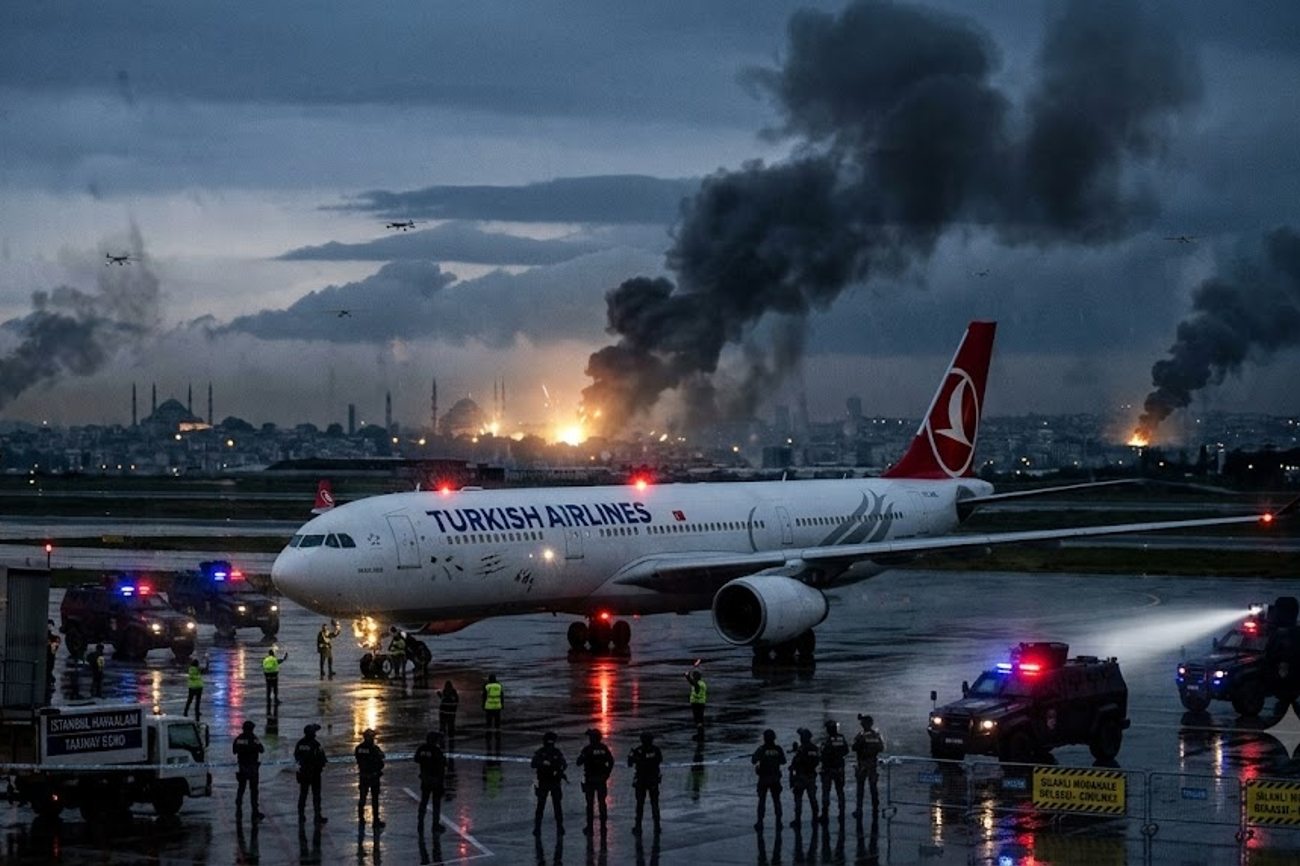
Image generated by AI
The volume of intercepted drones in Russian airspace surged to 1,600 units within a 48-hour window in September 2026, a spike that directly triggered the forced return of Turkish Airlines flight TK407. This event underscores a shifting risk profile for the Istanbul-Moscow corridor, where operational stability is now contingent on real-time air defense telemetry rather than standard scheduling.
The Moscow Airspace Volatility in Numbers
The disruption on September 20, 2026, serves as a precise case study in how localized security threats translate into systemic aviation failures. Turkish Airlines flight TK407, operated by an Airbus A330-300, departed Istanbul Airport at 2:22 a.m. local time. Despite successfully entering Russian airspace and initiating its approach to Vnukovo International Airport, the aircraft was forced to execute a return-to-origin maneuver.
The scale of the disruption extended far beyond a single flight. Data indicates that at least 35 Turkish-operated flights servicing Moscow’s Vnukovo International Airport suffered cancellations or delays. The catalyst was a massive drone offensive; Russian officials, including Moscow Mayor Sergei Sobyanin, confirmed that air defense systems intercepted over 1,600 drones across the federation since the preceding Saturday. Specifically, 450 of these drones were targeted in the immediate vicinity of Moscow.
When analyzed through the lens of IATA safety protocols, the decision to return the Airbus A330-300 to Istanbul reflects a conservative risk-management strategy. Rather than holding in a pattern or diverting to a secondary regional hub—which may have been equally compromised by the 450 drones targeting the capital—the carrier opted for a total reset to the departure point.
Regional Security Benchmarks and Flight Stability
The Turkey-Russia aviation corridor has historically been a high-volume artery for both diplomatic and commercial transit. However, the transition from standard geopolitical tension to active airspace interference represents a qualitative shift in risk. In previous years, disruptions in this region were typically linked to diplomatic sanctions or technical failures; the 2026 data suggests a new era of "kinetic disruption" where unmanned aerial vehicles (UAVs) dictate flight paths.
The following table compares the operational impact of the September 20 event against standard operational disruptions typically seen on the Istanbul-Moscow route.
| Metric | Standard Operational Disruption | September 20, 2026 Event | Variance/Impact |
|---|---|---|---|
| Primary Cause | Weather/Technical/Air Traffic | Drone Attack (450+ in Moscow) | Kinetic Security Threat |
| Flight Action | Holding Pattern/Diversion | Return to Origin (TK407) | Maximum Risk Aversion |
| Scale of Impact | 1-5 flights affected | 35+ Turkish flights affected | Systemic Route Failure |
| Aircraft Model | Mixed Fleet | Airbus A330-300 (Wide-body) | High-Capacity Displacement |
| Airspace Status | Restricted/Congested | Active Combat/Interception | Non-Permissive Environment |
This shift is mirrored in broader global trends. According to data from OAG, the volatility of flight schedules in conflict-adjacent zones has increased year-over-year, leading airlines to prioritize "return-to-base" protocols over "divert-to-alternate" strategies to ensure passenger safety and aircraft integrity.
Practical Traveler Advisory and Strategic Insights
For passengers utilizing the Turkey-Russia corridor, the data suggests that the "buffer zone" for travel planning must be expanded. The return of TK407 proves that even after an aircraft has entered the destination country's airspace, the journey is not guaranteed.
Actionable Booking and Transit Advice:
- Buffer Connection Windows: If you are booking onward travel from Moscow, a minimum 24-hour layover is now recommended. The fact that 35 flights were impacted simultaneously indicates that a single security event can wipe out an entire day's capacity for a specific carrier.
- Insurance Requirements: Ensure travel insurance explicitly covers "civil unrest" or "security-related diversions." Standard trip cancellation insurance may not cover a return-to-origin event if the flight technically "departed" but did not "arrive."
- Communication Channels: Rely exclusively on the Turkish Airlines mobile application and official flight status pages. During the September 20 event, the rapid shift from "approach" to "return" happened in a timeframe that renders traditional airport monitors obsolete.
- Flexibility in Routing: Travelers should evaluate alternative hubs. While Istanbul remains the primary gateway, the concentration of flights at Vnukovo International Airport creates a single point of failure during localized drone attacks.
Projection: The Future of High-Risk Airspace Management
The trajectory of aviation in the Moscow-Istanbul sector is moving toward "Dynamic Airspace Routing." We expect to see airlines implementing real-time telemetry feeds from air defense networks directly into flight deck decision-making processes. The 1,600-drone intercept figure is a benchmark that will likely force Statista and other data trackers to categorize certain urban airspaces as "Variable Risk Zones."
In the coming 12-24 months, we anticipate a shift in aircraft deployment. Carriers may move away from utilizing high-capacity wide-body aircraft like the Airbus A330-300 on these routes in favor of smaller, more flexible narrow-body jets that can be diverted to smaller, less targeted regional airports more efficiently. The financial risk of returning a wide-body aircraft full of passengers to its origin is significantly higher than managing a smaller fleet.
Furthermore, the precedent set by TK407 suggests that "Return to Origin" will become a standard operating procedure (SOP) for security threats, replacing the traditional "divert to nearest airport" logic. This is because, in a coordinated drone attack, "nearest" airports are often the most targeted.
FAQ: Turkey-Russia Aviation Security 2026
Will ticket prices increase due to these security risks? Likely. Increased operational risk often leads to higher insurance premiums for carriers, which are typically passed to the consumer via fuel or security surcharges.
Is it still safe to fly into Moscow Vnukovo International Airport? Airlines continue to operate based on real-time safety assessments. The return of TK407 demonstrates that safety protocols are functioning to prevent aircraft from landing during active threats.
Which airlines are most affected by these disruptions? Turkish Airlines has seen significant impact due to its high volume of flights between Istanbul and Moscow, with over 35 flights disrupted in a single event.
How can I tell if my flight will be diverted? Monitor official airline apps. Diversions in high-risk zones often happen mid-flight based on air defense data, meaning the most accurate information is provided in-flight by the crew.
The transition of air travel from scheduled precision to real-time risk mitigation is no longer a theory—it is the new operational reality for the Eurasian corridor.
Related Travel Guides
- United Airlines Brings Premium Boeing 787-9 Dreamliner to Sydney San Francisco Route With New Elevated Cabin Experience
- easyJet Flight EZY888 Returns at Glasgow Airport After Passenger Disruption Triggers Police Intervention
- USA Flight Disruptions Guide: Over 5,800 Delays Hit Chicago O'Hare, Boston Logan, and Major Hubs
This article is for informational purposes. Flight routes, passenger regulations, visa rules, and transit advisories are subject to change by airlines and aviation authorities. Readers are advised to verify schedules and travel documentation with relevant carriers and border agencies before departure.
Related Stories

Jet Airways vs. Boeing NCLAT Battle: Why Manufacturer Litigation Offers No Quick Ticket Refunds for Indian Travel Agents
easyJet Launches Direct Liverpool to Reykjavik Flights: Inside the North West's New Winter Gateway to Iceland