
USA Flight Disruptions Guide: Over 5,800 Delays Hit Chicago O'Hare, Boston Logan, and Major Hubs

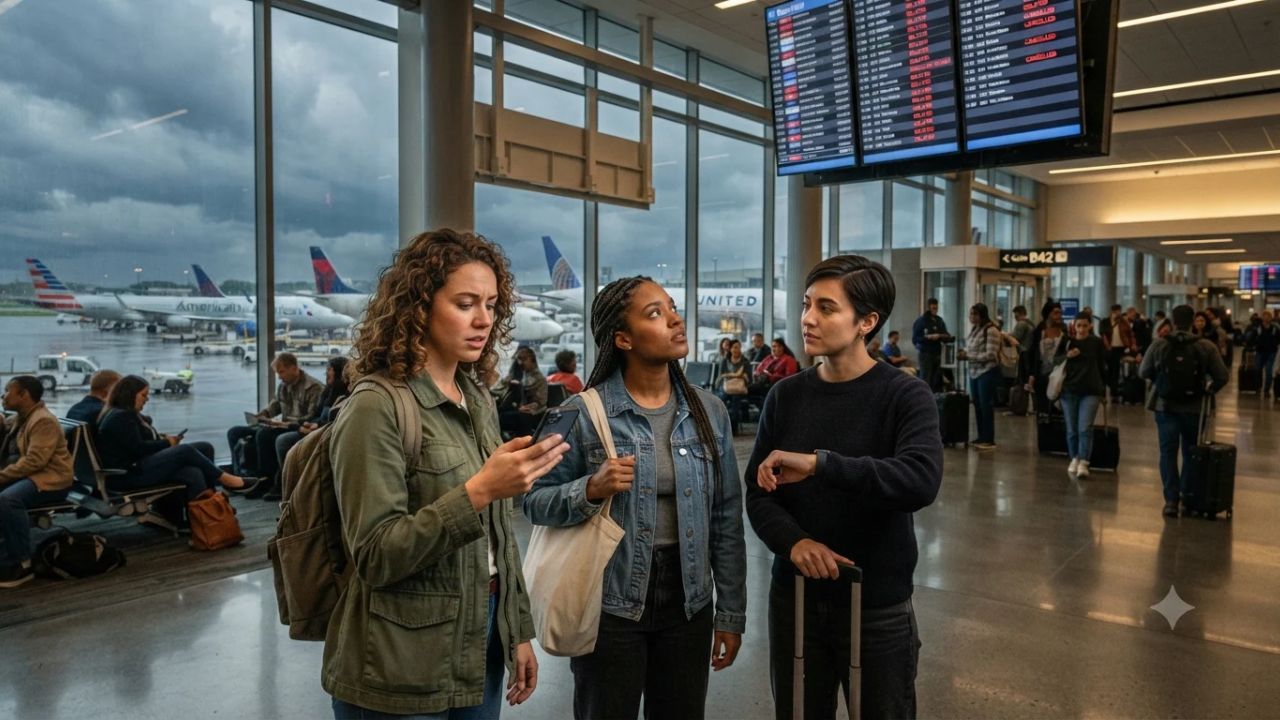
When dense cloud cover settles over Lake Michigan and coastal squalls graze Massachusetts Bay, commercial air traffic across North America can unravel within ninety minutes. On September 20, 2026, an initial tally of 3,592 flight delays and 182 cancellations surged to 5,855 delays and 201 cancellations across United States airspace by 5:42 p.m. Eastern Time. From the runway intersections of Chicago O'Hare to the tightly constrained perimeter of Boston Logan, seasoned air passengers witnessed how localized weather restrictions quickly escalate into a nationwide logistical squeeze.
Navigating these cascading schedule shifts requires more than passive gate monitoring. Understanding the mechanics behind air traffic management programs, carrier rebooking protocols, and hub-specific transit alternatives separates stranded flyers from those who reach their destinations on schedule.
Nationwide Ripple Effects Across Major American Aviation Hubs
The primary wave of operational bottlenecks began during morning bank departures, according to real-time aviation figures recorded at 2:08 p.m. ET on September 20, 2026. The Federal Aviation Administration implemented a string of ground delays and traffic management initiatives that constrained arrival and departure throughput at several top-tier facilities.
Chicago O'Hare International Airport absorbed the heaviest volume of operational strain, recording 556 delays and 40 cancellations. Originating departures faced a 21% delay rate, while arriving inbound flights registered an 18% delay rate. FAA controllers instituted departure spacing averaging 15 minutes and mounting steadily as low ceilings reduced visual approach capacity across O'Hare's parallel runway system.
Simultaneously, Boston Logan International Airport suffered acute congestion, logging 396 delays and 40 cancellations. Boston experienced a 20% delay rate on outbound services and a severe 39% delay rate for incoming destination flights. FAA operations placed Logan under a formal ground delay program, with hold times averaging 95 minutes due to compounded operational factors along the Northeast corridor.
The disruption extended swiftly across key connecting points in every geographic quadrant:
- Atlanta Hartsfield-Jackson: Registered 312 delays and 25 cancellations, with consistent 13% delay rates across both originating and destination flight schedules.
- Dallas-Fort Worth: Recorded 298 delays alongside 8 cancellations, generating a 15% origin delay rate and an 11% destination delay rate.
- San Francisco International: Tallied 210 delays and 5 cancellations, with a 12% outbound delay rate fueled by FAA low-ceiling ground delay programs averaging 52 minutes.
- Newark Liberty: Sustained 120 delays and 13 cancellations, maintaining a flat 10% delay rate on both arrivals and departures.
- Los Angeles International: Logged 118 delays and 8 cancellations, operating with a 5% origin delay rate and a 7% destination delay rate.
- Orlando International: Recorded 105 delays and 3 cancellations, absorbing a 10% destination delay rate as FAA weather initiatives enforced departure delays averaging 45 minutes and escalating.
- Seattle-Tacoma: Encountered 81 delays and 9 cancellations, running a 5% origin delay rate and a 6% arrival delay rate.
- Fort Lauderdale-Hollywood: Handled 74 delays and 2 cancellations after thunderstorms triggered an outright FAA ground stop.
- Harry Reid International in Las Vegas: Endured departure delays averaging 15 minutes and rising under gusting surface winds.
Across individual airlines, operational exposure varied significantly by fleet base and route network design. American Airlines absorbed the greatest overall scheduling pressure, racking up 614 delays and 17 cancellations across its primary domestic hubs. Southwest Airlines followed with 594 delays and 3 cancellations. Delta Air Lines posted 406 delays alongside 34 cancellations. United Airlines recorded 346 delays and 35 cancellations, matching Boston and Chicago for high cancellation totals, while Alaska Airlines logged 54 delays and 15 cancellations.
What Makes Core Transfer Hubs Vulnerable to Systemic Delays
Connecting through a megahub like O'Hare, Dallas-Fort Worth, or Atlanta operates on tightly synchronized arrival and departure banks. When inbound aircraft arrive thirty minutes behind schedule due to low ceilings over the Midwest, the outbound connection window closes rapidly. Because flight crews and aircraft cycle through multiple cities each day, a weather hold in San Francisco or a thunderstorm stop in Fort Lauderdale produces secondary delays in North Carolina, Texas, and New York hours later.
Boston Logan faces unique geographic limits. Bound by Boston Harbor, the airport operates without room for physical runway expansion. When strong coastal winds or visibility drops reduce operational capacity, inbound flights must enter holding patterns or hold at their origin gates. This dynamic explains why Boston's destination delay rate soared to 39%, nearly double its departure delay rate.
At San Francisco, marine layer fog routinely halves runway arrival capacity. When visual separation rules cannot be applied, arrival rates drop from sixty aircraft per hour to barely thirty, triggering rolling ground delay programs that back up flights across the western seaboard.
Visitor Insider Tips for Beating Domestic Flight Disruptions
Experienced travelers rely on proven tactical strategies when severe delay days materialize across the country:
- Book the First Bank of the Day: Flights departing before 8:00 a.m. experience fewer than 5% cancellation rates compared to late afternoon departures. Early planes are almost always already parked at the gate overnight, shielding your itinerary from previous-leg delays.
- Utilize International Airline Partner Phone Desks: When domestic customer service lines at O'Hare or Boston Logan stretch around terminal concourses, call the airline's overseas English-speaking support desk (such as the United Kingdom, Ireland, or Australia helplines). These desks connect within seconds and access identical global reservation inventories.
- Master the Same-Day Change Window: Both United and American allow confirmed same-day flight changes via their mobile apps as soon as a travel waiver or significant delay is posted. If your connection through Chicago is delayed by 45 minutes, switch immediately to a direct routing or a southern connection point like Charlotte or Dallas before seats fill.
- Bypass Checked Luggage on Tight Connections: If your transit window drops below forty-five minutes during a major hub disruption, carry-on bags guarantee you can accept alternate flight standby positions without waiting for baggage transfers.
- Identify Terminal Co-Locations: At Boston Logan, Terminals B and C connect airside behind security, allowing passengers to switch gates between American, United, and JetBlue without clearing Transportation Security Administration screening a second time.
Aviation Policy, Consumer Protections, and Environmental Realities
Air traffic disruptions highlight the delicate intersection between modern fleet scheduling and consumer protection standards. When delays stem from FAA weather programs or low cloud ceilings, federal regulations classify the disruption as extraordinary circumstances beyond airline control. While carriers are not legally mandated to provide hotel vouchers for pure weather disruptions, recent Department of Transportation guidelines require transparent meal assistance and clear fee-free rebooking terms.
From an environmental perspective, holding patterns and tarmac idling generate substantial excess aviation fuel burn. Ground delay programs managed by FAA command centers aim to hold aircraft at their departure gates with engines shut down, rather than allowing planes to stack up in holding patterns above metropolitan Chicago or the Boston coastline. This approach preserves fuel efficiency and reduces airport noise impacts on adjacent coastal and urban neighborhoods.
Understanding these operational frameworks empowers travelers to anticipate systemic slowdowns, negotiate proactive re-routings, and protect their travel investments when nationwide airspace faces heavy atmospheric constraints.
FAQ: Navigating USA Flight Disruptions 2026
What should I do immediately when my flight is cancelled at a major hub?
Open your airline mobile app instantly to accept automated rebooking choices before queueing at airport service desks. If satisfactory options are unavailable, contact phone customer support while monitoring adjacent airport routes.
Am I entitled to a cash refund if my flight is significantly delayed?
Yes. Under Department of Transportation rules, if an airline significantly delays or cancels your flight and you decline their rebooking alternative, you are entitled to a full cash refund to your original payment method.
How do low cloud ceilings cause nationwide flight delays?
Low ceilings force air traffic controllers to increase physical distance between landing aircraft under instrument flight rules, cutting runway arrival capacity by up to 50% and triggering upstream departure holds nationwide.
Can I change my connecting city for free during major weather alerts?
Yes. When airlines issue severe weather waivers for hubs like Chicago O'Hare or Boston Logan, travelers can reroute through alternative connection hubs without paying fare differences or change fees.
Smart travelers never wait at the departure gate for answers; proactive rebooking through digital tools and alternate hub routings always wins the race home.
Related Travel Guides
Disclaimer
This article is for informational and educational purposes only. It does not constitute legal, financial, or professional advice. While we strive to provide accurate and up-to-date information, travel policies, regulations, and conditions change rapidly. Always verify information with official sources before making travel decisions. Nomad Lawyer makes no representations about the accuracy, reliability, completeness, or suitability of the information provided. Readers should consult qualified professionals for advice specific to their circumstances. The views expressed in this article are those of the author and do not necessarily reflect the views of Nomad Lawyer.
Raushan Kumar
Founder & Lead Developer
Full-stack developer with 11+ years of experience and a passionate traveller. Raushan built Nomad Lawyer from the ground up with a vision to create the best travel and law experience on the web.
Learn more about our team →