
Türkiye Rail Boom Accelerates as Istanbul Turns Into a Global Connectivity Hub in 2026
Türkiye Rail Boom Accelerates as Istanbul Turns Into a Global Connectivity Hub in 2026

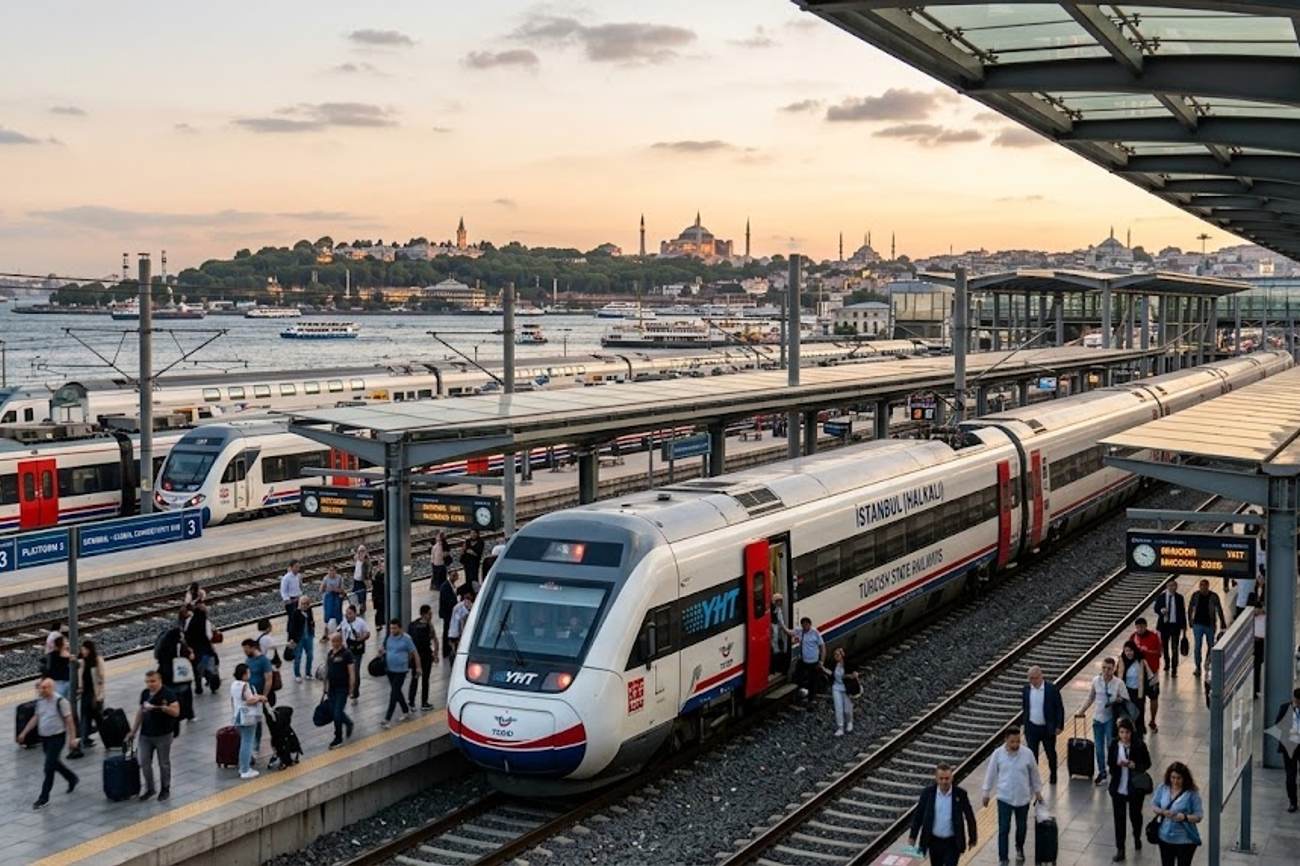
Image generated by AI
$70 billion is the estimated price tag for Turkey’s aggressive overhaul of its railway infrastructure, a financial commitment designed to pivot the nation from a regional transit point to the primary logistics artery of Eurasia. This investment is not merely about updating tracks; it is a calculated geopolitical maneuver to redesign continental trade routes and diversify the movement of people and goods across two continents. By the year 2026, the first wave of these transformations is expected to begin altering the flow of international commerce and tourism.
The 2053 Logistics Master Plan: A Blueprint for Hegemony
The scale of Turkey's ambition is codified in the 2053 Transport and Logistics Master Plan. This is not a standard infrastructure update but a total systemic reconfiguration. Currently, the national railway network spans approximately 13,919 kilometers. The state's objective is to more than double this footprint, reaching 28,590 kilometers by 2053.
This expansion targets a fundamental shift in modal share. At present, rail freight accounts for only around 5% of total transport, while passenger rail sits at a negligible 0.96%. The government intends to aggressively scale these figures to 22% for freight and 6.2% for passengers. The most immediate impact for the high-end traveler and business commuter will be the expansion of the high-speed rail (HSR) network, which is projected to grow from its current 2,251 kilometers to approximately 6,000 kilometers by 2035.
To power this growth, Turkey is integrating green energy into its operational DNA, aiming for 35% of rail energy demand to be met through renewable sources. This aligns with broader global mandates from the International Union of Railways (UIC) to decarbonize long-haul transport.
Data Breakdown: The Shift in Transit Capacity
The following data outlines the transition from the current baseline to the projected 2035 and 2053 targets.
| Metric | Current Status | Future Target | Target Date |
|---|---|---|---|
| Total Network Length | ~13,919 km | 28,590 km | 2053 |
| High-Speed Rail (HSR) | 2,251 km | ~6,000 km | 2035 |
| Rail Freight Market Share | ~5% | 22% | 2053 |
| Rail Passenger Market Share | 0.96% | 6.2% | 2053 |
| Renewable Energy Usage | Growing | 35% | 2053 |
Expert Analysis: The Middle Corridor and the Trade Shield
While the public narrative focuses on the luxury of high-speed trains between Istanbul and Ankara, the strategic core of this project is the "Middle Corridor." This trade route connects China, Central Asia, and the Caspian region directly to Europe via Turkey. In an era of extreme geopolitical volatility, the Middle Corridor serves as a "trade shield," providing a viable alternative to the Northern Corridor (which traverses Russia) and the maritime routes that are increasingly susceptible to disruption.
For travelers and logistics managers, the direct consequence is a reduction in "single-point-of-failure" risk. By investing $70 billion into this network, Turkey is positioning itself as the indispensable bridge between Asian manufacturing hubs and European consumer markets.
The pricing pressure created by this shift will likely be felt in the aviation sector. As high-speed rail connects cities like Izmir, Bursa, and eastern Anatolian heritage sites, the demand for short-haul domestic flights—which are often inefficient and carbon-intensive—will likely plummet. This forces a market correction where airlines must either pivot to longer-haul international routes or integrate their ticketing with rail services, similar to the models seen in Western Europe.
Furthermore, the financial architecture of these projects reveals a high level of international confidence. The €2.1 billion financing package for the Ankara–Izmir high-speed line, backed by UK Export Finance, indicates that global capital views Turkey's geography as a low-risk, high-reward asset. This is not just a local project; it is an international venture funded by Export Credit Agencies (ECAs) and multilateral banks.
The Istanbul Gateway Effect
Istanbul is the epicenter of this transformation. The Marmaray tunnel already proved that the Bosphorus could be bridged via rail, but the next phase is about integration. The goal is to transform Istanbul from a final destination into a seamless transit hub.
For the international visitor, this means the end of the "Istanbul-only" vacation. With expanded airport accessibility and integrated urban mobility, a traveler can land at Istanbul Airport and transition directly to a high-speed rail network that reaches Cappadocia or the Aegean coast without the friction of multiple flight transfers. This creates a new "rail-tourism" economy, benefiting hotels and tour operators who can now design multi-city itineraries based on rail schedules rather than flight availability.
The logistical integration of Istanbul will also streamline the movement of cargo from the ports to the European interior, reducing the reliance on trucking and lowering the overall carbon footprint of Eurasian trade. This shift is being monitored closely by the International Air Transport Association (IATA) as it changes the intermodal competition between air freight and rail.
Key Takeaways
- Massive Capacity Increase: Turkey aims to more than double its rail network to 28,590 km by 2053, with HSR reaching 6,000 km by 2035.
- Strategic Trade Pivot: The investment prioritizes the Middle Corridor, creating a geopolitical alternative to traditional trade routes between China and Europe.
- Modal Shift: The government is targeting a jump in rail freight share from 5% to 22%, significantly reducing reliance on road transport.
- Financial Backing: A $70 billion investment plan is being supported by international lenders, including a €2.1 billion UK-backed package for the Ankara–Izmir line.
- Tourism Transformation: Istanbul is being redesigned as a gateway, enabling seamless rail-based exploration of Anatolia and the Aegean coast.
FAQ: Turkey Rail Expansion 2026
Will high-speed rail replace domestic flights in Turkey? While not replacing them entirely, the expansion to 6,000 km of HSR by 2035 will make rail the preferred option for routes like Istanbul–Ankara and Istanbul–Izmir due to city-center arrivals and increased frequency.
What is the Middle Corridor and why does it matter? It is a trade route linking China to Europe via Central Asia and Turkey. It provides a critical alternative to routes passing through Russia, ensuring supply chain resilience during geopolitical conflicts.
How does this affect international tourists visiting Istanbul? Visitors will have easier, faster access to regional destinations. Instead of flying to Cappadocia or the coast, integrated high-speed rail will allow for more flexible, multi-city land itineraries.
When will these changes be noticeable for travelers? Significant transformations in logistics and connectivity are anticipated as early as 2026, though the full network expansion continues through 2053.
Turkey is no longer just bridging two continents; it is building the tracks that will dictate the pace of Eurasian commerce for the next thirty years.
Tags: Turkey 2053 Transport Plan, Middle Corridor Trade, Ankara-Izmir High-Speed Rail, Marmaray Istanbul, Eurasian Logistics 2026
Related Travel Guides
- Manchester Launches Free Bee Network Tram Travel for Students Through TfGM and Aviva Partnership in 2026
- Russian Railways Network Operates Twelve Longest Passenger Rail Journeys Worldwide Led by 10,214-Kilometer Moscow to Pyongyang Express Route in 2026
- India Travel Surge as Indian Railways Moves 67.27 Crore Passengers With Suburban Demand Rising Nine Percent
Disclaimer
This article is for informational and educational purposes only. It does not constitute legal, financial, or professional advice. While we strive to provide accurate and up-to-date information, travel policies, regulations, and conditions change rapidly. Always verify information with official sources before making travel decisions. Nomad Lawyer makes no representations about the accuracy, reliability, completeness, or suitability of the information provided. Readers should consult qualified professionals for advice specific to their circumstances. The views expressed in this article are those of the author and do not necessarily reflect the views of Nomad Lawyer.
Kunal K Choudhary
Co-Founder & Contributor
A passionate traveller and tech enthusiast. Kunal contributes to the vision and growth of Nomad Lawyer, bringing fresh perspectives and driving the community forward.
Learn more about our team →