Manchester Launches Free Bee Network Tram Travel for Students Through TfGM and Aviva Partnership in 2026

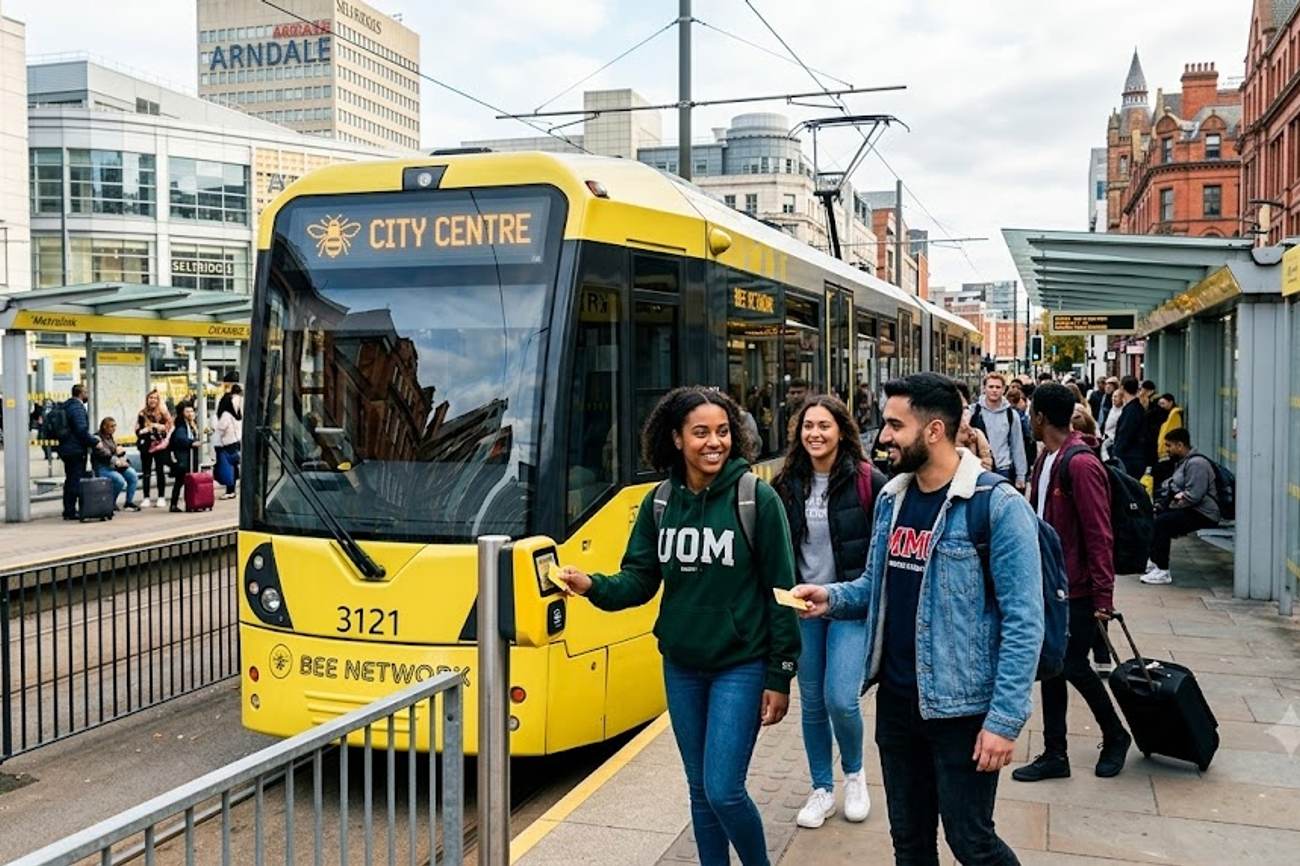
Image generated by AI
[Manchester, September 2026] — Greater Manchester is eliminating transport costs for school groups to combat funding shortages and expand offsite learning opportunities across the region. Starting September 14, 2026, schools can utilize the Bee Network for free, provided they travel in groups of 10 or more.
The initiative, funded by a partnership between Aviva and Transport for Greater Manchester (TfGM), aims to remove the financial barriers that have historically prevented students from accessing cultural, artistic, and natural landmarks. The program will operate for a 12-month period, transforming the city's transit infrastructure into a tool for educational equity.
Funding Crisis Triggers Free Transit Shift
The move is a direct response to severe funding cuts targeting school trips, a crisis exacerbated by the lingering disruptions of the pandemic. Educational institutions have reported a significant decline in available resources, making the cost of transportation a primary deterrent for organizing offsite learning.
Previously, schools relied on the "Kid for a Quid" program, which charged £1 per child and £2 per accompanying adult. While that scheme saw 40,000 children and 5,700 adults utilize the service, the new model completely removes ticket costs to ensure that a school's budget does not dictate a student's access to experiential learning.
Affected Travelers, Airlines and Logistics
The program is designed to scale rapidly across the metropolitan area, targeting a massive demographic of primary and secondary students.
| Impact Category | Details |
|---|---|
| Eligible Students | Approximately 90,000 primary and secondary school-age pupils |
| Group Requirements | Minimum of 10 passengers per group |
| Duration | 12-month operational window |
| Primary Beneficiaries | Schools facing budget constraints and students in underserved neighborhoods |
| Key Destinations | Aviva Studios, The Lowry, Oldham Coliseum Theatre, Heaton Park, Sale Water Park, and Wythenshawe Park |
Practical Traveler Advisory and Strategic Insights
For the general commuting public and school administrators, this shift changes the utility of the Bee Network, moving it from a purely commuter-focused system to a social infrastructure network.
For School Administrators: The logistical burden of funding transport is removed. Schools can now plan trips to high-value cultural and environmental sites without requesting additional levies from parents or dipping into depleted departmental budgets.
For Parents and Students: This removes the "hidden barrier" of travel costs. Students who live miles away from the city center or cultural hubs now have guaranteed access to these venues, provided their school organizes the trip.
For Daily Commuters: There will likely be an increase in school-aged groups on trams and buses during weekday morning and afternoon hours. The presence of up to 90,000 students utilizing the network for educational purposes may impact peak-time congestion on specific routes leading to major parks and theaters.
A New Model for Urban Mobility
Greater Manchester Mayor Bev Craig has emphasized that transport costs should not be the reason a child misses an opportunity to broaden their horizons. By integrating transport policy with education policy, the city is attempting to create a blueprint for other global urban centers.
The Bee Network is currently one of the most ambitious integrated transport projects in the United Kingdom, combining buses, trams, cycling, and walking paths. This school initiative proves that the network's value extends beyond ticket revenue and passenger volume; it is now being measured by its ability to foster social inclusion and economic participation.
This strategy also serves as a long-term investment in "education tourism." By introducing children to museums and theaters via free transit, the city is building destination awareness. The theory is that a student who visits a cultural venue today is more likely to return as a professional, tourist, or family visitor in the future, thereby supporting the local economy over the long term.
Starting in 2026, students in Greater Manchester will benefit from free tram travel via the Bee Network through a strategic partnership between TfGM and Aviva. This initiative aims to increase accessibility to educational hubs and city landmarks, further integrating the region's transit systems as managed by Transport for Greater Manchester.
Future Integration and Scaling
The 12-month pilot serves as a test case for whether public transport can effectively function as an extension of the classroom. If successful, this model may lead to permanent funding structures for educational transit.
The broader goal remains the full integration of the region's rail services into the Bee Network, which would further expand the geographical reach of these free school trips. As cities worldwide reconsider the role of public transit, Manchester is positioning its network as a platform for social development rather than just a means of moving people from point A to point B.
FAQ: Manchester School Travel 2026
Which schools are eligible for the free travel program? Any primary or secondary school within Greater Manchester can access the service, provided they are traveling in groups of 10 or more students and accompanying staff.
How long will the free transport be available? The program is funded for a 12-month period starting from September 14, 2026.
Are there specific destinations schools must visit? While schools can use the network for various educational purposes, highlighted destinations include The Lowry, Aviva Studios, and several major regional parks like Heaton Park.
What was the previous cost for school groups? Under the former "Kid for a Quid" initiative, schools paid £1 per student and £2 per adult. The new program reduces this cost to zero for eligible groups.
Turning the morning commute into a classroom on wheels.
Related Travel Guides
- Russian Railways Network Operates Twelve Longest Passenger Rail Journeys Worldwide Led by 10,214-Kilometer Moscow to Pyongyang Express Route in 2026
- India Travel Surge as Indian Railways Moves 67.27 Crore Passengers With Suburban Demand Rising Nine Percent
- Netherlands’ Amsterdam Centraal Climbs To Europe’s Top Rail Elite As 2026 Ranking Reveals A New Golden Era For Train Travel
This article is for informational purposes. Flight routes, passenger regulations, visa rules, and transit advisories are subject to change by airlines and aviation authorities. Readers are advised to verify schedules and travel documentation with relevant carriers and border agencies before departure.
Related Stories
Amtrak Expands Loyalty Reach With Bilt Partnership Bringing Housing-Based Rewards to Rail Travellers
The World’s Most Beautiful Train Journeys Revealed: Australia’s Ghan Takes Top Spot in 2026 Index