
Trekking the Prosecco Hills: Logistics Guide from Susegana to CastelBrando Italy 2026
Master the logistics of the Susegana to CastelBrando trek through Italy's UNESCO Prosecco hills, including route distances, elevation gains, and vineyard transit strategies.

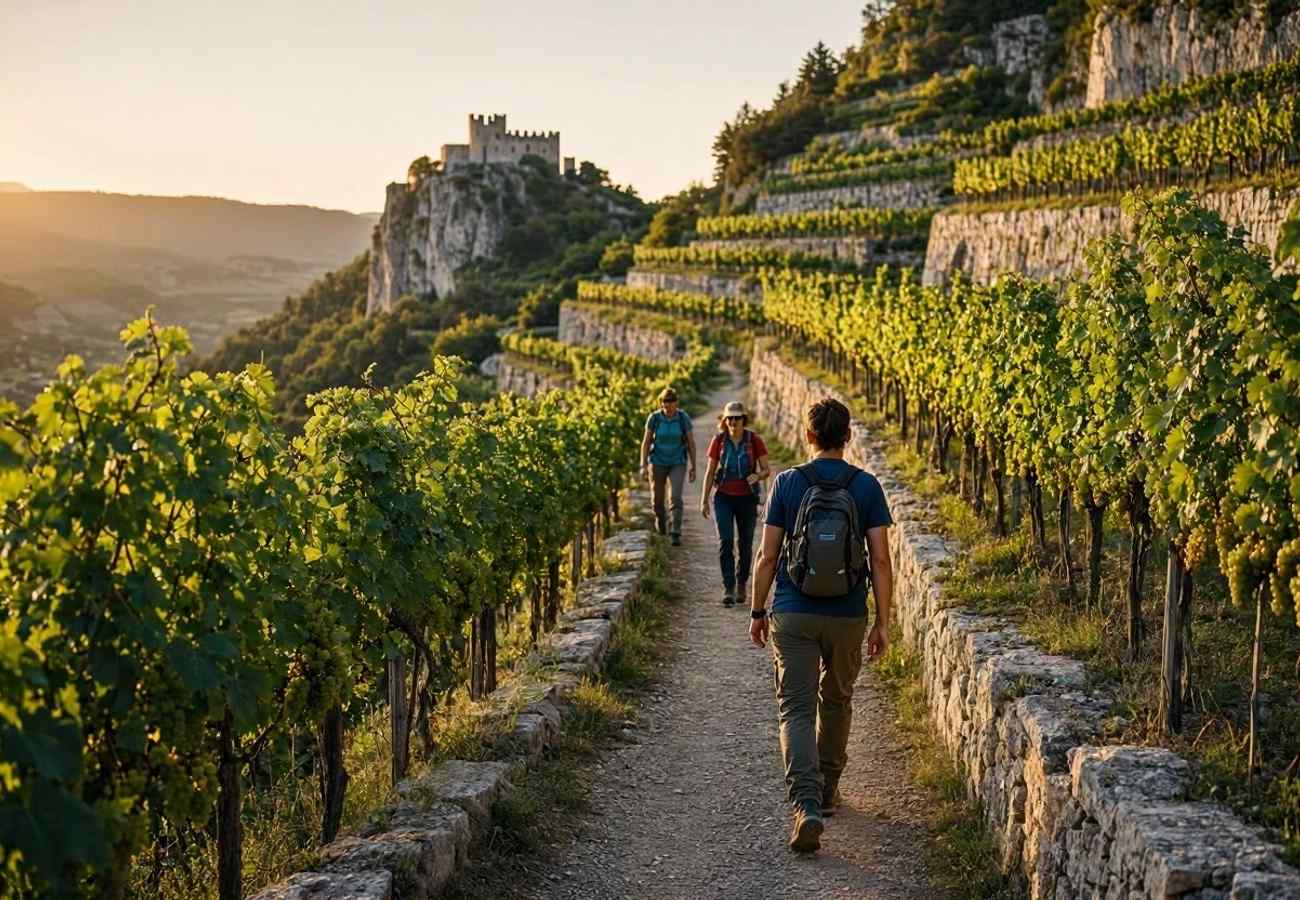
Image generated by AI
Planning a multi-day trek through the steep emerald slopes of Northern Italy? Here is the logistical breakdown for traversing the route from Susegana to CastelBrando in the Conegliano Valdobbiadene region.
The Prosecco Hills Transit Shift
The transition of the Conegliano Valdobbiadene region into a UNESCO World Heritage site in 2019 has fundamentally altered how travelers access this territory. The protected core zone covers 9,197 hectares (22,700 acres), supported by a 9,769-hectare buffer zone. For the modern traveler, this means a shift from rapid day-trips from Venice—located approximately 50 miles south—to immersive, multi-day trekking. Data shows the average visitor stay has increased from 1.2 days to 3.8 days, reflecting a move toward slow-paced, active exploration of the agricultural terraces.
Route and Schedule Details
The journey is divided into three primary legs, moving from the edge of the DOCG winemaking zone toward the clifftop fortifications of Cison di Valmarino.
| Route Segment | Distance | Key Landmarks | Terrain Type | Status |
|---|---|---|---|---|
| Susegana $\rightarrow$ Pieve di Soligo | 8 Miles | Castello di Collalto, Cal Monda | Woodland & Rural | Active |
| Pieve di Soligo $\rightarrow$ San Pietro di Barbozza | 6 Miles | Glera Vineyards, Trattoria alla Cima | Steep Ascent | Active |
| San Pietro di Barbozza $\rightarrow$ CastelBrando | 9 Miles | Follina, Valmareno, Cison di Valmarino | Meadows & Cliffs | Active |
Traveler Logistics Guide
Route Planning and Physical Requirements
This is not a casual stroll; the topography is defined by steep inclines ranging from 30% to 70%. The final ascent to CastelBrando involves a rigorous 370-meter climb. Travelers should ensure they have high-traction hiking boots, as the glacial clay and limestone deposits can become slippery during the high annual rainfall periods (averaging 1,200 mm to 1,400 mm).
Connection and Ground Transport
Most travelers arrive via Venice. To reach Susegana, the most efficient method is hiring a private transfer or utilizing regional rail connections to the nearest hub before taking a local taxi. For those staying overnight, the Municipio 1815 in San Pietro di Barbozza serves as a strategic base for accessing local tasting rooms without needing a vehicle.
Customs and Vineyard Etiquette
When visiting specialized sub-regions like the 267-acre Cartizze area, be aware that many vineyards are family-run. Prior appointments are highly recommended for tastings of Cartizze PDC Extra Brut or natural orange wines at estates like Costadilà. Respect the "col fondo" traditional methods; these unfiltered wines are bottle-fermented and differ significantly from commercial Prosecco.
Digital and Booking Tools
Check the UNESCO World Heritage Centre for updated boundary maps of the protected zones. For regional transport and hotel bookings in the Veneto region, utilizing Trenitalia for the initial leg from Venice is the standard procedure.
Regional Connectivity Impact
The focus on "active tourism" is redistributing economic flow away from overcrowded Venetian hubs and into the rural heartlands. By integrating luxury wellness—such as the hydrotherapy spas and Kneipp baths at CastelBrando—with arduous trekking, the region is attracting a higher-spending, health-conscious demographic. This shift protects the agricultural heritage of native grapes like bianchetta and boschera, preventing the industrial monoculture that often follows mass tourism.
The microclimatic conditions of the area—where elevations range from 100 to 500 meters—create a thermal fluctuation of 10°C to 12°C between day and night. This geological diversity ensures that the trek is not just a physical challenge but a study in high-altitude viticulture.
FAQ: Prosecco Hills Trek 2026
Do I need a guide for the Susegana to CastelBrando route? While the trails are marked, a local guide is recommended for the San Pietro di Barbozza segment due to the precipitous slopes and the complexity of the hogback-terraced hillsides.
How long should I allocate for the full trek? Based on current visitor trends, a minimum of 3 to 4 days is recommended to cover the 23 total miles and allow for cultural stops in Follina and Pieve di Soligo.
Can I transport my luggage between the stages? Some local hospitality providers and boutique hotels offer luggage transfer services between Susegana, San Pietro di Barbozza, and Cison di Valmarino, but these must be arranged in advance.
What is the best time of year for this journey? Spring and autumn are optimal to avoid peak summer heat and to witness the manual cultivation of the Glera vines on the steep slopes.
Trade the tourist crowds for the silence of the limestone cliffs.
Related Travel Guides
Disclaimer
This article is for informational and educational purposes only. It does not constitute legal, financial, or professional advice. While we strive to provide accurate and up-to-date information, travel policies, regulations, and conditions change rapidly. Always verify information with official sources before making travel decisions. Nomad Lawyer makes no representations about the accuracy, reliability, completeness, or suitability of the information provided. Readers should consult qualified professionals for advice specific to their circumstances. The views expressed in this article are those of the author and do not necessarily reflect the views of Nomad Lawyer.
Naina Thakur
Contributor & Travel Specialist
Travel enthusiast and legal writer covering visa regulations, responsible tourism, and cultural journeys across global destinations.
Learn more about our team →