
Abu Dhabi Mina Tunnel Data Analysis: 40% Journey Time Reduction and 2050 Mobility Projections
Analysis of the Abu Dhabi Mina Tunnel reveals a 40% drop in travel times and a 23% decrease in accidents, signaling a shift toward subterranean urban planning to support UAE tourism growth.

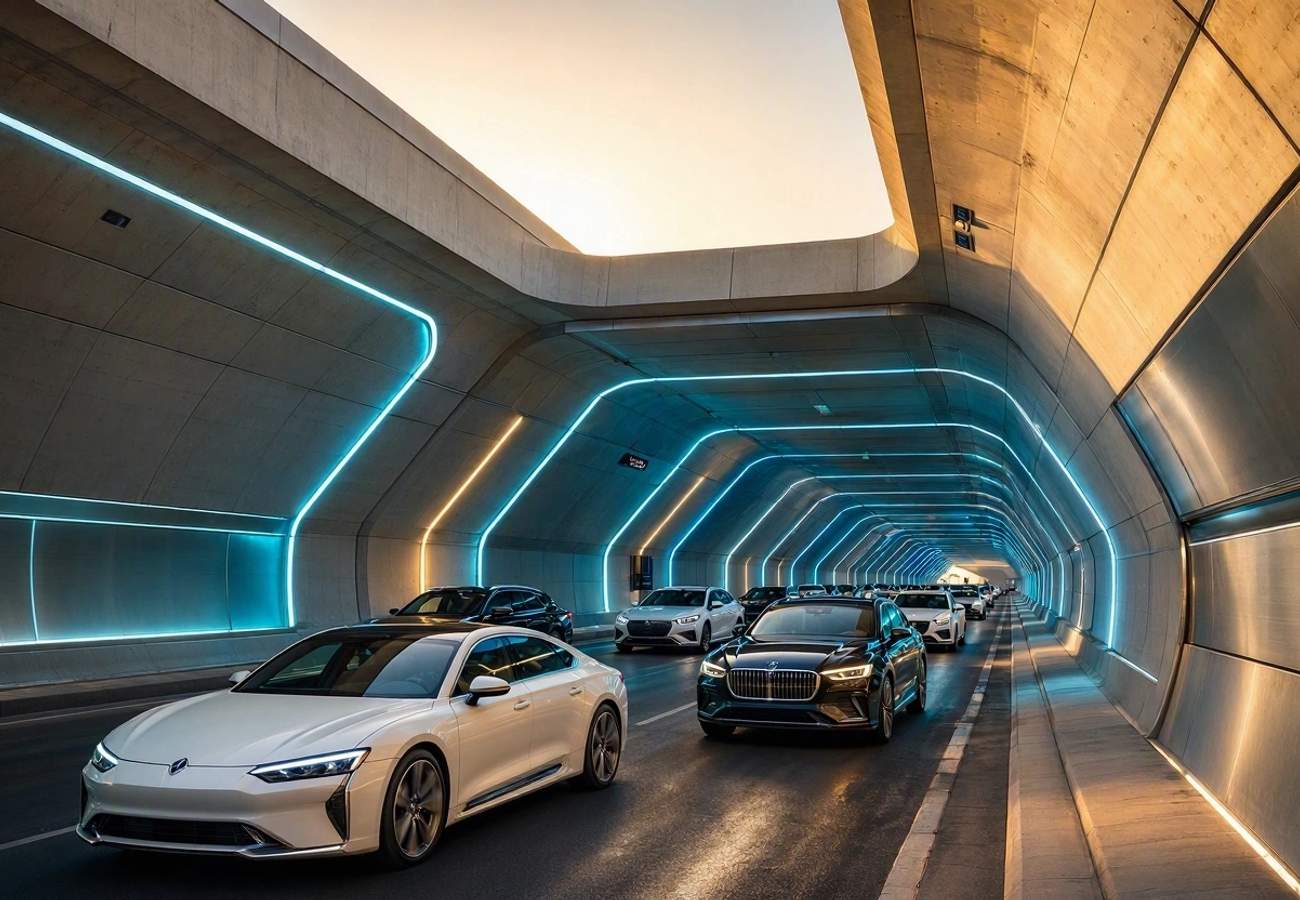
Image generated by AI
Commuter journey times through Abu Dhabi's central corridors have plummeted by 40% since the activation of the Mina Tunnel, marking a decisive shift from surface-level congestion to subterranean efficiency. This data point represents more than just a faster commute; it is a structural realignment of how the UAE capital manages the intersection of maritime commerce, luxury tourism, and residential growth.
The Mina Tunnel in Numbers: Efficiency and Safety Metrics
The operational data provided by the Department of Municipalities and Transport reveals a multi-dimensional improvement in urban health and safety. The tunnel does not merely move cars faster; it has fundamentally altered the risk profile of the connected routes. A recorded 23% decrease in traffic accidents suggests that by removing bottlenecks and optimizing flow, the city has reduced the high-stress "stop-and-go" conditions that typically lead to collisions.
From an environmental perspective, the data is equally striking. Air pollution levels in the immediate vicinity of the corridor have dropped by 37%. This is a direct result of eliminating prolonged vehicle idling—a common feature of the previous surface-level intersections. When viewed through a long-term lens, the projection is staggering: transport planners estimate a cumulative saving of 34 million travel hours by the year 2050.
Comparative Transit Analysis: Surface vs. Subterranean
The transition from traditional road widening to subterranean engineering represents a paradigm shift in UAE civic planning. Historically, Abu Dhabi relied on reactive measures—widening existing roads or adjusting signal timings—which often resulted in "induced demand," where more lanes simply attracted more traffic. The Mina Tunnel approach isolates through-traffic from local street networks, effectively decoupling regional transit from neighborhood congestion.
The following table breaks down the performance shift since the tunnel's 2023 opening:
| Metric | Pre-Tunnel Baseline | Post-Tunnel Performance | Variance |
|---|---|---|---|
| Average Journey Time | Baseline (100%) | 60% of original time | -40% |
| Accident Frequency | Baseline (100%) | 77% of original rate | -23% |
| Local Air Pollution | Baseline (100%) | 63% of original level | -37% |
| Traffic Management | Reactive/Surface | Proactive/Subterranean | Structural Shift |
This shift aligns with global trends observed by the International Air Transport Association (IATA) and other mobility bodies, where the "last mile" of the traveler's journey—from the airport or hotel to the attraction—is becoming the primary focus for urban investment.
What This Means for Travelers
For the individual traveler or business nomad visiting Abu Dhabi, these statistics translate into higher predictability and expanded itinerary flexibility. The connection between Mina Zayed, the Corniche, and the Saadiyat Island cultural district is no longer subject to the volatile delays of surface-level bottlenecks.
Actionable Booking and Transit Advice:
- Itinerary Planning: If you are scheduling visits between the coastal heritage sites and the modern hospitality zones, you can now reduce your transit buffers by roughly 30-40%.
- Navigation Tools: Use real-time GPS applications. The Department of Municipalities and Transport integrates intelligent traffic direction systems that feed directly into modern nav-apps, ensuring you are routed through the tunnel during peak hours.
- Logistics for Groups: Tour operators can now offer tighter, more reliable schedules for airport transfers and site-seeing, reducing the "dead time" spent in traffic.
Projections for UAE Urban Mobility
The success of the Mina Tunnel serves as a blueprint for future developments across the Emirates. We are seeing a movement toward "invisible infrastructure," where the primary arteries of the city are moved underground to preserve the aesthetic and ecological value of the surface. This is essential for maintaining the appeal of tourist hotspots, as reduced emissions and noise pollution directly correlate with higher visitor satisfaction and longer average stays.
As the UAE continues to push its national sustainability agendas, expect to see similar subterranean projects connecting other major hubs. The integration of automated incident detection and CCTV surveillance in the Mina Tunnel sets a technological benchmark that will likely be scaled across the region to ensure that commercial fleets and private vehicles maintain a constant, uninterrupted flow.
FAQ: Abu Dhabi Mina Tunnel 2026
Will the tunnel lead to higher tolls for travelers? The current data focuses on efficiency and safety; there is no indicated shift toward increased tolling. The primary goal remains the reduction of 34 million travel hours by 2050.
Is the tunnel suitable for all vehicle types? Yes, it is designed to handle both private commuter vehicles and commercial transport fleets, providing a seamless link between maritime and residential zones.
How does this affect travel to Saadiyat Island? By alleviating congestion at the Corniche and Mina Zayed, the tunnel streamlines the approach to Saadiyat Island, making the cultural district more accessible and reducing transit volatility.
Are there safety risks associated with the subterranean route? On the contrary, accidents have decreased by 23% due to optimized traffic flow and the implementation of automated incident detection systems.
The transition from surface-level chaos to subterranean precision is no longer an option for global hubs—it is a requirement for survival.
Related Travel Guides
Disclaimer
This article is for informational and educational purposes only. It does not constitute legal, financial, or professional advice. While we strive to provide accurate and up-to-date information, travel policies, regulations, and conditions change rapidly. Always verify information with official sources before making travel decisions. Nomad Lawyer makes no representations about the accuracy, reliability, completeness, or suitability of the information provided. Readers should consult qualified professionals for advice specific to their circumstances. The views expressed in this article are those of the author and do not necessarily reflect the views of Nomad Lawyer.
Preeti Gunjan
Contributor & Community Manager
A passionate traveller and community builder. Preeti helps grow the Nomad Lawyer community, fostering engagement and bringing the reader experience to life.
Learn more about our team →