
Chicago Marathon 2026 to Bring 55,000 Runners from Over 130 Countries as Global Sports Tourism Takes Over the City: All You Need to Know
Chicago Marathon 2026 to Bring 55,000 Runners from Over 130 Countries as Global Sports Tourism Takes Over the City: All You Need to Know

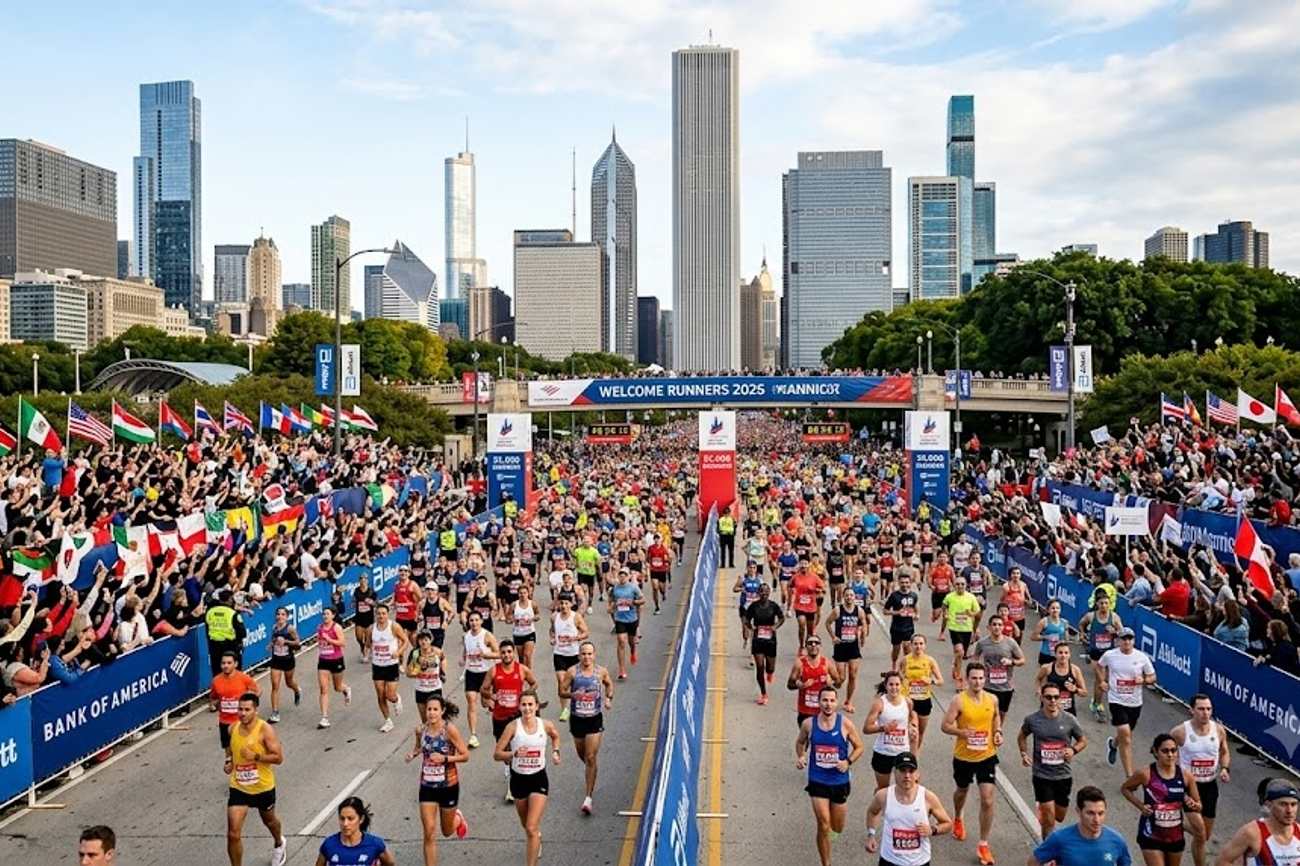
Image generated by AI
title: "The Logistics of Scale: Analyzing the Economic and Urban Impact of the 2026 Chicago Marathon" date: 2024-05-22 author: Senior Editorial Staff category: Aviation and Urban Logistics tags: [Chicago-Marathon-2026, Grant-Park, McCormick-Place, Abbott-Health-Fitness-Expo, Illinois-Tourism]
Over 130 countries will be represented in the 2026 Chicago Marathon, a figure that underscores the event's transition from a local athletic competition to a massive global logistics operation. With more than 55,000 runners expected to hit the pavement on 11 October 2026, the city is preparing for a surge in international arrivals that will stress-test everything from O'Hare International Airport's processing capacity to the city's hotel inventory. This is not merely a race; it is a coordinated movement of millions of people across 29 distinct neighborhoods, creating a temporary urban ecosystem that dictates the flow of commerce and transport for an entire week.
The Architecture of a Citywide Takeover
The 48th edition of the Chicago Marathon is designed as a distributed event, meaning its impact is not confined to a single stadium or arena. By routing 26.2 miles (42.195 km) through 29 different neighborhoods, the organizers effectively turn the city's street grid into a venue. This distribution is a strategic move to spread the economic benefit—and the logistical burden—across a wider geographic area, preventing the total paralysis of the downtown core while maximizing the exposure of local businesses to a global audience.
Grant Park serves as the operational nerve center, hosting both the start and finish lines. However, the "event hub" concept extends to McCormick Place, which will host the Abbott Health & Fitness Expo from 8–10 October. The scale of this secondary hub is immense; data from the 2025 event shows the Expo attracted more than 157,000 unique visitors. This creates a dual-pole movement pattern where thousands of travelers oscillate between their hotels, the Expo at McCormick Place, and the race staging areas in Grant Park.
| Metric | 2026 Official Projection |
|---|---|
| Total Participants | 55,000+ |
| Spectator Volume | ~1.7 Million |
| Global Representation | 130+ Countries |
| Volunteer Force | ~10,000 |
| Course Reach | 29 Neighborhoods |
| Expo Visitors (2025 baseline) | 157,000+ |
| U.S. Entry Fee | $250 |
| Non-U.S. Entry Fee | $260 |
Expert Analysis: The Economics of Sports Tourism
For the traveler or business owner in Chicago, the direct consequence of these numbers is a period of artificial scarcity. When 55,000 athletes and 1.7 million spectators converge, the "hotel room night" becomes the most valuable currency in the city. With Choose Chicago reporting approximately 11.9 million hotel room nights occupied in 2025, the marathon creates a concentrated spike that allows hotels to implement premium pricing and minimum-stay requirements.
The pricing delta between U.S. residents ($250) and non-U.S. residents ($260) is a subtle but telling indicator of the event's market positioning. While the $10 difference is negligible to the runner, it reflects a tiered registration system designed to account for the higher administrative costs and different marketing channels associated with international participants.
The involvement of more than 100 official tour operators suggests a shift toward "packaged" sports tourism. Rather than booking fragmented flights and hotels, a growing segment of the 130+ represented nations is opting for curated experiences. This consolidation of travel allows the city to better predict arrival patterns but also concentrates visitor spending into specific corporate channels. For the independent traveler, this means that booking windows for October 2026 must open months in advance to avoid the "marathon premium" on remaining inventory.
Furthermore, the timeline of the event—starting with the Expo on 8 October and concluding with the race on 11 October—transforms a single-day race into a four-day visitor event. The 7:30 a.m. start for the Abbott Chicago 5K on Saturday, followed by the professional wheelchair (7:20 a.m.) and professional runner (7:30 a.m.) starts on Sunday, creates a high-density transit window. Travelers relying on rideshare services during these hours will likely face extreme delays and surge pricing as the city's transport infrastructure pivots to support the International Air Transport Association (IATA) standards for mass-gathering arrivals.
Key Takeaways
- Massive Human Influx: The 2026 race will be the largest in history, with over 55,000 runners and 1.7 million spectators creating significant urban congestion.
- Multi-Day Disruption: The event is a four-day operation (8–11 October), with the Abbott Health & Fitness Expo at McCormick Place acting as a major secondary traffic driver.
- Geographic Spread: The 26.2-mile course penetrates 29 neighborhoods, meaning road closures and crowds will affect far more than just the downtown area.
- Tiered Pricing: Entry fees are split by residency, with non-U.S. participants paying $260 compared to $250 for domestic runners.
- Logistical Hubs: Grant Park (Race Day) and McCormick Place (Expo) are the two critical zones for all marathon-related activity.
FAQ: Chicago Marathon 2026
When is the Chicago Marathon 2026 taking place? The main race is scheduled for Sunday, 11 October 2026. However, the associated Abbott Health & Fitness Expo runs from Thursday, 8 October through Saturday, 10 October at McCormick Place.
How much does it cost to enter the 2026 race? Registration is $250 for residents of the United States and $260 for non-U.S. residents.
Where do the race start and finish? Both the start and finish lines are located in Grant Park, which serves as the central hub for the event's operations.
Will the marathon affect traffic in areas outside of downtown? Yes. The race course extends through 29 different Chicago neighborhoods, meaning road closures and spectator crowds will be widespread across the city.
The 2026 marathon is less a race and more a temporary redesign of Chicago's urban geography.
Related Travel Guides
- Alabama’s Gulf Shores National Shrimp Festival 2026 Set To Drive Coastal Travel Boom With Food Music And Beach Experiences
- UK Travel Alert: Major Heavy Rain Front to Impact 65 Areas Across Britain on September 25–26
- Switzerland Tourism Launches Autumn Campaign Highlighting Geneva, Interlaken, and First Class Rail Transit Integration
Disclaimer
This article is for informational and educational purposes only. It does not constitute legal, financial, or professional advice. While we strive to provide accurate and up-to-date information, travel policies, regulations, and conditions change rapidly. Always verify information with official sources before making travel decisions. Nomad Lawyer makes no representations about the accuracy, reliability, completeness, or suitability of the information provided. Readers should consult qualified professionals for advice specific to their circumstances. The views expressed in this article are those of the author and do not necessarily reflect the views of Nomad Lawyer.
Naina Thakur
Contributor & Travel Specialist
Travel enthusiast and legal writer covering visa regulations, responsible tourism, and cultural journeys across global destinations.
Learn more about our team →