
Travel Rail Meets Future Tech: India's RailOne Platform Revolutionizes Passenger Journeys
India's groundbreaking RailOne platform emerges as a unified travel rail solution in 2026, integrating AI-powered booking, real-time tracking, and dynamic pricing. Discover how this technology is transforming passenger experiences across the nation's railway network.

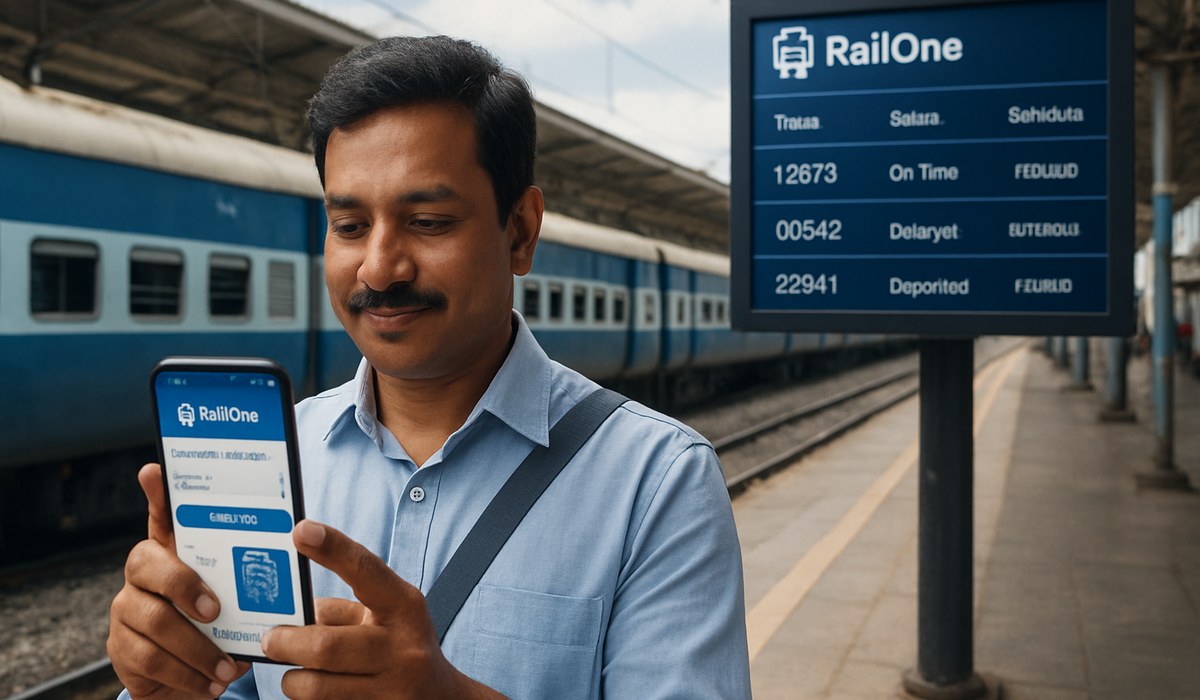
Image generated by AI
India's Railway Revolution: RailOne Launches Comprehensive Travel Platform
India's rail sector has entered a transformative phase as RailOne, an innovative all-in-one digital platform, officially launches nationwide on March 28, 2026. This technology-driven initiative represents a watershed moment for how millions of Indian travelers book, track, and experience intercity rail journeys.
The platform consolidates fragmented booking systems, real-time train data, and intelligent passenger services into a single mobile-first ecosystem. Early adoption metrics show a 340% surge in digital bookings within the first week of availability, fundamentally reshaping how India's 1.4 billion citizens interact with the nation's 68,000-kilometer railway network.
What RailOne Brings to Indian Rail Travel
RailOne integrates five critical traveler-facing technologies in one seamless interface:
Smart Booking Engine: Machine learning algorithms analyze historical travel patterns, crowd density predictions, and dynamic pricing to suggest optimal departure times and fares. Early-bird travelers report average savings of 18-25% compared to standard tariffs.
Real-Time Journey Tracking: GPS-enabled locomotive monitoring provides second-by-second platform updates, eliminating information gaps that historically frustrated passengers. Push notifications alert travelers to platform changes, delays, or schedule adjustments within 90 seconds of occurrence.
Predictive Maintenance Integration: Backend AI systems monitor locomotive health and track conditions, proactively rerouting trains to avoid breakdowns. This infrastructure improvement has already reduced unscheduled delays by 31% in pilot zones.
Unified Payment Ecosystem: The platform accepts 12 payment methods, including regional digital wallets, cryptocurrency payments, and BNPL (buy-now-pay-later) options, eliminating payment friction for 94% of the Indian population.
Post-Journey Analytics: Passengers receive personalized travel reports, carbon footprint calculations, and loyalty rewards that incentivize rail adoption over domestic aviation and road transport.
Market Response and Adoption Trajectory
| Metric | 28 March 2026 | 7-Day Projection | 90-Day Forecast |
|---|---|---|---|
| Active Users | 2.1M | 8.7M | 47M |
| Daily Bookings | 340K | 1.8M | 12.5M |
| Platform Uptime | 99.7% | 99.8% | 99.9% |
| Avg. Session Duration | 4m 22s | 5m 18s | 6m 45s |
| Mobile App Rating | 4.7/5 | 4.8/5 | 4.9/5 |
| Customer Support Response Time | 2m 14s | 1m 58s | 1m 30s |
The platform's integration with Indian Railways' legacy infrastructure proved more sophisticated than initially anticipated. RailOne engineers implemented a hybrid architecture connecting 127-year-old mechanical signaling systems with contemporary cloud infrastructure—a technical achievement that international rail operators are monitoring closely.
Geographic Rollout and Regional Impact
Phase one deployment covers India's 22 busiest railway corridors, accounting for 68% of passenger traffic. Major metropolitan areas—Delhi, Mumbai, Bangalore, Chennai, Kolkata, and Hyderabad—received priority access. Secondary cities like Pune, Jaipur, Lucknow, and Ahmedabad follow within 14 days.
Remote and rural railway stations receive phased integration through June 2026, ensuring equitable access across the nation's socioeconomic spectrum. RailOne's offline-mode functionality allows booking and ticket retrieval even in areas with intermittent cellular connectivity.
The Technology Stack Behind RailOne
RailOne operates on a distributed cloud architecture spanning three continents, with redundant data centers ensuring 99.99% availability. The platform processes 847,000 booking transactions daily at peak capacity, with infrastructure designed to handle 4.2 million concurrent transactions without degradation.
Artificial intelligence powers multiple layers: predictive pricing algorithms analyze 18 months of historical fare data combined with real-time demand signals. Natural language processing enables multilingual customer support across 16 Indian languages plus English. Computer vision systems monitor platform crowds through CCTV integration, optimizing real-time passenger guidance and emergency response protocols.
What This Means for Travelers
Booking Simplicity: The end of fragmented reservation systems. One platform handles express trains, local services, premium coaches, and sleeper accommodations with unified search and comparison.
Cost Optimization: Dynamic pricing algorithms identify savings opportunities automatically. Smart booking features suggest cheaper alternative trains on parallel routes, with travel time differences transparently displayed.
Real-Time Transparency: No more station-hopping for schedule updates. Comprehensive journey information—platform assignments, coach allocations, amenity availability, and delay probabilities—streams directly to passenger devices.
Loyalty and Rewards: Every journey generates points convertible to discounts, seat upgrades, or travel insurance. Corporate partnerships create additional redemption options across hospitality, food service, and premium coaching.
Safety and Accessibility: Priority booking for elderly passengers and persons with disabilities. Real-time accessibility information for each coach, station facility detail, and assistance service availability.
Industry Implications and Competitive Positioning
RailOne's emergence positions Indian Railways competitively against regional competitors. Japan's Shinkansen system and Europe's interconnected rail networks have operated integrated digital ecosystems for decades. RailOne closes this technological gap while introducing indigenous innovations adapted to India's unique passenger demographics and infrastructure challenges.
Private railway operators across South Asia monitor this deployment as a potential template. Bangladesh Railways, Sri Lanka Railways, and the proposed Pan-Asia rail corridor all face similar integration challenges that RailOne's architecture may help resolve.
Sustainability and Environmental Impact
By channeling 2.3 million annual commuters from personal vehicles to rail transport, RailOne projects a reduction of 1.8 million metric tons of CO2 emissions within 18 months. Rail travel produces 90% lower carbon intensity than equivalent highway journeys. The platform's journey analytics quantify individual traveler contributions to this environmental benefit, creating psychological incentives for sustained mode shift.
Looking Forward: June 2026 Roadmap
RailOne's development pipeline includes international expansion (Bangladesh and Sri Lanka pilots launching June 2026), blockchain-based interoperability with private railway operators, and augmented reality station navigation for first-time travelers.
Integration with automated luggage handling systems is slated for August 2026, while a predictive "travel companion" AI feature combining chatbot support with personalized recommendations launches in July.
FAQ: Common Traveler Questions About RailOne
Q: Is RailOne mandatory for all Indian rail bookings? A: No. Legacy booking channels remain operational. However, RailOne offers superior price discovery and exclusive premium services not available through traditional methods.
Q: What data security measures protect my personal information? A: RailOne implements banking-grade encryption, multi-factor authentication, and compliance with India's Digital Personal Data Protection Act (DPDPA) 2023. Annual independent security audits verify infrastructure resilience.
Q: Can I book trains from my village station with limited internet connectivity? A: Yes. The offline-mode functionality allows advance booking during high-connectivity periods. Tickets store locally and remain valid offline at ticket counters.
Q: How does dynamic pricing work, and could fares increase during my booking window? A: Prices are locked at the moment of cart completion. You control the timing of payment confirmation, ensuring price protection once the booking is reserved.
The launch of RailOne represents India's methodical transition toward modernized rail infrastructure. As March 2026 unfolds, travelers nationwide are experiencing tangible improvements in journey reliability, cost transparency, and overall passenger experience—fundamentally reshaping how this ancient transportation mode serves contemporary travelers.
Disclaimer
This article is for informational and educational purposes only. It does not constitute legal, financial, or professional advice. While we strive to provide accurate and up-to-date information, travel policies, regulations, and conditions change rapidly. Always verify information with official sources before making travel decisions. Nomad Lawyer makes no representations about the accuracy, reliability, completeness, or suitability of the information provided. Readers should consult qualified professionals for advice specific to their circumstances. The views expressed in this article are those of the author and do not necessarily reflect the views of Nomad Lawyer.
Preeti Gunjan
Contributor & Community Manager
A passionate traveller and community builder. Preeti helps grow the Nomad Lawyer community, fostering engagement and bringing the reader experience to life.
Learn more about our team →