
Travel Industry Sees Powerful Shift as Human Connection Beats Artificial Intelligence in Holiday Planning
Travel Industry Sees Powerful Shift as Human Connection Beats Artificial Intelligence in Holiday Planning

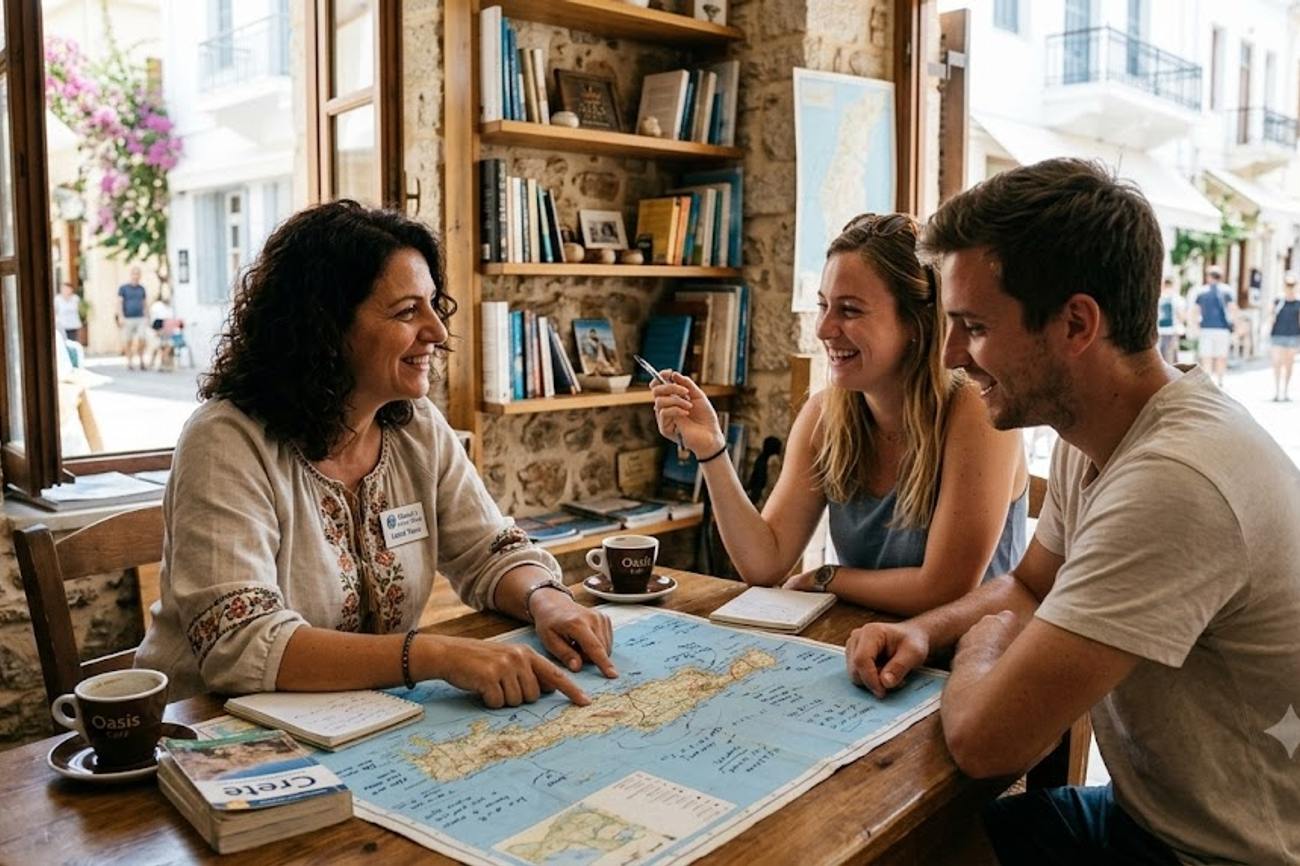
Image generated by AI
[New York, October 2023] — A dominant majority of North American travelers are rejecting artificial intelligence in favor of human expertise to combat "decision fatigue" caused by digital information overload. New research commissioned by the adventure travel firm Explore Worldwide reveals that 78% of travelers in the region are more likely to book a trip if the itinerary was designed by an expert with firsthand destination experience.
The survey highlights a growing tension between the proliferation of AI-driven planning tools and the desire for authentic, lived experience. While digital platforms offer speed, travelers are increasingly wary of the "generic" nature of bot-generated suggestions. The findings suggest that as the volume of online travel data increases, the value of a trusted human intermediary rises proportionally, particularly for high-stakes international journeys.
The AI Confidence Gap
The push toward automation in the travel sector is hitting a wall with older demographics and high-value travelers. For "empty nesters" and travelers over the age of 50 who undertake at least one international trip annually, trust in AI is remarkably low. Only 11% of this group report feeling "highly confident" in using AI to select a destination or organize a full holiday. An additional 29% feel only "somewhat confident," leaving the vast majority of this affluent demographic skeptical of autonomous planning.
The distrust stems from three primary failures of current AI models:
- Accuracy Concerns: 51% of respondents cite the risk of receiving incorrect or outdated information as their primary deterrent.
- Lack of Specificity: 39% of travelers believe AI-generated itineraries are too general and lack the nuance of a curated experience.
- Personalization Deficits: 38% argue that digital tools cannot account for individual preferences or specific personal needs.
This sentiment is echoed by the World Tourism Organization (UNWTO), which monitors global trends in tourism digitalization and the evolving needs of the modern traveler.
The Psychology of Information Overload
The research indicates that the "research phase" of travel planning—once a source of excitement—is becoming a source of stress. While 55% of respondents still feel excitement and 38% feel optimism during the planning process, a significant portion of the market is paralyzed by choice.
Approximately 42% of travelers find the process of comparing various destinations and itineraries overwhelming. This "decision fatigue" has a tangible impact on travel behavior: 26% of respondents admitted they chose a familiar destination they had visited before, not because they wanted to return, but because the stress of making a new decision was too high.
For Generation X, Baby Boomers, and the Silent Generation, human validation is a prerequisite for confidence. 58% of these travelers state it is "extremely or very important" that their itinerary is reviewed or created by a person who has physically visited the location. Only 4% of this group viewed human expertise as unimportant.
What This Means for Travelers
For the average person booking a trip today, these findings translate into a shift in how to approach the planning process. While AI tools like ChatGPT or Gemini are efficient for brainstorming a list of cities or checking flight durations, they are increasingly viewed as unreliable for the "final mile" of planning.
Passenger Impact Assessment:
- The "Safety Net" Requirement: Travelers are moving away from "DIY" digital planning for complex international trips. There is a renewed demand for travel advisors who can provide a guarantee of accuracy that a Large Language Model (LLM) cannot offer.
- The Authenticity Premium: There is a growing trend toward "human-verified" itineraries. Travelers are now seeking out specific names and credentials of the people who designed their tours rather than trusting a brand's generic marketing.
- Risk Mitigation: To avoid the 51% accuracy risk associated with AI, travelers are returning to official sources, such as the U.S. Department of State for safety and entry requirements, and direct airline portals for scheduling.
- The Return of the Specialist: The "generalist" travel agent is being replaced by the "destination specialist"—someone who can prove they have "boots on the ground" experience in a specific region.
The Shift Toward "Human-Centered" Planning
In response to these trends, Explore Worldwide has launched "Made by Humans," a digital platform designed to pivot away from the AI trend. The hub focuses on the individual stories and personal expertise of the people shaping the journeys, rather than the algorithms managing the bookings.
Katy Rockett, Regional Director of North America for Explore Worldwide, notes that while digital tools are useful for immediate access to information, they cannot replace the confidence provided by a trusted advisor. According to Rockett, 61% of surveyed travelers feel that immersive international travel makes them feel more connected to the world, a feeling that is often lost when a trip is planned by a bot.
The industry is seeing a bifurcation of tools: AI is being relegated to the "research and discovery" phase, while human experts are being brought back in for the "curation and validation" phase. This hybrid approach aims to provide the efficiency of technology without sacrificing the reliability of human judgment.
FAQ: Travel Planning Trends 2023
Is AI completely unreliable for planning a vacation? AI is effective for high-level inspiration and basic logistics. However, 51% of travelers worry about accuracy. It is best used for brainstorming, while final itineraries should be verified by a human expert or official government travel site.
Why are older travelers more skeptical of AI travel tools? Travelers over 50 prioritize accuracy and personalization. Only 11% feel highly confident in AI, as they often require more nuanced, reliable advice for international journeys that bots cannot provide through lived experience.
What is "decision fatigue" in travel planning? It is the stress caused by an overwhelming number of online choices. This has led 26% of travelers to book familiar destinations simply to avoid the mental exhaustion of comparing too many new options.
How can I ensure my itinerary is "expert-verified"? Look for travel providers that list the specific destination specialists or tour leaders involved in the design. Avoid generic "AI-generated" packages and seek out platforms that showcase the real-world experience of their curators.
As the digital noise grows louder, the most valuable luxury in travel is becoming a trusted human voice.
#ExploreWorldwide #NorthAmericaTravel #TravelDecisionFatigue #AIvsHumanTravel #AdventureTravel2023 #DestinationExpertise
Related Travel Guides
- Dubai Airport Immigration Upgrade Transforms Travel As Smart Gates Deliver Faster Passport Control For Visitors
- Guyana Tourism Surges as Record Arrivals Put Kaieteur Falls and Indigenous Travel in Focus
- US Travel Shock 2026 as Fed Rate Hike, $100 Oil and AI Crash Threaten to Make American Holidays Unaffordable
Disclaimer
This article is for informational and educational purposes only. It does not constitute legal, financial, or professional advice. While we strive to provide accurate and up-to-date information, travel policies, regulations, and conditions change rapidly. Always verify information with official sources before making travel decisions. Nomad Lawyer makes no representations about the accuracy, reliability, completeness, or suitability of the information provided. Readers should consult qualified professionals for advice specific to their circumstances. The views expressed in this article are those of the author and do not necessarily reflect the views of Nomad Lawyer.
Preeti Gunjan
Contributor & Community Manager
A passionate traveller and community builder. Preeti helps grow the Nomad Lawyer community, fostering engagement and bringing the reader experience to life.
Learn more about our team →