Delta Prepares Airbus A350-1000 Deliveries for Early 2027: US International Travel Guide

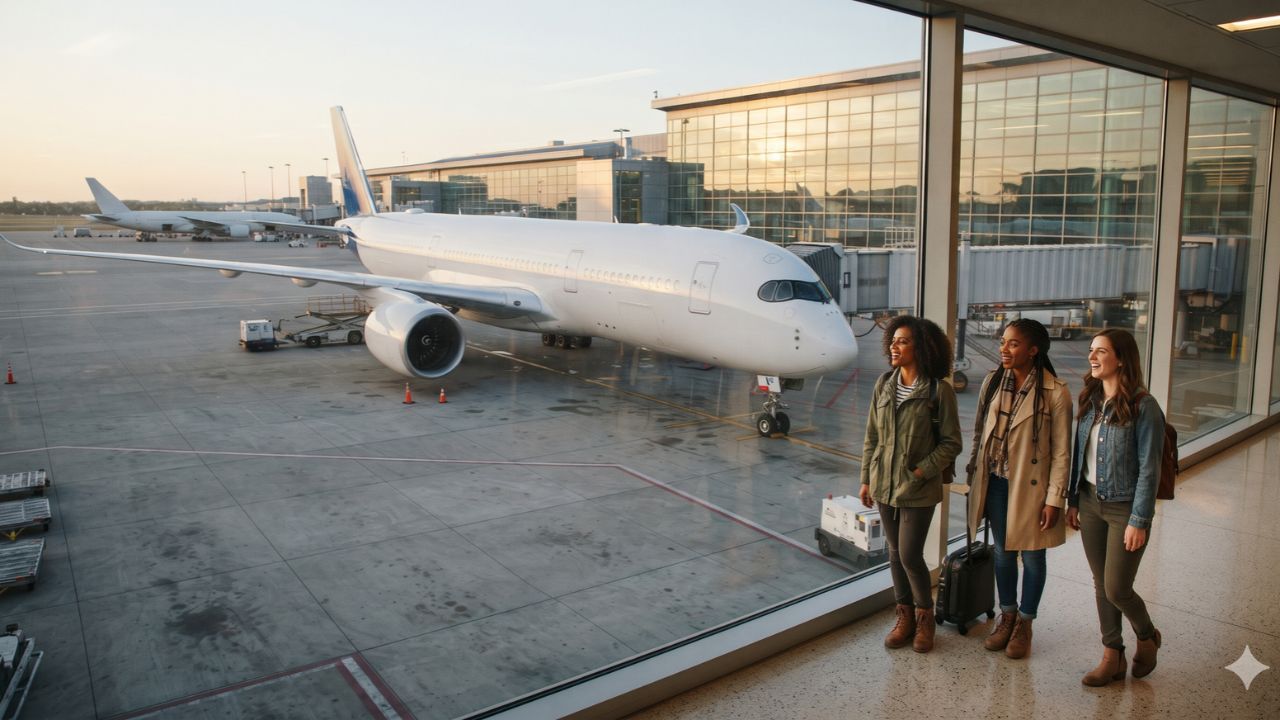
While international travelers contributed an estimated US$145.4 billion to the United States economy between January and July 2026, the long-haul aircraft carrying them across the Atlantic and Pacific are about to undergo their most significant fleet transition in a decade. With Delta Air Lines scheduled to receive the first of 20 flagship Airbus A350-1000 widebody aircraft starting in early 2027, followed by orders for 31 additional Airbus widebodies and 30 Boeing 787-10 Dreamliners, the carrier is not merely adding seating capacity—it is setting off a multi-year aircraft reallocation across its international network that will reshape long-haul travel options from Atlanta and New York to Seattle and Salt Lake City.
Delta Prepares Early 2027 Debut for 20 Flagship Airbus A350-1000 Aircraft
The arrival of the Airbus A350-1000 in early 2027 marks a key operational milestone for Delta’s global strategy. First announced in January 2024, the order for 20 A350-1000 aircraft introduces the largest variant of Airbus’s composite twin-engine family into the airline’s fleet. Powered by high-efficiency Rolls-Royce Trent XWB-97 turbofans, the aircraft is engineered for premier ultra-long-haul routes, offering expanded premium cabin configurations and increased cargo lift compared to the smaller A350-900.
Rather than stopping with the A350-1000, Delta broadened its widebody procurement program in January 2026. The airline finalized an order for 31 additional Airbus widebodies, comprising 16 A330-900s (A330neo) and 15 A350-900s, with deliveries scheduled to begin in 2029. Simultaneously, Delta diversified its future long-haul fleet by committing to 30 Boeing 787-10 Dreamliners, slated primarily for transatlantic and South American routes. Together, these orders demonstrate a structured replacement of aging Boeing 767 and older Airbus A330 models while positioning Delta for sustained intercontinental expansion.
| Aircraft Model / Family | Order Commitment Quantity | Expected Delivery Window | Primary Strategic Network Deployment |
|---|---|---|---|
| Airbus A350-1000 | 20 aircraft ordered | Deliveries begin early 2027 | Ultra-long-haul transpacific and high-demand European trunk routes. |
| Airbus A330-900 (neo) | 16 additional aircraft | Deliveries commence in 2029 | Transatlantic, Latin American, and high-density domestic routes. |
| Airbus A350-900 | 15 additional aircraft | Deliveries commence in 2029 | Long-haul intercontinental routes; supplements existing A350 fleet. |
| Boeing 787-10 Dreamliner | 30 aircraft ordered | Future delivery window | Transatlantic European corridors and deep South American markets. |
| Airbus A330-200/300 Fleet | Active fleet retrofit | Ongoing cabin investment | Cabin refresh adding Delta One suites and accessible lavatories. |
For international holidaymakers and corporate fliers, the real value of these aircraft deliveries lies in the cascade effect. When brand-new A350-1000s enter service on premier transpacific and transatlantic flagship routes, the existing A350-900 and A330neo aircraft currently flying those routes become available for reallocation to secondary international gateways. This allows destinations that previously saw seasonal service or older cabin products to gain modern widebody aircraft featuring quieter cabins, higher cabin humidity, and expanded premium seating.
Alongside new deliveries, Delta is investing heavily in retrofitting its existing long-haul fleet. The airline’s published cabin program includes upgrading older Airbus A330-200 and A330-300 aircraft with enclosed Delta One suites featuring full-height sliding privacy doors, customized mood lighting, updated seatback entertainment systems, tactile flight attendant call buttons, and dedicated accessible lavatories designed for travelers with disabilities.
| Inbound Tourism Indicator | Calendar Metric (July 2026) | Seven-Month Cumulative (Jan–Jul 2026) | National Economic Relevance |
|---|---|---|---|
| Total International Spend | Nearly US$20.4 billion | Estimated US$145.4 billion | Major US export sector covering travel and leisure spending. |
| Year-on-Year Spending Trend | Down nearly 1% vs July 2025 | Down 0.1% year-on-year | Highlights competitive global tourism marketplace. |
| Included Economic Categories | Passenger airfares, hotels, dining | Education, medical, short-term worker spend | Comprehensive travel export accounting by the US Department of Commerce. |
Official spending figures from the US National Travel and Tourism Office (NTTO) demonstrate why airline fleet decisions carry significant economic weight. International travelers spent nearly US$20.4 billion in July 2026, bringing total year-to-date travel spending to US$145.4 billion. Modern widebody aircraft that offer superior cabin comfort and dependable scheduling help US destinations attract high-spending international leisure and corporate visitors in an increasingly competitive global market.
What Makes Delta’s Gateway Hubs and Connecting Corridors Experientially Unique
Delta’s route architecture channels international visitors through distinct American regional hubs, each serving as a cultural gateway to its surrounding territory. At Hartsfield-Jackson Atlanta International Airport (ATL), the busiest passenger airport in the world, international arrivals step into the cultural epicenter of the American South. Beyond the airport's underground Plane Train, Atlanta offers rich civil rights history at the Martin Luther King Jr. National Historical Park, tree-lined walking trails along the pedestrian Atlanta BeltLine, and a renowned culinary scene in neighborhoods like Inman Park, where chefs reinvent classic Southern fare like stone-ground grits, pimento cheese croquettes, and hot sorghum-glazed biscuits.
In the Pacific Northwest, Seattle-Tacoma International Airport (SEA) anchors Delta’s primary transpacific gateway. Nestled between the Puget Sound and Mount Rainier, Seattle provides visitors with immediate access to maritime heritage. At historic Pike Place Market, fishmongers toss fresh Pacific King salmon above cobblestone arcades, while nearby coffee houses showcase the city's micro-roasting craft. Stepping onto an iconic green-and-white Washington State Ferry from the downtown terminal whisks travelers across the sound to Bainbridge Island, where cedar-lined trails offer panoramic views of the Olympic Mountains.
Connecting through Salt Lake City International Airport (SLC) delivers an entirely different experience, framed by the jagged granite peaks of the Wasatch Range. Salt Lake City acts as the primary springboard for outdoor enthusiasts heading to Utah's famed "Mighty 5" National Parks—Zion, Bryce Canyon, Capitol Reef, Arches, and Canyonlands—as well as world-renowned powder skiing in Park City, Alta, and Snowbird. Meanwhile, New York-JFK and Boston Logan (BOS) offer direct pipelines into the historic walking neighborhoods of Manhattan, Brooklyn, and New England's maritime coastlines.
Visitor Insider Tips: Delta One Booking Hacks, Mobile Passport Control, and Transit Rail
- Verify Aircraft Equipment Codes on Seat Maps: When booking long-haul flights starting in 2027, review the exact equipment identifier on the Delta booking engine. The Airbus A350-1000 will be displayed under distinct internal codes (such as "351" or "35K") separating it from the smaller A350-900 ("359"). Check the seat map during reservation to confirm whether your flight features the latest flagship cabin layout.
- Utilize the Free Mobile Passport Control (MPC) App: International visitors holding qualifying visas, ESTA authorizations, or US citizenship can bypass standard immigration lines upon landing at Delta hubs like Atlanta, New York-JFK, Los Angeles, and Seattle. Download the official US Customs and Border Protection (CBP) Mobile Passport Control app on your smartphone, submit your digital customs declaration upon landing, and enter dedicated MPC priority inspection lanes that save up to 45 minutes of queuing time.
- Pre-Select Delta One Dining via the Fly Delta App: If flying in Delta One, take advantage of the airline's meal pre-select feature. Beginning seven days prior to departure, passengers receive an app notification allowing them to reserve exclusive regional dishes—such as slow-braised short ribs or vegetarian pasta creations—that are not always loaded in sufficient quantities on the standard inflight cart.
- Take Direct Rail Transit into City Centers: Avoid expensive highway rideshare fares and rush-hour bottlenecks when landing at Delta’s major hubs. At Atlanta (ATL), board the MARTA Red or Gold line directly inside the domestic terminal to reach Downtown and Midtown in 20 minutes for $2.50. At Seattle (SEA), the Sound Transit Link 1 Line departs every 10 minutes from the airport garage, connecting directly to downtown Pioneer Square and Westlake in 35 minutes.
- Explore Cultural Neighborhoods Outside the Airport Perimeter: If you have an extended daytime layover in Atlanta, take a short taxi to the historic Sweet Auburn neighborhood to tour Martin Luther King Jr.’s birth home. In Seattle, take the light rail to the Chinatown-International District to sample piping-hot handmade soup dumplings (xiao long bao) and Vietnamese iced coffee before returning to your connecting gate.
- Coordinate US Travel Plans Through National Tourism Resources: Explore official travel planning guides, regional road trip itineraries, and seasonal park pass guidelines through Brand USA, ensuring your multi-city flight itinerary connects smoothly with local transit and lodging.
Cultural and Environmental Context: Inbound Tourism Economics and Accessible Aviation Standards
The modernization of long-haul widebody fleets intersects directly with national environmental commitments and evolving accessibility standards. The Airbus A350 family and Boeing 787 Dreamliner rely extensively on lightweight carbon-fiber composite materials, advanced wing aerodynamics, and high-bypass turbofan engines, achieving an estimated 20% to 25% reduction in fuel consumption and carbon dioxide emissions per seat compared to previous-generation four-engine and older twin-engine aircraft. For an airline operating hundreds of daily transoceanic crossings, these efficiency gains represent a fundamental pillar of corporate decarbonization roadmaps.
Simultaneously, Delta’s cabin refurbishment program reflects an important shift toward inclusive travel. The retrofitting of existing A330-200 and A330-300 aircraft includes dedicated accessible lavatories engineered specifically to accommodate on-board wheelchair transfers, alongside tactile cabin controls and high-contrast signage for travelers with sensory impairments. These physical improvements demonstrate that modern fleet renewal must prioritize dignity and independent mobility for all passengers, not merely premium luxury amenities.
From a cultural perspective, international air connections nurture regional American economies far beyond coastal gateway cities. When widebody aircraft cascade onto secondary hub corridors, travelers from Europe, Latin America, and Asia gain direct access to regional music scenes, national parks, and indigenous cultural sites across the American interior. By supporting local farmers, artisan cooperatives, and independent hospitality providers, inbound international tourism helps preserve the diverse human communities that define the American continent.
FAQ: Delta Airbus A350-1000 and Fleet Renewal 2027
When will Delta Air Lines take delivery of its first Airbus A350-1000?
Delta's official fleet guidance indicates that deliveries of its 20 ordered Airbus A350-1000 aircraft are scheduled to begin in early 2027.
What other widebody aircraft has Delta ordered for future delivery?
In January 2026, Delta announced orders for 31 additional Airbus widebodies (16 A330-900s and 15 A350-900s) starting in 2029, alongside an order for 30 Boeing 787-10 Dreamliners.
Which cabin improvements are coming to Delta’s existing A330 fleet?
Delta is retrofitting its A330-200 and A330-300 aircraft with enclosed Delta One suites featuring sliding privacy doors, tactile controls, updated entertainment, and accessible lavatories.
How can international travelers expedite US customs at Delta hubs?
Eligible international travelers can use the free US Customs and Border Protection Mobile Passport Control (MPC) app to access dedicated expedited lanes at major US airport hubs.
[As morning light gleams off composite wings and high above the clouds, Delta's evolving fleet connects diverse horizons, carrying travelers toward unforgettable American journeys.]
Related Travel Guides
Solomon Airlines Launches South Pacific Airfare Sale: Melanesia Island Travel Guide 2026–2027
SriLankan Airlines Airlifts Japanese Taiko Troupe to Colombo: Cultural Tour and Travel Guide 2026
The Insider Guide to Delta One Suites, Atlanta Transit Hacks, and Utah Ski Corridors, According To Reddit (Coming Soon)
This article is for informational purposes. Flight routes, passenger regulations, visa rules, and transit advisories are subject to change by airlines and aviation authorities. Readers are advised to verify schedules and travel documentation with relevant carriers and border agencies before departure.
Related Stories

Solomon Airlines Launches South Pacific Airfare Sale: Melanesia Island Travel Guide 2026–2027

SriLankan Airlines Airlifts Japanese Taiko Troupe to Colombo: Cultural Tour and Travel Guide 2026